What Happens If My Key Fob Battery Dies While Driving
Your key fob battery dies while driving? Don’t panic. This guide explains exactly what happens when your key fob battery dies mid-trip, how to restart your car, and what to do next. You’ll learn simple fixes, safety tips, and when to seek help.
Key Takeaways
- A dead key fob doesn’t always stop you: Most modern cars let you drive and restart even with a dead fob, thanks to backup systems.
- You can often start the car with a mechanical key: Hidden physical keys are built into most key fobs for emergencies.
- Replacing the battery is easy and cheap: A CR2032 coin cell costs under $5 and takes minutes to swap.
- No reset is usually needed: The key syncs automatically after you install the new battery.
- Prevent future failures: Change your key fob battery every 1–2 years and keep a spare in your glove box.
- Know your car’s specific backup method: Hold the fob against the start button or place it in a designated slot.
📑 Table of Contents
- What Happens When Your Key Fob Battery Dies While Driving
- Can You Still Drive the Car with a Dead Key Fob?
- How to Restart Your Vehicle When the Key Fob Battery Dies
- How to Replace Your Key Fob Battery
- Do You Need to Reset the Key After Changing the Battery?
- Preventing Key Fob Battery Failures
- What to Do If You’re Stranded with a Dead Key Fob
- Conclusion
What Happens When Your Key Fob Battery Dies While Driving
Imagine you’re cruising down the highway. Your key fob battery dies without warning. The dashboard shows a warning light. The push-button start doesn’t respond. You might feel a jolt of panic, but the situation is rarely as dire as it seems. Understanding what actually happens when your key fob battery dies can save you from a lot of stress. This guide walks you through every scenario, from mild warnings to full lockouts, and gives you clear steps to get back on the road.
Modern cars rely heavily on key fob batteries for convenience and security. When that small coin cell dies, your car may still start. Many vehicles have a dead key fob fallback mode. The system detects the weak battery and switches to a low-power protocol. You can still drive to a safe spot and replace the battery. Knowing this changes everything. You won’t feel helpless. You’ll know exactly what to do the moment your key fob battery dies while driving.
The experience varies by car brand and model. A Toyota Camry might let you drive indefinitely with a dead fob. A Honda Civic may require you to hold the fob against the start button. A Ford F-150 might use a hidden mechanical key slot. Regardless of the vehicle, the core message is the same: a dead key fob battery is a temporary inconvenience, not a catastrophe. Let’s break down exactly what happens and how to handle it like a pro.
Why Key Fobs Rely on Small Batteries
Your key fob is a tiny computer. It sends encrypted radio signals to your car. The battery powers that signal. A key fob battery typically lasts 1–3 years. The most common type is the CR2032 coin cell. When the battery voltage drops below a threshold, the fob can’t transmit a strong enough signal. The car’s receiver then flags a low key fob battery warning. You’ll see a light on the dashboard. That light is your first clue. It tells you the key fob battery is dying, but it doesn’t mean the car will stop running.
Some fobs use CR2025 batteries. Others use rechargeable cells. The type doesn’t change the basic principle. When power fades, the signal weakens. The car’s computer enters a key fob not detected mode. This mode is designed to be forgiving. It allows you to keep driving and start the engine using backup methods. The goal is safety. The manufacturer wants you to reach a repair shop, not get stranded.
The Moment Your Key Fob Battery Dies
The exact sequence of events depends on your vehicle. Here’s a typical timeline. You notice the low key fob battery warning on the dash. The fob becomes sluggish. The range shortens. You have to hold it closer to the start button. Then, one day, the fob stops working entirely. The key fob battery dies. The car will not start with a simple push of the button. However, the engine can still run if it was already on. The real issue is restarting after you turn the ignition off.
If you stop at a gas station and shut off the engine, you might not be able to restart it with the fob alone. That’s when the backup systems kick in. Your car has a hidden mechanical key or a key fob battery replacement workaround. You just need to know where to look. Let’s explore those workarounds in detail.
Can You Still Drive the Car with a Dead Key Fob?
The short answer is yes, in most cases. Can you drive a car if the key fob battery dies? Automakers design their systems to handle this. A dead key fob doesn’t disable the engine. It only prevents remote locking and push-button start. The car’s computer can still read the fob’s immobilizer chip when it’s close enough. The fob doesn’t need a working battery to transmit that low-frequency ID signal. So, if your key fob battery dies while driving, keep going safely.
You can drive to the nearest auto parts store or home. Once parked, you can replace the battery. Some cars will not let you lock the doors with the fob, but you can still use the physical key blade. The doors unlock manually. The car will still drive. This design prevents a simple battery death from turning into a dangerous roadside emergency. It’s one of the most overlooked safety features in modern vehicles.
How Different Car Brands Handle a Dead Key Fob
Each brand has a slightly different approach. Toyota and Lexus vehicles often allow you to hold the dead fob directly against the start button. The car reads the internal chip through the plastic. Honda and Acura models usually require you to place the fob in a specific cup holder or center console slot. Ford and Lincoln vehicles may have a backup key slot hidden in the steering column. BMW and Mercedes use a capacitive touch area on the start button. You just tap the fob against that area. No matter the brand, the principle is the same: the car accepts the fob even with a dead key fob battery as long as the chip is recognized.
If you own a specific model, you can check your owner’s manual for the exact push button start key fob battery backup method. The manual will tell you where to place the fob. This small piece of knowledge is invaluable. It turns a potential panic moment into a simple routine.
How to Restart Your Vehicle When the Key Fob Battery Dies
You’ve turned off the car and now it won’t start. The key fob battery dies and the push-button start is unresponsive. Don’t worry. You have options. The first step is to stay calm. Look at your key fob closely. Most modern fobs have a small release button or slider on the side. Press it to pop out a mechanical key. This thin metal blade is your ultimate backup. It’s the physical key that works even when all electronics fail.
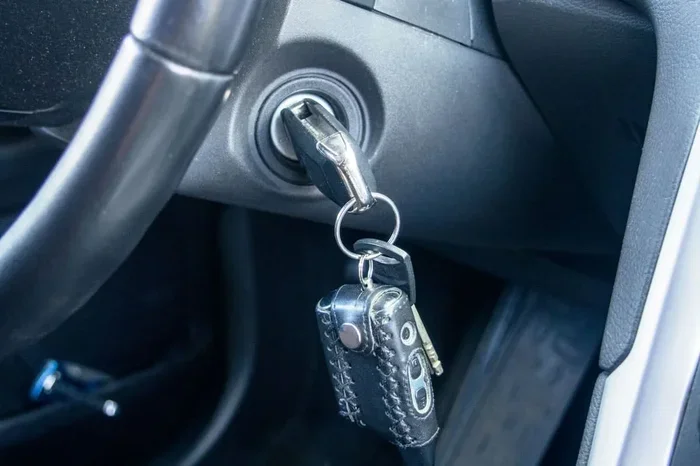
Locate the key slot on your car. On many Toyota and Honda models, the slot is hidden under a small cover on the steering column. On some Ford vehicles, it’s inside the center console near the gear shift. Insert the mechanical key and turn it to the ignition position. The engine should start. This method bypasses the key fob battery entirely. It uses the old-fashioned physical lock mechanism that has been in cars for decades.
For push-button start cars without a visible key slot, you can still start the engine. Hold the dead fob directly against the start button. The car’s antenna reads the chip inside the fob. Press the brake pedal and push the button. The engine will crank and start. This works because the low-frequency signal doesn’t need battery power to be read at very close range. The fob’s internal chip is always active, even with a dead key fob battery. This is a clever design that saves drivers from being stranded.
If you’re unsure about your specific car, here’s a quick checklist. Check for a mechanical key slot first. If you don’t see one, hold the fob against the start button. If that fails, try placing the fob in the cup holder or a designated spot on the center console. Most cars have a documented backup method. Can you start an ignition without a key? Yes, with the mechanical key or the fob-on-button trick. You just need to know where to look.
Quick Tips for Restarting with a Dead Fob
- Always carry the mechanical key: Make sure the hidden blade is accessible and not broken.
- Know your car’s backup spot: Read the owner’s manual or search online for your specific model’s dead-fob start procedure.
- Keep the fob close: Even with a weak battery, holding the fob right against the start button can work.
- Don’t turn the car off unnecessarily: If the fob is dying, avoid shutting off the engine until you’re ready to replace the battery.
- Use a spare fob if available: Many people have a second key fob. Switch to it if the primary one dies.
How to Replace Your Key Fob Battery
Replacing the battery is the real fix. The good news is that it’s simple and inexpensive. Can you replace a key fob battery yourself? Absolutely. You don’t need a dealership or a locksmith. A standard CR2032 battery costs less than $5 at any grocery store or gas station. You can do the swap in under two minutes. Here’s how to do it right.
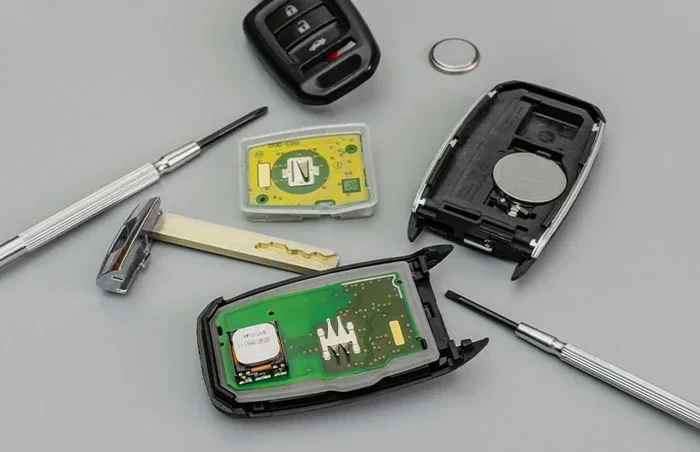
First, find the seam on your key fob. Most fobs have a small notch or groove along the edge. Insert a small flathead screwdriver or a coin into the notch. Gently twist to pop the back cover off. Inside, you’ll see the old battery. Note the orientation: the positive side usually faces up. Slide the old battery out carefully. Insert the new CR2032 battery with the positive side up. Snap the back cover back into place until it clicks. Your key fob battery replacement is done.
Some fobs use a different size, like the CR2025. Check the label on the old battery before buying a new one. Using the wrong size can damage the fob. Also, avoid touching the battery contacts with your fingers. The oils from your skin can cause corrosion over time. A quick wipe with a dry cloth is all you need.
Comparison Table: Common Key Fob Battery Types
| Battery Type | Voltage | Common In | Typical Lifespan |
|---|---|---|---|
| CR2032 | 3V | Toyota, Honda, Ford, most sedans and SUVs | 1–3 years |
| CR2025 | 3V | Some Honda models, older BMWs | 1–2 years |
| CR2016 | 3V | Compact fobs, some older models | 1–2 years |
| Rechargeable Li-ion | 3.7V | Tesla, some luxury brands | 2–4 years (built-in USB charging) |
Once you’ve replaced the battery, the fob should work immediately. Test it by standing near the car and pressing the lock button. If the doors lock, the new battery is good. If not, double-check the orientation. A backwards battery won’t work. In rare cases, you might need to reset the car key after changing the battery. But for most vehicles, no reset is necessary. The system recognizes the fresh battery and syncs automatically.
Do You Need to Reset the Key After Changing the Battery?
After you pop the back off and swap in a fresh cell, the natural question is: do I need to reset the key? Do you have to reset the car key after changing the battery? For the vast majority of cars, the answer is no. The immobilizer and the key fob are paired at the factory. Changing the battery doesn’t erase that pairing. The fob’s chip has its own power source that maintains the ID code. When you install a new battery, the chip wakes up and broadcasts its ID again. The car’s computer recognizes it instantly.
However, some older vehicles or specific models may require a manual reset. For example, certain early 2000s Toyota models need you to cycle the ignition on and off with the physical key. Some European cars ask you to press a sequence of buttons on the fob. If you’re unsure, a quick search for your car model plus “key fob battery reset” will give you the exact steps. In most cases, the process takes less than 30 seconds.
When a Reset Is Necessary
You might need a reset if the car still doesn’t recognize the fob after a battery change. This can happen if the fob was completely dead for a long time. The car’s computer may have cleared the fob from its memory. To re-pair it, you usually need to follow a simple procedure. Put the key in the ignition, turn it to the “On” position without starting the engine, then press the lock button on the fob three times within five seconds. The doors should lock and unlock to confirm the reset. Always consult your owner’s manual for the exact reset sequence. Each brand has its own protocol.
Remember, a reset is rarely needed after a simple battery swap. The key fob battery change is a clean, straightforward process. Don’t overcomplicate it. Just replace the battery, test the fob, and move on. If the fob still doesn’t work, the battery might be defective, or the fob itself could be damaged. In that case, you might need a key fob not working diagnosis.
Preventing Key Fob Battery Failures
The best way to handle a dead key fob battery is to prevent it from happening at the worst possible time. Key fob batteries don’t usually die suddenly without warning. The low key fob battery warning light gives you weeks or even months of notice. When that light appears, don’t ignore it. Replace the battery right away. Keep a spare CR2032 battery in your glove box or center console. This tiny preparation can save you from an emergency situation.
Extreme temperatures can shorten battery life. If you live in a very hot or very cold climate, your fob battery may drain faster. Parking in a garage or shaded area helps. Also, avoid placing the fob near strong magnets or electronic devices that emit interference. These factors can cause the key fob not working issue even if the battery is still good. Keeping the fob in a dedicated pocket or pouch reduces interference.
How to Extend Key Fob Battery Life
- Replace the battery proactively: Change it every 18 months, even if the warning light hasn’t appeared.
- Store the fob away from heat sources: Don’t leave it on the dashboard in direct sunlight.
- Use name-brand batteries: Duracell, Energizer, and Panasonic offer reliable coin cells with consistent voltage.
- Avoid contact with metal objects: Keys and coins can short-circuit the fob contacts and drain the battery faster.
- Keep a spare fob charged: If your car supports a second fob, keep its battery fresh as a backup.
- Check the battery voltage annually: A multimeter can tell you if the battery is starting to drop below 2.5 volts.
What to Do If You’re Stranded with a Dead Key Fob
Even with all the preparation, sometimes the key fob battery dies at the worst moment. You’re in a parking garage, on a dark road, or in an unfamiliar area. What now? First, remember that you can still drive the car if it’s already running. Find a safe place to pull over. Then, use the mechanical key to restart the engine. If you don’t have the mechanical key, call roadside assistance. Most insurance policies and new car warranties include towing and lockout services. You’re never truly stranded.
If you’re near a dealership or auto parts store, you can buy a replacement battery and fix the problem on the spot. Many stores will help you open the fob if you ask. The staff are used to this common issue. They can show you how to pop the case and slide in the new battery. This quick fix takes less than five minutes. You’ll be back on the road with a working fob and a lot more confidence.
For Toyota owners, you might wonder about hybrid-specific concerns. Can you drive a RAV4 without a key fob? Yes, the same backup methods apply. The RAV4 allows you to start the engine with a dead fob by holding it against the start button. The hybrid battery doesn’t depend on the key fob battery. A dead fob won’t affect the hybrid system’s ability to drive. The same goes for the Prius. Can I drive my Toyota Camry with the check engine light on? That’s a separate issue, but a dead fob doesn’t trigger the check engine light. The warning light for a dead fob is usually a small key icon or a flashing indicator on the dash.
Stay proactive. Keep your spare battery fresh. Know your car’s backup method. And remember, a key fob battery dies is a minor hiccup, not a roadblock. With the right knowledge, you’ll handle it smoothly every time.
Expert Insight: Why Manufacturers Design for Dead Batteries
Engineers know that batteries die. They build redundancy into every modern key fob system. The low-frequency antenna in the car can read the fob’s chip even when the fob’s own battery is completely dead. This is called a “passive entry” or “passive start” system. The car provides just enough power through the antenna to wake up the fob’s chip. The chip then sends back its unique ID code. The car unlocks and starts. This elegant design means that a dead key fob battery never means a dead car. It’s a brilliant safety feature that most drivers never think about until they need it.
The next time you see that low key fob battery warning, don’t ignore it. Treat it as a friendly reminder. Replace the battery, and you’ll never have to worry about being stranded. Your car will keep running smoothly, and your key fob battery will be ready for the next drive.
Conclusion
A key fob battery dies while driving, and you’re not alone. It happens to millions of drivers every year. The good news is that modern cars are built to handle it. You can still drive, restart, and reach safety. The mechanical key backup and the fob-on-button trick are your best friends. Replace the battery quickly with a cheap CR2032 or CR2025 cell. No reset is usually needed. Keep a spare battery on hand, and you’ll never be caught off guard. A dead key fob battery is a small problem with a simple solution. Stay calm, use the backup method, and you’ll be back on the road in minutes.
Frequently Asked Questions
What should I do if my key fob battery dies while driving?
Keep driving safely and find a secure spot to pull over. Use the mechanical key hidden inside the fob to restart the engine. Most cars allow you to hold the dead fob against the start button to bypass the dead battery. Replace the battery as soon as possible.
Can a dead key fob damage my car?
No, a dead key fob cannot damage your car. The fob only sends a signal. It doesn’t control engine functions. The car’s computer simply switches to a backup mode when it can’t read the fob. No harm comes to the vehicle.
How much does it cost to replace a key fob battery?
A standard CR2032 battery costs less than $5. You can buy one at any grocery store, pharmacy, or auto parts shop. The replacement process takes about two minutes and requires no special tools.
Will a dead key fob drain my car battery?
No, a dead key fob does not drain the car battery. The car battery powers the engine and electrical systems. The key fob only uses a tiny coin cell for its remote functions. A dead fob has no effect on the car’s main battery.
How often should I change my key fob battery?
Change the battery every 1 to 2 years as a preventive measure. If you notice the range getting shorter or the low key fob battery warning light appearing, replace it immediately. Waiting too long can leave you stranded.
Can I use any coin cell battery in my key fob?
Use the exact type specified in your owner’s manual, usually CR2032 or CR2025. Using the wrong size or voltage can damage the fob or cause it to malfunction. Stick with name-brand batteries for reliable performance.