What Happens If You Go a Full Year Without Oil Change
Going a full year without oil change can cause serious engine damage, sludge buildup, and overheating. Old oil loses its lubrication power, leading to increased wear and costly repairs. Regular oil changes are the cheapest way to protect your engine and keep your car running smoothly.
Your car’s engine is a complex machine with hundreds of moving parts. These parts spin, rotate, and collide at incredibly high speeds. Without proper engine oil, they would grind against each other and destroy your engine in a matter of hours.
So what happens if you go a full year without oil change? The short answer is: it’s really bad news for your engine. Old oil breaks down, loses its ability to lubricate, and turns into a thick, dirty sludge that can cause permanent damage. In this article, we’ll walk you through exactly what happens inside your engine when you skip oil changes for too long.
We’ll cover the warning signs to watch for, how often you should really change your oil, and why staying on top of this simple maintenance task can save you thousands of dollars. Whether you drive a Toyota, Honda, Ford, or any other vehicle, this guide applies to you.
Key Takeaways
- Engine Damage: Running old oil for a year causes increased friction, metal-on-metal contact, and permanent engine wear.
- Sludge Buildup: Contaminated oil turns into sludge that clogs passages and starves your engine of lubrication.
- Overheating Risk: Old oil can’t absorb heat properly, which leads to engine overheating and potential warping of parts.
- Warranty Void: Skipping oil changes for a year can void your manufacturer’s warranty, leaving you with expensive repair bills.
- Reduced Fuel Efficiency: Dirty oil makes your engine work harder, burning more fuel and costing you money at the pump.
- Check Engine Light: Prolonged oil neglect often triggers warning lights and diagnostic trouble codes.
- Prevention Is Cheap: Regular oil changes cost far less than engine rebuilds or replacements.
📑 Table of Contents
What Does Oil Do for Your Engine?
Before we dive into the consequences of skipping oil changes, let’s understand what oil actually does. Engine oil is often called the “lifeblood” of your vehicle, and for good reason. It performs several critical jobs that keep your engine running smoothly.
Lubrication
The primary role of oil is to reduce friction between moving parts. Your engine has pistons, crankshafts, camshafts, and valves that all move rapidly. Oil creates a thin protective film between these metal surfaces. This prevents metal-on-metal contact that would cause rapid wear and eventually seize the engine.
Heat Absorption
Engines generate enormous heat during combustion. Oil absorbs some of this heat and carries it away from critical components. Without fresh oil, heat builds up in areas that can’t dissipate it properly, leading to overheating and warping of engine parts.
Cleaning and Protection
Modern engine oil contains detergents and additives that keep internal surfaces clean. These additives suspend tiny particles of dirt, carbon, and metal debris in the oil. The oil filter then traps these contaminants. Over time, however, the additives break down and the filter becomes saturated.
Seal Conditioning
Oil helps maintain the integrity of rubber seals and gaskets inside the engine. Old oil loses its conditioning properties, which can lead to small leaks and reduced engine compression.
When oil sits in your engine for a full year, all of these functions gradually decline. The oil becomes less effective at every single job it’s supposed to do.
What Happens When You Skip Oil Changes for a Year
Skipping oil changes for 12 months is a gamble with your engine’s health. The damage happens in stages, and by the time you notice symptoms, the internal damage may already be significant.
Stage 1: Oil Degradation (Months 1-3)
Within the first few months, your oil begins to degrade. Heat and exposure to combustion byproducts cause the oil to oxidize. The viscosity, or thickness, of the oil changes. It becomes thinner and less capable of forming a proper lubricating film between engine parts.
During this stage, the oil life monitor in your vehicle will typically alert you that it’s time for a change. If you ignore this alert, you’re already heading down a risky path. The additives in the oil that prevent corrosion and keep contaminants suspended start to deplete.
If you’re wondering about oil life percentages, check out our guide on at what percent oil life should you change oil for more details on when to act.
Stage 2: Sludge Formation (Months 3-6)
As the oil continues to break down, it starts to form sludge. Sludge is a thick, dark, tar-like substance that builds up inside the engine. It forms when old oil mixes with moisture, fuel, and combustion residues that have accumulated over time.
Sludge is particularly dangerous because it clogs narrow oil passages. These passages are designed to deliver oil to every part of the engine that needs lubrication. When sludge blocks them, certain areas of the engine receive little or no oil. This creates hot spots where metal parts grind against each other without any protection.
Sludge buildup also restricts oil flow to the oil pump, which can cause a drop in oil pressure. Low oil pressure means the engine isn’t getting the lubrication it needs, even if there’s still oil in the crankcase.
Stage 3: Increased Engine Wear (Months 6-9)
By the six-month mark, the oil has lost most of its protective properties. Metal particles from normal wear and tear are now circulating freely in the engine. Without fresh oil to carry these particles to the filter, they settle on surfaces and act like sandpaper, scratching and scoring internal components.
This stage of wear is often invisible from the outside. You might not notice any change in how your car drives. But internally, bearings, cylinder walls, and camshafts are slowly being damaged. This kind of wear is cumulative and irreversible.
Stage 4: Serious Engine Damage (Months 9-12)
After a full year of neglect, the damage becomes severe. The sludge has built up significantly, oil passages are heavily clogged, and engine components are showing signs of accelerated wear. At this point, you may experience:
- Engine overheating because old oil can’t absorb and transfer heat effectively
- Drop in oil pressure due to clogged passages and a failing oil pump
- Metal debris circulating throughout the engine, causing further scratching and scoring
- Check engine light illuminating due to abnormal sensor readings from engine stress
- Rough idle or misfires caused by worn internal components
- Oil leaks from degraded seals and gaskets
In the worst cases, a year without an oil change can result in a seized engine. This means the internal parts have fused together from metal-on-metal contact. A seized engine usually requires a full engine replacement, which can cost anywhere from $4,000 to $8,000 or more.
If you ever find yourself in a situation where your oil is critically low, you might wonder if you can just top it off. Learn more about adding oil to your car if it’s low in our helpful guide.
Warning Signs Your Engine Oil Is Long Overdue
Your car will often tell you when something is wrong with the oil. Recognizing these warning signs early can prevent catastrophic engine damage.
Dark, Dirty Oil on the Dipstick
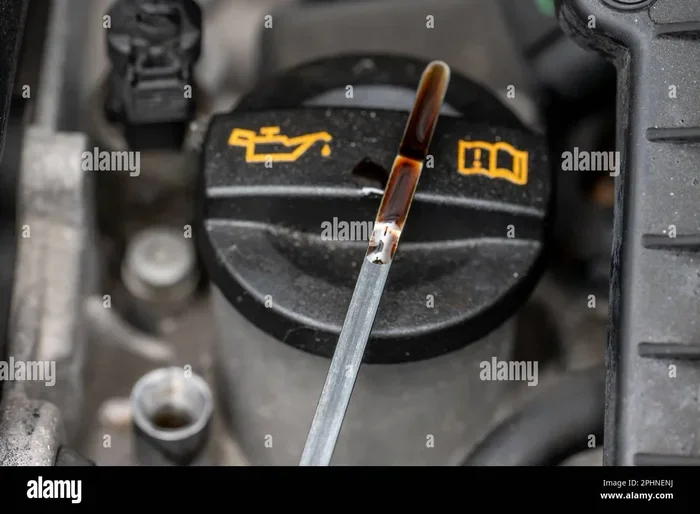
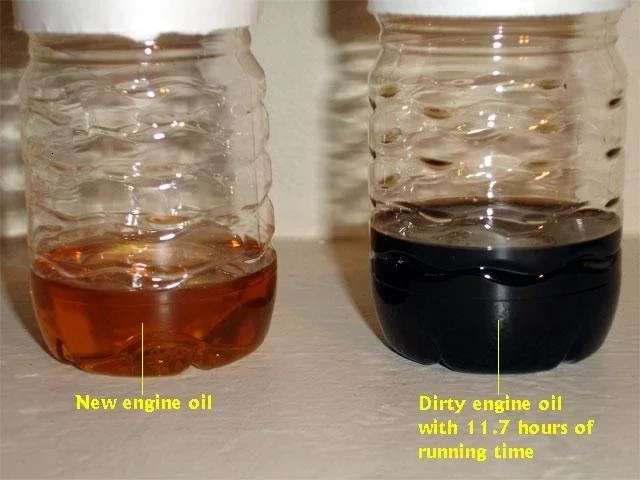
Fresh oil is amber or golden in color. As it ages, it darkens. By the time oil turns very dark brown or black, it has accumulated a significant amount of contaminants. If you check your dipstick and the oil looks like thick molasses, it’s way past due for a change.
Burning Oil Smell
A burnt oil smell inside or outside your car is a red flag. This usually means oil is leaking onto hot engine components and burning. It can also indicate that the oil has broken down so much that it’s no longer staying where it should.
Unusual Engine Noises
Old oil loses its ability to cushion engine parts. You might hear knocking, ticking, or rumbling sounds from the engine bay. These noises often indicate metal parts contacting each other without proper lubrication.
Reduced Fuel Efficiency
When your engine isn’t running smoothly because of old oil, it has to work harder. This means it burns more fuel. If you notice you’re visiting the gas station more often, dirty oil could be the culprit.
Oil Pressure Warning Light
If your dashboard shows an oil pressure warning light, pull over safely as soon as possible. This light indicates that oil pressure has dropped to a dangerous level. Continuing to drive with low oil pressure can destroy your engine within minutes.
How Often Should You Really Change Your Oil?
The old rule of thumb was to change your oil every 3,000 miles. Modern vehicles and oils have changed this significantly. The right interval depends on several factors.
Conventional vs. Synthetic Oil
Conventional oil breaks down faster and typically needs changing every 3,000 to 5,000 miles. Synthetic oil is engineered to last much longer, often between 7,500 and 15,000 miles. Synthetic blends fall somewhere in between.
If you use synthetic oil and drive under normal conditions, you can comfortably go 7,500 miles between changes. But going a full year without a change is still risky, even with synthetic oil. Oil additives degrade over time regardless of mileage.
Driving Conditions Matter
Your driving habits affect how quickly your oil degrades. “Severe” driving conditions include:
- Short trips under 5 miles
- Stop-and-go city driving
- Extreme hot or cold temperatures
- Towing heavy loads
- Driving on dusty or gravel roads
- Idling for long periods
If you drive under any of these conditions, you should change your oil more frequently. The general recommendation for severe driving is every 3,000 to 5,000 miles or every six months, whichever comes first.
Your Vehicle’s Owner Manual
Always refer to your vehicle’s owner manual for the manufacturer’s recommended oil change interval. This is the most accurate guide for your specific vehicle. Some manufacturers recommend oil changes every 5,000 to 7,500 miles for normal driving conditions.
When you do get your oil changed, it’s also a good idea to ask the technician to check other fluids. Many people wonder if mechanics check transmission fluid during an oil change. The answer depends on the shop and your vehicle, but it’s worth asking.
The Cost of Neglecting Oil Changes
Let’s talk numbers. A standard oil change costs between $35 and $75 for conventional oil, and between $65 and $125 for synthetic oil. Some quick-lube shops even offer discounted oil change deals, especially if you have a coupon or loyalty program.
Now compare that to the cost of engine damage from a year of neglected oil changes:
- Engine flush to remove sludge: $200 to $500
- New oil, filter, and gasket: $50 to $100
- Engine rebuild (if damage is extensive): $3,000 to $5,000
- Full engine replacement: $4,000 to $8,000+
The math is simple. Regular oil changes cost a fraction of what engine repairs cost. Skipping oil changes for a year might save you $50 to $100 in the short term, but it could cost you thousands in the long run.
Also, if you lease your vehicle or it’s still under warranty, skipping oil changes can void your coverage. Manufacturers require documented maintenance records. If you need to get your Lexus oil change at a Toyota dealership or use any authorized service center, keep those records. They protect your investment.
Can You Fix the Damage From a Year Without Oil Change?
If you’ve already gone a year without changing your oil, don’t panic. But do take action immediately. The severity of the damage depends on how long the oil has been degraded and what type of driving you’ve been doing.
Start by having a professional mechanic inspect your engine. They can check the oil condition, oil pressure, and look for signs of sludge buildup. In some cases, a full engine flush combined with a fresh oil change can restore proper lubrication if the damage isn’t too severe.
If sludge has already caused significant internal damage, you may need more extensive repairs. The key takeaway is that early intervention prevents the worst outcomes. The longer you wait, the more expensive and invasive the repairs become.
After getting your oil changed, make sure to reset your oil life monitor or oil change reminder. This helps you stay on track with future maintenance. You can learn more about whether you should reset after an oil change in our detailed article.
Final Thoughts
Going a full year without oil change is a risk you simply shouldn’t take. Your engine depends on clean, fresh oil to protect its internal components from friction, heat, and wear. Over the course of a year, oil degrades, forms sludge, and loses its ability to do its job. The result can be expensive engine damage that could have been prevented with a simple, affordable oil change.
Stay on top of your maintenance schedule. Check your oil level regularly between changes. Watch for warning signs like dark oil, unusual noises, or a burning smell. And if you’re ever unsure about your oil condition, have a trusted mechanic take a look.
A few dollars spent on regular oil changes today can save you from a massive repair bill tomorrow. Your engine works hard for you every day. Give it the care it deserves.
Frequently Asked Questions
Can I drive my car for a year without an oil change if I drive very little?
Even if you drive fewer miles, oil still degrades over time due to moisture accumulation and oxidation. Most manufacturers recommend changing oil at least once a year, regardless of mileage. Going a full year without a change, even with low mileage, puts your engine at risk of sludge buildup and reduced lubrication.
What is the worst that can happen if I don’t change my oil for a year?
The worst-case scenario is a seized or catastrophically damaged engine. Old oil loses its lubricating properties, which causes metal parts to grind against each other. This can lead to warped components, clogged oil passages, and complete engine failure. Repairing or replacing a damaged engine costs thousands of dollars.
Does synthetic oil last longer than conventional oil?
Yes, synthetic oil generally lasts longer because it’s engineered with more stable molecular structures and better additives. Synthetic oil can typically go 7,500 to 15,000 miles between changes. However, even synthetic oil degrades over time, and going a full year without a change is still not recommended.
How can I tell if my oil is too old and needs immediate changing?
Check your oil on the dipstick. If it appears very dark brown or black, feels gritty, or has a strong burnt smell, it’s too old. Also watch for warning signs like the oil pressure light, unusual engine noises, or decreased fuel efficiency. When in doubt, have a mechanic inspect the oil condition.
Will skipping one oil change void my car’s warranty?
It depends on your warranty terms and the manufacturer’s maintenance schedule. Most warranties require documented proof of regular oil changes. If skipping an oil change leads to engine damage, the manufacturer may deny your warranty claim. Always keep records of all maintenance to protect your warranty coverage.
How much does it actually cost to fix damage from a year without an oil change?
The cost varies widely based on the extent of damage. A simple engine flush and oil change might cost $200 to $500. However, if sludge has caused internal engine damage, you could be looking at a $3,000 to $8,000 engine rebuild or replacement. Regular oil changes are a fraction of that cost and are the best prevention.