Can I Drive My Car With a Low Key Battery Problems
Yes, you can often drive your car with a low key battery, but it comes with risks and limitations. Your car may still start and run, but features like keyless entry, push button ignition, and remote start could fail. Understanding what happens when your key battery is low helps you avoid getting stranded and keeps you safe on the road.
Have you ever been standing by your car, ready to go, and realized your key battery is low? It is a frustrating moment. You press the button, nothing happens. You wonder if your car will even start. The good news is that in most cases, you can still drive your car even when the key battery is running low. But there are some important things you need to know before you turn the ignition and hit the road.
Your car key is more than just a way to unlock the door. Modern keys contain tiny computers, chips, and transmitters that communicate with your car’s security system. When the battery inside the key starts to die, that communication gets weaker. This can cause all sorts of problems, from not being able to unlock your car remotely to failing to start the engine. Understanding how this works helps you stay prepared and avoid getting stuck in an inconvenient or even dangerous situation.
In this article, we will walk you through everything you need to know about driving with a low key battery. We will cover what happens when the battery dies, the warning signs to watch for, how to replace the battery yourself, and when to call a professional. Whether you have a traditional key or a modern keyless entry system, this guide has you covered.
Key Takeaways
- You can usually drive with a low key battery: Most cars will still start and operate even when the key fob battery is weak.
- Warning signs are easy to spot: Reduced range, difficulty starting, and dashboard alerts tell you your key battery is dying.
- Replacement is simple and cheap: Most car key batteries cost under $5 and take minutes to swap out.
- Cars with push button start are more affected: Traditional ignition keys tend to work longer with a low battery than keyless systems.
- Preventive habits save you trouble: Replacing your key battery every 2 years and keeping a spare prevents unexpected problems.
- See a professional if issues persist: If replacing the battery does not fix the problem, there may be deeper electrical or security issues.
📑 Table of Contents
What Happens When Your Key Battery Is Low
When the battery inside your car key starts to weaken, the first thing you will notice is that the range gets shorter. You might need to be right next to the door handle to unlock the car. The push button start might not respond right away. Some cars will give you a warning on the dashboard. Others will just act confused and not start at all.
But here is the important part. In most vehicles, a low key battery does not mean your car will not run. Once the engine is started, the car operates on its own power. The key battery only matters for the communication between the key and the car. If that communication is weak, you might face issues, but the engine itself can still work.
How the Key Communicates With Your Car
Your car key sends a low frequency signal to the vehicle. This signal tells the car that the correct key is present. The car’s immobilizer system then allows the engine to start. When the battery is low, this signal becomes weaker. The car might not pick it up right away, or it might not pick it up at all from a distance.
Think of it like talking to someone across a room. When your voice is strong, they hear you clearly. When you whisper, they have to strain to listen. A low key battery is like whispering. The message still gets through, but it takes more effort and closer proximity.
What You Will Experience
The experience of driving with a low key battery varies from car to car. Here are some common things you might notice:
- The key fob has a much shorter range than usual
- You need to press the start button harder or hold it longer
- The dashboard shows a warning light about the key or security system
- The car sometimes does not recognize the key until you are very close
- Remote features like trunk release or panic alarm work poorly
- The car starts fine once running but struggles to detect the key for restart
These issues can be annoying, but they are usually not dangerous. The car will still drive normally once the engine is running. The key battery low problem mostly affects your ability to start the car and use convenience features.
Can You Actually Drive With a Low Key Battery
The short answer is yes. In most cases, you can drive your car with a low key battery. But the long answer depends on what kind of car you have and what type of key system it uses. Let us break this down so you know exactly what to expect.
Cars With Traditional Key Ignition
If your car uses a traditional key that you stick into the ignition, a low battery in the key fob is less of a problem. The physical key still works to turn the ignition and start the engine. The battery in the fob mainly controls the remote locks and any electronic features. So even if the battery is almost dead, you can still unlock the car with the physical key and start it the old fashioned way.
This is one big advantage of traditional keys. They are simple and reliable. Even when the electronics fail, the mechanical key still works. You might lose the convenience of remote locking, but you will not be stranded.
Cars With Push Button Start
Cars with push button start or keyless entry are more affected by a low key battery. These systems rely entirely on the electronic signal from the key fob. If the battery is low, the car might not detect the key at all. In some models, the car will not start no matter how many times you press the button.
However, most push button start cars have a backup system. Many will let you start the car by placing the key fob directly against the start button or a specific spot on the steering column. Check your owner manual for the exact method. This backup feature is designed exactly for situations like a dead or low key battery.
So can you drive with a low key battery in a push button start car? Yes, but you need to know where to place the key fob to get the car to start. Without that knowledge, you might think the car is completely dead when it is really just not hearing the weak signal from the key.
Comparison: Traditional Key vs Keyless Start With Low Battery
| Feature | Traditional Key | Keyless Start |
|---|---|---|
| Can you start the car? | Yes, with physical key | Yes, with backup placement |
| Will remote features work? | Partially or not at all | No, or very limited |
| Will the car drive normally? | Yes | Yes, once started |
| Risk of being stranded | Low | Medium |
| Ease of fixing | Very easy | Easy |
As you can see, both types of cars can be driven with a low key battery. The keyless start system is just more dependent on the battery working properly. But even then, there is almost always a workaround.
Warning Signs Your Key Battery Is Dying
Catching a low key battery early saves you from a lot of headaches. Most car keys give you plenty of warning before the battery completely dies. The trick is knowing what to look for.
Early Warning Signs
These are the first things you might notice when your key battery is starting to run low:
- Reduced range: You have to be closer to the car for the key fob to work. If you used to unlock your car from 30 feet away and now it only works from 5 feet, that is a clear sign.
- Delayed response: When you press the lock or unlock button, there is a noticeable pause before the car responds. The fob is still sending a signal, but it is weaker.
- Intermittent function: The key fob works sometimes but not others. This inconsistency is a classic sign of a fading battery.
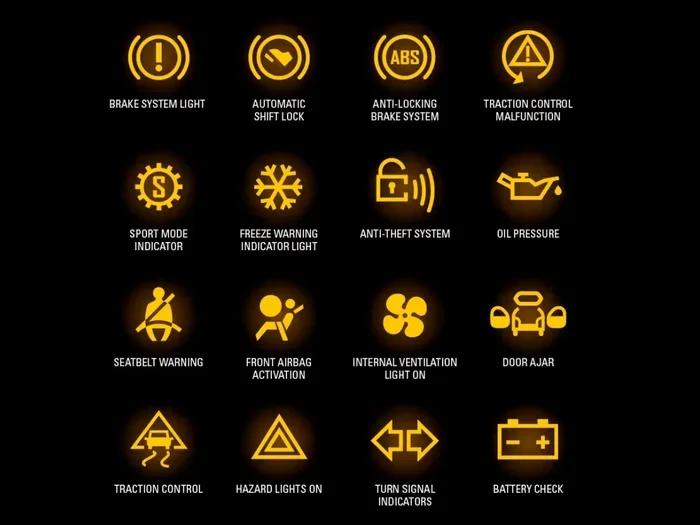
- Dashboard warning light: Many newer cars display a warning icon on the dashboard when the key battery is low. Look for a key symbol or a battery icon on your instrument cluster.
Late Stage Symptoms
If you ignore the early warning signs, the problem gets worse. Late stage symptoms include:
- The key fob stops working completely at a distance
- The car does not recognize the key at all
- You cannot start the car using the normal push button method
- The trunk or glove box will not open with the fob
- The alarm system might go off unexpectedly
When you notice these late stage symptoms, it is time to replace the battery immediately. Do not wait until you are standing outside your car in the rain with no way inside.
Quick Tip: Replace your car key battery every 2 years, even if it seems to be working fine. This simple habit prevents surprise failures and keeps your car running smoothly. Most key batteries cost just a few dollars and are easy to find at any hardware store or pharmacy.
How to Replace Your Car Key Battery
Replacing the battery in your car key is one of the easiest maintenance tasks you can do. Most people can do it in under two minutes without any special tools. You do not need to visit a dealer or pay someone else to do it.
Step by Step Replacement Guide
Here is how to replace your key battery in simple steps:
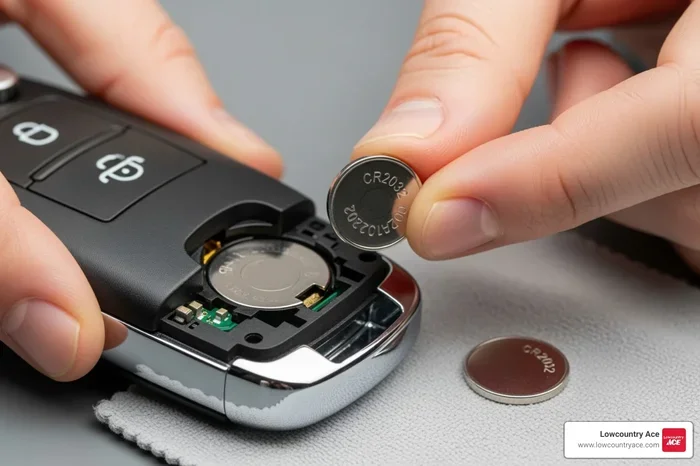
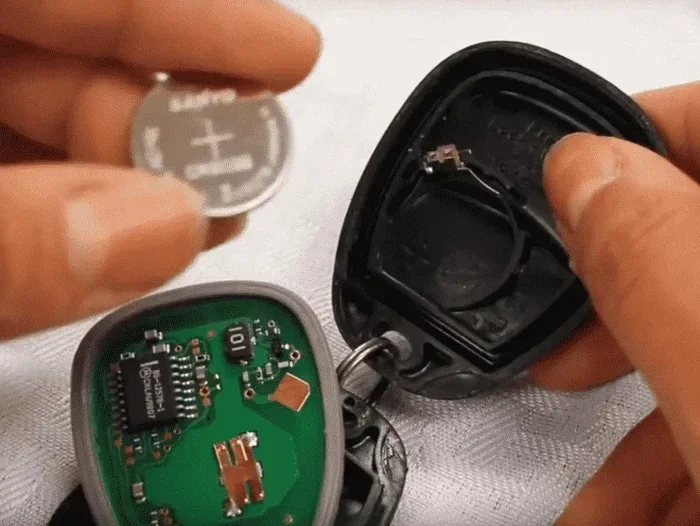
- Find the right battery type. Most car keys use a CR2032 coin cell battery. Check your owner manual or look at the old battery to confirm the model number.
- Open the key fob. Use a small flathead screwdriver or a coin to pry open the key shell. Look for a small notch along the seam. Insert the screwdriver gently and twist to pop the case open.
- Remove the old battery. Use a toothpick or small screwdriver to lift the old battery out. Pay attention to which side faces up so you can place the new battery the same way.
- Insert the new battery. Place the new battery in the same orientation as the old one. Make sure it sits flat and snug in the compartment.
- Snap the key fob back together. Press both halves of the case firmly until they click into place.
- Test the key. Stand near your car and try locking and unlocking the doors. Press the start button to make sure the car recognizes the key.
That is it. You are done. The whole process takes less time than it took to read those steps.
Which Battery Does Your Key Need?
The most common battery used in car keys is the CR2032. This is a 3-volt coin cell battery that you can find at virtually any store. Other common types include the CR2025 and CR1632, depending on your car model.
Here are some quick tips for buying the right battery:
- Always check your owner manual for the exact battery model
- Buy name brand batteries for better reliability and longer life
- Avoid buying the cheapest off-brand batteries, as they may die faster
- Keep a spare battery in your glove box for emergencies
Using the wrong battery type can damage your key fob or cause it to malfunction. If you are unsure, take the old battery with you to the store and match it exactly.
Preventing Key Battery Problems
The best way to deal with a low key battery is to prevent the problem from happening in the first place. A few simple habits can keep your key fob working reliably for years.
Simple Habits That Help
Here are easy things you can do to extend your key battery life:
- Do not store your key near electronic devices. Phones, laptops, and other electronics can drain the key battery faster through electromagnetic interference.
- Keep your key away from extreme temperatures. Heat and cold both reduce battery life. Do not leave your key on the dashboard in direct sunlight or in a freezing car.
- Replace the battery proactively. Set a reminder on your phone every 2 years to swap out the battery, even if it seems fine.
- Avoid pressing buttons unnecessarily. Every press uses a small amount of battery power. Do not repeatedly press the lock or unlock button if the first press does not work.
- Clean the battery contacts. Over time, corrosion can build up on the battery contacts inside the key fob. A quick wipe with a dry cloth keeps the connection strong.
When to Carry a Backup
Even with the best habits, batteries die unexpectedly. That is why it is smart to carry a backup plan. Here are some options:
- Keep a spare key fob in your glove box
- Store a mechanical key somewhere safe in case the electronic key fails completely
- Know the backup start method for your specific car model
- Keep a portable battery charger for your key fob if your car supports it
Having a backup gives you peace of mind. You will never be stuck because of a dead key battery again.
When to See a Professional
Most key battery problems are simple to fix on your own. But there are times when you should call in a professional. Knowing the difference between a simple battery issue and a deeper problem saves you time and money.
Persistent Issues After Battery Replacement
If you replace the key battery and the car still does not recognize the key, something else might be wrong. This could indicate a problem with the key fob itself, the car’s antenna, or the immobilizer system. In these cases, it is best to visit a qualified mechanic or your car dealer.
Common signs that you need professional help include:
- The new battery does not fix the problem
- The dashboard warning light stays on after replacing the battery
- The key fob is physically damaged or cracked
- The car starts sometimes but not consistently
- Multiple keys fail to work on the same car
Key Fob Damage vs Battery Problems
Sometimes the problem is not the battery at all. Water damage, drops, and general wear and tear can damage the key fob’s internal electronics. If you have replaced the battery and still have issues, the key fob itself might need to be repaired or replaced.
A professional can diagnose whether the problem is the battery, the fob, or the car’s receiver. They have specialized tools and software that can read error codes from your car’s security system. This kind of diagnostic work is not something you can do at home with a screwdriver and a new battery.
Emergency Situations
If you are stranded because your key battery died and you do not know the backup start method, do not panic. Call roadside assistance or a trusted mechanic. Most professionals carry tools to help you start the car even with a completely dead key battery. It is always better to ask for help than to try something that could damage your car’s electronics or security system.
Key Takeaways and Final Thoughts
Driving with a low key battery is usually possible, but it comes with some inconvenience and potential frustration. The key battery powers the communication between your key fob and your car. When it gets low, you might notice reduced range, delayed responses, or difficulty starting the car. But in most cases, the car will still run normally once the engine is on.
The best approach is to be proactive. Replace your key battery every two years, watch for early warning signs, and keep a spare battery on hand. If you have a push button start car, learn the backup start method so you are never stuck. And if problems persist after a battery replacement, do not hesitate to seek professional help.
Your car key battery is a small but important part of your daily driving experience. Taking care of it with simple maintenance habits keeps everything running smoothly. You will save time, avoid stress, and never have to worry about being locked out of your own car again.
Remember, a low key battery is a minor issue that you can handle in minutes. With the knowledge you have gained from this guide, you are now prepared to deal with it confidently whenever it happens. Keep your spare battery handy, stay calm, and keep driving safely.
Frequently Asked Questions
How long does a car key battery last?
Most car key batteries last between 2 and 4 years depending on usage and the type of battery. CR2032 batteries are the most common and tend to last around 2 to 3 years with regular daily use. If you use features like remote start or keyless entry frequently, the battery may drain faster.
Can a low key battery cause the car not to start?
Yes, in some cases a very low key battery can prevent the car from starting, especially in vehicles with push button start systems. However, most cars have a backup method where you can place the key fob directly against the start button to get the car running even with a dead battery.
What battery does my car key use?
The most common battery used in car keys is the CR2032 coin cell battery. Some older or specialty models may use CR2025 or CR1632. Check your car owner manual or look at the old battery to confirm the exact model before purchasing a replacement.
Is it safe to drive with a low key battery?
Yes, it is generally safe to drive with a low key battery. Once the engine is running, the car operates on its own electrical system. The main risk is that the car might not start or the key might not be recognized, which could be inconvenient or cause you to be stranded in an unsafe location.
How much does it cost to replace a car key battery?
A car key battery costs between $2 and $10 depending on the brand and type. You can buy them at any pharmacy, hardware store, or online. The replacement process is simple enough that you do not need to pay a mechanic to do it for you.
What should I do if replacing the battery does not fix the problem?
If a new battery does not solve the issue, the key fob itself may be damaged or there could be a problem with the car’s antenna or security system. In this case, consult a professional mechanic or your car dealer. They can run diagnostic tests to identify the real cause of the problem.