Can I Drive My Car With Too Much Oil in It and What Happens
Can I drive my car with too much oil in it? The short answer is no — overfilling your engine oil can cause serious damage. When there is too much oil in the crankcase, it creates excess pressure, causes foaming, and can lead to blown seals, blue exhaust smoke, and even engine failure. In this guide, we will walk you through the symptoms of overfilled engine oil, the risks of driving with too much oil, and the simple steps you can take to fix the problem before it costs you big money.
You just got your oil changed, or maybe you topped off the oil yourself at home. You pull out the dipstick and notice the level is above the max line. Your heart drops a little. Can I drive my car with too much oil in it? It is a question many car owners face, and the answer is more important than you might think.
Engine oil is the lifeblood of your vehicle. It lubricates moving parts, reduces friction, and keeps your engine running cool. But like anything, too much of a good thing becomes a problem. When the oil level exceeds the maximum mark on the dipstick, you enter dangerous territory. The extra oil has nowhere to go, and it starts to create pressure inside the crankcase. That pressure can push past seals, foam up the oil, and even cause your engine to misfire.
In this article, we will cover everything you need to know about overfilled engine oil. You will learn the symptoms to watch for, the risks of driving with too much oil, and the best steps to take if you find yourself in this situation. Let us get into it.
Key Takeaways
- Too much oil in your car can cause severe engine damage: Excess oil creates pressure that pushes past seals and gaskets.
- Watch for blue smoke and oil leaks: These are the most common signs your oil level is too high.
- You should not drive with overfilled oil: Even short trips can cause foaming and oil starvation in critical engine parts.
- Draining the excess oil is usually a simple fix: A mechanic or DIY drain plug removal can resolve the issue quickly.
- Prevention is easy: Always check your oil level with the dipstick after an oil change and stay within the safe range.
- Ignoring an overfill can ruin your catalytic converter: Oil burning in the exhaust system is expensive to repair.
- Check your oil capacity: Every engine has a specific oil capacity listed in the owner’s manual.
📑 Table of Contents
- What Happens When You Put Too Much Oil in Your Car
- Overfilled Engine Oil Symptoms to Watch For
- Can You Still Drive With Too Much Oil?
- How Too Much Oil Damages Your Engine
- What to Do If Your Oil Is Overfilled
- How to Prevent Oil Overfill in the Future
- How Does Oil Overfill Compare to Oil Underfill?
- Final Thoughts on Driving With Too Much Oil
What Happens When You Put Too Much Oil in Your Car
Understanding what goes wrong inside your engine when the oil level is too high helps you see why this is such a serious issue. Your engine has a specific oil capacity. That number is set by the manufacturer for a reason. When you exceed that capacity, a chain of problems starts to build.
The Crankcase Gets Pressurized
The crankcase sits at the bottom of your engine. It holds the oil when the engine is not running. When there is too much oil, the crankshaft — the main spinning part of the engine — dips into the oil pool. Instead of splashing gently, it churns the oil like a blender. This creates air bubbles and foam.
Foamed oil loses its ability to lubricate. It becomes thin and airy. The oil pressure drops in areas that need it most. Critical parts like the camshaft and connecting rods start to wear faster because they are not getting a proper oil film between them.
Blow-By Gases Build Up
Your engine produces combustion gases that naturally blow past the piston rings. This is called blow-by. In a normal engine, these gases get routed through the PCV valve and burned in the combustion chamber. But when crankcase pressure rises from too much oil, the blow-by gases have a harder time escaping. The pressure builds up, and the oil gets pushed into places it should not be.
Oil Seals and Gaskets Fail
Excess pressure pushes against your engine’s seals and gaskets. These are rubber and metal components designed to keep oil inside the engine. When the pressure gets too high, they can crack, warp, or blow out entirely. This leads to oil leaks, oil consumption, and in worst cases, oil getting into areas where it can cause fires.
Overfilled Engine Oil Symptoms to Watch For
You might be wondering how to tell if your oil is overfilled. The good news is that your car will give you warning signs. The key is knowing what to look for. Here are the most common overfilled engine oil symptoms:
Blue or White Exhaust Smoke
This is one of the most visible signs. When excess oil gets into the combustion chamber, it burns along with the fuel. The result is blue or white smoke coming from your tailpipe. If you notice this, especially after an oil change, your oil level is likely too high.
Oil Leaks Under the Car
Too much oil pressure can force oil past the rear main seal, valve cover gasket, or oil pan gasket. You might notice fresh oil spots on your driveway or garage floor. These leaks often start small but can become serious if the pressure continues to build.
The Check Engine Light Comes On
Modern cars have sensors that detect changes in oil pressure and crankcase pressure. When the pressure from overfilled oil triggers a sensor, your check engine light will turn on. Do not ignore this. It is your car telling you something is wrong.
Engine Misfires or Rough Running
Oil in the combustion chamber can foul the spark plugs. This leads to misfires, rough idling, or a noticeable loss of power. If your engine feels sluggish or jerky after an oil change, check your oil level right away.
Oil Foaming or Milky Residue
If you pop the oil cap and see a milky, frothy residue, that is a sign of oil foaming. Air has mixed with the oil, and it has lost its lubricating properties. This is a clear signal that you have too much oil in the crankcase.
Can You Still Drive With Too Much Oil?
Here is the honest answer. You should not drive your car with too much oil in it. But we understand that sometimes life gets in the way. Maybe you are ten miles from home. Maybe you need to get to work. So what is the real risk?
Driving a short distance with slightly overfilled oil is less dangerous than driving for hours. But even a short trip can cause problems. The crankshaft starts churning the oil the moment your engine runs. Foaming begins immediately. Oil pressure becomes unstable. And if you are already seeing symptoms like blue smoke or leaks, driving will make things worse.
The risk depends on how much oil is over the max line. A few millimeters above the max mark is less risky than a full half-inch or more. But even a small overfill can cause issues over time. The best rule of thumb is simple: do not drive with overfilled oil. Get it fixed before you start the engine.
If you absolutely must move the car a very short distance, keep the engine running at low RPMs. Avoid high speeds. Do not rev the engine. This reduces the crankshaft’s interaction with the excess oil. But this is a temporary fix, not a solution.
How Much Overfill Is Too Much?
Most manufacturers allow a small margin of error. Being 1 to 2 milliliters above the max line on the dipstick is usually not a cause for panic. But anything beyond that enters the danger zone. Here is a quick comparison:
- 1-2 mm above max: Low risk. Monitor the oil level and consider having it checked soon.
- 3-5 mm above max: Moderate risk. You may notice foaming or slight pressure buildup. Have it corrected within a few days.
- More than 5 mm above max: High risk. Do not drive the car. Arrange for the excess oil to be drained immediately.
How Too Much Oil Damages Your Engine
Driving with overfilled oil is not just about the short term. Over time, the damage adds up. Here are the main ways too much oil harms your engine:
Catalytic Converter Damage
When oil burns in the combustion chamber, it creates soot and residue. This residue travels into the catalytic converter. Over time, the converter gets clogged or damaged. Replacing a catalytic converter is one of the most expensive repairs on any car. It can cost anywhere from $500 to $2,500 or more.
Increased Oil Consumption
Oil that gets pushed past the seals and into the combustion chamber gets burned away. This means you will need to add oil more frequently. Over time, this constant loss of oil can lead to low oil levels, which brings a whole new set of problems.
Engine Bearing Wear
Foamed oil does not protect bearings the way proper oil does. The bearings in your engine — especially the main bearings and rod bearings — rely on a consistent oil film. When that film breaks down due to foaming, metal-on-metal contact occurs. This leads to wear, heat, and eventually bearing failure.
Piston Ring Damage
Excess oil can get stuck around the piston rings. This prevents the rings from seating properly. Over time, the rings lose their ability to seal the combustion chamber. This leads to more blow-by, more oil consumption, and a drop in engine performance.
Hydrolocking the Engine
In extreme cases, too much oil can enter the combustion chamber in large enough amounts to hydrolock the engine. Hydrolocking happens when liquid — in this case, oil — gets trapped in a cylinder. The piston cannot compress the oil because it is not compressible. This can bend connecting rods, crack the engine block, or destroy the engine entirely. This is rare but it does happen.
Expert Insight: According to most automotive mechanics, the most common cause of oil overfill is not adding oil incorrectly. It is leaving the car on a slope or not waiting for the oil to settle before checking the level. Always park on a flat surface and wait at least 5 minutes after turning off the engine before checking your dipstick.
What to Do If Your Oil Is Overfilled
If you discover that your oil level is too high, do not panic. This is a fixable problem. Here is what you should do step by step:
- Do not start the engine if possible. If the oil level is significantly over the max mark, leave the car alone until you can get it fixed.
- Check your owner’s manual. Look up the exact oil capacity for your engine. This tells you how much oil your engine needs and helps you determine how much is excess.
- Drain the excess oil. The most common method is to remove the oil drain plug and let a small amount of oil out. You can also use a suction pump through the dipstick tube.
- Check the oil level again. After draining, wait a few minutes for the oil to settle, then recheck with the dipstick. Make sure it is between the min and max marks.
- Inspect for damage. If you have been driving with overfilled oil for a while, check for leaks, blue smoke, or rough running. Have a mechanic inspect the engine if you notice any of these symptoms.
Quick Tips for Fixing an Overfill
- Always use a drain pan when removing oil. Oil spills are messy and bad for the environment.
- Use a turkey baster or oil suction pump to remove small amounts of oil through the dipstick tube. This is the easiest method for minor overfills.
- Never remove the oil filter to drain oil. This can cause a mess and is not an effective way to remove excess oil.
- Keep a record of your oil changes and levels. This helps you catch overfills early.
Common Mistakes People Make With Oil Overfill
- Ignoring the overfill: Many people assume a little extra oil will not hurt. It will. Even a small overfill causes foaming and pressure buildup over time.
- Over-draining: If you remove too much oil, you end up with an underfill, which is equally damaging. Drain in small amounts and recheck often.
- Not checking the dipstick correctly: Always check oil on a flat surface with the engine off and cool. Checking oil right after driving gives a false reading.
- Using the wrong oil type: Different oils have different densities. Using a thinner oil can make the overfill problem worse because it is more likely to foam and get pushed past seals.
How to Prevent Oil Overfill in the Future
The good news is that preventing an oil overfill is simple. A little care and attention go a long way. Here are the best practices to follow:
Always Use the Dipstick
Never add oil without checking the level first. Even if you are just topping off, pull the dipstick and see where the level stands. Add oil in small increments — about a quarter of a quart at a time. Recheck after each addition.
Know Your Engine’s Oil Capacity
Every engine has a specific oil capacity listed in the owner’s manual. Write this number down and keep it in your glove box. When you get an oil change, ask the mechanic to confirm the oil level with you. This keeps everyone accountable.
Park on a Flat Surface
Checking your oil on a slope gives a false reading. The oil pools to one side of the pan, and the dipstick reading will not be accurate. Always park on a flat, level surface before checking your oil.
Wait Before Checking
After an oil change or after driving, wait at least 5 minutes before checking the oil. This gives the oil time to drain back into the oil pan. Checking too early can give you a falsely low reading, which tempts you to add more oil than needed.
Keep Records
Maintain a simple log of your oil changes and oil levels. Note the date, the oil type, the amount added, and the dipstick reading. Over time, this becomes a valuable reference that helps you spot problems early.
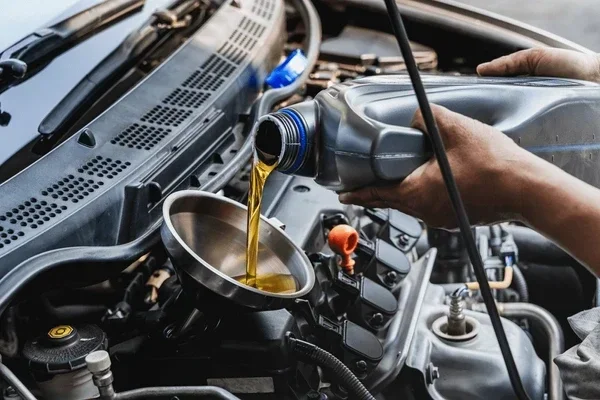
Pro Tip: If you are topping off oil yourself at home, use a funnel. It prevents spills and gives you more control over how much oil goes in. A small funnel costs less than a dollar and can save you hundreds in engine repairs.
How Does Oil Overfill Compare to Oil Underfill?
It is worth noting that both overfill and underfill are dangerous — just in different ways. Here is a quick comparison:
- Overfilled oil causes pressure buildup, foaming, seal failure, and oil burning in the combustion chamber.
- Underfilled oil causes oil starvation, increased friction, overheating, and accelerated wear on engine components.
Neither is good. The goal is to keep your oil level exactly where it should be — between the min and max marks on the dipstick. If you are ever unsure, it is better to have a mechanic check it than to guess.
Final Thoughts on Driving With Too Much Oil
So, can I drive my car with too much oil in it? The answer is a clear no. Overfilled engine oil creates pressure, causes foaming, and leads to a range of expensive problems. From blue exhaust smoke to catalytic converter failure, the risks are real and the costs are high.
The good news is that this is a completely preventable problem. A simple dipstick check before and after an oil change can save you from a world of trouble. And if you do find that your oil is overfilled, the fix is usually quick and affordable. Drain the excess oil, recheck the level, and you are back in business.
Your car depends on the right amount of oil to run smoothly. Treat the oil level with the respect it deserves. Check it regularly, add oil carefully, and never ignore the warning signs. A few minutes of attention today can save you thousands of dollars in engine repairs tomorrow.
Take care of your engine, and it will take care of you. That is the best deal you will ever get from your car.
Frequently Asked Questions
What happens if I drive with too much oil in my car?
Driving with overfilled oil causes the crankshaft to churn the excess oil, creating foam and pressure buildup. This can lead to oil leaks, blue exhaust smoke, engine misfires, and in severe cases, catalytic converter damage or engine failure. Even short trips can cause problems, so it is best to fix the overfill before driving.
How do I know if my oil is overfilled?
The most common signs of overfilled engine oil are blue or white exhaust smoke, oil leaks under the car, a check engine light, rough engine running, and a milky or frothy residue on the oil cap. You can also check the dipstick — if the oil level is above the max mark, you have too much oil.
Can a little too much oil damage my engine?
Yes, even a small overfill can cause problems over time. Excess oil foams, loses its lubricating ability, and creates pressure that pushes past seals. While a few millimeters above the max line is low risk, anything more should be corrected promptly to avoid long-term engine damage.
How do I fix an oil overfill?
The fix is to drain the excess oil. You can do this by removing the oil drain plug and letting a small amount out, or by using a suction pump through the dipstick tube. After draining, wait a few minutes and recheck the level with the dipstick. Make sure it falls between the min and max marks.
Is it safe to drive if the oil level is slightly above the max line?
Being 1 to 2 millimeters above the max line is usually not an immediate emergency. However, you should still have it corrected soon. Do not ignore it. Even a small overfill causes foaming and pressure buildup that can lead to oil seal failure and increased oil consumption over time.
How can I prevent oil overfill in the future?
Always check your oil level with the dipstick before and after adding oil. Add oil in small increments and recheck after each addition. Park on a flat surface and wait at least 5 minutes after turning off the engine before checking. Know your engine’s oil capacity from the owner’s manual and keep a log of your oil changes.
=== CONCLUSION ===
Driving with too much oil in your car is a risk you should never take. The symptoms are clear, the damage is real, and the fix is simple. By staying on top of your oil levels and following the prevention tips in this guide, you can protect your engine and avoid costly repairs. Remember: the right amount of oil keeps your car running strong. Too much oil does the opposite. Check your dipstick, respect the max line, and your engine will thank you for years to come.