Where Do I Find the TPMS Reset Button on Your Vehicle
Finding the TPMS reset button can be tricky because every vehicle hides it in a different spot. This guide shows you exactly where to look, how to reset your tire pressure monitoring system, and when to seek professional help. Whether your TPMS light is on or you just completed a tire rotation, you will learn the TPMS reset procedure for your specific car model.
If you have ever glanced at your dashboard and spotted a little horseshoe-shaped light with an exclamation point in the middle, you know the panic that can set in. That is your TPMS light, and it means your tire pressure monitoring system has detected something is off. The good news is that fixing it is often as simple as checking your tire pressure and hitting a reset button. But here is the catch: that TPMS reset button is nowhere near as obvious as your steering wheel or gear shift. It is hiding somewhere, and every car maker tucks it in a different place.
This guide will walk you through exactly where to find the TPMS reset button on virtually any vehicle. We will cover common locations, step-by-step reset procedures, and what to do when the reset does not work. Whether you drive a sedan, SUV, or truck, you will find practical advice here to get that annoying light turned off and your tire pressure dialed in correctly.
Before we dive in, let us quickly talk about what the TPMS actually does. The tire pressure monitoring system uses sensors mounted inside each tire, usually near the valve stem, to measure the air pressure in real time. When pressure drops below the recommended level, the system sends a signal to your car’s computer, which triggers the dashboard warning light. Understanding this basic function helps you appreciate why resetting the system matters after you fix the problem.
Key Takeaways
- Location Varies by Vehicle: The TPMS reset button can be under the steering wheel, on the dashboard, or inside the glove box depending on your car model.
- Resetting Is Simple: Most vehicles require turning the ignition on, pressing and holding the button until the light blinks three times, then releasing it.
- Check Your Owner Manual First: The fastest way to find your reset button is to consult the vehicle owner manual for your specific make and model.
- Common Warning Signs: A flashing or solid TPMS light usually means low tire pressure or a faulty sensor that needs attention.
- Reset After Maintenance: Always reset the system after checking tire pressure or replacing tires to clear the dashboard warning.
- Battery Matters: A weak tire pressure sensor battery can cause the TPMS light to stay on even after a reset.
📑 Table of Contents
- What Is a TPMS Reset Button and Why Does It Matter?
- Where Is the TPMS Reset Button Located?
- Step-by-Step TPMS Reset Procedure for Most Vehicles
- What to Do If the TPMS Reset Button Does Not Work
- TPMS Reset Button Locations by Popular Car Brands
- Quick Tips for TPMS Maintenance and Prevention
- Common Mistakes People Make When Resetting the TPMS
- Expert Insight: Understanding Your TPMS System Long Term
- Conclusion
What Is a TPMS Reset Button and Why Does It Matter?
The TPMS reset button is a small control that tells your car’s computer to recalibrate the tire pressure monitoring system. Think of it like hitting the refresh button on your browser after a webpage loads new content. Once you have corrected your tire pressure, the reset button tells the system to stop displaying the warning light and start monitoring fresh readings from your tire pressure sensors.
You might wonder why you even need a reset button at all. The reason is simple: the system does not automatically know that you have fixed the problem. If you just add air to a flat tire, the car’s computer still sees the old low-pressure data until you manually tell it to recheck. The TPMS reset procedure forces the system to run a new diagnostic cycle and update its baseline readings.
Common Signs You Need to Reset Your TPMS
Not sure if your TPMS light means you need a reset? Here are the most common signs that a reset is in order:
- The tire pressure warning light stays on after you have inflated your tires to the correct level.
- The light flashes for about 60 to 90 seconds when you start the car and then stays solid.
- You have recently rotated your tires or replaced a tire and the system has not recalibrated.
- One or more tire pressure sensors have been replaced, and the system needs reprogramming.
- You have checked your tire pressure with a reliable tire pressure gauge and all tires are at the recommended PSI.
If any of these situations sound familiar, a reset is likely all you need. However, if the light comes back on shortly after resetting, there may be a deeper issue, such as a failing tire pressure sensor battery or a slow leak in one of your tires.
Where Is the TPMS Reset Button Located?
This is the question everyone wants answered, and the frustrating truth is that there is no single universal location. Car manufacturers place the TPMS reset button in different spots depending on the vehicle model, year, and brand. That said, there are several common locations where you will likely find it.
Under the Steering Wheel
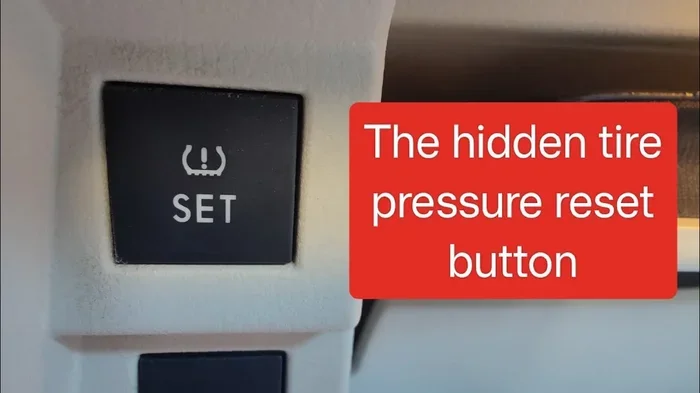
The most common location for the TPMS reset button is tucked underneath the steering column, to the left of the steering wheel. In many vehicles, you will find it near the lower-left side of the dashboard, close to where your knees rest while driving. It is often a small, recessed button that you need to press with a pen or a key. Look for a symbol that looks like a horseshoe with an exclamation point, which matches the TPMS warning light on your dash.
For many popular models from brands like Ford, Chevrolet, Honda, and Toyota, this is the go-to spot. If you have just replaced a tire or added air and the light is still on, start your search here. Simply turn the ignition to the “on” position without starting the engine, press and hold the button, and wait for the light to blink three times before releasing it.
On the Dashboard Near the Steering Column
In some vehicles, the reset button sits right on the dashboard itself, just below or to the side of the instrument cluster. It might be part of a cluster of small buttons that control your trip meter, audio settings, or display options. These buttons are often unlabeled, which makes them easy to miss. Check your vehicle owner manual for the exact location, as the manual will usually include a diagram showing which button controls the TPMS reset function.
Inside the Glove Box or Center Console
Some car makers, particularly certain models from luxury brands, place the TPMS reset button inside the glove box or in the center console area. If you have checked under the steering wheel and on the dashboard without finding anything, open your glove box and look along the edges or the inside of the door. In some vehicles, you may need to remove items from the glove box to access a small panel that houses the reset button.
Near the Gear Shift or Center Console
In a number of vehicles, especially those with automatic transmissions, the reset button is located near the gear shift lever. It might be on the console between the front seats or directly on the shift console itself. This placement is common in many SUV and truck models. Look for a small button that matches the TPMS symbol on your dashboard.
Under the Hood Near the Fuse Box
In rare cases, some vehicles do not have a dedicated TPMS reset button at all. Instead, the reset function is built into the vehicle’s diagnostic system and can be accessed through the onboard computer. For these models, you may need to navigate through the menu on your instrument cluster display to find the TPMS reset option. In a few older or specialty models, a reset procedure involves a fuse or relay under the hood, though this is uncommon in modern vehicles.
Step-by-Step TPMS Reset Procedure for Most Vehicles
Now that you know where to look, let us walk through the general TPMS reset procedure. Keep in mind that the exact steps can vary slightly by vehicle, so always refer to your owner manual for model-specific instructions.
- Start by checking all four tires with a reliable tire pressure gauge and inflating them to the recommended PSI listed on the driver side door jamb sticker.
- Turn the ignition key to the “on” position. Do not start the engine. The dashboard lights should illuminate.
- Locate the TPMS reset button using the common locations described above.
- Press and hold the reset button until the TPMS warning light on the dashboard begins to blink.
- Release the button once the light blinks three times.
- Start the engine and let the vehicle idle for about 20 minutes. The system will recalibrate and the light should turn off.
- Drive the vehicle at a steady speed for a few miles to allow the sensors to update their readings.
If the light does not turn off after following these steps, try turning the ignition off and back on again, then repeating the process. Sometimes the system needs two attempts to fully reset. If it still does not work, there may be an underlying issue that requires further diagnosis.
What to Do If the TPMS Reset Button Does Not Work
Finding the button and following the steps only to have the light stay on can be incredibly frustrating. When the TPMS reset button does not seem to do anything, several potential causes are worth investigating.
Check Your Tire Pressure Again
Before assuming the reset button is faulty, double-check your tire pressure. Even a few PSI below the recommended level can keep the light on. Use a quality tire pressure gauge and compare your readings to the number on the driver side door jamb. Remember that tire pressure changes with temperature, so a cold morning might show a slightly lower reading than the same tire measured in the afternoon.
Inspect the Tire Pressure Sensors
Each tire has a tire pressure sensor mounted inside, usually attached to the valve stem. These sensors run on small batteries that typically last between five and ten years. When the battery dies, the sensor cannot communicate with the car’s computer, and the TPMS light will remain on no matter how many times you press the reset button. If your vehicle is older and has never had the sensors replaced, a dead sensor battery is a very likely culprit.
Look for Slow Leaks
A slow puncture in one of your tires can cause the pressure to drop gradually, keeping the TPMS light active even after you think you have fixed the problem. Apply soapy water to each tire and look for bubbles forming near the valve stem or the tread area. This simple trick can reveal leaks that are too small to see otherwise.
When to Seek Professional Help
If you have checked your tire pressure, inspected the sensors, and still cannot get the light to turn off, it is time to visit a professional. A certified mechanic can run a diagnostic scan to identify which specific sensor is malfunctioning. In some cases, replacing a single sensor costs between $50 and $100, which is far less expensive than ignoring the problem and risking uneven tire wear or a blowout. You can also try manually clearing your car codes as a troubleshooting step if you are comfortable with basic diagnostics.
Additionally, if you recently had maintenance done and the light appeared afterward, it might be worth checking whether the service technician properly reset the system. Some quick lube shops and dealerships will reset maintenance indicators after an oil change, but not all of them check or reset the TPMS as part of standard service.
TPMS Reset Button Locations by Popular Car Brands
To make your search easier, here is a quick reference guide for where to find the TPMS reset button on some of the most popular car brands on the road today.
| Brand | Common Reset Button Location |
|---|---|
| Toyota | Under the steering wheel, to the lower left |
| Honda | Below the steering column or on the left side of the dashboard |
| Ford | Under the steering wheel or on the left side of the center console |
| Chevrolet | Under the steering wheel, often near the lower-left dash panel |
| BMW | In the iDrive menu system or on the left side of the center console |
| Ford | Under the steering wheel on the left side of the dashboard |
| Chevrolet | Under the steering wheel, near the lower-left panel |
| Nissan | On the dashboard to the right of the steering column |
| Honda | Below the steering wheel, to the left of the steering column |
| Toyota | Under the steering wheel on the lower left side |
As you can see, the locations vary quite a bit between brands. This is exactly why consulting your vehicle owner manual is so important. The manual will have a dedicated section on the TPMS system that includes a diagram and the exact reset procedure for your specific model and year.
Quick Tips for TPMS Maintenance and Prevention
Preventing TPMS issues is much easier than dealing with them after they occur. Here are some quick tips to keep your tire pressure monitoring system running smoothly:
- Check your tire pressure at least once a month using a quality tire pressure gauge.
- Always reset the TPMS system after rotating your tires or replacing any tire.
- Keep a tire pressure gauge in your glove box so you can check pressure on the go.
- Replace sensor batteries proactively every 5 to 7 years to avoid unexpected failures.
- Do not ignore the TPMS light, even if you just filled your tires. A persistent light could signal a sensor problem.
- Store a copy of your recommended tire pressure levels in your glove box for quick reference.
Common Mistakes People Make When Resetting the TPMS
Even with the best intentions, many people make avoidable mistakes when trying to reset their TPMS reset button. Here are the most common ones to watch out for:
- Resetting before checking tire pressure: Always verify and correct your tire pressure first. Resetting with low pressure will just cause the light to come back on within a few miles.
- Not holding the button long enough: Many people release the button too early. Hold it until the light blinks three times before letting go.
- Starting the engine during the reset: The reset procedure requires the ignition to be in the “on” position, not the running position. Starting the engine too early can interrupt the recalibration process.
- Ignoring a flashing TPMS light: A flashing light usually indicates a more serious issue, such as a malfunctioning sensor or a system fault, rather than simply low pressure.
- Assuming all tires are at the same pressure: Different tires can lose pressure at different rates. Always check each tire individually.
Avoiding these mistakes can save you time and prevent unnecessary trips to the mechanic. If you have tried everything and the light still will not go away, consider visiting a trusted service center or trying to troubleshoot similar dashboard warning lights using general diagnostic approaches.
Expert Insight: Understanding Your TPMS System Long Term
The tire pressure monitoring system is one of the most important safety features in modern vehicles. Properly inflated tires improve fuel efficiency, extend tire life, and reduce the risk of blowouts on the highway. Understanding how your TPMS works and where the reset button is located empowers you to handle this common maintenance task without visiting a dealership or mechanic.
Most vehicles today use direct TPMS sensors that are mounted inside each tire. These sensors communicate wirelessly with the car’s computer and provide real-time pressure readings for each individual tire. Indirect TPMS systems, found in some older or more budget-friendly models, use the vehicle’s wheel speed sensors to detect differences in tire rotation speed that indicate low pressure. Both systems benefit from a proper reset after maintenance or tire inflation.
If you are planning a long road trip or seasonal tire swap, take a few minutes to check your tire pressure and reset the system before hitting the road. A proactive approach to tire health keeps you safe and saves money on fuel and premature tire replacement.
Conclusion
Finding and using the TPMS reset button does not have to be a mystery. With the locations and steps outlined in this guide, you now have the knowledge to handle this common maintenance task with confidence. Start by checking your tire pressure, locate the reset button using the common spots we covered, and follow the reset procedure for your specific vehicle. Remember to consult your vehicle owner manual for model-specific details, and do not hesitate to seek professional help if the light persists after a proper reset.
Taking care of your tire pressure monitoring system is a small effort that pays big dividends in safety, fuel economy, and tire longevity. The next time that little horseshoe-shaped light pops up on your dash, you will know exactly what to do.
Frequently Asked Questions
Can I drive my car with the TPMS light on?
You can drive short distances with the TPMS light on, but it is not recommended. The light means your tire pressure is below the safe level, which can affect handling, fuel economy, and tire life. Check your tire pressure as soon as possible and inflate to the recommended level before driving long distances.
How much does it cost to replace a TPMS sensor?
Replacing a single TPMS sensor typically costs between $50 and $100 for the part, plus labor if you have a professional install it. Some newer vehicles require programming the new sensor to the car’s computer, which may add to the cost. DIY replacement is possible with the right tools and some mechanical know-how.
How often should I check my tire pressure?
You should check your tire pressure at least once a month and before any long road trips. Tire pressure naturally decreases over time and with temperature changes, so regular checks help maintain optimal tire health and keep the TPMS system functioning correctly.
Why does my TPMS light come back on after I reset it?
If the TPMS light returns shortly after a reset, it usually means the underlying issue has not been resolved. Common causes include a slow tire leak, a dead sensor battery, or a faulty sensor. Check all tire pressures again and inspect the valve stems for leaks. If the problem persists, a professional diagnostic scan can pinpoint the exact cause.
Do all cars have a TPMS reset button?
Most modern vehicles have a dedicated TPMS reset button, but some newer models require you to reset the system through the onboard computer display menu. If you cannot find a physical button, check your vehicle owner manual for the electronic reset procedure specific to your car model.
Can cold weather trigger the TPMS light?
Yes, cold weather can cause the TPMS light to come on because air pressure inside tires decreases as temperatures drop. A temperature drop of 10 degrees Fahrenheit can reduce tire pressure by about 1 PSI. If the light comes on in cold weather, check your tire pressure and add air as needed, then perform a TPMS reset.