Is It Hard to Replace Windshield Wipers on Your Car
Replacing windshield wipers is one of the easiest car maintenance tasks you can do at home. Most drivers can swap out old wiper blades in under 15 minutes with no special tools. Whether you drive a sedan, SUV, or truck, this quick fix keeps your driving safe and your visibility clear in any weather.
Replacing windshield wipers is one of the simplest and most important maintenance tasks every car owner should know how to do. Many people avoid it because they think it is complicated or messy. The truth is far from that. You do not need to be a mechanic, and you certainly do not need to visit a dealership or pay someone else to do it. In most cases, you can complete the entire process in less than fifteen minutes from the comfort of your driveway or garage.
If you have ever found yourself squinting through a streaky windshield during a rainstorm, you know exactly why this matters. Clear visibility is not a luxury. It is a basic requirement for safe driving. Windshield wipers play a huge role in keeping your view unobstructed when rain, snow, or debris hits the glass. Over time, these rubber blades wear down and become less effective. The good news is that swapping them out is incredibly straightforward. In this article, we will walk you through everything you need to know about wiper replacement, from recognizing the signs of worn blades to choosing the right replacement and installing them correctly.
Key Takeaways
- Easy DIY Task: Replacing windshield wipers is simple enough for beginners and takes just minutes.
- Regular Maintenance Matters: Worn wipers reduce visibility and can be dangerous on wet roads.
- Right Blade Matters: Choosing the correct wiper blade size and type ensures a perfect fit and better performance.
- No Tools Needed: Most wiper replacements require only your hands and the new blades.
- Know When to Replace: Streaks, squeaking, and visible wear are clear signs it is time for new wipers.
- Safety First: Always follow proper steps to avoid damaging your windshield or wiper arms.
📑 Table of Contents
- Why Windshield Wipers Wear Out and When to Replace Them
- Types of Windshield Wiper Blades Available
- Tools and Supplies You Need
- Step-by-Step Guide to Replace Windshield Wipers
- Common Mistakes to Avoid When Replacing Windshield Wipers
- When to Call a Professional for Wiper Replacement
- Final Thoughts on Replacing Your Windshield Wipers
Why Windshield Wipers Wear Out and When to Replace Them
Your windshield wiper blades take a beating every time you use them. They scrape across glass, battle harsh weather, and endure extreme temperatures. Over months and years, the rubber on the blade deteriorates. This natural wear means that even the best wipers will eventually need replacing. Understanding why they wear out helps you know when it is time to act.
Signs Your Windshield Wipers Need Replacing
You do not have to wait for a heavy storm to realize your wipers are failing. There are several clear warning signs that your blades are worn out and ready for replacement:
- Streaks on the windshield: If your wipers leave behind lines or smears after each pass, the rubber is no longer making proper contact with the glass.
- Squeaking or chattering sounds: Worn blades often make annoying noises as they move across the windshield. This happens when the rubber becomes stiff or uneven.
- Skipping or bouncing: Old wipers may lift off the glass and skip across the surface instead of gliding smoothly.
- Visible cracks or tears: Inspect the rubber edge closely. If you see cracks, splits, or chunks missing, it is definitely time for a replacement.
- Reduced cleaning performance: If your wipers are not clearing water as effectively as they used to, do not wait for the problem to get worse.
Ignoring these signs can seriously affect your driving visibility. In heavy rain or snow, poor wipers can make it nearly impossible to see the road ahead. That is a risk no driver should take.
How Often Should You Replace Windshield Wipers
Most experts recommend replacing your windshield wiper blades every six to twelve months. However, this timeline can vary based on several factors:
- Climate: If you live in a hot, sunny area, UV rays can dry out the rubber faster. In cold climates, ice and freezing temperatures can cause the blades to crack and become brittle.
- Usage frequency: If you use your wipers daily, they will wear out faster than someone who only uses them occasionally.
- Parking habits: Parking your car outside exposes wipers to more sun, rain, and debris compared to a garage.
- Wiper quality: Higher-quality blades tend to last longer, but they still need regular replacement.
A good habit is to inspect your wipers every few months. Simply run your finger along the rubber edge. If you feel rough spots or uneven wear, it is time for new ones. Many car owners replace their wipers as part of a seasonal routine, such as before winter or before the rainy season begins.
Types of Windshield Wiper Blades Available
Not all wipers are the same. Different styles and designs serve different purposes. Understanding the options available helps you choose the best blade for your vehicle and driving conditions.
Conventional Wiper Blades
Conventional wipers are the traditional style most people are familiar with. They feature a metal frame with rubber blades attached. These wipers are affordable and widely available. They work well for everyday driving in mild weather conditions. However, the exposed frame can be prone to ice buildup in winter, which may reduce their effectiveness.
Beam Wiper Blades
Beam wipers have become increasingly popular in recent years. They do not have a visible metal frame. Instead, they use a single piece of flexible rubber that conforms evenly to the shape of your windshield. This design provides better contact and more consistent wiping performance. Beam wipers also handle snow and ice better than conventional blades because there is no frame to collect buildup. They tend to look cleaner and more modern on a vehicle as well.
Winter and All-Season Wiper Options
If you live in an area with harsh winters, you might want to consider winter wiper blades. These blades are designed with a protective cover that prevents ice from building up on the rubber and frame. They are built to handle freezing temperatures and heavy snow. All-season wipers are another option that balances performance across different weather conditions. They work reasonably well in rain, light snow, and dry conditions, making them a versatile choice for year-round use.
| Wiper Type | Best For | Durability | Price Range |
|---|---|---|---|
| Conventional | Mild weather, budget-conscious drivers | 6-9 months | Low |
| Beam | All-weather performance, modern look | 9-12 months | Medium |
| Winter | Heavy snow, freezing climates | 6-12 months | Medium-High |
| All-Season | Year-round versatility | 6-10 months | Medium |
When choosing your next set of blades, consider your local climate and driving habits. OEM wiper blades (original equipment manufacturer) are designed specifically for your vehicle model and often provide the best fit. Aftermarket options can also work well, but make sure you check the wiper blade sizes for your specific car before purchasing.
Tools and Supplies You Need
One of the best things about replacing your own windshield wipers is that you do not need a lot of tools. The process is simple and requires minimal supplies. Here is what you will need:
- New wiper blades: Make sure you have the correct size for both the driver and passenger sides. You can find the right size in your vehicle owner manual or by checking the packaging at the auto parts store.
- A clean cloth or microfiber towel: This helps you wipe down the windshield and wiper arm before and after installation.
- Windshield washer fluid: While not strictly necessary for the replacement itself, topping off your washer fluid is a great idea while you are working on your wipers.
That is really it. No special tools, no complicated equipment. If you can open a package and lift a wiper arm, you have all the skills you need. For those who want a bit more guidance, Can I Replace My Windshield Wipers Myself is a great resource that covers the DIY process in even more detail.
Quick Tips Before You Start
- Make sure your car is parked on a flat surface and the ignition is off.
- Lift the wiper arm away from the windshield gently. Do not let it snap back, as this can crack the glass.
- Check the new blade packaging to confirm it matches your vehicle.
- Work on one wiper at a time so you do not mix up the sizes.
- Keep a towel handy to protect your windshield if you need to set the wiper arm down.
Step-by-Step Guide to Replace Windshield Wipers
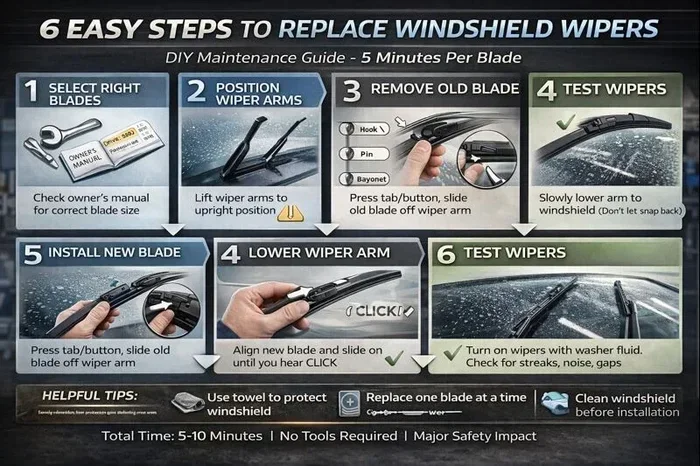
Now that you have your new blades and your supplies ready, let us walk through the actual replacement process. This guide works for most vehicles, but always refer to your owner manual if you are unsure about any step.
Removing Old Wiper Blades
- Lift the wiper arm: Gently pull the wiper arm away from the windshield until it stands upright. Hold it steady and do not let it snap back onto the glass.
- Locate the release mechanism: Most modern wipers have a small tab or button where the blade connects to the arm. Look for it — it is usually on the underside of the wiper blade where it meets the arm.
- Press the release tab: While holding the tab, slide the old blade off the arm. It should come off smoothly with minimal effort.
- Repeat for the other wiper: Follow the same steps for the second blade. Keep track of which blade goes on which side, as sizes may differ.
Once both old blades are removed, take a moment to wipe down the wiper arms and the windshield with a clean cloth. This removes any dirt or debris that could interfere with the new blades.
Installing New Wiper Blades
- Slide the new blade onto the arm: Align the new wiper blade with the arm connector. Push it firmly until you hear or feel it click into place.
- Secure the connection: Make sure the blade is locked in and does not wiggle. Different brands may have slightly different attachment mechanisms, so follow the instructions included with your specific blades.
- Repeat for the second blade: Install the other new blade the same way.
- Lower the arms gently: Slowly bring each wiper arm back down to the windshield. Do this carefully to avoid scratching the glass.
That is all there is to it. Replacing windshield wipers is genuinely this simple. Within minutes, you will have fresh blades that improve your visibility and make driving safer.
Testing Your New Windshield Wipers
After installation, it is important to test your new wipers before you hit the road. Turn on your vehicle and activate the wipers with a bit of washer fluid. Watch for even, smooth movement across the windshield. The blades should glide without streaking or skipping. Listen for any unusual noises like squeaking or chattering, which could indicate a problem with the installation.
If everything looks and sounds good, you are all set. If you notice any issues, double-check that the blades are properly attached and that the rubber is making full contact with the glass. Sometimes new blades just need a quick adjustment.
Common Mistakes to Avoid When Replacing Windshield Wipers
Even though this is a simple task, there are a few common mistakes that can cause problems. Being aware of these pitfalls helps you avoid frustration and ensures a smooth replacement every time.
Buying the Wrong Size
This is the most common mistake people make when replacing windshield wipers. Wiper blades come in specific sizes, and the driver and passenger sides often require different lengths. Using the wrong size can result in poor coverage, streaking, or even damage to your windshield. Always double-check the size before you purchase new blades. Your vehicle owner manual is the best source for this information, but you can also find it on the packaging at most auto parts stores.
Forgetting to Clean the Windshield
When you remove old wipers, take the time to clean the windshield and wiper arms. Dirt, oil, and grime can build up on the glass and the connector. This buildup can reduce the effectiveness of your new blades and lead to streaking right out of the box. A quick wipe with a glass cleaner and a microfiber cloth makes a big difference.
Letting the Wiper Arm Snap Back
The wiper arm is under tension, and if you let it snap back onto the windshield, it can chip or crack the glass. This is a surprisingly common accident during wiper replacement. Always lower the arm slowly and carefully, keeping your hand on it the entire time.
Not Replacing Both Blades at the Same Time
It can be tempting to only replace the blade that is clearly worn out. However, if one blade is bad, the other is likely close behind. Replacing both wipers at the same time ensures even performance and consistent visibility across the entire windshield.
When to Call a Professional for Wiper Replacement
For most drivers, replacing windshield wipers is a straightforward DIY job. However, there are situations where it makes sense to seek professional help. Understanding when to call in the experts saves you time and prevents potential damage.
Situations Where DIY Isn’t the Best Option
- Unusual wiper arm designs: Some vehicles, especially luxury models, have unique wiper systems that require special tools or techniques to service.
- Wiper arm damage: If the wiper arm itself is bent, broken, or stuck, replacing the blade won’t solve the problem. A professional can repair or replace the arm safely.
- Rear windshield wiper: Some vehicles have rear wipers that are integrated into the rear window defroser or have unusual mounting points. If you are unsure about how to handle a rear wiper, it is fine to let a professional take care of it.
If you are unsure about any part of the process, do not hesitate to ask for help. Many auto parts stores offer free installation when you purchase wiper blades from them. This can be a convenient option if you prefer not to do it yourself.
Cost Comparison: DIY vs. Professional Service
Doing it yourself is almost always the cheaper option. A pair of quality windshield wiper blades typically costs between twenty and fifty dollars, depending on the brand and type. Professional installation at a dealership or service center may add a labor fee, though many places waive this if you buy the blades from them. Overall, DIY wiper replacement is fast, affordable, and incredibly satisfying.
For those who want to learn more about other simple car maintenance tasks, check out Do You Legally Have to Have a Rear Wiper for helpful information about rear wiper requirements and regulations.
Final Thoughts on Replacing Your Windshield Wipers
Replacing your windshield wipers is one of those small maintenance tasks that makes a huge difference. It takes just a few minutes, costs very little, and directly impacts your safety on the road. Clear visibility in rain, snow, and grime is not something you should take for granted.
By staying on top of your wiper replacement schedule, you ensure that your driving experience remains safe and comfortable no matter what the weather throws at you. Pick up a new set of blades today, follow the steps in this guide, and enjoy the confidence of knowing you can handle this simple but essential car maintenance task yourself.
Remember, taking care of your vehicle does not have to be complicated or expensive. Small actions like replacing worn wiper blades regularly keep your car running well and keep you safe behind the wheel. Whether you are a complete beginner or an experienced DIYer, this is one maintenance job everyone can and should do on their own.
Frequently Asked Questions
How long does it take to replace windshield wipers?
Most drivers can replace both windshield wipers in under 15 minutes. The process is quick and straightforward once you have the right replacement blades. With a little practice, you will be able to do it in five minutes or less.
Can I use any wiper blade for my car?
No, you need to use the correct wiper blade size for your specific vehicle. Wiper blade sizes vary by car model, and using the wrong size can lead to poor performance and streaking. Check your owner manual or the packaging at the auto parts store to confirm the right fit.
How do I know which windshield wiper size I need?
You can find the correct wiper size in your vehicle owner manual, on the packaging of replacement blades at most auto parts stores, or by measuring the existing blades yourself. Many retailers also have lookup tools on their websites where you can enter your vehicle make and model.
Is it safe to replace windshield wipers myself?
Yes, replacing windshield wipers yourself is completely safe and one of the easiest car maintenance tasks you can do. You do not need any special tools or mechanical experience. Just follow the steps carefully and take your time to avoid any accidental damage to your windshield.
How much does it cost to replace windshield wipers?
A pair of windshield wiper blades typically costs between twenty and fifty dollars. This makes it one of the most affordable car maintenance tasks you can perform. Professional installation may add a small fee, but many stores include free installation with your purchase.
What happens if I don’t replace my windshield wipers on time?
Worn windshield wipers reduce your driving visibility, especially in rain and snow. This can increase the risk of accidents. Over time, damaged blades can also scratch your windshield, leading to costly repairs. Regular replacement keeps your visibility clear and protects your glass.