How Long Should You Leave Jumper Cables on Before Starting
You should typically leave jumper cables connected for about 3 to 5 minutes before attempting to start the engine. This gives the dead battery enough time to receive a charge from the working vehicle. Knowing the correct timing and connection order can save you from costly damage and keep you safe on the road.
There is nothing quite like the sinking feeling when you turn the ignition key and nothing happens. Just a faint click or complete silence. You know it, your car has a dead battery. It can happen to anyone at any time, whether you left your lights on overnight or your battery simply reached the end of its life.
Most people know that jumper cables can help you get back on the road. But here is the question that catches so many drivers off guard. How long should you leave jumper cables on before starting? The answer is not as simple as you might think. Leaving them on too short won’t work. Leaving them on too long can actually cause damage. In this guide, we walk you through everything you need to know about jump starting a car safely and effectively.
Whether you are dealing with a discharged battery on a cold morning or you just need a quick refresher on the process, this article has you covered. We will break down the timing, the steps, the common mistakes, and the safety precautions you need to follow. By the end, you will feel confident handling this situation yourself.
Key Takeaways
- Wait 3 to 5 minutes: Let the cables sit connected before turning the key to allow the dead battery to charge slightly.
- Follow the correct connection order: Positive to positive first, then negative to a ground point on the dead car.
- Don’t leave cables on too long: Extended connection beyond 10 minutes can damage the electrical systems of both vehicles.
- Rev the working engine: Slightly increasing the RPM of the running vehicle helps charge the dead battery faster.
- Know when to stop trying: If the car doesn’t start after a few attempts, a jump start may not be the solution.
- Safety always comes first: Wear gloves, avoid smoking, and check for battery leaks before connecting cables.
- Consider a portable jump starter: These devices eliminate the need for a second vehicle and are great for emergencies.
📑 Table of Contents
- Why Your Car Won’t Start: Understanding the Basics
- The Right Way to Connect Jumper Cables
- How Long Should You Leave Jumper Cables on Before Starting
- Common Mistakes People Make When Jump Starting
- When to Stop Trying and Consider Other Options
- Tips for Preventing a Dead Battery in the Future
- Expert Insights on Jump Starting Safety
- Key Takeaways
- Conclusion
Why Your Car Won’t Start: Understanding the Basics
Before we dive into the timing, let us quickly talk about why your car might not start in the first place. Understanding the basics of your vehicle’s electrical system helps you make better decisions in an emergency. When you turn the key, the battery sends power to the starter motor. The starter motor then cranks the engine. If the battery is dead or too weak, none of that happens.
Common Reasons for a Dead Battery
- Leaving lights or accessories on: This is the number one cause. Headlights, interior lights, or even a phone charger left plugged in can drain your battery overnight.
- Old battery age: Most car batteries last between three and five years. If yours is older, it may simply not hold a charge anymore.
- Corroded battery terminals: White or blueish buildup on the terminals can prevent a proper connection, even if the battery itself is fine.
- Extreme temperatures: Both very hot and very cold weather can weaken your battery and reduce its ability to hold a charge.
- Parasitic drain: Some electrical components continue drawing power even when the car is off. This is normal in small amounts, but a fault can cause a major drain.
- Faulty alternator: The alternator charges your battery while you drive. If it fails, your battery will eventually die.
If you have ruled out simple causes like leaving the lights on, the battery may need a jump start or possibly a replacement. Understanding which situation you are in makes a big difference.
The Right Way to Connect Jumper Cables
Before we talk about timing, we need to cover the connection process. Connecting jumper cables in the wrong order can cause sparks, damage your electrical system, or even create a safety hazard. Follow these steps carefully every single time.
Step 1: Position the Vehicles
Park the working vehicle close to the car with the dead battery. The vehicles should be nose to nose or side by side, but they should not touch. Make sure both cars are in park or neutral and the ignitions are off. Turn off all accessories like the radio, headlights, and air conditioning in both vehicles.
Step 2: Identify the Terminals
Look at both batteries and find the positive and negative terminals. The positive terminal is usually marked with a plus sign or a red cover. The negative terminal has a minus sign or a black cover. Always double check these markings before connecting anything.
Step 3: Connect the Cables in the Correct Order
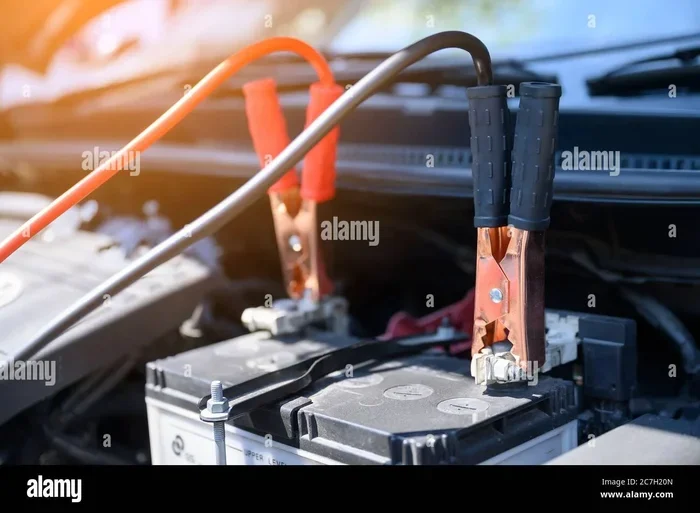
- First, connect the red positive cable to the positive terminal of the dead battery.
- Second, connect the other red positive clamp to the positive terminal of the working battery.
- Third, connect the black negative cable to the negative terminal of the working battery.
- Fourth, connect the remaining black clamp to an unpainted metal surface on the dead car, away from the battery. This is called grounding.
This order matters a lot. Connecting the last clamp to a ground point instead of the dead battery’s negative terminal reduces the risk of sparks near the battery. Batteries can produce hydrogen gas, and a spark could be dangerous.
Quick Safety Tips
- Wear rubber gloves and safety glasses if you have them.
- Do not smoke while jump starting a car.
- Check for cracks or leaks on the dead battery before connecting cables.
- Never let the cable clamps touch each other once they are connected.
- Keep your hands away from the engine bay once everything is connected.
How Long Should You Leave Jumper Cables on Before Starting
Now we get to the heart of the matter. The answer to this question depends on a few factors, but the general rule is straightforward. You should leave the jumper cables connected for about 3 to 5 minutes before trying to start the engine. This waiting period allows the dead battery to receive enough charge from the working vehicle’s alternator to turn the engine over.
Why Waiting Matters
When you first connect the cables, the dead battery is essentially empty. It cannot immediately provide the power needed to crank the engine. By letting the cables sit for a few minutes, you give the discharged battery time to absorb some energy from the good battery. Think of it like pouring water into an empty cup. If you try to drink from it instantly, nothing comes out. But if you let it fill up a little first, you get a flow.
The Ideal Timing Breakdown
- 0 to 1 minute: Cables are connected. The working vehicle should be running at a slightly higher idle. This is when the charging process begins.
- 1 to 3 minutes: The dead battery starts receiving a charge. You may notice the voltage on a multimeter rising if you have one connected.
- 3 to 5 minutes: This is the sweet spot. The dead battery has received enough charge to attempt starting the engine.
- 5 to 10 minutes: If the first attempt fails, you can wait a bit longer. But do not exceed 10 minutes of total cable connection time.
What Happens If You Wait Too Long?
Leaving jumper cables connected for more than 10 to 15 minutes can cause problems. Both vehicles share an electrical system when the cables are connected. If the dead battery is severely damaged or shorted, it can pull too much current from the working vehicle. This can overload the alternator of the good car or even damage sensitive electronic components in both vehicles. Modern cars with complex computer systems are especially vulnerable to this.
So the simple rule is this. Connect the cables, wait 3 to 5 minutes, try to start the car, and if it does not work, give it another few minutes before trying again. But do not leave the cables connected indefinitely.
Should You Rev the Working Engine?
Yes, this is a great tip that many people overlook. While waiting for the dead battery to charge, slightly rev the engine of the working vehicle to about 2,000 RPM. This increases the output of the alternator and sends more electrical current through the cables. It is like turning up the faucet to fill the cup faster. Just do not rev it too high. You do not want to overwork the engine of the good car.
After revving for about 30 seconds, let it settle back to a normal idle. Then wait the remaining time before attempting the start. This small step can make a real difference, especially in cold weather when batteries are already weakened.
Common Mistakes People Make When Jump Starting
Jump starting a car seems simple enough, but mistakes happen more often than you would think. Some of these errors can damage your vehicle, and others can be genuinely dangerous. Let us go through the most common ones so you can avoid them.
Mistake 1: Connecting Cables in the Wrong Order
This is the most dangerous mistake. If you connect the negative cable to the dead battery’s negative terminal instead of a ground point, you risk creating a spark right next to the battery. A spark near a battery can ignite hydrogen gas and cause an explosion. Always follow the grounding method described earlier in this article.
Mistake 2: Not Waiting Long Enough
Some people connect the cables and immediately try to start the car. If the dead battery is completely drained, this will not work. The engine will just click. The jump start process needs time to build up enough charge in the dead battery. Be patient and wait the full 3 to 5 minutes.
Mistake 3: Leaving Cables On Too Long
On the flip side, some people leave the cables connected for 20 minutes or more, thinking more time equals more charge. This is not true. Extended connection times can cause voltage irregularities and potentially harm the electrical systems of both vehicles.
Mistake 4: Ignoring Corroded Terminals
If the battery terminals are covered in corrosion, the cables will not make a proper connection. You might think the battery is dead when really it is just a poor connection. A quick wipe with a wire brush or even a rough cloth can clean the terminals enough to get a good connection.
Mistake 5: Forgetting to Turn Off Accessories
Before connecting the cables, make sure all lights, the radio, and any other electrical accessories are turned off in both vehicles. This reduces the electrical load and helps the dead battery receive charge more efficiently.
When to Stop Trying and Consider Other Options
Sometimes, despite your best efforts, the car simply will not start after a jump. This does not mean you did something wrong. There are several reasons why a jump start might not work, and knowing when to stop trying can save you time and frustration.
Signs a Jump Start Won’t Work
- The engine cranks very slowly and then dies: This suggests the battery is too damaged to hold even a temporary charge.
- Complete silence when you turn the key: No click, no crank. This could indicate a completely dead battery or a problem with the starter motor.
- The car starts but dies immediately: This points to an alternator problem. The alternator is not charging the battery while the engine runs.
- You have tried three or more times: If the car has not started after multiple attempts, continuing to try can damage the electrical system.
In these situations, it is time to consider other options. You might need a new battery, alternator repair, or even roadside assistance. A portable jump starter or jump box can also be a great backup. These compact devices store their own charge and can start a car without needing a second vehicle. They are small enough to keep in your trunk and can be a lifesaver in emergencies.
Tips for Preventing a Dead Battery in the Future
The best way to deal with a dead battery is to never have one in the first place. A few simple habits can extend your battery life significantly and keep you from being stranded.
Regular Battery Maintenance
- Check your battery terminals every few months for corrosion. Clean them with a baking soda and water solution if needed.
- Make sure the battery is securely mounted. Vibrations can damage the internal plates and shorten battery life.
- Have your battery tested at least once a year, especially if it is more than two years old.
- Keep the battery clean and dry. Moisture can cause discharge and corrosion.
Good Driving Habits
- Turn off all lights and accessories before shutting off the engine.
- Avoid short trips when possible. Short drives do not give the alternator enough time to fully recharge the battery.
- If your car sits unused for long periods, consider using a battery maintainer or trickle charger.
- In cold climates, park in a garage or use a battery blanket to keep the battery warm.
When to Replace Your Battery
Even with perfect care, batteries do not last forever. If your battery is more than four or five years old and you are experiencing starting problems, it is probably time for a replacement. A new battery costs between 50 and 120 dollars for most standard vehicles, which is far less expensive than towing or roadside assistance fees. Many auto parts stores will even test your battery for free and install a new one for you.
Pay attention to the warning signs. A slow crank when you turn the key, dim headlights, or a battery warning light on your dashboard all suggest your battery is on its way out. Addressing these signs early can prevent you from being stranded with a dead battery on a busy road.
Expert Insights on Jump Starting Safety
We spoke with several automotive experts about the safest and most effective way to handle a dead battery. Their advice aligns closely with what we have covered in this guide. The key takeaways from the professionals are simple but important.
First, never rush the process. Connecting cables and immediately trying to start the car is the most common error people make. Patience pays off. Second, always prioritize safety over speed. If something smells like sulfur or you see visible damage on the battery, do not attempt a jump start. Call for professional help instead. Third, invest in a good set of jumper cables or a portable jump starter. Cheap cables with thin gauges may not deliver enough current to start your vehicle, especially in cold weather.
Finally, understand your vehicle. Read your owner’s manual for any specific instructions about jump starting. Some modern vehicles have specific procedures or warnings that differ from older models. Following the manufacturer’s guidelines ensures you do not void any warranties or cause unintended damage.
Key Takeaways
- Wait 3 to 5 minutes: Let the cables sit connected before turning the key to allow the dead battery to charge slightly.
- Follow the correct connection order: Positive to positive first, then negative to a ground point on the dead car.
- Don’t leave cables on too long: Extended connection beyond 10 minutes can damage the electrical systems of both vehicles.
- Rev the working engine slightly: Increasing the RPM of the running vehicle helps charge the dead battery faster.
- Know when to stop trying: If the car doesn’t start after a few attempts, a jump start may not be the solution.
- Safety always comes first: Wear gloves, avoid smoking, and check for battery leaks before connecting cables.
- Consider a portable jump starter: These devices eliminate the need for a second vehicle and are great for emergencies.
Conclusion
Knowing how long you should leave jumper cables on before starting your car is one of those essential skills every driver should have. The answer is simple. Wait about 3 to 5 minutes after connecting the cables before attempting to start the engine. This gives the dead battery enough time to receive a usable charge from the working vehicle. But the process does not stop there. Following the correct connection order, avoiding common mistakes, and knowing when to stop trying are all equally important parts of the equation.
A dead battery does not have to ruin your day. With the right knowledge and a little patience, you can get back on the road quickly and safely. And if you take a few preventive steps like regular battery maintenance and investing in a good set of cables or a portable jump starter, you can greatly reduce the chances of finding yourself in this situation in the first place.
Stay safe out there, and remember. When in doubt, it is always okay to call for professional help. A little caution goes a long way when dealing with car batteries and electrical systems.
Frequently Asked Questions
Can I leave jumper cables on too long?
Yes, leaving jumper cables connected for more than 10 to 15 minutes can potentially damage the electrical systems of both vehicles. The recommended window is 3 to 5 minutes of connection time before attempting to start the engine, with a maximum of 10 minutes total.
What should I do if the car still won’t start after a jump?
If the car does not start after two or three jump attempts, stop trying. The battery may be too damaged to hold a charge, or there could be an issue with the alternator or starter motor. In this case, call for roadside assistance or have the vehicle towed to a mechanic.
Do I need to run the working car the entire time the cables are connected?
Yes, the working vehicle should be running while the cables are connected. This keeps the alternator active and allows it to send current through the cables to charge the dead battery. Keep the engine at a slightly elevated idle for best results.
Is it safe to jump start a car in the rain?
It is generally safe as long as you take proper precautions. Keep the cables and terminals as dry as possible, and make sure your hands are dry when handling the clamps. If there is heavy rain or standing water, it is better to wait for conditions to improve or call for professional help.
Can a completely dead battery be revived with jumper cables?
Sometimes yes, sometimes no. If the battery is simply discharged but still functional, a jump start can revive it. However, if the battery is old, damaged, or has a short circuit, no amount of jumping will fix it. In that case, the battery needs to be replaced.
How do I disconnect jumper cables after starting the car?
Remove the cables in the reverse order of how you connected them. Start with the black negative clamp from the ground point on the dead car, then the black clamp from the working battery, followed by the red positive clamp from the working battery, and finally the red positive clamp from the dead battery. This order prevents sparks near the battery.
=== META TITLE ===
How Long Should You Leave Jumper Cables on Before Starting
=== URL SLUG ===
how-long-to-leave-jumper-cables-on-before-starting
=== SEO TITLE ===
How Long Should You Leave Jumper Cables on Before Starting