How Long Can Frozen Food Stay in a Car Without Spoiling
Frozen food in a car can last anywhere from 30 minutes to several hours, depending on the outside temperature and how well you insulate it. The key to safe frozen food storage is understanding how heat affects your groceries. This guide covers everything you need to know about keeping frozen food cold in a car and avoiding food spoilage.
You just finished grocery shopping. The trunk is full of frozen food. You need to run one more errand. But then it hits you — how long can frozen food stay in a car?
This is a question more people should ask. Frozen food in a car is a real concern, especially during summer months. The heat inside a parked car can rise fast. And that heat can ruin your frozen groceries quickly.
Whether you are picking up ice cream, frozen meals, or frozen meat, the clock starts ticking the moment you leave the store. Understanding food safety and frozen food storage times can save you money and keep your family safe.
In this guide, we will break down everything you need to know. We will cover safe time limits, what affects frozen food in a car, and the best ways to keep it cold. By the end, you will feel confident about your next grocery run.
Key Takeaways
- Frozen food in a car lasts 30 minutes to 3 hours in warm weather without insulation.
- Insulated coolers and thermal bags can extend frozen food life to 12 hours or more.
- Food safety depends on temperature — the danger zone starts at 40°F and goes up to 140°F.
- Dry ice and portable freezers are the best options for long trips with frozen groceries.
- Never leave frozen food in a hot car for more than 30 minutes, especially in summer.
- Refreezing thawed food can be risky and may lead to foodborne illness.
- Planning ahead with proper cold chain methods keeps your frozen meals and vegetables safe.
📑 Table of Contents
- How Long Can Frozen Food Stay in a Car Without Spoiling?
- What Affects How Long Frozen Food Stays Frozen in a Car
- The Temperature Danger Zone for Frozen Food in a Car
- Best Ways to Keep Frozen Food Cold in a Car
- When Is Frozen Food in a Car No Longer Safe to Eat?
- Special Situations: Frozen Food in a Car During Summer
- Key Takeaways
- Conclusion
How Long Can Frozen Food Stay in a Car Without Spoiling?
The short answer is: it depends. The temperature outside, the type of car, and how you store the food all matter. But here are some general rules to follow.
In cool weather, around 60°F or below, frozen food in a car can last about 1 to 2 hours safely. In mild weather, between 60°F and 80°F, you have about 30 minutes to 1 hour. In hot weather, above 80°F, frozen food starts to thaw fast. You should aim to get it into a fridge or freezer within 30 minutes.
Here is a quick breakdown of time limits:
- Below 60°F: Up to 2 hours
- 60°F to 80°F: 30 minutes to 1 hour
- Above 80°F: Less than 30 minutes
- With a cooler: Up to 12 hours or more
These numbers are not exact. They give you a good baseline. The real goal is to keep frozen food below 0°F until you can store it properly.
Why Time Matters So Much
Frozen food is not just frozen water. It contains fats, proteins, and sugars. These components break down when they thaw and then warm up. The result is food spoilage. Bacteria start to grow fast once the food hits the temperature danger zone, which is between 40°F and 140°F.
Even if the food looks and smells fine, harmful bacteria like Salmonella and E. coli may be present. You cannot always see, smell, or taste them. That is why following time limits is so important for food preservation and food safety.
What Affects How Long Frozen Food Stays Frozen in a Car
Not all frozen food in a car behaves the same way. Several factors change how fast your groceries thaw. Let us look at the biggest ones.
Outside Temperature
This is the number one factor. A hot summer day can turn your car into an oven. Studies show that the inside of a car can reach 120°F in just 30 minutes on an 85°F day. That is brutal on frozen food.
Even on a mild day, the car interior heats up quickly. Parking in the shade helps, but it does not stop the rise in temperature. Your frozen groceries are still at risk.
Type of Frozen Food
Not all frozen items thaw at the same rate. Here is how different foods compare:
- Frozen ice cream: Melts very fast. It is one of the first items to thaw.
- Frozen vegetables: Small pieces thaw faster than large blocks.
- Frozen meat: Thick cuts take longer to thaw but are more risky if they do.
- Frozen meals: Often have uneven thickness, so some parts thaw faster.
Thin items like frozen pizza slices or veggies lose cold faster. Dense items like frozen chicken or beef hold cold longer. But none of them are safe forever in a warm car.
Car Type and Insulation
A well-insulated car holds cold better than a small, thin-walled vehicle. Larger cars with more cargo space also hold temperature better than compact cars. The trunk or cargo area is usually cooler than the passenger cabin because it is further from the seats and windows.
Some SUVs and trucks have better insulated trunks. This helps keep frozen food cold for a bit longer. But no car is designed to be a freezer.
How the Food Is Packaged
This is where you have control. Frozen food in a flimsy plastic bag will thaw much faster than food wrapped in insulated packaging. The way you pack your groceries matters a lot.
Using insulated bags or placing items together helps them stay cold longer. Cold items grouped together keep each other cold. Think of it like a mini cold chain right in your trunk.
The Temperature Danger Zone for Frozen Food in a Car
Understanding the temperature danger zone is key to food safety. This is the range where bacteria grow the fastest. It spans from 40°F to 140°F.
When frozen food leaves the freezer, it begins to warm up. Once it crosses 32°F and starts to thaw, the clock is ticking. Within two hours in the danger zone, the food may no longer be safe to eat.
Here is why this matters so much for frozen food in a car:
- Bacteria double every 20 minutes in the danger zone.
- Some bacteria produce toxins that survive even after cooking.
- Frozen food that has thawed and been left out is not the same as fresh food.
The cold chain is the process of keeping food at safe temperatures from store to home. Breaking that chain, even for a short time, can lead to foodborne illness. Symptoms include nausea, vomiting, diarrhea, and stomach cramps.
Expert food safety guidelines say that perishable items should not stay in the danger zone for more than two hours. In hot weather, that window shrinks to just one hour. Frozen food in a hot car can enter the danger zone surprisingly fast.
How to Monitor Temperature
A simple car thermometer can help you track the temperature in your vehicle. You can place one in the trunk or cargo area. This gives you a real-time read on conditions. Some digital thermometers even send alerts to your phone.
If you frequently transport frozen groceries, this is a smart investment. It takes the guesswork out of frozen food storage in your vehicle.
Best Ways to Keep Frozen Food Cold in a Car
The good news is that you have many options for keeping frozen food safe during transport. Some are free, and some require a small investment. All of them work better than just tossing bags in the trunk.
Use a Cooler
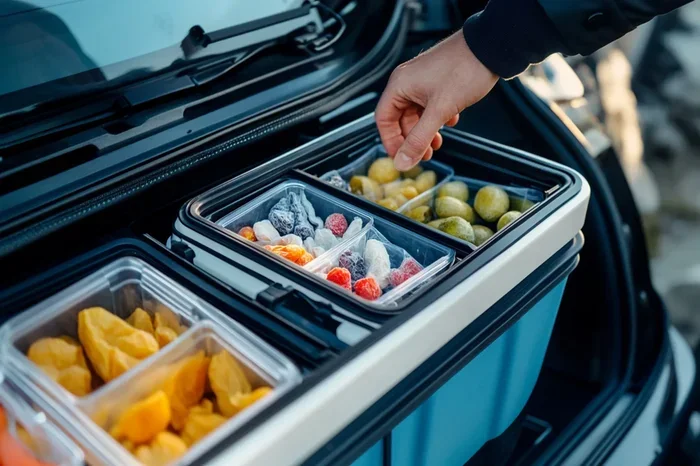
A good cooler is the best friend of frozen food in a car. A quality insulated cooler can keep frozen items cold for 12 hours or more. Pre-chill the cooler with ice packs before loading your groceries in.
Hard-sided coolers work best. They have better insulation than soft-sided ones. But even a basic cooler makes a huge difference compared to just putting bags in the trunk.
Try Insulated Shopping Bags
Many stores now offer insulated bags at checkout. These are great for short trips. They keep frozen food in a car cold for about 1 to 2 hours. They are not perfect, but they are better than nothing.
You can also buy reusable insulated bags for a few dollars. Keep one or two in your car at all times. You will always be ready for frozen grocery runs.
Use Dry Ice for Long Trips
Dry ice is frozen carbon dioxide. It stays at minus 109°F. This makes it incredibly effective for long trips with frozen food. A 10-pound block of dry ice can keep a cooler frozen for up to 24 hours.
But dry ice needs careful handling. It can cause burns if you touch it bare-handed. And it needs ventilation — never store it in a completely sealed space. The gas it releases can build up in a closed car.
Place dry ice at the bottom of the cooler and frozen food on top. This setup works well for road trips and moves.
Consider a Portable Freezer
Portable freezers plug into your car’s 12V outlet. They keep food frozen during long drives. These are great for people who travel often or haul frozen goods for work.
They are more expensive than coolers, but they offer the best food preservation for frozen food in a car. Some models can reach 0°F and hold that temperature for hours.
Pack Smart
How you arrange your groceries matters. Here are some smart packing tips:
- Place frozen items together in one area.
- Put frozen meat on the bottom, where it is coldest.
- Use frozen water bottles as extra ice packs.
- Fill empty space with towels to reduce air flow.
- Keep the cooler or bag closed as much as possible.
These small steps add up. They help maintain the cold chain and keep your frozen groceries safe.
Comparison: Methods for Keeping Frozen Food Cold
Not sure which method works best? Here is a comparison of popular options:
| Method | Cold Duration | Cost | Best For |
|---|---|---|---|
| No insulation | 30 min to 2 hours | Free | Very short trips |
| Insulated bag | 1 to 2 hours | $5-$15 | Quick errands |
| Standard cooler | 6 to 12 hours | $15-$50 | Grocery runs, day trips |
| Cooler + ice packs | 12 to 24 hours | $10-$30 extra | Longer trips |
| Dry ice + cooler | 18 to 24 hours | $10-$20 | Road trips, moves |
| Portable freezer | Ongoing | $100-$300 | Frequent transport, professionals |
As you can see, the more you invest in insulation, the longer your frozen food stays safe. Even a basic cooler is a big step up from no insulation at all.
Quick Tips for Keeping Frozen Food Cold
- Always pre-chill your cooler before loading frozen food.
- Keep the car’s air conditioning running if possible.
- Place the cooler in the coolest part of the car, usually the floor of the back seat.
- Avoid opening the cooler repeatedly.
- Plan your route so frozen groceries are the last stop before home.
- Use a thermometer to check that the cooler stays below 40°F.
Common Mistakes People Make With Frozen Food in a Car
Even careful shoppers make mistakes. Here are the most common ones to avoid:
Leaving frozen food in the car overnight. This is never a good idea. Even in cool weather, temperatures can drop and rise unpredictably. The food may thaw partially and enter the danger zone. Throw it out if it has been in the car for many hours.
Assuming the car is air-conditioned enough. Your car’s AC cools the cabin, not the trunk. The trunk can be 10 to 20 degrees warmer than the cabin. Do not rely on air conditioning alone to protect frozen food.
Not checking the food before cooking. Always inspect frozen food before you cook it. Look for ice crystals, check the texture, and smell it. If anything seems off, do not take the risk.
Refreezing food that has thawed. This is one of the biggest food safety mistakes. Once frozen food thaws and enters the danger zone, bacteria can multiply rapidly. Refreezing does not kill the bacteria. It only pauses their growth.
Overpacking the cooler. A packed cooler works better than an empty one because the items help keep each other cold. But overpacking can block airflow and create warm spots. Leave some room for cold air to circulate.
Ignoring the type of frozen food. Ice cream and frozen dinners are not the same. Ice cream melts fast and signals a problem. Frozen meat may not show obvious signs of thawing. Always consider the specific item when judging safety.
When Is Frozen Food in a Car No Longer Safe to Eat?
Knowing the signs of spoiled frozen food is just as important as knowing the time limits. Sometimes food looks fine but is not safe to eat.
Here are the warning signs to watch for:
- The food is completely thawed and warm to the touch.
- There is a slimy or sticky texture on meat or vegetables.
- The food has an unusual or off smell.
- Ice crystals have melted and there is excess liquid in the packaging.
- The food was in the car for longer than the recommended time.
If you notice any of these signs, do not eat the food. When in doubt, throw it out. The cost of replacing frozen groceries is far less than the cost of treating foodborne illness.
What About Partially Thawed Food?
Partially thawed frozen food is a gray area. If the food still has ice crystals and feels cold (below 40°F), it may still be safe. You can refreeze it, but the quality will suffer. The texture and taste may change.
However, if the food has been in the temperature danger zone for more than two hours, it is not safe. This rule has no exceptions. It applies to all frozen food, whether it is vegetables, meat, or ice cream.
Food safety expert Dr. Benjamin Chapman from NC State says, “The two-hour rule is one of the most important guidelines in food safety. It applies whether the food is in a car, on a picnic table, or on your kitchen counter.”
Remember, frozen food is perishable. It may be frozen, but it is not immune to time and temperature. Treat it with the same care you would treat fresh produce or dairy.
Special Situations: Frozen Food in a Car During Summer
Summer is the hardest season for frozen food in a car. The heat is intense, and the risk of spoilage is at its highest. Here is what you need to know for summer trips.
On a 90°F day, the inside of a car can reach 130°F in under 30 minutes. Frozen food in those conditions will thaw in minutes. You must have a plan for summer grocery runs.
Always bring a cooler. Always make frozen food your last stop. Always get home quickly. These three rules can save your frozen groceries during the hottest months of the year.
If you have a long drive ahead, consider using dry ice or a portable freezer. These tools are worth the investment if you regularly transport frozen food in summer heat.
Expert Insight
According to the USDA, perishable foods — including frozen items that have started to thaw — should not be left out of refrigeration for more than two hours. In temperatures above 90°F, that window drops to just one hour. This guideline applies directly to frozen food in a car during summer.
The USDA also recommends using a food thermometer to check the internal temperature of your food. If it reads above 40°F, it has entered the danger zone and should be discarded.
Key Takeaways
- Frozen food in a car lasts 30 minutes to 2 hours without insulation, depending on the weather.
- Use a cooler or insulated bag to extend safe storage time to 12 hours or more.
- The temperature danger zone (40°F to 140°F) is where bacteria grow fastest.
- Never leave frozen food in a hot car for more than 30 minutes.
- Dry ice and portable freezers are the best options for long trips.
- Always check food before cooking — look, smell, and feel for signs of spoilage.
- When in doubt, throw it out. Food safety always comes first.
Conclusion
So, how long can frozen food stay in a car without spoiling? The answer is not a single number. It depends on the temperature, the type of food, and how well you insulate it. But the general rule is simple: keep it cold, keep it fast, and keep it safe.
Frozen food in a car is manageable if you plan ahead. Use a cooler, pack smart, and never leave your groceries in a hot vehicle. These small habits make a big difference for food safety and food preservation.
Your frozen groceries are an investment. You spent money on quality frozen meals, frozen vegetables, and frozen meat. Protect that investment by following the tips in this guide. A little planning goes a long way toward keeping your family healthy and your food fresh.
Next time you load up your car with frozen food, remember what you have learned here. Keep the cold chain intact. Watch the time. And never take food safety for granted. Your stomach will thank you.
Frequently Asked Questions
Can frozen food go bad in a car?
Yes, frozen food can go bad in a car if it is left too long, especially in warm weather. Once frozen food thaws and enters the temperature danger zone (40°F to 140°F), bacteria can grow rapidly. The food may not look or smell bad, but it can still make you sick. Always follow the time limits and keep frozen food cold during transport.
How long can frozen meat stay in a car?
Frozen meat can stay in a car for about 30 minutes to 2 hours, depending on the outside temperature. In hot weather, that window shrinks to less than 30 minutes. Use a cooler with ice packs to extend the safe time. Thick cuts of frozen meat hold cold longer than thin pieces, but they are still at risk in a warm car.
Is it safe to eat ice cream that melted in a hot car?
No, it is not safe to eat ice cream that melted in a hot car. Ice cream is a dairy product, and dairy is highly perishable. Once it thaws and warms up, bacteria can grow quickly. Even if you re-freeze it, the texture and safety are compromised. When in doubt, throw it out.
What is the best way to transport frozen groceries in a car?
The best way is to use an insulated cooler pre-chilled with ice packs. Place frozen items together and keep the cooler closed. For longer trips, use dry ice or a portable freezer. Plan your route so frozen groceries are the last stop before you get home. These steps keep the cold chain intact and protect your food.
Can you leave frozen food in a car overnight?
No, you should never leave frozen food in a car overnight. Temperatures can fluctuate wildly, and the food may enter the danger zone. Even in winter, a car is not a safe storage place for frozen food. Always transfer frozen groceries to your freezer or refrigerator as soon as you get home.
Does the type of car matter for frozen food storage?
Yes, the type of car does matter. Larger vehicles with better insulated trunks hold cold longer than small cars. SUVs and trucks often have more cargo insulation. However, no car is designed to replace a freezer or cooler. Always use proper insulation methods regardless of your vehicle type.