How Close to Max Towing Capacity Is Safe on the Road
Pushing your tow vehicle to its max towing capacity is risky and can compromise safety, handling, and braking. The smartest approach is to stay well below the rated limit, factoring in tongue weight, payload, and road conditions. This guide breaks down the real risks, calculations, and expert-backed tips to keep you safe every time you tow.
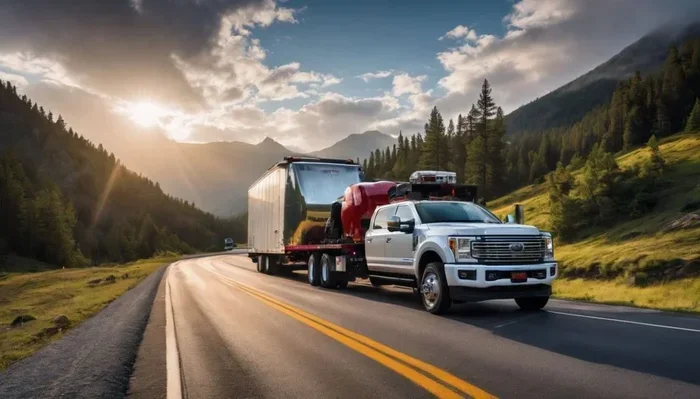
There is something deeply satisfying about hooking up a trailer and hitting the open road. Whether you are hauling a boat, a horse trailer, or a moving van, the freedom of towing is hard to beat. But with that freedom comes a big responsibility: staying safe while you tow.
Many drivers wonder how close to max towing capacity is safe. The honest answer is that pushing your vehicle to its absolute limit carries real risks. Your tow vehicle has limits for a reason, and understanding those limits is the first step toward towing safety.
In this guide, we will walk you through everything you need to know about towing capacity, the dangers of overloading, and how to calculate a safe towing weight that keeps you and others protected on the road. By the end, you will have a clear picture of where your comfort zone should sit relative to your maximum towing capacity.
Key Takeaways
- Stay Below the Limit: Towing at or near your max towing capacity reduces control, braking power, and overall stability on the road.
- Understand Your Numbers: Knowing your GVWR, payload capacity, and tongue weight is essential for calculating a safe towing weight.
- Equipment Matters: A proper brake controller, weight distribution hitch, and trailer brakes dramatically improve towing safety.
- Watch for Warning Signs: Swaying, overheating, and sluggish acceleration are clear signals you may be overloading your tow vehicle.
- Conditions Change Everything: Wind, hills, and road surface all affect how safely you can tow at any given weight.
- Legal Limits Exist: Many states have specific towing regulations that may be stricter than your vehicle’s rated capacity.
- Practice Makes Perfect: Always test your towing setup in a safe, open area before hitting the highway.
📑 Table of Contents
Understanding Max Towing Capacity
Before you can answer the question of how close to max towing capacity is safe, you need to understand what that number actually means. Towing capacity is not a single, simple figure. It is the result of many engineering calculations that account for your vehicle’s engine, brakes, suspension, frame, and transmission.
What Does Max Towing Capacity Really Mean?
Your vehicle’s max towing capacity is the maximum weight of a trailer that the manufacturer says your vehicle can safely pull under ideal conditions. This number is determined through extensive testing in controlled environments. It assumes a properly equipped vehicle with the right hitch, tires, and cooling systems.
Here is something many drivers miss: the max towing capacity listed in your owner’s manual assumes you are also staying within the vehicle’s payload capacity. Payload is the weight of everything inside the vehicle, including passengers, cargo, and the tongue weight of the trailer itself. If your truck bed is loaded with heavy gear and you have four adults in the cab, your actual available towing capacity drops significantly.
Why Manufacturers Set Towing Limits
Manufacturers do not set towing limits arbitrarily. These limits are based on the weakest link in your vehicle’s towing chain. That weak link could be the brakes, the transmission, the suspension, or even the frame. When you exceed any of these limits, you are asking components to perform beyond their design specifications.
For example, your brakes are sized to stop a certain total vehicle weight. Add a heavy trailer and the brakes may not have enough stopping power. Your transmission is designed to handle a certain amount of torque and heat. Towing near the limit generates more heat, which can lead to premature wear or even failure. Understanding this helps you see why staying below the max towing capacity is not just a suggestion, it is a safety necessity.
The Risks of Towing at Maximum Capacity
So what happens when you actually tow at or near your max towing capacity? The risks are real and they compound quickly, especially under less-than-ideal conditions.
Loss of Control and Stability Issues
One of the biggest dangers of towing at maximum capacity is the loss of towing stability. A heavily loaded trailer is more likely to sway, especially in crosswinds or when passing large vehicles on the highway. Trailer sway can escalate into a full jackknife situation in seconds, which is extremely dangerous for you and everyone around you.
When your tow vehicle is pushing its limits, it also becomes harder to maneuver. Turning corners, changing lanes, and navigating tight spaces all become more difficult. The vehicle feels sluggish and unresponsive, which is the last thing you want when you need to make a quick evasive maneuver.
Strain on Your Vehicle’s Engine and Transmission
Towing at maximum capacity puts enormous stress on your engine and transmission. The engine works harder to maintain speed, especially on inclines. The transmission shifts more frequently and under greater load, which generates excess heat. Over time, this accelerated wear can lead to costly repairs.
Transmission failure is one of the most common and expensive problems associated with heavy towing. The transmission fluid breaks down faster under high heat, and the internal components wear out prematurely. Staying well below the max towing capacity gives your drivetrain a much longer life.
Braking Distance Increases Dramatically
This is perhaps the most critical risk. When you are towing at or near your max towing capacity, your stopping distance increases significantly. Your brakes have to stop not just the weight of your vehicle, but also the weight of the trailer and everything in it.
On a wet road, this effect is amplified. A fully loaded trailer adds momentum that your brakes must overcome. Many towing accidents happen because drivers underestimate how much longer it takes to stop when they are at or near their towing limits.
How to Calculate Your Safe Towing Weight
Now that you understand the risks, let us talk about how to actually calculate a safe towing weight. This is where the rubber meets the road, so to speak.
Understanding GVWR and Payload Capacity
Your vehicle’s Gross Vehicle Weight Rating, or GVWR, is the maximum total weight of your vehicle including passengers, cargo, fuel, and the tongue weight of the trailer. You can find this number on a sticker inside the driver’s door jamb or in your owner’s manual.
Payload capacity is the GVWR minus the curb weight of your vehicle. Curb weight is the weight of the vehicle with a full tank of fuel but no passengers or cargo. If your truck has a payload capacity of 1,500 pounds, and you have four passengers weighing about 150 pounds each plus 100 pounds of gear, you have already used 700 pounds of your payload. That leaves only 800 pounds for tongue weight and any additional cargo.
This is why many drivers are surprised to learn that their actual towing capacity is lower than the max towing capacity listed on the manufacturer’s website. The max number assumes an empty vehicle with just the driver and minimal cargo.
The Role of Tongue Weight
Tongue weight is the downward force that the trailer hitch places on the tow vehicle’s receiver. Proper tongue weight is crucial for towing stability. Too little tongue weight and the trailer will sway. Too much and it will push the rear of your vehicle down, reducing steering control and headlight effectiveness.
The general rule is that tongue weight should be about 10 to 15 percent of the total trailer weight. So if your trailer weighs 5,000 pounds, your tongue weight should be between 500 and 750 pounds. Use a tongue weight scale at a truck stop or scale to verify this before every trip.
Comparison Table: Key Towing Weight Terms
| Term | Definition | Why It Matters |
|---|---|---|
| Max Towing Capacity | The heaviest trailer your vehicle can pull | Sets the upper boundary for safe towing |
| GVWR | Maximum total weight of your loaded vehicle | Determines your overall weight limit |
| Payload Capacity | Weight available for passengers, cargo, and tongue weight | Often the real limiting factor |
| Tongue Weight | Downward force of the trailer on the hitch | Affects stability and steering |
| Curb Weight | Weight of the vehicle with fuel but no load | The baseline for all calculations |
| Gross Combined Weight Rating (GCWR) | Maximum combined weight of vehicle and trailer | The true ceiling for your towing setup |
As you can see from the table, max towing capacity is just one piece of a larger puzzle. The real safe towing weight depends on how all of these numbers interact with each other.
Essential Towing Equipment for Safety
Having the right equipment is not optional when you are towing near your limits. The right gear can mean the difference between a smooth, controlled trip and a dangerous situation on the highway.
Brake Controllers and Trailer Brakes
If your trailer weighs more than 1,500 pounds, it should have its own braking system. A brake controller is a device installed in your tow vehicle that synchronizes the trailer brakes with your vehicle brakes. This is absolutely essential for maintaining safe stopping distances when you are towing heavy loads.
There are two main types of brake controllers: time-delayed and proportional. Proportional controllers are the better choice for most towers. They sense the deceleration of your vehicle and apply the trailer brakes with matching force. This gives you much more consistent and predictable stopping power.
Weight Distribution Hitches
A weight distribution hitch helps spread the tongue weight more evenly across all axles of your tow vehicle. When you are towing close to your max towing capacity, a weight distribution system can dramatically improve handling and steering control.
These hitches use spring bars to transfer some of the tongue weight from the rear axle to the front axle and the trailer axles. The result is a more level ride and better balance. If your trailer is pushing the rear of your vehicle down, a weight distribution hitch is one of the best investments you can make.
Other Must-Have Towing Gear
Beyond brake controllers and weight distribution hitches, there are a few other pieces of equipment that contribute to towing safety. A quality hitch receiver rated for your trailer weight is a must. Make sure your hitch ball size matches your trailer coupler exactly. Use safety chains and cross them under the trailer tongue for added security in case of a hitch failure.
Tire pressure is another often overlooked factor. Both your tow vehicle tires and your trailer tires should be checked before every trip. Underinflated tires generate more heat and are more prone to blowouts, especially when carrying heavy loads.
Signs You Are Overloading Your Tow Vehicle
Sometimes you do not realize you are too close to your max towing capacity until something goes wrong. Being able to recognize the warning signs early can help you make adjustments before a dangerous situation develops.
One of the most common signs is excessive rear sag. If your tow vehicle’s rear end looks visibly lower when the trailer is attached, you are putting too much weight on the rear axle. This reduces steering response and can cause the front wheels to lose contact with the road on bumps.
Another warning sign is overheating. If your engine temperature gauge is climbing or your transmission is slipping under load, the weight is likely too much. Listen for any unusual sounds from the drivetrain, and pay attention to how your vehicle performs on inclines. If you are struggling to maintain speed on mild grades, you are probably pushing too hard.
Trailer sway is a serious red flag. If your trailer begins to oscillate or weave, especially at highway speeds, you are likely over the safe limit for your setup. This can be caused by too little tongue weight, an improperly loaded trailer, or simply exceeding the towing capacity of your vehicle.
Expert Tips for Staying Within Safe Limits
So how do you actually stay safe when towing? Here are some practical, expert-backed tips that every tower should follow.
Use the 80 Percent Rule. Many experienced towers and industry professionals recommend never exceeding 80 percent of your max towing capacity. This gives you a safety buffer for unexpected situations like sudden braking, wind gusts, or wet roads. It also reduces wear on your vehicle and gives you more confidence behind the wheel.
Load Your Trailer Properly. How you load your trailer matters just as much as how much you load. Place heavier items over the axle and secure everything so it cannot shift during transit. An improperly loaded trailer is more prone to sway and is harder to control, even if the total weight is within limits.
Check Your Towing Setup Before Every Trip. Take a few minutes before each trip to inspect your hitch connections, safety chains, brake lights, and tire pressure. A quick pre-trip check can catch problems before they become emergencies on the road.
Know Your State’s Towing Regulations. Towing laws vary by state. Some states have lower speed limits for vehicles towing trailers, require specific equipment like brake controllers, or have weight limits that are lower than your vehicle’s rated capacity. Check the regulations for every state you plan to travel through.
Practice in a Safe Area. If you are new to towing or are pulling a heavier load than usual, practice in an empty parking lot or a quiet road. Get a feel for how your vehicle handles with the extra weight. Practice turning, braking, and reversing. This preparation will make you much more confident and safer when you hit the open road.
Conclusion
The answer to how close to max towing capacity is safe is simple: not as close as you might think. Towing at or near your maximum limit introduces real risks to your safety, your vehicle, and everyone else on the road. The best practice is to stay well below the rated limit, use the 80 percent rule as your guideline, and always account for tongue weight, payload, and road conditions.
Understanding your vehicle’s towing capacity is not just about protecting your investment. It is about protecting lives. When you take the time to calculate your safe towing weight, invest in the right equipment, and respect the limits of your vehicle, you set yourself up for a safer, more enjoyable towing experience. The open road is meant to be enjoyed, not feared, and the best way to enjoy it is to tow smart and tow safe.
Frequently Asked Questions
What happens if you exceed max towing capacity?
Exceeding your max towing capacity puts extreme strain on your brakes, transmission, engine, and suspension. It increases your stopping distance, reduces handling and stability, and raises the risk of a serious accident. Over time, it can cause permanent damage to your vehicle’s drivetrain and frame.
How do I find my vehicle’s towing capacity?
Your vehicle’s towing capacity is listed in the owner’s manual and on the manufacturer’s website. You can also find a label on the driver’s door jamb that shows the GVWR and payload capacity. For the most accurate number, consider the payload you will actually be carrying, not just the vehicle alone.
Is it safe to tow at 90 percent of max towing capacity?
Most towing experts recommend staying at or below 80 percent of your max towing capacity. Towing at 90 percent leaves very little safety margin for unexpected situations like sudden braking, wind gusts, or wet roads. The extra buffer gives you more control and reduces wear on your vehicle.
Does trailer length affect towing capacity?
Trailer length itself does not directly change your max towing capacity, but longer trailers can be harder to control and more prone to sway. The total trailer weight and how it is distributed matter far more than length. Always prioritize weight limits over length when planning a towing trip.
Do I need a brake controller for all trailers?
Most states require a brake controller when towing a trailer that weighs over 1,500 pounds. Even if it is not legally required, a brake controller is strongly recommended for any trailer that is more than a lightweight utility trailer. It significantly improves your stopping power and overall towing safety.
Can I increase my towing capacity with aftermarket parts?
Some aftermarket upgrades like a weight distribution hitch, upgraded brakes, or a transmission cooler can help you tow more safely, but they do not change your vehicle’s factory-rated towing capacity. The max towing capacity is a structural and engineering limit set by the manufacturer. Always stay within the rated limits regardless of aftermarket modifications.