How Can I Tell When My Toyota Was Built and Why It Matters
Finding out when your Toyota was built is easier than you think. You can use the VIN, door jamb labels, and dashboard stickers to uncover the exact manufacture date. Knowing your Toyota build date helps with parts compatibility, warranty claims, recalls, and resale value.
Have you ever looked at your Toyota and wondered, when exactly was my car built? Maybe you bought it used and want to know more. Or perhaps you need to order a part and the year alone isn’t enough. Either way, finding your Toyota’s build date is a useful skill every owner should have.
The good news is that you don’t need to be a mechanic to figure this out. There are several simple ways to find the Toyota manufacture date. And once you know it, you unlock a lot of helpful information about your vehicle. In this guide, we’ll walk you through every method step by step.
We’ll also explain why the build date matters. From ordering the right parts to staying on top of recalls, this small detail can save you time and money. So let’s dive in and learn how to read the clues your Toyota leaves behind.
Key Takeaways
- Use the VIN decoder: The 10th character of your VIN reveals the model year of your Toyota.
- Check the door jamb label: This sticker contains the production date, plant code, and serial number.
- Look at the dashboard sticker: Found on the driver’s side dashboard, it lists the manufacture date.
- Why it matters: The build date affects parts fitment, recall eligibility, warranty coverage, and resale value.
- Online tools help: Free VIN decoder websites make finding your Toyota production date quick and easy.
- Contact the dealer: A Toyota dealership can pull exact build information using your VIN.
📑 Table of Contents
What Is a Toyota Build Date?
The Toyota build date is the exact date your vehicle rolled off the assembly line. It is different from the model year. For example, a 2020 Toyota Camry might have been built in late 2019. The model year and the actual production date don’t always match up perfectly.
Knowing the Toyota production date gives you precise information. You’ll know exactly how old your vehicle is, not just what year it’s labeled as. This matters more than most people realize. Let’s look at why.
Model Year vs. Actual Build Date
Car companies use model years to group vehicles. A 2023 model might have been built months earlier. This is standard across the auto industry. Toyota follows this same practice. So your car’s sticker might say one thing, but the real manufacture date tells the true story.
This distinction becomes important when you’re shopping for parts. A part labeled “2023” might not fit a car built in late 2022. The build date clears up that confusion. It also helps when checking recall status or warranty details.
How to Find Your Toyota Build Date
There are several reliable ways to find when your Toyota was built. Each method works well, and some are faster than others. Here are the most common approaches.
Method 1: Use the VIN Decoder
The vehicle identification number is like your Toyota’s fingerprint. Every character in the VIN tells you something specific. The 10th character represents the model year. But the full VIN can reveal even more when decoded properly.
To use a VIN decoder, follow these steps:
- Find your 17-character VIN. It’s on the dashboard, door jamb, or registration papers.
- Visit a free online VIN decoder site.
- Enter the VIN and review the results.
- Look for the manufacture date or production date in the report.
Many free tools make this process quick. You’ll get details about the engine, trim, plant location, and build date. This is often the fastest method. Toyota VINs follow a standard format, so any reliable decoder works.
You can also visit Toyota directly and ask a dealer to look up your VIN. They have access to detailed build records. This is especially helpful if you need official documentation.
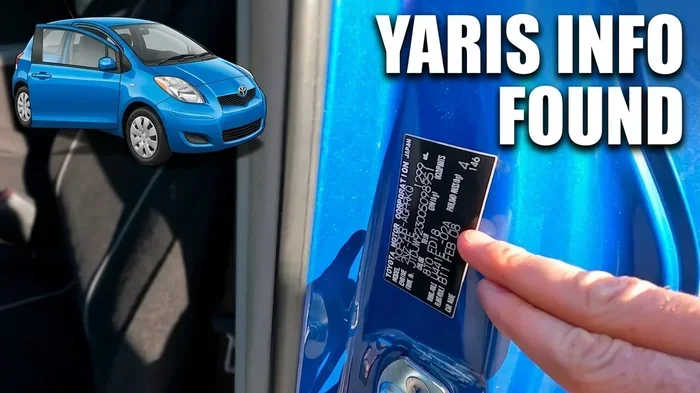
Method 2: Check the Door Jamb Label
Open your driver’s side door and look for a sticker on the door frame. This door jamb label contains a wealth of information. It typically lists the production date, tire pressure specs, and vehicle options.
On most Toyota models, the label includes a date code. This code shows the month and year the vehicle was assembled. Some labels use a numeric format, while others use a letter-number combination. If you’re unsure what the code means, a quick online search for your specific model year can help you decode it.
Method 3: Look at the Dashboard Sticker
Stand outside your vehicle and look through the windshield on the driver’s side. There should be a small sticker on the dashboard. This dashboard sticker often includes the manufacture date.
The sticker may also show the model year, trim level, and other factory options. It’s one of the easiest places to check because it’s visible from outside the car. If the sticker is faded or worn, try using a flashlight to improve visibility.
Method 4: Check the Owner’s Manual
Your owner’s manual is another great resource. Flip to the vehicle identification section. Many manuals include a diagram showing where to find the build date label on your specific model.
This method works best if you still have the original manual. If you don’t, you can often download a PDF from the Toyota website. Just enter your model and year, and the manual should be available for free.
Method 5: Contact a Toyota Dealer
If all else fails, contact a Toyota dealership. Provide them with your VIN, and they can pull the exact build date from their system. This method gives you official records. It’s especially useful if you need documentation for a warranty claim or resale paperwork.
You don’t have to visit the dealer in person. Many dealerships offer online VIN lookup tools on their websites. Some even provide build date information through email or phone inquiries. This is a great option if you want a quick and accurate answer.
Why Does Your Toyota Build Date Matter?
Now that you know how to find the build date, let’s talk about why it’s so important. This information affects several areas of vehicle ownership.
Parts Compatibility
One of the biggest reasons to know your Toyota build date is parts compatibility. Two cars with the same model year might have different parts. This happens because manufacturers make changes throughout the production cycle.
For example, a Toyota Camry built in January 2020 might have a different engine component than one built in December 2020. Knowing the exact manufacture date ensures you order the right part the first time. This saves you from frustrating returns and exchanges.
This is especially true for older models or vehicles with multiple production runs. Even small changes between build periods can affect fitment. Always reference the build date when ordering parts online or at a dealership.
Recall Information
Car manufacturers issue recalls for safety and quality issues. These recalls sometimes apply only to vehicles built during specific timeframes. Knowing your Toyota production date helps you determine if your vehicle is affected.
You can check for recalls on the NHTSA website using your VIN. But understanding your build date gives you context. You’ll know whether the recall window overlaps with your vehicle’s manufacturing period. This is valuable information that keeps you and your family safe.
Warranty and Service Records
Your Toyota build date determines when your warranty starts and expires. Even if you bought the car used, the original warranty timeline is based on the manufacture date. Some warranties last for a set number of years from the build date, regardless of when the car was sold.
This matters if you’re considering an extended warranty or a certified pre-owned Toyota. The build date helps you understand what coverage remains. It also affects service intervals and scheduled maintenance timelines.
When you visit a Toyota dealership for service, they may ask for the build date. Having this information ready speeds up the process. It shows the service advisor that you are informed and organized.
Resale Value
Buyers pay close attention to a vehicle’s age. Knowing the exact Toyota build date helps you price your car accurately when selling. A car built earlier in a model year might be worth slightly less than one built later. Buyers prefer vehicles that are closer to the new model release.
Being transparent about the build date builds trust with potential buyers. It shows you’ve done your homework. This honesty can lead to faster sales and better offers. You can also use this information to highlight any recent maintenance or upgrades you’ve done.
How to Read Toyota Date Codes
Toyota uses specific coding systems for production dates. Understanding these codes takes a little practice, but it’s very doable. Let’s break it down.
VIN Date Codes
The 10th position in the VIN represents the model year. Here is a quick reference:
- A = 1980, B = 1981, C = 1982, D = 1983, E = 1984
- F = 1985, G = 1986, H = 1987, J = 1988, K = 1989
- L = 1990, M = 1991, N = 1992, P = 1993, R = 1994
- S = 1995, T = 1996, V = 1997, W = 1998, X = 1999
- Y = 2000, 1 = 2001, 2 = 2002, 3 = 2003, 4 = 2004
- 5 = 2005, 6 = 2006, 7 = 2007, 8 = 2008, 9 = 2009
- A = 2010, B = 2011, C = 2012, D = 2013, E = 2014
- F = 2015, G = 2016, H = 2017, J = 2018, K = 2019
- L = 2020, M = 2021, N = 2022, P = 2023, R = 2024
Remember, this is the model year, not necessarily the build date. The actual production date may be months earlier. Use the door jamb label or dashboard sticker for the precise date.
Door Jamb Date Codes
The door jamb label uses a different format. It typically shows the month and year of production. For example, “03/2021” means March 2021. Some labels use a numeric day count from the start of the year. In those cases, you’ll need to convert the number to an actual date.
If you’re having trouble decoding the label, don’t hesitate to ask a Toyota dealer for help. They deal with these codes every day and can explain what each number means for your specific vehicle.
Quick Tips for Finding Your Toyota Build Date
Here are some practical tips to make the process smoother:
- Clean the area first: Wipe the door jamb and dashboard before looking for labels. Dirt and grime can hide important codes.
- Use your phone flashlight: The dashboard sticker can be hard to see. A quick photo with your phone often makes it clearer.
- Keep your VIN handy: Write down or save your VIN before visiting any decoder tool. This saves time and prevents errors.
- Compare multiple sources: If you get different dates from different methods, the door jamb label is usually the most accurate.
- Don’t rely on the title alone: The title shows the model year, not the exact build date. Always verify with the actual labels on the car.
These small steps make a big difference. Taking a few extra minutes to find the right information now can save you hours of confusion later. Whether you’re ordering parts, checking recalls, or selling your vehicle, the Toyota build date is your key to getting it right.
Common Mistakes People Make
Avoid these common pitfalls when looking up your Toyota manufacture date:
- Assuming the model year equals the build date: As we discussed, these can be months apart. Always check the actual production date.
- Using an unreliable VIN decoder: Not all online tools are accurate. Stick to reputable sites or go directly through Toyota or a trusted dealership.
- Ignoring the door jamb label: Many people skip this and rely only on the VIN. The door jamb often has the most precise date.
- Not recording the build date after finding it: Save this information in your phone or glove box. You’ll thank yourself the next time you need it.
- Confusing the build date with the inspection date: Some labels include inspection or delivery dates. These are different from the actual manufacture date.
How Build Date Affects Vehicle Maintenance
Your Toyota build date plays a role in maintenance scheduling too. Service intervals are sometimes calculated from the manufacture date rather than the purchase date. This means a car that sat on a lot for six months before being sold might already be “older” in terms of maintenance needs.
For example, if your Toyota was built in March 2020 but you bought it in September 2020, your first oil change might be due sooner than you think. Check the maintenance schedule in your owner’s manual and reference the build date for accuracy.
This is also relevant when considering how long your car has been sitting if it’s a used purchase. A vehicle with a recent build date but low miles might have issues from sitting. Knowing the build date helps you assess the true condition of the car.
Frequently Asked Questions
Can I find my Toyota build date for free online?
Yes, you can. Many free VIN decoder websites provide the manufacture date when you enter your VIN. You can also check the door jamb label and dashboard sticker without any cost. A Toyota dealership can also look it up for free using your VIN.
Does the build date affect my Toyota warranty?
Yes, it does. The warranty period typically starts from the manufacture date, not the purchase date. This means a used car might have less remaining warranty coverage. You can check the exact warranty status by contacting a Toyota dealer with your VIN.
What if my door jamb label is missing or faded?
If the label is damaged, try using a VIN decoder as your primary method. You can also check the dashboard sticker or contact a Toyota dealership for official records. The VIN is the most reliable backup source for finding your build date.
Is the build date the same as the model year?
No, they are not always the same. The model year is a general grouping, while the build date is the exact day the vehicle was produced. A 2022 model might have been built in late 2021. Always check the actual production date for accuracy.
Can I use the build date to determine if my Toyota has an open recall?
Yes, absolutely. Recalls often target specific production date ranges. Knowing your Toyota manufacture date helps you determine if your vehicle falls within the recall window. You can then check the NHTSA website or contact a dealer for confirmation.
Where is the VIN located on a Toyota?
The VIN can be found in several places on a Toyota. Check the dashboard on the driver’s side, the door jamb on the driver’s side, and your vehicle registration or insurance documents. The VIN is a 17-character code that uniquely identifies your vehicle.
Conclusion
Finding out when your Toyota was built is a simple process with big benefits. Whether you use the VIN decoder, check the door jamb label, or visit a Toyota dealership, you now have the tools to get this information quickly. The build date opens the door to better parts ordering, smarter recall checks, and more accurate warranty tracking.
Take a few minutes today to look up your Toyota production date. Write it down and keep it in a safe place. This small piece of information can make a big difference the next time you need parts, schedule service, or sell your vehicle. Knowing your car inside and out is what every smart owner does, and now you’re one step ahead.
Your Toyota is a significant investment. Treat it like one by staying informed about its history and specifications. The build date is just the beginning. Use it wisely, and your Toyota will serve you well for years to come.