Harley-Davidson Production Numbers by Year – Complete Guide
Harley-Davidson production numbers by year reveal a fascinating story of American motorcycle manufacturing. From the early days of a small Milwaukee workshop to becoming a global icon, Harley-Davidson’s annual output tells the tale of innovation, resilience, and raw power. This guide breaks down every era, model, and milestone that shaped the brand’s incredible production journey.
Harley-Davidson production numbers by year paint a vivid picture of American motorcycle history. From tiny beginnings in a backyard shed to dominating the global motorcycle market, the story of how many bikes Harley-Davidson built each year is full of surprises. Whether you are a collector, a rider, or just curious about motorcycle manufacturing history, this guide covers it all. We will walk through every major era, highlight key models, and show you how production trends reflect bigger changes in the motorcycle industry.
Understanding Harley-Davidson production numbers by year gives you a deeper appreciation for the brand. It helps you see why certain models are rare. It explains why some years saw massive output while others brought dramatic drops. And if you own a vintage Harley, knowing the production context can help you understand what your bike is worth. Let us dive into this rich history.
Key Takeaways
- Early Production Was Modest: Harley-Davidson started with just a few hundred units per year in the early 1900s before scaling up dramatically.
- World War II Boosted Output: Military contracts caused a massive spike in production during the 1940s.
- Serial Numbers Tell the Story: Every Harley-Davidson motorcycle has a unique serial number that reveals its production year and factory origin.
- Modern Production Ranges Widely: Annual output fluctuates based on market demand, economic conditions, and model popularity.
- Collectors Value Production Data: Knowing the production numbers helps determine rarity and value for vintage models.
- Factory Locations Matter: Production shifted between Milwaukee, Kansas City, and York over the decades.
- Iconic Models Drove Sales: The Sportster, Softail, and Touring families each had distinct production peaks.
📑 Table of Contents
- The Early Years: Harley-Davidson Production Takes Shape
- Harley-Davidson Production Numbers by Year: The Mid-Century Boom
- How to Read Harley-Davidson Serial Numbers
- Factors That Changed Harley-Davidson Production Over the Decades
- Maintaining a Classic Harley-Davidson
- Why Production Numbers Matter to Collectors
- Modern Harley-Davidson: Production in the 21st Century
- Key Takeaways
The Early Years: Harley-Davidson Production Takes Shape
The Harley-Davidson story began in 1903 in Milwaukee, Wisconsin. William S. Harley and Arthur Davidson built their first motorcycle in a small wooden shed. Back then, Harley-Davidson annual output was tiny. They produced just a few hand-built bikes each year. The focus was on engineering and perfecting the design, not mass production.
1903 to 1910: Building the Foundation
In the first decade, Harley-Davidson produced fewer than 1,000 motorcycles total. Each bike was assembled by hand with careful attention to detail. The early models featured a single-cylinder engine and a simple frame design. These were not mass-produced machines. They were crafted one at a time by skilled workers who cared deeply about quality.
By 1909, the company introduced its first V-twin engine. This was a game-changer. The V-twin design became the signature of Harley-Davidson and set the brand apart from competitors. Motorcycle manufacturing history was about to change forever.
1910 to 1920: Rapid Growth and Rising Demand
The teens brought explosive growth. Harley-Davidson production numbers increased year after year. By 1920, the company was producing over 28,000 motorcycles annually. This was a massive leap from the early days. Several factors drove this growth:
- Improved manufacturing processes made assembly faster and more consistent.
- The rise of motorcycle racing put Harley-Davidson in the spotlight.
- Returning soldiers from World War I brought interest in motorcycles.
- Dealer networks expanded across the United States and into international markets.
The company moved into a larger factory on Juneau Avenue in Milwaukee. This location became the heart of Harley-Davidson motorcycle production for decades. The iconic bar-and-shield logo started appearing on bikes during this period, creating one of the most recognized brand symbols in the world.
Harley-Davidson Production Numbers by Year: The Mid-Century Boom
The middle of the 20th century was a golden era for Harley-Davidson. Harley-Davidson production numbers by year during this period reflect both wartime demand and post-war consumer enthusiasm. Let us break this down decade by decade.
1930s: Surviving the Great Depression
The Great Depression hit the motorcycle industry hard. Many brands struggled or disappeared. Harley-Davidson survived, but production dropped significantly. Annual output fell to around 3,700 units in the worst years. The company adapted by offering more affordable models and focusing on reliability over flash.
This era taught Harley-Davidson resilience. The brand emerged from the Depression stronger and more focused. The company refined its V-twin engine technology and improved the riding experience. These improvements would pay off handsomely in the years ahead.
1940s: The War Years
World War II transformed Harley-Davidson factory records. The U.S. military awarded Harley-Davidson a contract to produce the WLA motorcycle for the war effort. This military designation stood for “W” for the engine design, “L” for a 45 cubic inch displacement, and “A” for army use.
During the war years, production shifted almost entirely to military orders. Harley-Davidson built over 90,000 WLAs for the Allied forces. Civilian production was minimal. The factory operated around the clock to meet demand. This period proved that Harley-Davidson could scale up production rapidly when needed.
After the war, the company faced a choice. It could return to civilian production slowly or ramp up quickly. Harley-Davidson chose to meet the pent-up consumer demand head-on. The result was a surge in motorcycle assembly line activity and a flood of new models for the American public.
1950s to 1960s: The Golden Age
The post-war decades were the golden age of Harley-Davidson. Annual production numbers soared. The company introduced legendary models that are still celebrated today. The 1950s saw the rise of the K-series and the first Hydra-Glide front fork, which dramatically improved ride comfort.
By the mid-1960s, Harley-Davidson was producing over 60,000 bikes per year. The brand became synonymous with American freedom and the open road. Classic motorcycle production reached its peak during this era, with the company dominating the heavyweight motorcycle segment in the United States.
1970s: Competition and Challenges
The 1970s brought new challenges. Japanese motorcycle manufacturers like Honda, Yamaha, and Suzuki entered the American market with reliable, affordable bikes. Harley-Davidson faced stiff competition for the first time. Motorcycle industry trends shifted toward smaller, fuel-efficient machines.
Production numbers during this decade fluctuated. The company struggled with quality control issues and outdated manufacturing processes. AMF Corporation, which had acquired Harley-Davidson in 1969, was not investing enough in modernization. This period showed that even iconic brands must evolve to survive.
How to Read Harley-Davidson Serial Numbers
Every Harley-Davidson motorcycle carries a unique serial number. This number is your key to unlocking the Harley-Davidson model year breakdown. The serial number tells you the production year, the factory where the bike was assembled, and its place in the production sequence.
Before 1969, Harley-Davidson used a simple numbering system. The first two digits represented the model year. The next digits indicated the model type. After 1969, the company switched to a more complex system that included a VIN (Vehicle Identification Number).
Here is a quick guide to finding your serial number:
- Frame number: Located on the steering head or the left frame down tube.
- Engine number: Stamped on the engine case, usually on the left side.
- VIN plate: Found on the frame, typically near the steering head.
If you are restoring a vintage Harley, decoding the serial number is one of the most satisfying parts of the process. It connects you directly to the bike’s history and tells you exactly when and where it was built.
Factors That Changed Harley-Davidson Production Over the Decades
Many forces shaped Harley-Davidson production numbers by year. Understanding these factors helps you see the bigger picture behind the numbers. Let us look at the key drivers.
Economic Conditions
The economy has always had a direct impact on motorcycle sales. During recessions, Harley-Davidson production numbers dropped. People had less disposable income for luxury purchases like motorcycles. During boom times, the company struggled to keep up with demand.
The 2008 financial crisis is a great example. Harley-Davidson sales fell sharply, and production was scaled back. The company had to cut costs and restructure. But the brand bounced back stronger as the economy recovered.
Model Innovation and Popularity
New models can drive massive production spikes. When Harley-Davidson introduced the Softail in 1984, it was an instant hit. The company ramped up production to meet the demand. Similarly, the introduction of the Twin Cam engine in 1998 led to significant changes in the Harley-Davidson annual output across multiple model lines.
Some models became cultural icons. The Sportster, introduced in 1957, became one of the best-selling Harley-Davidson families ever. The Road King, Street Glide, and Road Glide Touring models each carved out their own loyal followings and production milestones.
Global Expansion
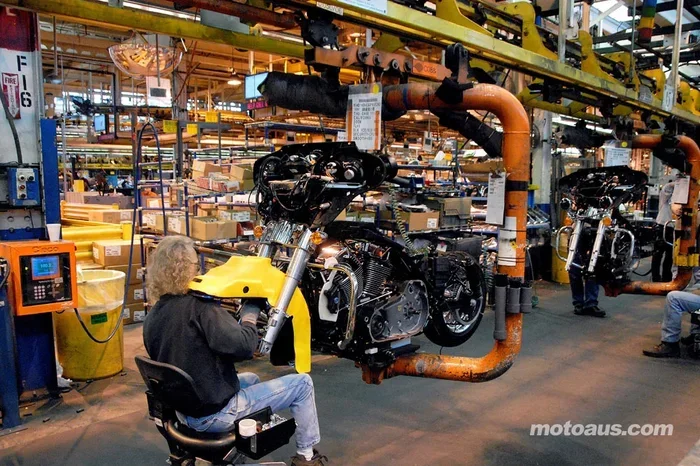
Harley-Davidson expanded beyond American shores in a big way during the 1990s and 2000s. The company opened a manufacturing plant in York, Pennsylvania, and later established operations in India and Thailand. This global expansion affected production numbers by spreading manufacturing capacity across multiple locations.
Today, Harley-Davidson bikes are sold in over 100 countries. The motorcycle manufacturing plant in Kansas City, Missouri, and the York facility both contribute to annual production. This global reach has helped stabilize output even during domestic market fluctuations.
Maintaining a Classic Harley-Davidson
Owning a vintage Harley-Davidson comes with responsibility. Regular maintenance keeps these machines running strong for decades. If you are new to Harley ownership, understanding basic upkeep is essential.
One common issue owners face is electrical gremlins. Sometimes a check engine light on older models can be confusing. A check engine light can go off by itself due to loose connections, sensor issues, or simple electrical glitches. Do not panic if your vintage Harley’s warning light flickers on and off.
Another important maintenance task is replacing wear parts. Replacing a headlight on your own is a straightforward DIY job that saves money and builds your mechanical skills. Most Harley headlight assemblies are easy to access and swap out with basic tools.
For younger riders or new owners, insurance is a must. A 17-year-old can get car insurance in their name, and the same applies to motorcycle insurance. Getting covered early protects you and your investment. Look for policies that specialize in classic or vintage motorcycle coverage for the best rates.
Regular oil changes, chain maintenance, and tire checks should be part of your routine. A well-maintained Harley-Davidson will last a lifetime and beyond. These bikes were built with durability in mind, and proper care preserves that legacy.
Why Production Numbers Matter to Collectors
For motorcycle collectors, Harley-Davidson production numbers by year are gold. Rarity drives value. A model with low production numbers commands a premium in the collector market. Understanding these numbers helps buyers make smart decisions and sellers set fair prices.
Here are some examples of how production data affects collector value:
- Low-production years: Models built during economic downturns or supply shortages are often rarer and more valuable.
- Factory-specific models: Bikes produced at specific plants may have unique features that collectors seek out.
- First-year models: The inaugural year of a new model line often has the lowest production numbers.
- Limited editions: Special run models with known production totals are highly sought after.
Collectors also look at motorcycle collector values alongside production data. A bike’s condition, originality, and documentation all play a role. But the production numbers provide the baseline for understanding how rare a particular machine truly is.
Online databases and forums have made it easier than ever to research production numbers. Enthusiast communities share information about specific model years, factory quirks, and production totals. This collective knowledge helps both new and experienced collectors make informed choices.
Modern Harley-Davidson: Production in the 21st Century
The 21st century has brought both challenges and opportunities for Harley-Davidson. The company has adapted to changing consumer preferences, environmental regulations, and global competition. Harley-Davidson production numbers by year in the modern era reflect these shifts.
In recent years, Harley-Davidson has focused on expanding its model lineup. The company introduced the LiveWire electric motorcycle in 2019, marking a bold step into the electric vehicle space. Production numbers for the LiveWire started small but grew as the model gained traction.
The company also invested heavily in its factory infrastructure. The Milwaukee Plant 1 underwent a major modernization to increase efficiency and capacity. These investments aim to keep Harley-Davidson annual output competitive in a rapidly changing market.
Today, the brand remains a symbol of American motorcycle culture. Whether you ride a brand-new model or a restored classic, you are part of a legacy that spans over a century of motorcycle manufacturing. The numbers tell the story, and the story is far from over.
Key Takeaways
- Early Production Was Modest: Harley-Davidson started with just a few hundred units per year before scaling up dramatically in the 1910s and 1920s.
- World War II Was a Turning Point: Military contracts pushed production to new heights and proved the company could scale rapidly.
- Serial Numbers Reveal Production Details: Every Harley-Davidson has a unique serial number that encodes the year, factory, and production sequence.
- Economic Conditions Drive Output: Recessions cause production drops, while booms push the company to increase annual output.
- Model Innovation Spurs Sales: Iconic models like the Sportster, Softail, and Touring families each created production milestones.
- Collectors Rely on Production Data: Low-production years and factory-specific details directly impact a bike’s collector value and market price.
- The Brand Continues to Evolve: Modern Harley-Davidson balances tradition with innovation, including the move into electric motorcycles.
Frequently Asked Questions
What were Harley-Davidson’s highest production years?
Harley-Davidson’s highest production years occurred in the late 1990s and early 2000s. During this period, the company was producing over 250,000 motorcycles annually. The booming American economy and strong brand loyalty drove these record numbers. However, the 2008 recession caused a sharp decline in output.
How can I find the production year of my Harley-Davidson?
You can find the production year by decoding your motorcycle’s serial number. The frame number and engine number both contain date codes. Before 1969, the first two digits of the serial number represented the model year. After 1969, the VIN system took over. You can also consult Harley-Davidson’s official resources or online databases for help.
Why did Harley-Davidson production drop in the 1970s and 1980s?
Several factors caused the decline. Japanese motorcycle manufacturers offered reliable, affordable alternatives that cut into Harley’s market share. The company was also owned by AMF Corporation during much of this period, which underinvested in modernization. Quality control issues and outdated manufacturing processes further contributed to the drop in production numbers.
Are low-production Harley-Davidson models worth more money?
Generally, yes. Low-production models tend to be more valuable because of their rarity. However, condition, originality, and documentation also play major roles in determining value. A well-documented low-production model in excellent condition can command a significant premium in the collector market.
Where are Harley-Davidson motorcycles manufactured today?
Today, Harley-Davidson manufactures motorcycles primarily in York, Pennsylvania, and Milwaukee, Wisconsin. The company also has operations in India and Thailand to serve global markets. These facilities work together to maintain consistent Harley-Davidson annual output across different regions and model lines.
What should I know before buying a vintage Harley-Davidson?
Before buying a vintage Harley, research the production numbers for that specific model year. Check the serial number to verify authenticity. Inspect the bike for originality, including the engine, frame, and body panels. Get a pre-purchase inspection from a qualified mechanic who specializes in Harley-Davidson motorcycles. And make sure you have proper insurance coverage in place before hitting the road.
=== CONCLUSION ===
Harley-Davidson production numbers by year tell a compelling story of American ingenuity, resilience, and passion. From the humble beginnings in a Milwaukee shed to becoming one of the world’s most iconic motorcycle brands, every number represents a milestone. Whether you are a collector hunting for a rare model, a rider maintaining your current bike, or simply a fan of motorcycle history, understanding these production figures deepens your connection to the brand.
The data shows that Harley-Davidson has weathered every storm. Economic downturns, fierce competition, and changing consumer tastes have all left their mark on the production charts. But the brand has always bounced back. The V-twin rumble continues to echo through American streets and beyond, powered by a legacy that spans more than a century.
Now that you have a solid understanding of Harley-Davidson production numbers by year, you can appreciate your next ride with a deeper perspective. Check your bike’s serial number. Research its production year. And join the millions of enthusiasts who celebrate the Harley-Davidson experience every single day. The road ahead is long, and the story is still being written.