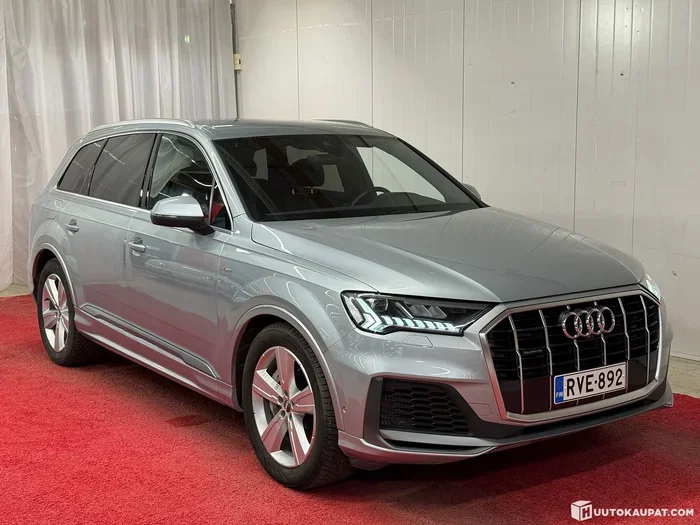
Does Audi Q7 Qualify for Section 179 Business Deduction
The Audi Q7 can qualify for a Section 179 business deduction, but it depends on factors like gross vehicle weight, business use percentage, and IRS limits. This guide breaks down everything you need to know about claiming the deduction on your luxury SUV. You will learn the eligibility rules, deduction caps, and common pitfalls to avoid when writing off your Audi Q7.
Owning a luxury SUV like the Audi Q7 feels amazing. The sleek design, the powerful engine, and the premium interior make every drive a treat. But here is the question many business owners ask: can you write off that Audi Q7 on your taxes?
The answer is yes, but with some important caveats. The Section 179 business deduction allows small business owners to deduct the full purchase price of qualifying vehicles in the year they are placed in service. However, the IRS has specific rules about which vehicles qualify and how much you can deduct. This article walks you through everything you need to know about whether your Audi Q7 qualifies for the Section 179 deduction.
We will cover the eligibility requirements, the deduction limits, the IRS rules for luxury vehicles, and practical tips to help you claim the maximum deduction safely. Whether you bought the Q7 for your business or use it for both personal and business purposes, this guide has you covered. Let us dive in.
Key Takeaways
- The Audi Q7 may qualify for Section 179: The deduction depends on the vehicle’s gross vehicle weight rating and how you use it for business.
- Gross vehicle weight matters: SUVs over 6,000 pounds GVWR can qualify for the full Section 179 deduction, while lighter models face a luxury vehicle cap.
- The 2024 Section 179 limit is $1,160,000: This is the maximum you can deduct in a single tax year for qualifying business property.
- Business use percentage is critical: You can only deduct the portion of the vehicle used for business purposes.
- Common mistakes cost money: Misclassifying the vehicle or ignoring the luxury auto limits can trigger IRS audits and penalties.
- Consult a tax professional: A CPA or tax advisor can help you navigate the rules and maximize your deduction safely.
📑 Table of Contents
What Is Section 179 and Why Does It Matter?
Section 179 is a tax code provision that lets business owners deduct the full cost of qualifying business assets in the year of purchase. Instead of spreading the deduction over several years through depreciation, you get to take a larger deduction upfront. This can significantly reduce your taxable income and lower your overall tax bill.
The Section 179 deduction applies to tangible personal property used in a trade or business. This includes equipment, computers, office furniture, and yes, certain vehicles. The idea behind the deduction is to encourage business investment by giving owners a tax incentive to purchase what they need.
How the Section 179 Deduction Works
When you purchase a qualifying vehicle for your business, you can elect to take the Section 179 deduction instead of using the standard depreciation method. The deduction reduces your taxable dollar-for-dollar, which makes it more valuable than a tax credit in most cases. For the 2024 tax year, the maximum Section 179 deduction is $1,160,000.
However, there is a phase-out threshold. Once your total qualifying purchases exceed $2,890,000, the Section 179 deduction starts to phase out dollar for dollar. Most small business owners will never hit this threshold, but it is important to know the rule exists.
Why Business Owners Love Section 179
The Section 179 deduction is popular for several reasons. First, it simplifies your taxes. Instead of tracking depreciation schedules over five or six years, you take one big deduction. Second, it improves cash flow. A larger deduction means a lower tax bill, which means more money stays in your business. Third, it rewards investment. The more you invest in your business, the more you save on taxes.
Does the Audi Q7 Meet Section 179 Requirements?
This is the million-dollar question, and the answer depends on a few key factors. The IRS classifies vehicles differently based on their weight, purpose, and how they are used. Not every Audi Q7 will qualify for the full Section 179 deduction, but many models do.
Gross Vehicle Weight Rating
The most important factor is the Audi Q7’s gross vehicle weight rating, or GVWR. The IRS draws a bright line at 6,000 pounds. If your vehicle has a GVWR over 6,000 pounds, it qualifies as a heavy SUV and is eligible for the full Section 179 deduction. Vehicles at or under 6,000 pounds GVWR are subject to the luxury vehicle depreciation limits, which cap your annual deduction significantly.
The Audi Q7 comes in different configurations, and the GVWR varies by model and trim. The standard Audi Q7 has a GVWR that typically falls under 6,000 pounds. However, certain trims and configurations, especially those with heavier optional equipment, may push the GVWR above the 6,000-pound threshold. You need to check the specific weight rating for your exact vehicle.
You can find the GVWR on the driver-side door jamb label or in the vehicle owner’s manual. This number is critical for determining your deduction eligibility. If your Audi Q7 GVWR is below 6,000 pounds, you will be limited by the luxury vehicle depreciation rules, which we will cover in detail below.
Business Use Percentage
Even if your Audi Q7 qualifies based on weight, you must actually use it for business. The IRS requires that the vehicle be used more than 50 percent for business purposes to qualify for the full Section 179 deduction. If you use the Q7 60 percent for business and 40 percent for personal use, you can only deduct 60 percent of the purchase price.
Keeping accurate records is essential. You should maintain a mileage log that tracks business miles versus personal miles. This log serves as documentation if the IRS ever questions your deduction. Many business owners use apps or spreadsheets to track this information throughout the year.
Who Can Claim the Section 179 Deduction?
The Section 179 deduction is available to businesses that purchase qualifying property for use in their trade or business. This includes sole proprietorships, partnerships, S corporations, and C corporations. The business must have taxable income from operations to claim the deduction. You cannot use Section 179 to create or increase a business loss.
Additionally, the vehicle must be purchased, not leased. If you lease an Audi Q7 for your business, the rules are different, and you would follow the lease deduction rules instead of the Section 179 rules. The vehicle must also be new or used, as long as it is purchased for business use and placed in service during the tax year.
How Much Can You Deduct with Section 179?
The Section 179 deduction for the 2024 tax year allows you to deduct up to $1,160,000 in qualifying business property. However, the amount you can deduct for your Audi Q7 depends on whether the vehicle qualifies as a heavy SUV or falls under the luxury vehicle limits.
Heavy SUV vs. Luxury Vehicle Rules
If your Audi Q7 has a GVWR over 6,000 pounds, it qualifies as a heavy SUV under IRS rules. This means you can deduct the full purchase price up to the Section 179 limit, minus any business-use percentage adjustments. For example, if you buy a Q7 for $80,000 and use it 100 percent for business, you could potentially deduct the entire $80,000 in the first year.
If your Audi Q7 has a GVWR under 6,000 pounds, the luxury vehicle depreciation limits apply. These limits cap the annual depreciation deduction. For 2024, the first-year depreciation limit for luxury vehicles is $20,200 (including the bonus depreciation). This is a fraction of what you could deduct with the Section 179 heavy SUV rule. The difference can be thousands of dollars, so getting the GVWR right matters a lot.
Section 179 vs. Bonus Depreciation
It is worth noting that Section 179 is not the only way to deduct a vehicle purchase. Bonus depreciation is another option. For 2024, bonus depreciation allows you to deduct 60 percent of the cost of qualifying property in the first year. You can use Section 179, bonus depreciation, or a combination of both, depending on what works best for your tax situation.
Many tax advisors recommend using Section 179 first because it provides a dollar-for-dollar reduction in taxable income. Bonus depreciation is a percentage-based deduction, which is generally less valuable. However, the best approach depends on your specific circumstances, including your income level, other business deductions, and future tax expectations.
Common Mistakes When Claiming Section 179 for Luxury Vehicles
Claiming a Section 179 deduction for a luxury SUV like the Audi Q7 can be tricky. Many business owners make mistakes that lead to audits, penalties, or missed deductions. Here are the most common errors to avoid.
Assuming All SUVs Qualify for the Full Deduction
The biggest mistake is assuming every SUV qualifies for the full Section 179 deduction. As we discussed, the GVWR threshold is the deciding factor. Many Audi Q7 models fall under 6,000 pounds GVWR, which means they are subject to the luxury vehicle limits. Always verify the exact GVWR for your specific vehicle before claiming the deduction.
Ignoring the Business Use Requirement
Another common error is claiming 100 percent business use when the vehicle is actually used for personal purposes too. The IRS scrutinizes vehicle deductions closely, and claiming a higher business-use percentage than is accurate is a red flag. Keep detailed mileage logs and be honest about how you use your Audi Q7.
Not Keeping Proper Documentation
Documentation is your best friend during a tax audit. You should keep your purchase contract, the GVWR information, your mileage log, and any other records that support your deduction. Without proper documentation, you risk having your deduction disallowed, which means paying more taxes plus potential penalties and interest.
Forgetting About the Luxury Vehicle Depreciation Cap
Even if you do not use Section 179, the luxury vehicle depreciation cap still applies. If you use regular depreciation instead of Section 179, the annual deduction for a luxury vehicle is capped at around $20,200 in the first year. Over the full depreciation schedule, the total deduction will be significantly less than the vehicle’s actual cost. This is why Section 179 is so valuable for qualifying heavy SUVs.
Tips to Maximize Your Audi Q7 Tax Deduction
Want to get the most out of your Audi Q7 tax deduction? Here are some practical tips to help you maximize your savings while staying compliant with IRS rules.
1. Verify the GVWR Before You Buy
If you are shopping for an Audi Q7 and want to maximize your tax deduction, check the GVWR before you purchase. Look for configurations and trims that push the vehicle weight above 6,000 pounds. Options like heavier wheels, upgraded suspension, and additional cargo capacity can increase the GVWR and help you qualify for the full Section 179 deduction.
2. Track Your Business Miles Diligently
Start tracking your business miles from day one. Use a dedicated app or a simple spreadsheet to record every business trip. Include the date, destination, purpose, and miles driven. This log will support your deduction and protect you in case of an audit.
3. Consider the Timing of Your Purchase
The timing of your purchase can affect your deduction strategy. If you are close to the Section 179 limit or the phase-out threshold, the timing of your purchase matters. Talk to your tax advisor about the best time to buy to maximize your deduction for the current tax year.
4. Pair Section 179 with Other Deductions
Section 179 works well alongside other business deductions. Combine your vehicle deduction with deductions for insurance, fuel, maintenance, and registration. The more legitimate business deductions you claim, the lower your overall taxable income will be.
5. Consult a Tax Professional
This is the most important tip of all. Tax laws are complex, and the rules around vehicle deductions can be confusing. A qualified CPA or tax advisor can review your specific situation, verify your eligibility, and help you claim the maximum deduction without putting you at risk for an audit.
Audi Q7 Section 179 Deduction at a Glance
Here is a quick comparison of how the Audi Q7 stacks up against the key Section 179 requirements.
- Vehicle: Audi Q7
- Typical GVWR: Under 6,000 lbs (varies by trim)
- Section 179 Eligible (Heavy SUV): Only if GVWR exceeds 6,000 lbs
- Luxury Vehicle Cap (if under 6,000 lbs): $20,200 first-year depreciation limit
- Section 179 Maximum (2024): $1,160,000
- Business Use Requirement: More than 50% for full deduction
- Deduction Type: Dollar-for-dollar reduction in taxable income
Final Thoughts
The Audi Q7 is a fantastic luxury SUV, and the good news is that it may qualify for a Section 179 business deduction. The key factor is the vehicle’s gross vehicle weight rating. If your Q7 weighs over 6,000 pounds, you can potentially deduct the full purchase price in the year of purchase. If it weighs under 6,000 pounds, you will be subject to the luxury vehicle depreciation limits, which significantly reduce your deduction.
Regardless of which category your Audi Q7 falls into, there are still tax benefits available. Even with the luxury vehicle cap, you can still deduct a meaningful amount through depreciation and business-use percentage calculations. The important thing is to understand the rules, keep accurate records, and plan your purchase and deduction strategy carefully.
Take the time to verify your vehicle’s specifications, track your business use, and work with a qualified tax professional. These steps will help you claim every deduction you are entitled to and keep more money in your pocket. The Section 179 deduction is a powerful tool for business owners, and your Audi Q7 might just be the vehicle that helps you use it to your advantage.
Do not leave money on the table. Understand the rules, plan ahead, and make the most of your business vehicle purchase. Your tax return will thank you.
Frequently Asked Questions
Can I claim Section 179 on a used Audi Q7?
Yes, you can claim the Section 179 deduction on a used Audi Q7 as long as the vehicle is used for business and meets the gross vehicle weight requirement. The vehicle does not need to be new to qualify. Just make sure you have the purchase documentation and can verify the business-use percentage.
What happens if my Audi Q7 GVWR is under 6,000 pounds?
If your Audi Q7 GVWR is under 6,000 pounds, it does not qualify for the full Section 179 deduction as a heavy SUV. Instead, the luxury vehicle depreciation limits apply. These limits cap your first-year depreciation deduction at around $20,200 for the 2024 tax year. You can still claim depreciation, but the total deduction will be much smaller than what the Section 179 deduction would provide.
Do I need to be a sole proprietor to claim Section 179?
No, you do not need to be a sole proprietor. Section 179 is available to various business entities, including partnerships, S corporations, and C corporations. The key requirement is that the business must have taxable income from operations. You cannot use Section 179 to create a business loss.
How do I prove business use of my Audi Q7?
The best way to prove business use is to maintain a detailed mileage log. Record the date, destination, purpose, and miles for every business trip. Keep receipts for fuel, maintenance, and insurance. The IRS looks for consistent, contemporaneous records. A well-kept log is your strongest evidence in case of an audit.
Is there a deadline for claiming the Section 179 deduction?
The Section 179 deduction must be claimed in the tax year the vehicle is placed in service. You cannot claim it in a prior or future year. For most taxpayers, this means claiming the deduction on your tax return for the year you purchased and started using the Audi Q7 for business.
Will claiming Section 179 trigger an IRS audit?
Claiming Section 179 does not automatically trigger an audit. However, large vehicle deductions can draw more scrutiny from the IRS, especially if the business-use percentage seems high or the documentation is incomplete. The best way to avoid problems is to keep thorough records, claim only what you are entitled to, and work with a qualified tax professional.
=== CONCLUSION ===
The Audi Q7 can qualify for the Section 179 business deduction, but the eligibility depends on the vehicle’s gross vehicle weight rating and how you use it. If your Q7 exceeds 6,000 pounds GVWR, you may be able to deduct the full purchase price in the first year. If it falls under that threshold, the luxury vehicle depreciation limits apply, reducing your deduction significantly.
Understanding the rules, keeping accurate records, and working with a tax professional are the best ways to maximize your deduction and stay compliant with IRS regulations. Take action today to review your Audi Q7 specifications and plan your tax strategy. The savings could be substantial.