Does the Mazda CX-5 Have TPMS Tire Pressure Sensors
Yes, the Mazda CX-5 comes equipped with TPMS tire pressure sensors across all trim levels. These sensors monitor your tire pressure in real time and alert you when pressure drops below safe levels. Understanding how your TPMS works helps you maintain safety, improve fuel economy, and extend tire life on your CX-5.
Do you own a Mazda CX-5 or are you thinking about buying one? If so, you might wonder about the tire pressure monitoring system. Specifically, you may ask: does Mazda CX-5 have TPMS sensors? The short answer is yes. Every Mazda CX-5 on the road today comes with TPMS tire pressure sensors built right in. But there is a lot more to know about how these sensors work, what they do, and how to keep them running properly.
Your tire pressure sensor plays a big role in your daily driving experience. It keeps you safe by alerting you when tire pressure drops too low. It also helps you get better fuel economy and makes your tires last longer. In this guide, we will walk through everything you need to know about the TPMS in your Mazda CX-5. We will cover how the system works, what the warning lights mean, and how to handle common issues.
Whether you are a new CX-5 owner or have been driving one for years, this article has practical tips you can use today. Let us dive into the world of tire pressure monitoring and make sure your Mazda CX-5 is running at its best.
Key Takeaways
- Standard Feature: Every Mazda CX-5 model year comes with TPMS tire pressure sensors as standard equipment.
- Two Types Exist: The CX-5 uses direct TPMS sensors mounted inside each tire to provide precise pressure readings.
- Warning Light Matters: The TPMS warning light on your dashboard tells you when tire pressure is dangerously low.
- Easy Reset: You can reset the TPMS system after inflating tires or replacing sensors.
- Battery Life: TPMS sensors have batteries that typically last 5 to 10 years before needing replacement.
- Affects Fuel Economy: Proper tire pressure from working sensors helps maintain the Mazda CX-5 MPG you expect.
- DIY-Friendly: Many TPMS tasks like resetting and checking readings can be done at home with basic tools.
📑 Table of Contents
- What Is a TPMS and Why Does It Matter?
- Does the Mazda CX-5 Have TPMS Sensors? A Closer Look
- Understanding the TPMS Warning Light
- Common TPMS Issues in the Mazda CX-5
- How to Maintain Your Mazda CX-5 TPMS
- TPMS and Your Mazda CX-5’s Overall Performance
- Frequently Asked Questions About Mazda CX-5 TPMS
- Conclusion
What Is a TPMS and Why Does It Matter?
A Tire Pressure Monitoring System, or TPMS, is a smart safety feature in your vehicle. It uses sensors to check the air pressure inside each tire. When the pressure falls below the recommended level, the system sends a signal to your dashboard. A light then tells you that something needs your attention.
Here is why this matters so much for your Mazda CX-5:
- Safety First: Underinflated tires can cause poor handling, longer stopping distances, and even blowouts. The TPMS warning light gives you an early heads-up.
- Better Fuel Economy: Tires with low pressure create more rolling resistance. This means your engine works harder and uses more fuel. Keeping pressure right helps maintain the Mazda CX-5 MPG ratings you see on the window sticker.
- Longer Tire Life: Tires that sit at the wrong pressure wear out faster on the edges or in the center. Proper pressure from a working tire pressure sensor keeps your tread even and your tires lasting longer.
- Better Ride Quality: Correctly inflated tires give you a smoother, quieter ride. Your CX-5 handles better when the tires have the right amount of air.
The Mazda CX-5 uses a direct TPMS system. This means each wheel has its own physical sensor inside the tire. These sensors measure the exact pressure and send data wirelessly to your car’s computer. This is different from an indirect system, which uses wheel speed sensors to guess pressure based on how fast each tire spins.
Does the Mazda CX-5 Have TPMS Sensors? A Closer Look
So, does Mazda CX-5 have TPMS sensors? Absolutely. Every single Mazda CX-5 sold in recent years comes with direct TPMS sensors installed at the factory. You do not need to add them or upgrade. They are part of the vehicle from day one. Let us look at how they work across different model years and trims.
TPMS Across All CX-5 Trim Levels
Mazda does not hide TPMS behind a paywall. Whether you drive the base Sport trim or the top-of-the-line Signature trim, your CX-5 has tire pressure sensors in all four wheels. Here is a quick look at what you get:
- Sport: Standard TPMS with sensors in all four wheels.
- Touring: Same direct TPMS system with real-time readings.
- Grand Touring: Full TPMS functionality plus additional display info on the instrument cluster.
- Signature: Premium TPMS with clear dashboard readouts and alerts.
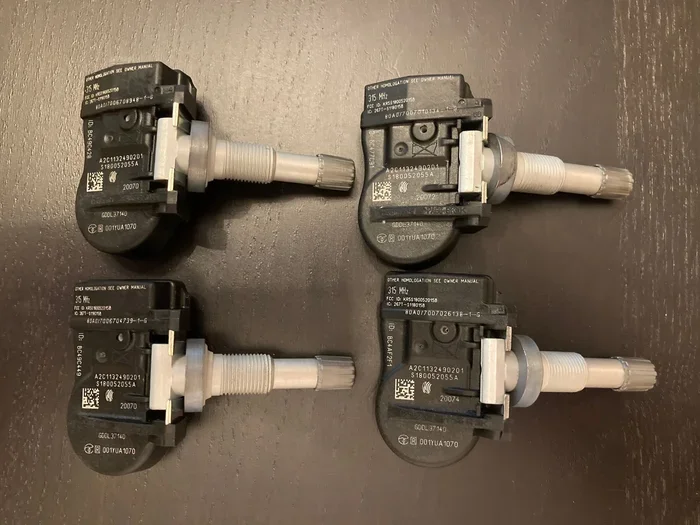
No matter which trim you choose, the tire pressure monitoring system works the same way. Each sensor is mounted on the valve stem or attached to the wheel inside the tire. They communicate with the TPMS module in your car using radio frequency signals.
How the Direct TPMS Sensors Work
Each tire pressure sensor inside your CX-5 contains a small battery, a pressure gauge, and a radio transmitter. Here is the simple process:
- The sensor measures the air pressure inside the tire.
- It sends this data wirelessly to the car’s TPMS control module.
- The module compares the reading to the recommended pressure.
- If pressure is too low, the dashboard TPMS warning light turns on.
This whole process happens in seconds. You do not need to do anything. The system checks your tires automatically, usually every few minutes while you drive.
Understanding the TPMS Warning Light
Your Mazda CX-5 dashboard has a specific symbol for the TPMS system. It looks like a horseshoe shape with an exclamation point in the middle. When you see this light, your car is telling you that at least one tire has low pressure.
What the Different TPMS Light Behaviors Mean
Not all TPMS warnings are the same. How the light behaves tells you how urgent the issue is:
- Light stays on steadily: One or more tires have pressure below the recommended level. Check your tire pressure as soon as you can. This is not an emergency, but you should address it quickly.
- Light flashes and then stays on: This usually means there is a problem with the TPMS system itself. A sensor may have failed, or the battery in a sensor may be dead. You should get the system checked by a professional.
- Light comes on and then goes off: Sometimes pressure drops in cold weather and the light appears temporarily. If it goes away after driving a bit, the pressure may have equalized. Still, check your tires to be safe.
Where to Find the Recommended Tire Pressure
Every Mazda CX-5 has a sticker that tells you the recommended tire pressure. You can find it on the driver’s side door jamb. The sticker lists the correct PSI for both front and rear tires. The typical pressure for a CX-5 is between 32 and 35 PSI, but always check the sticker on your specific vehicle.
Keep a tire pressure gauge in your glove box. Checking your pressure once a month takes only a few minutes and can prevent bigger problems down the road.
Common TPMS Issues in the Mazda CX-5
Like any electronic system, the TPMS in your CX-5 can run into problems. Here are the most common issues owners face and what you can do about them.
TPMS Light Stays On After Inflating Tires
This is one of the most common complaints. You fill up your tires, but the TPMS warning light stays on. What gives? The system needs a reset after you adjust the pressure. Most Mazda CX-5 models have a TPMS reset button located under the steering column or on the dashboard. Press and hold it until the light blinks three times. Then start driving, and the system will relearn the new pressure levels.
TPMS Sensor Battery Failure
Each tire pressure sensor runs on a small battery. These batteries are not rechargeable. When they die, the sensor stops sending readings. Most sensor batteries last between 5 and 10 years. If your CX-5 is getting older and the TPMS light starts flashing, a dead battery in one or more sensors could be the cause.
Replacing a TPMS sensor battery usually means replacing the entire sensor unit. The cost typically runs between $50 and $100 per sensor. Some tire shops can do this quickly while you wait.
TPMS Light After Rotating or Changing Tires
When you rotate your tires or install new ones, the tire pressure sensor positions change. The system may need to relearn which sensor is where. A simple reset usually fixes this. If the light persists, you may need to use a TPMS diagnostic tool to reprogram the sensors.
Cold Weather and False TPMS Alerts
Cold temperatures cause air inside tires to contract. This can drop your pressure enough to trigger the TPMS warning light. If the light appears on a cold morning but goes away after driving, this is likely the cause. Still, always verify your pressure with a gauge to be sure.
How to Maintain Your Mazda CX-5 TPMS
Taking care of your TPMS is simple. A little regular attention goes a long way in keeping the system accurate and reliable.
Quick Tips for TPMS Maintenance
- Check tire pressure monthly: Use a reliable tire pressure gauge to verify the PSI in all four tires, including the spare.
- Reset the system after adjustments: Always reset your TPMS after adding or releasing air from any tire.
- Replace sensors when needed: If a sensor battery dies, replace it promptly. A dead sensor means you lose monitoring on that wheel.
- Keep valve stems capped: The caps protect the sensor and prevent air leaks. They are small but important.
- Watch for corrosion: In winter, road salt can corrode sensor connections. Clean the valve stems regularly to prevent issues.
- Read your owner’s manual: Your Mazda CX-5 manual has specific instructions for TPMS reset procedures and sensor replacement.
When to Seek Professional Help
Most TPMS tasks are straightforward. But some situations call for a professional. If your TPMS warning light stays on after a reset, if multiple sensors fail at once, or if you notice erratic pressure readings, it is time to see a mechanic. A full car diagnostic can pinpoint exactly which sensor or component is failing.
If you ever need to clear a persistent warning light, places like Autozone can help with diagnostic tools, but for sensor replacement, a qualified shop is your best bet. You can also learn more about how long a full diagnostic takes to set expectations before you visit a shop.
TPMS and Your Mazda CX-5’s Overall Performance
The TPMS does more than just warn you about flat tires. It plays a role in your vehicle’s overall performance and safety. Let us look at how proper tire pressure affects your CX-5.
Fuel Economy and Tire Pressure
Your Mazda CX-5 gets its best fuel economy when tires are inflated to the correct PSI. Underinflated tires create drag, which makes the engine work harder. Over time, this can noticeably reduce your miles per gallon. In fact, tire pressure has a direct impact on fuel efficiency, even as your vehicle ages. Keeping your sensors working properly ensures you always know when pressure is off and can fix it fast.
Tire Wear and Replacement Costs
Tires are expensive. Proper pressure from a working tire pressure sensor helps you get the most miles out of each set. Underinflated tires wear the outer edges of the tread. Overinflated tires wear the center. Both patterns shorten tire life and cost you money. Your TPMS helps you avoid both scenarios.
Safety on the Road
This is the most important reason your TPMS matters. Properly inflated tires grip the road better, handle more predictably, and stop shorter. In wet or icy conditions, the difference is even more dramatic. The TPMS warning light gives you the chance to fix pressure issues before they become safety hazards.
Frequently Asked Questions About Mazda CX-5 TPMS
Can I drive my Mazda CX-5 with the TPMS light on?
You can drive short distances with the TPMS warning light on, but you should not ignore it. Pull over safely and check your tire pressure with a gauge. If the pressure is low, inflate the tire to the recommended PSI. Driving on underinflated tires for long periods can damage the tires and reduce your safety on the road.
How long do TPMS sensors last in a Mazda CX-5?
Most TPMS sensors last between 5 and 10 years. The limiting factor is usually the small battery inside each sensor. When the battery dies, the sensor stops working and you will need to replace the entire unit. If your CX-5 is approaching the 10-year mark, it is a good idea to have the sensors checked during routine maintenance.
Can I replace TPMS sensors myself?
Yes, many owners replace TPMS sensors at home if they have basic tire tools and a TPMS reset tool. The process involves removing the tire, swapping the old sensor for the new one, and then resetting the system. However, if you are not comfortable working with tires, a tire shop or mechanic can handle the job quickly and affordably.
Does the Mazda CX-5 have both direct and indirect TPMS?
The Mazda CX-5 uses a direct TPMS system, which means physical sensors inside each tire measure the actual pressure. Some vehicles use indirect systems that estimate pressure based on wheel speed. The CX-5 does not use an indirect system. You get precise, real-time pressure readings from each wheel thanks to the direct sensors.
Why does my TPMS light come on in cold weather?
Cold air causes the air inside your tires to contract, which lowers the pressure. This can trigger the TPMS warning light even when your tires are properly inflated. If the light goes away after driving for a while, the temperature change was likely the cause. Still, always check your pressure with a gauge to confirm everything is in the safe range.
How much does it cost to replace a TPMS sensor in a Mazda CX-5?
Replacing a single TPMS sensor typically costs between $50 and $100 for the part, plus labor if you go to a shop. Some tire retailers include free installation with the purchase of a sensor. If you need all four sensors replaced, expect the total cost to range from $200 to $400 depending on your location and the sensor brand you choose.
Conclusion
The Mazda CX-5 comes with TPMS tire pressure sensors as standard equipment across all trims and model years. These sensors are a vital part of your vehicle’s safety system, helping you maintain proper tire pressure for better handling, improved fuel economy, and longer tire life. Understanding how your TPMS works and knowing what to do when the warning light comes on can save you time, money, and potentially prevent accidents.
Keep your tires properly inflated, reset the system after any pressure changes, and replace sensors when the batteries die. These simple steps keep your CX-5 running at its best. Your tire pressure monitoring system works hard for you every time you drive. Give it the attention it deserves, and it will keep you safe on the road for years to come.
Remember, a quick check of your tire pressure once a month takes only a few minutes but pays off in big ways. Your Mazda CX-5 is a well-engineered vehicle, and the TPMS is just one of the many features that make it a smart, safe choice for drivers everywhere.