Why Is My Cruise Control Staying On and Wont Shut Off
Your cruise control staying on and refusing to shut off is a frustrating and potentially unsafe issue. Common causes include a sticky brake pedal switch, a faulty cruise control module, or a vacuum leak in the system. This guide walks you through every reason your speed control might be stuck, gives you practical DIY fixes, and tells you exactly when a mechanic is needed.
There’s nothing more unsettling than pressing the brake pedal and realizing your cruise control staying on won’t disengage. You’re cruising down the highway, and suddenly you realize the throttle is still being commanded by a system that should have released the moment your foot hit the brake. It’s a scary moment, and it happens more often than most drivers think.
Whether you drive a modern truck with adaptive cruise control or a classic car with a traditional speed control setup, a cruise system that refuses to turn off is a real problem. It can cause unintended acceleration, wear out your engine, and put you and others at serious risk on the road.
This article covers every reason your cruise control might be stuck on, from simple fixes you can do at home to complex electrical issues that need professional attention. By the end, you’ll know exactly what’s causing the problem and how to fix it safely.
Key Takeaways
- Brake light switch failure is the #1 reason cruise control won’t disengage when you press the brake.
- A faulty cruise control switch on the steering wheel can send constant signals to keep the system active.
- Vacuum leaks in older vehicles cause the cruise control actuator to malfunction and stay engaged.
- Wiring and electrical issues like corroded connectors can trick the system into thinking it should remain on.
- Resetting the system by disconnecting the battery often fixes minor glitches in the speed control module.
- Adaptive cruise control (ACC) systems have additional sensors that can cause the same staying-on problem.
- Ignoring the issue can lead to unintended acceleration and dangerous driving situations.
📑 Table of Contents
- How Your Cruise Control System Actually Works
- Why Your Cruise Control Stays On: The Top Causes
- Quick Fixes You Can Try at Home
- Common Mistakes That Make Cruise Control Problems Worse
- When You Need to See a Mechanic
- Preventing Cruise Control Staying-On Issues in the Future
- Key Takeaways
- Frequently Asked Questions
- Final Thoughts
How Your Cruise Control System Actually Works
Before we dive into why your cruise control staying on won’t shut off, it helps to understand how the system works. When you know the basics, troubleshooting becomes much easier.
Your cruise control system is essentially a speed control module that tells your engine how much throttle to apply. It keeps your vehicle moving at a set speed without you needing to hold the gas pedal. The system relies on several key components working together.
The Main Components
Here are the parts that make your cruise control function:
- Cruise control switch — The buttons on your steering wheel or column that let you set, resume, or cancel the system.
- Brake pedal switch — A simple sensor that tells the cruise control to disengage the moment you press the brake.
- Vehicle speed sensor — Monitors how fast your wheels are turning and feeds that data to the control module.
- Cruise control module — The brain of the system. It processes inputs and adjusts throttle accordingly.
- Actuator or servo — The mechanical part that physically opens or closes the throttle based on commands from the module.
- Vacuum lines — In older vehicles, vacuum pressure operates the actuator to control throttle position.
When any of these parts fail or send wrong signals, the speed control system can get confused. It might keep the throttle open even when you want it to stop. Understanding this helps you see why a simple switch failure can cause such a big problem.
Why Your Cruise Control Stays On: The Top Causes
Now let’s get to the heart of the matter. Why does your cruise control refuse to turn off? There are several well-known culprits, and they range from easy fixes to more serious repairs.
1. Faulty Brake Pedal Switch
The brake pedal switch is the most common reason for cruise control staying on. This small sensor sits right at the top of your brake pedal. When you press the brake, it sends a signal to the cruise control module telling it to disengage immediately.
If this switch goes bad, the system never receives the cancel signal. You could be pressing the brake pedal hard, but the cruise control thinks everything is fine. Here’s what to look for:
- Your brake lights don’t come on when you press the pedal.
- The cruise control cancel button on the steering wheel doesn’t work.
- The brake light warning on your dashboard stays off even when you’re braking.
A bad brake pedal switch is usually a cheap and easy fix. Most mechanics can replace it in under 30 minutes. The part itself often costs less than 50 dollars.
2. Stuck or Faulty Cruise Control Switch
The buttons on your steering wheel take a beating over time. The set, resume, cancel, and coast buttons are used hundreds of times. Eventually, one of them can stick or send a constant signal to the control module.
For example, if the cancel button’s internal contact gets stuck in the “off” position, it might actually send a signal that keeps the system active. This is a quirky electrical problem that confuses many car owners.
Try pressing each cruise control button firmly several times. Sometimes a simple reset of the switch contacts can clear a temporary glitch. But if the buttons feel sticky or unresponsive, the whole switch assembly may need replacement.
3. Vacuum Leaks in Older Vehicles
If you drive an older car or truck, your cruise control likely uses vacuum pressure to operate the throttle actuator. A vacuum leak in the system can cause the actuator to stay partially open, which keeps the cruise control engaged.
Common places for vacuum leaks include:
- Cracked or hardened vacuum hoses
- A leaking intake manifold gasket
- A faulty brake booster that loses vacuum
- A damaged cruise control solenoid
When vacuum pressure drops or becomes inconsistent, the cruise control actuator can’t respond properly to the module’s commands. The result is a system that stays on and keeps the throttle open even when it shouldn’t.
4. Wiring and Electrical Connector Problems
Modern vehicles rely heavily on wiring harnesses and electrical connectors to communicate between sensors and the control module. Over time, these connections can corrode, loosen, or get damaged.
A corroded connector at the cruise control module can send erratic signals. The module might interpret a faulty signal as a command to keep the system active. This is especially common in vehicles that have been exposed to road salt, moisture, or debris.
Here are signs of wiring issues:
- The cruise control works intermittently — sometimes on, sometimes off.
- You get a cruise control warning light on the dashboard.
- The system behaves erratically, engaging and disengaging on its own.
Checking connectors and wiring is something a mechanic can do with a basic multimeter. It’s often an overlooked cause of cruise control problems.
5. Vehicle Speed Sensor Failure
The vehicle speed sensor tells the cruise control module how fast you’re going. If this sensor fails or sends incorrect data, the module might not recognize that you’ve slowed down or stopped. It could keep the throttle open because it thinks you’re still moving at the set speed.
A failing speed sensor usually triggers other warning signs too:
- Your speedometer acts erratically or goes to zero.
- The transmission shifts poorly or roughly.
- The check engine light comes on with a related diagnostic code.
If you notice these symptoms along with your cruise control staying on, the speed sensor should be your first suspect.
6. Adaptive Cruise Control Sensor Issues
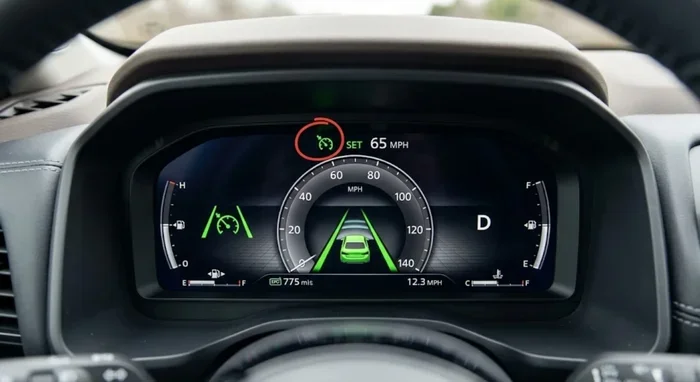
Many newer vehicles come equipped with adaptive cruise control, or ACC. This system uses radar or cameras to maintain a safe following distance from the vehicle ahead of you. When the ACC sensor gets dirty, damaged, or misaligned, it can cause the system to stay engaged even when it should cancel.
Common ACC sensor problems include:
- A dirty radar sensor behind the front grille
- A misaligned camera unit near the rearview mirror
- Water or ice covering the sensor
- A faulty sensor that needs recalibration
ACC systems are more complex than traditional cruise control, and their staying-on issues often require professional diagnostic equipment to resolve.
7. Cruise Control Module Malfunction
In rare cases, the cruise control module itself fails. This is the computer that processes all inputs and controls the throttle. When the module goes bad, it can send constant commands to keep the system active regardless of what you do.
A failed module usually needs to be reprogrammed or replaced entirely. The good news is that module failure is one of the least common causes. Most cruise control staying-on issues come down to simpler problems like switches, sensors, or vacuum leaks.
Quick Fixes You Can Try at Home
Before you head to the mechanic, there are a few things you can try yourself. These simple steps often resolve minor cruise control issues.
Try the Cancel Button First
It sounds obvious, but many drivers don’t realize the cancel button might not be working properly. Press it firmly and hold it for a second. Try tapping it a few times quickly. Sometimes a stuck contact just needs a little extra pressure to reset.
Check the Brake Pedal
Press your brake pedal all the way to the floor. Does the cruise control disengage? If it does, the problem might be with the brake light switch adjustment rather than a complete failure. Some switches can be adjusted without replacing them.
Reset by Disconnecting the Battery
A simple battery reset can clear temporary electronic glitches. Here’s how:
- Turn off the engine and remove the key from the ignition.
- Locate the negative battery terminal.
- Disconnect the cable and wait at least 15 minutes.
- Reconnect the cable and start the engine.
- Test the cruise control system to see if it responds normally.
This reset clears the speed control module’s memory and can resolve many minor electrical hiccups. It won’t fix a broken switch or a failed sensor, but it’s worth trying before anything else.
Inspect Vacuum Lines
For older vehicles, pop the hood and look at the vacuum hoses connected to the cruise control actuator. Look for cracks, dry rot, or loose connections. A simple hose replacement can often solve the problem without expensive repairs.
Clean the ACC Sensors
If your vehicle has adaptive cruise control, check the front radar sensor for dirt, mud, or ice. A gentle wipe with a soft cloth can sometimes restore proper function. Avoid using harsh chemicals that could damage the sensor lens.
Common Mistakes That Make Cruise Control Problems Worse
Some things drivers do unknowingly make cruise control issues worse. Avoid these common mistakes to keep your speed control system working properly.
Ignoring the Problem
The biggest mistake is ignoring a cruise control that won’t turn off. Some drivers just disconnect the system entirely and go back to manual driving. But that doesn’t fix the underlying issue. A stuck cruise control system can cause wear on your engine, transmission, and throttle body over time.
Using the Resume Button Repeatedly
When the cruise control won’t disengage, some drivers keep hitting the resume button hoping it will cancel. This can actually make the problem worse. The resume button is designed to bring the system back to the previously set speed, not to turn it off. Use the cancel button or press the brake pedal instead.
DIY Electrical Repairs Without Proper Knowledge
It can be tempting to start pulling wires and connectors apart when you suspect an electrical issue. But without proper knowledge, you can damage sensitive sensors or create new problems. Stick to visual inspections and leave electrical repairs to professionals unless you have experience.
Forgetting to Check the Brake Lights
Since the brake pedal switch controls both your brake lights and the cruise control cancel function, a single failed switch can cause two problems at once. If your brake lights aren’t working, get them checked immediately. It’s a safety issue and a cruise control issue in one.
When You Need to See a Mechanic
Not every cruise control problem can be fixed at home. Here are the signs that it’s time to take your vehicle to a professional.
- The cruise control stays on even when you press the brake pedal firmly. This points to a serious brake switch or electrical issue that needs proper diagnosis.
- You get a check engine light along with the cruise control problem. The two issues might be related, and a mechanic can pull diagnostic codes to find the root cause.
- The throttle sticks open or the car accelerates on its own. This is a dangerous situation that needs immediate attention. Do not keep driving the vehicle.
- Multiple electrical systems are acting up. If other electronics are also malfunctioning, you might have a broader wiring or grounding problem.
- You’ve tried basic resets and fixes but nothing works. At this point, professional diagnostic equipment is needed to pinpoint the issue.
A qualified mechanic can use diagnostic scanners to read error codes from your cruise control module. These codes tell exactly which component is failing, saving you time and money on guesswork.
Preventing Cruise Control Staying-On Issues in the Future
The best way to deal with cruise control problems is to prevent them from happening in the first place. Regular maintenance goes a long way toward keeping your speed control system working reliably.
Stick to a Maintenance Schedule
Follow your vehicle manufacturer’s recommended maintenance schedule. Regular inspections of the brake system, throttle body, and electrical connections can catch small issues before they become big problems.
Keep Sensors Clean
For vehicles with adaptive cruise control, keeping the front sensors clean is essential. A quick wipe during your regular car wash routine can prevent many sensor-related issues.
Address Small Problems Early
If you notice the cruise control acting a little funny — engaging at odd times, not holding speed steady, or feeling sluggish to respond — don’t ignore it. Early intervention prevents a minor glitch from turning into a major repair.
Use Genuine or Quality Replacement Parts
When you do need to replace a switch, sensor, or actuator, use quality parts. Cheap aftermarket components can fail quickly and cause the same problems you’re trying to fix.
Key Takeaways
- Brake pedal switch failure is the most common reason cruise control stays on and won’t disengage.
- A faulty cruise control switch on the steering wheel can send constant signals that keep the system active.
- Vacuum leaks in older vehicles prevent the actuator from responding properly to the control module.
- Wiring and connector corrosion can send erratic signals that trick the system into staying engaged.
- Vehicle speed sensor failure can cause the module to think you’re still at the set speed.
- Adaptive cruise control sensors need regular cleaning and can cause staying-on issues when dirty or damaged.
- Resetting the system by disconnecting the battery is a quick first step for minor electronic glitches.
Frequently Asked Questions
Can a dead battery cause cruise control to stay on?
Yes, a weak or dying battery can send inconsistent voltage signals to the cruise control module. This can cause the system to behave erratically, including staying on when it should be off. If your battery is more than three to four years old, have it tested. A simple battery replacement might solve the problem entirely.
Is it safe to drive with cruise control stuck on?
It is not safe. A stuck cruise control system can cause unintended acceleration and takes away your ability to control throttle input manually. If the system won’t disengage, press the brake pedal firmly and pull over safely. Turn off the engine and restart the vehicle. If the problem persists, do not continue driving until it’s repaired.
How much does it cost to fix cruise control that won’t turn off?
The cost depends entirely on the cause. A brake pedal switch replacement typically costs between 50 and 150 dollars. A cruise control switch on the steering wheel might run 100 to 300 dollars. More complex issues like a failed control module or wiring harness repair can cost several hundred dollars or more. Always get a diagnosis before committing to a repair.
Can low brake fluid cause cruise control to stay on?
In some vehicles, yes. Low brake fluid can affect the brake pedal switch and the brake light system, which are directly connected to cruise control cancellation. If you notice low brake fluid along with cruise control issues, check for leaks in the brake system immediately. Low brake fluid is a serious safety concern on its own.
Does resetting the cruise control always fix the staying-on problem?
No, a reset only works for minor electronic glitches and temporary software errors. If there’s a physical failure in a switch, sensor, actuator, or wiring, a reset won’t fix it. Think of a reset as a first step, not a guaranteed solution. If the problem comes back after a reset, you need to investigate further.
Are cruise control staying-on problems more common in certain vehicles?
Yes, some vehicle brands and models are known for cruise control issues. Older trucks with vacuum-operated cruise systems tend to have more actuator and vacuum line problems. Certain late-model vehicles with electronic throttle control have reported cruise control module glitches. Check online forums for your specific vehicle to see if others have experienced similar issues.
Final Thoughts
A cruise control staying on and refusing to shut off is more than just an annoyance. It’s a safety issue that deserves your attention. Whether the cause is a simple brake pedal switch, a sticky steering wheel button, or a more complex electrical problem, the key is to address it quickly and properly.
Start with the basics. Check the brake pedal. Try the cancel button. Reset the system. These steps solve a surprising number of cruise control issues. But don’t hesitate to get professional help when the problem persists. A qualified mechanic has the tools and knowledge to diagnose even the trickiest cruise control malfunctions.
Your cruise control system is designed to make long drives more comfortable and less tiring. When it works right, it’s a great feature. When it malfunctions, it becomes a hazard. Take care of it, maintain it, and always prioritize safety over convenience. The road ahead is safer when your vehicle’s systems are working exactly the way they should.