How to Find GPS Tracker on Car With These Easy Tips
Finding a GPS tracker on your car is easier than you think with the right approach. This guide covers physical inspection spots, electronic detection tools, and proven methods to locate hidden surveillance devices. Whether you suspect someone is monitoring your vehicle or want to check for fleet trackers, these easy tips will help you stay in control of your privacy and security.
Have you ever wondered if someone is tracking your car? It sounds like something from a spy movie, but the truth is, GPS trackers on cars are more common than most people realize. Whether a jealous partner, a suspicious employer, or a stranger has planted a device, discovering a GPS tracking device on your vehicle can feel alarming.
The good news is that you do not need to be a tech expert to find one. With a little patience and the right approach, you can locate hidden GPS trackers on your car in under an hour. This guide walks you through every step, from simple visual checks to advanced electronic detection methods. By the end, you will know exactly how to find GPS tracker on car and what to do once you spot one.
Your car is your private space. You deserve to know what is happening with it when you are not around. Let us dive into the tips and tricks that will help you take back your privacy.
Key Takeaways
- Know where to look: GPS trackers hide in common spots like under the car, inside the wheel well, and beneath seats.
- Use a GPS signal detector: Electronic sweepers make finding hidden trackers faster and more reliable than visual checks alone.
- Check the OBD port: Many trackers plug directly into your car’s diagnostic port under the dashboard.
- Scan your phone for unusual activity: Unexpected battery drain or location data usage can signal a tracking device is present.
- Act fast if you find one: Remove the device safely and consider legal options if the tracker was placed without your consent.
📑 Table of Contents
- Why Someone Might Place a GPS Tracker on Your Car
- How to Find GPS Tracker on Car: Physical Inspection Tips
- Electronic Methods to Detect a GPS Tracker
- Common Places GPS Trackers Hide on a Car
- How to Confirm a Device Is a GPS Tracker
- What to Do After You Find a GPS Tracker
- Preventing Future GPS Tracking on Your Car
- Common Mistakes People Make When Looking for Trackers
- Final Thoughts
Why Someone Might Place a GPS Tracker on Your Car
Before we get into the detection methods, it helps to understand why people install vehicle tracking devices in the first place. Knowing the motives can also help you figure out where to look. Not all tracking is sinister, but some situations are serious.
Common Reasons for Car Tracking
- Fleet management: Companies track company vehicles to monitor routes and fuel usage.
- Parental monitoring: Some parents place trackers on their teen’s car for safety reasons.
- Personal surveillance: A jealous or controlling partner may track your movements.
- Stalking or harassment: Unwanted individuals sometimes use hidden car surveillance to follow someone.
- Insurance or loan monitoring: Some lenders install trackers on financed vehicles.
- Private investigation: Detectives may use trackers for legal investigative purposes.
No matter the reason, if you did not consent to being tracked, you have every right to find and remove the device. Car privacy protection is not paranoia — it is smart self-care.
How to Find GPS Tracker on Car: Physical Inspection Tips
The first method to detect hidden GPS trackers is a thorough physical inspection. Most trackers are small, about the size of a deck of cards or smaller. They are often hidden in plain sight or in spots people rarely check. Here is where to start.
Check Under the Car
Start with the underside of your vehicle. Magnetic GPS trackers are the most common type found on cars. They stick to the metal frame using a strong magnet. Crawl under your car and look for any unusual objects attached to the body or frame.
Focus on these areas:
- Under the front bumper
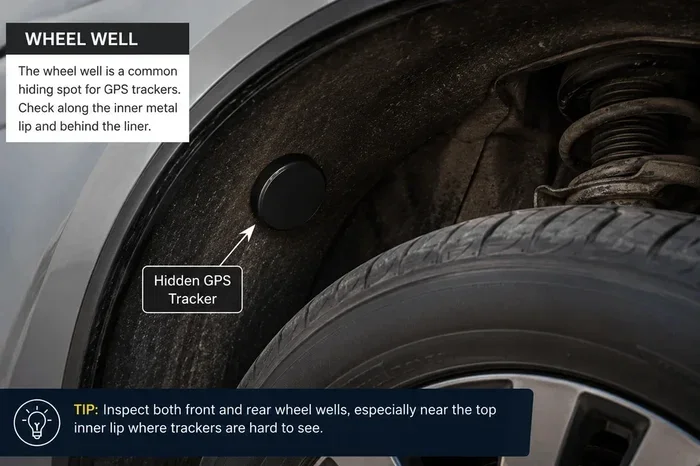
- Along the wheel wells
- Near the exhaust system
- Beneath the rear seats (from underneath)
Bring a flashlight. A magnetic tracking device may be small and flat, so look carefully. If you find something that looks like a small box with a magnet on the back, you have likely found your tracker.
Inspect the Interior of the Car
Do not skip the inside of your car. Many trackers hide in the cabin where they can get a clear GPS signal. Check these spots:
- Under the seats
- Inside the glove compartment
- Behind the dashboard panels
- In the center console
- Inside the sun visor
- Attached to the spare tire
Feel around for anything that looks out of place. A GPS bug sweep of the interior should include moving seats fully forward and backward to access hidden areas. Use your phone flashlight to look into dark crevices.
Examine the Wheel Wells and Trunk
The wheel wells are a favorite hiding spot because they are dark and hard to see. Open your trunk and look along the inside walls. Some trackers are taped or zip-tied behind plastic trim pieces. Run your hands along the edges and feel for anything bulky or unusual.
Quick Tip: If your car was recently washed or detailed, check again. People sometimes remove a tracker temporarily for cleaning and then reattach it.
Electronic Methods to Detect a GPS Tracker
Physical inspection works well for magnetic and larger devices. But some wireless tracking devices are tiny and nearly invisible. That is where electronic detection methods come in.
Use a GPS Signal Detector
A GPS signal detector is a handheld device that picks up radio frequencies emitted by tracking devices. These detectors are affordable and easy to use. You simply turn it on and walk around your car slowly, scanning for signal spikes.
Here is how to do it right:
- Park your car in a quiet area away from tall buildings.
- Turn off all electronic devices inside the car.
- Walk around the entire vehicle slowly with the detector.
- Watch for sudden spikes in frequency or signal strength.
- Check the area where the signal is strongest.
Popular GPS signal detector brands include SpyFinder, GPS Detector, and Tracker Detect. These tools are especially helpful for finding real-time location tracker devices that transmit data continuously.
Check Your Phone for Suspicious Apps
Some modern trackers connect to your phone via Bluetooth or Wi-Fi. If someone installed a companion app on your phone, you might be able to find the tracker through your device. Go through your installed apps and look for anything unfamiliar.
Also, check your phone’s battery usage. A tracking device that communicates frequently can cause unusual battery drain. If your phone battery is dropping faster than normal without any change in your usage habits, that could be a red flag.
Use a RF (Radio Frequency) Scanner
An RF scanner detects radio waves used by wireless trackers. Unlike a GPS detector, which specifically targets GPS frequencies, an RF scanner covers a broader range of signals. This makes it useful for finding non-GPS tracking devices as well.
You can find portable RF scanners for under $50 online. They are a worthwhile investment if you want thorough anti-tracking device protection.
Common Places GPS Trackers Hide on a Car
Knowing the most common hiding spots gives you a huge advantage. Most vehicle location monitors are placed in predictable locations. Here is a breakdown of where to look first.
| Location | Why It Is Popular | Difficulty to Find |
|---|---|---|
| Undercarriage near wheels | Easy access and strong GPS signal | Moderate |
| Inside wheel well | Hidden from view, protected from weather | Moderate |
| OBD port under dashboard | Plugs in directly, no battery needed | Easy |
| Inside glove box or center console | Close to the driver, easy to access | Easy |
| Behind plastic trim panels | Concealed and snug fit | Hard |
| Under the spare tire | Often forgotten and rarely checked | Moderate |
| Attached to the chassis | Hidden and stable mounting point | Hard |
If you are short on time, start with the OBD port and the underside of the car. These two spots account for the majority of hidden trackers found on vehicles.
The OBD Port: A Common Tracker Spot
The OBD-II port is located under your dashboard, usually near the driver’s side knee area. Many telematics devices plug directly into this port because it provides power and access to the car’s systems. A tracker plugged into the OBD port is very easy to miss because it blends in with the other cables.
To check, get down low and look behind the steering column. You should see the OBD port with a rectangular connector. If there is an extra device plugged in that you do not recognize, unplug it carefully and examine it.
How to Confirm a Device Is a GPS Tracker
Not every strange device on your car is a tracker. You might find a toll tag, a Bluetooth beacon, or even a mechanic’s diagnostic tool left behind. Here is how to confirm what you found.
Look for a GPS Antenna
Most GPS tracking devices have a small antenna or a metallic patch designed to receive satellite signals. If the device has an external antenna or looks like a small square box with a flat top, it is likely a tracker.
Check for a SIM Card Slot
Many modern trackers use cellular networks to transmit location data. Open the device if you can and look for a SIM card slot. A SIM card means the device sends real-time location information to someone else’s phone or computer.
Test for Battery Power
Battery-powered trackers will have a rechargeable battery or disposable cells. If the device has a USB charging port or a battery compartment, it is almost certainly a wireless tracking device. Remove it and check the brand name online if you want more details.
What to Do After You Find a GPS Tracker
Finding a tracker is only half the battle. What you do next matters just as much. Here is a step-by-step plan for handling the situation.
Step 1: Do Not Remove It Immediately If You Suspect Legal Issues
If you believe the tracker was placed by a law enforcement agency or a licensed private investigator, removing it could have legal implications. In some cases, it is better to document the device and consult a lawyer first.
Step 2: Document Everything
Take clear photos of the tracker from multiple angles. Note the exact location where you found it. Record the date and time. This documentation can be valuable if you decide to take legal action.
Step 3: Remove the Device Safely
For magnetic trackers, simply pull them off gently. For devices plugged into the OBD port, unplug them carefully. If the tracker is wired into your car’s electrical system, consider having a mechanic remove it to avoid damaging any components.
Step 4: Report the Incident
If you did not give permission for anyone to track your car, report it to your local police. Unauthorized GPS tracking is illegal in many jurisdictions. File a report and share your documentation.
Step 5: Consider Preventive Measures
To prevent future tracking, consider using a GPS signal jammer (where legal) or regularly performing a GPS bug sweep on your vehicle. Some people also install a car privacy protection device that blocks unauthorized signals.
Preventing Future GPS Tracking on Your Car
Finding a tracker once is enough for most people. The goal is to make sure it does not happen again. Here are some proactive steps you can take.
- Perform regular sweeps: Walk around and under your car once a month to check for new devices.
- Invest in a detector: Keep a GPS signal detector in your garage or car for quick checks.
- Use a Faraday pouch: If you are concerned about Bluetooth or cellular trackers, a Faraday pouch blocks signals.
- Lock your car: Keep doors and windows locked, especially in unfamiliar parking areas.
- Be aware of who has access: Limit who has a copy of your car keys or knows where you park.
Expert Insight: “Most people do not check their car for trackers regularly. A simple monthly sweep takes less than 15 minutes and can save you a lot of stress and potential danger.” — Automotive Security Specialist
Common Mistakes People Make When Looking for Trackers
Avoid these common errors that can cause you to miss a GPS tracker on car:
- Only checking the interior: Many trackers are on the outside of the car, not inside.
- Rushing the search: Trackers are small and well hidden. Take your time and look carefully.
- Ignoring the OBD port: This is the easiest place for a tracker to hide, yet many people overlook it.
- Assuming all devices are harmless: Even a small device could be transmitting your location in real time.
- Not checking after car washes: Some trackers are removed during washing and reattached afterward.
By avoiding these mistakes, you increase your chances of finding any hidden tracker detector that may be on your vehicle.
Final Thoughts
Learning how to find GPS tracker on car is a valuable skill in today’s world. GPS tracking devices are small, affordable, and easy to hide. But with the right knowledge and tools, you can find them and protect your privacy. Start with a physical inspection of the common hiding spots. Follow up with an electronic sweep using a GPS signal detector or RF scanner. Document everything and take action if the tracker was placed without your consent.
Your car is your personal space. You should feel safe and secure every time you get behind the wheel. Regular checks and preventive measures go a long way in keeping unwanted surveillance at bay. Stay vigilant, stay informed, and take control of your car privacy protection today.
Remember, finding a tracker is not about paranoia — it is about awareness. A few minutes of checking can give you peace of mind and keep you one step ahead. Now that you know how to find GPS tracker on car, you have the power to protect yourself and your loved ones.
Frequently Asked Questions
Can a GPS tracker be hidden inside the car’s body panels?
Yes, some trackers are small enough to be tucked behind plastic trim panels or inside the door frame. These are harder to find but a thorough visual and electronic sweep can uncover them. Use a flashlight and feel along seams and edges for anything unusual.
How long does it take to find a GPS tracker on a car?
A basic physical inspection takes about 20 to 30 minutes. Adding an electronic sweep with a detector brings the total to around 45 minutes to an hour. The time depends on how thoroughly you check and how many hiding spots the tracker may be in.
Is it legal to place a GPS tracker on someone else’s car?
In most places, placing a GPS tracker on someone’s car without their consent is illegal. Laws vary by state and country, but unauthorized tracking is generally considered a violation of privacy. If you find a tracker you did not consent to, consider reporting it to the police.
Do GPS trackers need a monthly subscription?
Many real-time location tracker devices require a monthly SIM card plan to transmit data. However, some basic trackers store location data internally and only update when you retrieve the device. Check the device for a SIM card slot to determine if it needs a subscription.
What should I do if I find a tracker but I am not sure who placed it?
Document the device with photos and notes about its location. Do not remove it right away if you plan to involve law enforcement. Contact your local police department and consider consulting a lawyer to understand your rights and next steps.
Can a GPS tracker work even when the car is turned off?
Yes, most GPS trackers have their own battery or draw power from the car’s electrical system even when the engine is off. This means they can continue transmitting your location 24 hours a day. This is why regular checks and electronic detection are so important.
=== CONCLUSION ===
Finding a GPS tracker on car does not have to be a stressful experience. With the physical inspection tips, electronic detection methods, and preventive strategies covered in this guide, you now have everything you need to protect your vehicle and your privacy. Start by checking the common hiding spots, use a GPS signal detector for a thorough sweep, and take action if you find anything suspicious. Share this guide with friends and family who might benefit from knowing how to find GPS tracker on car. Stay safe, stay aware, and keep your car truly yours.