Texas Window Tint Law Explained What You Need To Know
The Texas window tint law sets clear rules on how dark your car windows can be tinted. You must meet specific visible light transmission (VLT) percentages for front, side, and rear windows. Understanding these rules helps you avoid fines, pass inspections, and stay safe on Texas roads.
Key Takeaways
- Front side windows must allow more than 25% VLT for passenger vehicles in Texas.
- The windshield tint strip must sit above the AS-1 line and cannot extend more than 5 inches down.
- Rear windows can be any darkness level as long as the vehicle has dual side mirrors.
- Reflective tint is restricted and must not exceed 25% reflectivity on front and back side windows.
- A medical exemption is available through the Texas Department of Public Safety for those with skin conditions.
- Tint violations can result in fines up to $500 and may cause you to fail your annual inspection.
- Always ask for a certificate of compliance from your tint installer before getting your windows tinted.
📑 Table of Contents
- What Is the Texas Window Tint Law?
- Legal Tint Darkness for Each Window
- Windshield Tint Rules in Texas
- Reflective and Colored Tint Restrictions
- Medical Exemption for Window Tint in Texas
- Common Mistakes and How to Avoid Tint Tickets
- Tips for Choosing Compliant Window Tint
- What Happens If You Get Caught with Illegal Tint?
What Is the Texas Window Tint Law?
The Texas window tint law regulates how dark or reflective you can tint your car windows. These rules exist for safety reasons. Dark windows can block a driver’s view at night. They can also make it harder for police officers to see inside your vehicle during a traffic stop.
Every state has its own set of rules. Texas is no different. The law covers passenger cars, SUVs, vans, and even commercial vehicles. It specifies how much light must pass through each window. It also restricts certain types of tint materials.
Knowing the rules before you tint your windows saves you money and trouble. A simple mistake can lead to a tint ticket. You might even have to remove your tint entirely. This guide breaks down everything you need to know in plain, simple terms.
The Texas Department of Public Safety (DPS) enforces these rules. They work alongside local law enforcement during traffic stops and vehicle inspections. The Texas DMV tint rules are part of the broader vehicle safety inspection process. If your tint does not meet the standard, your vehicle will not pass inspection.
Legal Tint Darkness for Each Window
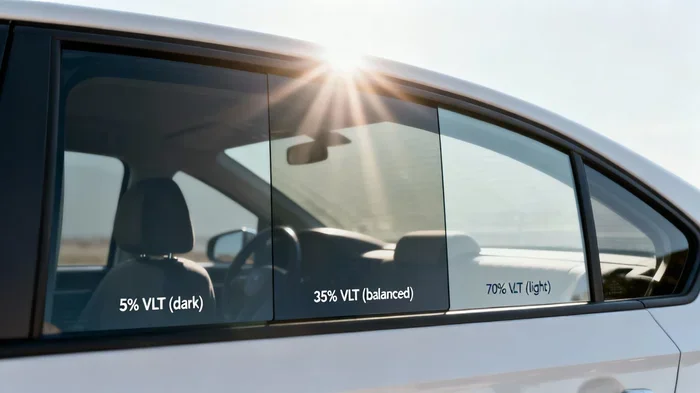
The darkness of window tint is measured by something called Visible Light Transmission, or VLT. This is a percentage. It tells you how much light the tint lets through. The lower the number, the darker the tint. Understanding VLT is the key to staying legal in Texas.
Front Side Windows
For passenger vehicles, the front side windows must allow at least 25% VLT. This means your tint must let more than one-quarter of the light pass through. This rule applies to both the driver’s side and the passenger’s side window.
Why 25%? The state wants drivers to have a clear view of the road. Dark front windows can reduce your ability to see pedestrians, cyclists, and other vehicles. This is especially important during early morning and evening hours when light is low.
Rear Side Windows
The rear side windows have more relaxed rules. You can tint them to any darkness level you want. There is no minimum VLT requirement for rear side windows on passenger vehicles. This gives you more freedom to choose a darker, more stylish look for the back of your car.
Rear Window
Just like the rear side windows, the rear window can be tinted to any darkness. There is no VLT restriction. However, if you tint the rear window, you must have dual side mirrors. The mirrors help compensate for reduced visibility through the back window. This is a safety requirement, not just a suggestion.
Windshield Tint Rules in Texas
The windshield has its own set of rules. You cannot tint the entire windshield in Texas. The law only allows a tint strip at the top of the windshield. This strip must be above the manufacturer’s AS-1 line. If your windshield does not have a visible AS-1 line, the tint strip cannot extend more than 5 inches down from the top.
This rule exists for a very good reason. The windshield gives you your primary view of the road. Any tint that goes too low can seriously block your sightline. It can also create glare issues during sunrise and sunset. The 5-inch limit keeps your vision clear while still allowing some shade at the top of the glass.
Front windshield tint is one of the most commonly misunderstood areas of the law. Many people think they can tint the whole top portion. That is not true. Stick to the AS-1 line or the 5-inch rule, and you will be fine.
Quick Tip for Windshield Tint
- Ask your installer to show you the AS-1 line on your windshield before they start.
- If you are unsure, a 5-inch strip is a safe and legal choice.
- Never apply tint below the AS-1 line or past the 5-inch mark.
Reflective and Colored Tint Restrictions
Texas does not allow just any type of tint film. There are specific rules about reflective and colored tints. These rules are in place to keep roads safe for everyone.
Reflective Tint Rules
Reflective tint has a mirrored or metallic look. It reflects sunlight away from your car. While this can keep your interior cooler, it can also blind other drivers. In Texas, reflective tint on the front and rear side windows cannot exceed 25% reflectivity. This means the tint should not look like a mirror from the outside.
Some states ban reflective tint entirely. Texas allows it, but with limits. The 25% cap ensures that your windows do not become a distraction to other drivers on the road.
Colored Tint Restrictions
Red, amber, and blue tint colors are not allowed in Texas. The law prohibits any tint that gives your windows a distinct color. This rule helps police officers identify vehicles and see inside them during traffic stops. It also prevents confusion with emergency vehicle lighting.
Standard tint colors like charcoal, gray, and green are perfectly fine. These neutral shades reduce glare and heat without changing the color of the glass. If you are shopping for aftermarket window film, stick to these neutral tones.
Comparison Table: Allowed vs. Prohibited Tint Types
| Tint Type | Allowed in Texas? | Notes |
|---|---|---|
| Standard gray or charcoal | Yes | Meets VLT and color rules |
| Reflective tint (front/rear side) | Yes, under 25% reflectivity | Must not look mirror-like |
| Red, amber, or blue tint | No | Prohibited by law |
| Metallic finish | Yes, if under 25% reflectivity | Check with your installer |
| Mirror-like finish | No | Exceeds reflectivity limits |
Medical Exemption for Window Tint in Texas
Some people need darker tint for medical reasons. Conditions like lupus, eczema, or certain skin disorders make the skin extremely sensitive to sunlight. The sun’s UV rays can cause serious health problems for these individuals.
Texas does offer a medical exemption for window tint. This allows you to tint your windows darker than the standard legal limits. However, you must go through the proper process. You cannot simply claim a medical exemption on your own.
How to Get a Medical Exemption
First, you need a written statement from a licensed physician. This statement must explain why you need darker tint. It should specify the VLT percentage that is medically necessary. The physician’s letter should include their contact information and license details.
Next, you must submit this letter to the Texas Department of Public Safety. The DPS will review your application. If approved, you will receive a medical exemption certificate. You must keep this certificate in your vehicle at all times. During a traffic stop or inspection, you may be asked to show it.
Important: The medical exemption applies to the driver and front passenger only in most cases. It does not automatically allow you to tint every window beyond legal limits. Always check the specific terms of your exemption certificate.
Common Mistakes with Medical Exemptions
- Using an expired or outdated medical certificate.
- Failing to carry the certificate in the vehicle.
- Assuming the exemption covers all windows without checking the terms.
- Using a non-licensed practitioner’s letter, which will not be accepted.
Common Mistakes and How to Avoid Tint Tickets
Getting a tint ticket in Texas is more common than you might think. Many drivers do not realize their tint is illegal until they get pulled over. Some people buy tint from shops that do not follow the law. Others simply do not know the rules. Either way, the result is the same: a fine and the hassle of removing or replacing your tint.
Mistake 1: Buying Tint Without Checking VLT
Not all tint films are created equal. Some films that look light on the shelf can be much darker once applied. Always ask your installer for the VLT percentage of the film they plan to use. Do not guess. Get it in writing if possible.
Mistake 2: Tinting the Windshield Too Low
This is the number one mistake people make. The 5-inch rule is strict. Even one inch too far down can cause you to fail inspection. Measure carefully and trust the AS-1 line on your windshield.
Mistake 3: Ignoring the Dual Mirror Rule
If you tint your rear window, you need dual side mirrors. Some drivers forget this requirement. A vehicle with a heavily tinted rear window and no side mirrors will not pass inspection. This is a simple fix, but it is one that catches many people off guard.
Mistake 4: Using Prohibited Colors
Red, blue, and amber tints look cool, but they are illegal in Texas. Do not let a shop talk you into using a colored film. Stick to neutral tones and you will stay on the right side of the law.
How to Avoid a Tint Violation Fine
- Know the VLT requirements for each window before you get tinted.
- Choose a reputable tint installer who understands Texas law.
- Ask for a certificate of compliance from the installer.
- Keep the certificate in your glove box with your registration.
- Get your vehicle inspected annually and check your tint beforehand.
- If you have a medical exemption, carry the certificate with you at all times.
Tips for Choosing Compliant Window Tint
Choosing the right window tinting for your vehicle does not have to be confusing. Follow these tips, and you will find a tint that looks great and keeps you legal.
1. Ask About VLT Before You Buy
Before you commit to any tint, ask the installer to show you the VLT rating of the film. The film should be labeled on the packaging. Compare the VLT to the legal limits for each window. If you are unsure, ask the installer to explain the numbers in plain terms.
2. Choose a Licensed Installer
Not all tint shops follow the same standards. Choose a shop that is familiar with Texas window tinting regulations. A good installer will know the legal limits and will not push you toward illegal options. Ask for references or read online reviews before making a decision.
3. Consider Heat Rejection and UV Protection
Legal tint can still offer great benefits. Many tint films block up to 99% of UV rays. They also reduce heat inside your car. You do not need illegal darkness to enjoy these benefits. Look for films with high heat rejection ratings that still meet the VLT requirements.
4. Keep Records of Your Tint Installation
After your tint is installed, ask for a receipt and a compliance certificate. Keep these documents in your vehicle. If you ever get stopped or questioned, you can prove that your tint was installed by a professional and meets legal standards.
5. Re-Inspect After Tint Installation
If your vehicle passes inspection before tinting, it may fail afterward if the tint is illegal. Plan to get your vehicle re-inspected after installing new tint. This will catch any compliance issues early, before you get a ticket.
Expert Insight
“Most tint violations happen because people buy tint online or from shops that do not understand state regulations,” says a certified automotive inspector in Austin. “The best thing you can do is work with a local installer who knows Texas law inside and out. It saves time, money, and the headache of removing illegal tint.”
Quick Tips at a Glance
- Front side windows: Must be above 25% VLT.
- Rear side and rear windows: Any darkness allowed with dual mirrors.
- Windshield: Tint strip only, above AS-1 line or 5 inches max.
- Reflectivity: Must not exceed 25% on front and rear side windows.
- Colors: No red, blue, or amber tints allowed.
- Medical exemption: Available through DPS with a physician’s letter.
- Certificate: Always ask for proof of compliance from your installer.
What Happens If You Get Caught with Illegal Tint?
If a law enforcement officer determines your tint is illegal, you will likely receive a citation. The fine for a tint violation in Texas can be up to $500. This is a Class C misdemeanor, which means it is a non-criminal offense but still carries a financial penalty.
In addition to the fine, you may be required to remove the illegal tint before your vehicle can pass inspection. This means paying for the tint removal and then paying for new, compliant tint. The total cost can quickly add up to several hundred dollars or more.
Some drivers try to argue their case in court. While this is possible, it rarely works if the tint clearly does not meet the legal VLT requirements. The best approach is prevention. Know the rules, choose compliant tint, and keep your documentation in order.
Key Takeaways
The Texas window tint law exists to keep drivers safe. The rules are clear and enforceable. By understanding VLT percentages, knowing which windows have which limits, and following the rules for reflective and colored tints, you can enjoy tinted windows without any legal trouble.
If you have a medical condition that requires darker tint, the exemption process is straightforward. Just get a physician’s letter and submit it to the DPS. Keep your exemption certificate with you, and you will be protected by law.
Choose a reputable installer, ask the right questions, and always get documentation. These simple steps will keep you compliant and give you peace of mind every time you get behind the wheel. The Texas window tint law does not have to be confusing. With the right information, staying legal is easy.
Remember, the rules apply to every vehicle on Texas roads. Whether you drive a sedan, truck, or SUV, the same VLT limits and tint restrictions apply. Stay informed, stay compliant, and enjoy the benefits of properly tinted windows.
Frequently Asked Questions
Can I tint my front windshield in Texas?
You can only tint the top portion of the windshield in Texas. The tint strip must sit above the manufacturer’s AS-1 line or extend no more than 5 inches down from the top. Full windshield tint is not allowed under Texas law.
What is the legal VLT for front side windows in Texas?
The legal VLT for front side windows on passenger vehicles in Texas must be above 25%. This means the tint must allow at least 25% of outside light to pass through the glass. Both the driver’s side and passenger’s side windows must meet this requirement.
Do I need dual mirrors if I tint my rear window in Texas?
Yes. If you tint your rear window to any darkness level, Texas law requires dual side mirrors. This ensures you still have adequate visibility from the driver’s seat. Vehicles with tinted rear windows and no side mirrors will fail inspection.
How much is a tint ticket in Texas?
A tint violation fine in Texas can be up to $500. It is classified as a Class C misdemeanor. In addition to the fine, you may be required to remove the illegal tint before your vehicle can pass inspection.
Can I get a medical exemption for darker window tint in Texas?
Yes. Texas allows a medical exemption for window tint through the Department of Public Safety. You need a written statement from a licensed physician explaining why darker tint is medically necessary. Submit the letter to DPS and carry the exemption certificate in your vehicle at all times.
Are colored tints like red or blue allowed in Texas?
No. Texas law prohibits red, blue, amber, and other colored tints. Only neutral tint colors like charcoal, gray, and green are allowed. Using a prohibited tint color can result in a citation and a requirement to remove the tint.
=== CONCLUSION ===
The Texas window tint law is straightforward once you understand the basics. The key points are VLT percentages for each window, the windshield strip limit, reflectivity caps, and color restrictions. Front side windows must stay above 25% VLT. The rear windows can be any darkness as long as you have dual mirrors. Your windshield tint is limited to a 5-inch strip at the top.
If you need a medical exemption, the DPS makes the process accessible. Just get a physician’s letter and follow the application steps. And always work with a licensed, reputable tint installer who understands Texas regulations.
Staying compliant with the Texas window tint law protects you from fines, failed inspections, and the hassle of removing illegal tint. It also keeps you and other drivers safe on the road. Take the time to learn the rules, choose the right film, and enjoy your tinted windows with confidence.