How Can I Check My TPMS Tire Pressure Warning Light
Knowing how to check your TPMS is essential for every driver who wants a safe and efficient ride. Your tire pressure monitoring system keeps you informed about low tire pressure before it becomes a serious problem. This guide walks you through every method to check your TPMS, from manual tools to dashboard diagnostics. You will also learn how to reset the warning light and spot common TPMS issues early. By the end, you will feel confident handling your tire pressure like a pro.
Have you ever glanced at your dashboard and seen a strange yellow light shaped like a horseshoe with an exclamation mark? That is your TPMS warning light, and it is trying to tell you something important. Many drivers ignore it or feel confused about what it means. But understanding how to check your TPMS is one of the simplest things you can do to stay safe on the road.
Your tire pressure monitoring system works behind the scenes every time you drive. It keeps an eye on your tire pressure levels and alerts you when something is off. Whether you have a direct TPMS or an indirect TPMS, knowing how to read and respond to the warning is key. In this guide, we will walk you through every step. You will learn how to check your TPMS manually, what the dashboard light means, how to reset it, and when to seek professional help. Let us dive in and take control of your tire health.
Key Takeaways
- Check your TPMS manually: Use a tire pressure gauge to verify each tire matches the recommended tire pressure listed on your door jamb.
- Read the dashboard warning: The TPMS warning light tells you when one or more tires fall below safe tire pressure levels.
- Reset the light after fixing: A simple TPMS reset process can turn off the tire pressure light once you inflate your tires properly.
- Know the sensor lifespan: TPMS sensor batteries typically last 5 to 10 years and need replacement when they die.
- Direct vs indirect TPMS: Direct TPMS uses physical sensors inside the tire, while indirect TPMS relies on wheel speed sensors.
- Don’t ignore the light: Driving with the tire pressure warning on can reduce fuel efficiency and cause uneven tire wear.
- Check tire pressure monthly: Regular tire pressure maintenance prevents most TPMS issues and keeps your tires healthy.
📑 Table of Contents
What Is a TPMS and Why Does It Matter?
The tire pressure monitoring system is a safety feature built into modern vehicles. It tracks the air pressure inside your tires and warns you when levels drop too low. TPMS technology has been required on all new cars sold in the United States since 2007. This means almost every vehicle on the road today has some form of this system.
Why does this matter so much? Underinflated tires are a hidden danger. They can reduce your fuel efficiency, cause uneven tire wear, and even lead to blowouts. According to the National Highway Traffic Safety Administration, tire-related crashes account for thousands of accidents every year. A properly functioning TPMS sensor helps prevent these risks by catching pressure problems early.
How TPMS Sensors Work
There are two main types of TPMS systems. The first is direct TPMS, which uses small sensors mounted inside each tire. These sensors sit on the valve stem or are banded to the wheel. They measure the actual air pressure inside the tire and send a wireless signal to your car’s computer.
The second type is indirect TPMS. This system does not use physical pressure sensors. Instead, it relies on your vehicle’s anti-lock braking system (ABS) sensors. It compares the rotational speed of each wheel. A tire with low pressure has a smaller rolling radius, so it spins faster than the others. The car’s computer detects this difference and triggers the tire pressure light.
Both systems serve the same purpose. They alert you when your tire pressure drops below a safe threshold. Understanding which type your vehicle has can help you troubleshoot issues more effectively.
How to Check Your TPMS Manually
The dashboard warning light is a great alert, but it does not tell you which tire is low or how low it is. That is why learning how to check your TPMS manually is so valuable. A simple tool called a tire pressure gauge gives you precise readings for every tire on your vehicle.
Step-by-Step Manual Tire Pressure Check
Follow these steps to check your tire pressure the right way:
- Find the recommended tire pressure. Look on the driver’s side door jamb for a sticker. It lists the recommended tire pressure for your specific vehicle. You can also check your owner’s manual. Do not use the number printed on the tire sidewall. That number is the maximum pressure, not the recommended one.
- Check pressure when tires are cold. Drive less than a mile before checking. Air inside warm tires expands and gives false readings. Morning is the best time to check.
- Remove the valve stem cap. Twist it counterclockwise and set it aside.
- Press the gauge firmly onto the valve stem. You will hear a brief hiss of air. Hold the gauge steady until the reading stabilizes.
- Compare the reading to the recommended number. If the pressure is low, add air until it matches the recommended level. If it is too high, let a small amount of air out.
- Repeat for all four tires. Do not forget the spare tire if your vehicle has one.
- Replace the valve stem caps. These small caps keep moisture and debris out of the valve.
A good quality tire pressure gauge costs under fifteen dollars and lasts for years. Digital gauges are easy to read, while pencil-style gauges are compact and simple. Keep one in your glove box and use it every month. This habit alone can extend the life of your tires and improve your fuel efficiency.
Quick Tips for Accurate Readings
- Always check tires when they are cold for the most accurate results.
- Do not rely on visual inspection alone. A tire can lose 50 percent of its pressure and still look normal.
- Check your spare tire pressure at least twice a year.
- Keep a log of your readings to spot slow leaks over time.
- Temperature changes affect tire pressure. Cold weather can lower pressure by one to two PSI for every ten-degree drop.
Understanding the TPMS Warning Light
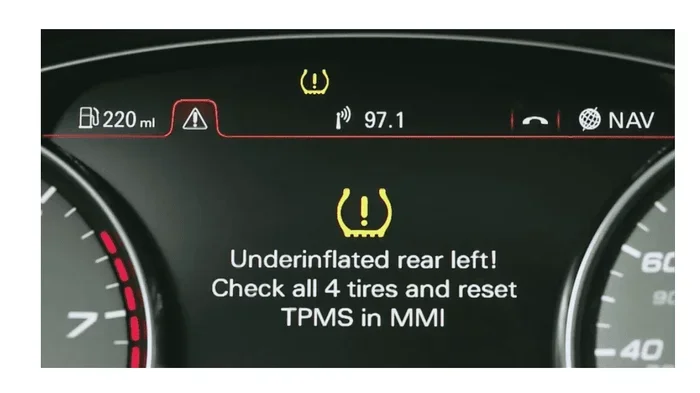
The TPMS warning light is your vehicle’s way of telling you something is wrong with your tire pressure. When this light comes on, it means at least one tire has dropped below the safe threshold. But the light can behave differently depending on the situation.
What Each TPMS Light Pattern Means
A solid yellow TPMS light usually means one or more tires are underinflated. This is the most common scenario. You should pull over safely and check your tire pressure as soon as possible. If the light flashes for about 60 to 90 seconds and then stays solid, it often indicates a malfunction in the TPMS system itself. In this case, the sensors may not be working correctly.
Some vehicles display a graphic that shows which specific tire is low. Others simply show a general warning. If your car has a graphic display, pay attention to it. It can save you time and help you pinpoint the problem quickly.
Common Reasons the TPMS Light Comes On
The tire pressure warning light can activate for several reasons. Here are the most common ones:
- Low tire pressure: A puncture, slow leak, or natural air loss causes pressure to drop below the threshold.
- Temperature changes: Cold weather can trigger the light temporarily, especially in winter months.
- TPMS sensor battery failure: Each sensor has a small battery that lasts about 5 to 10 years. When it dies, the sensor stops transmitting.
- Sensor damage: Hitting a pothole or curb can damage the sensor or its valve stem.
- System malfunction: Electrical issues or a faulty control module can cause the light to illuminate without any actual tire problem.
- After tire rotation or replacement: The system may need recalibration after maintenance.
If your tire pressure warning light comes on, do not panic. Check your tire pressure first. Most of the time, the fix is as simple as adding air. If the light stays on after you inflate your tires, there may be a deeper issue to investigate.
How to Reset Your TPMS Light
Once you have fixed the low pressure issue, the next step is to reset the TPMS warning light. The reset process varies by vehicle, but the general steps are similar across most makes and models.
General TPMS Reset Process
Here is a typical reset procedure you can follow:
- Inflate all tires to the recommended pressure. Use the door jamb sticker as your reference for correct tire pressure levels.
- Locate the TPMS reset button. This button is usually found beneath the steering wheel. Check your owner’s manual if you cannot find it.
- Turn the ignition to the ON position. Do not start the engine. Just turn the key or press the start button.
- Press and hold the reset button. Hold it until the TPMS light blinks three times. Then release it.
- Start the engine and drive for 20 minutes. The system should recalibrate during this drive cycle.
- Check if the light turns off. If it does, your reset was successful.
Some vehicles require a TPMS tool or scan device to reset the system. These are common with direct TPMS setups. If the simple reset method does not work, visit a tire shop or dealership. They have professional diagnostic equipment that can reset the system quickly.
When the Light Won’t Turn Off
If you have inflated your tires properly and reset the system, but the light stays on, do not ignore it. A persistent tire pressure light often signals a deeper problem. The TPMS sensor battery may be dead. The sensor itself may be damaged. Or there could be an electrical issue in the system. In these cases, professional diagnosis is the best next step.
Common TPMS Problems and How to Fix Them
Like any car system, the tire pressure monitoring system can develop problems over time. Understanding the most common issues helps you address them before they become expensive repairs.
Dead Sensor Battery
Every TPMS sensor has a small battery that powers the transmitter. These batteries are not rechargeable and typically last between 5 and 10 years. When the battery dies, the sensor stops sending pressure data to your car’s computer. The TPMS light will usually flash for 60 to 90 seconds and then stay solid.
The fix is straightforward. You need to replace the sensor. Many tire shops offer this as a quick service. Some sensors are sold as a combined valve stem and sensor unit, making replacement even easier. The cost typically ranges from 50 to 100 dollars per sensor, depending on your vehicle.
Corroded or Damaged Valve Stems
The valve stem is the small metal or rubber piece that sticks out of your wheel. It is where you add air to the tire. Over time, exposure to road salt, moisture, and debris can cause corrosion. A damaged valve stem can cause a slow leak, which triggers the TPMS light.
Inspect your valve stems regularly. If you see rust, cracking, or damage, replace them. Valve stem caps also play a role. They keep moisture out and prevent the valve from losing air. Never skip replacing these small but important parts.
Sensor Damage from Road Hazards
TPMS sensors are exposed to the road. Hitting potholes, curbs, or debris can damage them. A sensor that has been knocked out of position or physically broken will stop working. If you recently had a rough encounter with a road hazard and your TPMS light came on, get the sensors inspected.
After Tire Service
Whenever you get new tires, rotate your tires, or repair a puncture, the TPMS system may need attention. Sensors are often moved to different wheels during a rotation. The system needs to recognize the new positions. A tire pressure reset after any tire service helps keep everything working correctly.
When to Replace Your TPMS Sensor
TPMS sensors do not last forever. Knowing when to replace them saves you from unexpected breakdowns and keeps your tire pressure maintenance on track. Here are the signs that it is time for a replacement:
- The TPMS light flashes for 60 to 90 seconds and stays solid.
- Your tire pressure is fine, but the warning light remains on.
- You have had the same sensors for more than 10 years.
- You notice inconsistent readings between tires.
- The sensor battery has been replaced recently but the light still flashes.
Replacing a TPMS sensor is a job most tire shops can handle in about 15 to 30 minutes per sensor. The process involves removing the old sensor, installing the new one, and programming it to your vehicle’s system. Some newer sensors are universal and can be programmed on the spot. Others need a specific matching process that requires a diagnostic tool.
If you are comfortable working on your car, you can replace some TPMS sensors yourself. However, proper programming is essential. A sensor that is not matched to your vehicle will not communicate correctly with the computer. When in doubt, let a professional handle the installation and programming.
Cost of TPMS Sensor Replacement
The cost varies depending on your vehicle and the type of sensor. Direct TPMS sensors tend to be more expensive than indirect systems because they contain more components. On average, you can expect to pay between 50 and 250 dollars per sensor for parts and labor. Luxury vehicles or performance cars may cost more. Keep in mind that replacing all four sensors at once is often recommended for consistent readings and long-term reliability.
Expert Insights on TPMS Care
Automotive professionals agree that regular attention to your TPMS pays off in the long run. Here are some expert tips to keep your system running smoothly:
- Check tire pressure monthly. Regular checks catch slow leaks before the TPMS light even comes on.
- Invest in a quality digital gauge. The 99-cent pencil gauges at gas stations are often inaccurate.
- Replace valve stems with new tires. The rubber parts degrade over time. Fresh valve stems prevent air loss.
- Keep a tire pressure log. Tracking your readings helps you spot patterns and catch problems early.
- Do not reset the light without fixing the root cause. Turning off the light without addressing the low pressure is dangerous and defeats the purpose of the system.
Taking care of your tire health goes beyond just the TPMS. Proper inflation improves your vehicle’s handling, shortens braking distances, and boosts fuel efficiency. A well-maintained set of tires also wears more evenly, saving you money on replacements. Your TPMS is your first line of defense. Treat it with respect and it will keep you safe.
Key Takeaways
- Check your TPMS manually: Use a tire pressure gauge to verify each tire matches the recommended tire pressure listed on your door jamb.
- Read the dashboard warning: The TPMS warning light tells you when one or more tires fall below safe tire pressure levels.
- Reset the light after fixing: A simple TPMS reset process can turn off the tire pressure light once you inflate your tires properly.
- Know the sensor lifespan: TPMS sensor batteries typically last 5 to 10 years and need replacement when they die.
- Direct vs indirect TPMS: Direct TPMS uses physical sensors inside the tire, while indirect TPMS relies on wheel speed sensors.
- Don’t ignore the light: Driving with the tire pressure warning on can reduce fuel efficiency and cause uneven tire wear.
- Check tire pressure monthly: Regular tire pressure maintenance prevents most TPMS issues and keeps your tires healthy.
Conclusion
Learning how to check your TPMS is one of the most useful skills any driver can develop. Your tire pressure monitoring system works hard to keep you safe, but it needs your help too. Regular manual checks, timely resets, and prompt attention to warning lights make all the difference. Whether your vehicle uses direct TPMS or indirect TPMS, the principles remain the same. Keep your tires properly inflated, replace sensors when needed, and never ignore the warning light.
A few minutes of attention each month can save you from costly repairs, dangerous blowouts, and poor fuel economy. Your tires are the only part of your car that touches the road. Treat them well, and they will carry you safely for miles to come. Start today by grabbing a tire pressure gauge and checking all four tires. You will be glad you did.
Frequently Asked Questions
How do I know if my TPMS sensor is bad?
A bad TPMS sensor often triggers a flashing light that stays solid after 60 to 90 seconds. You may also notice inconsistent pressure readings or a light that comes on even when your tires are properly inflated. A professional scan tool can confirm whether a specific sensor has failed.
Can I drive with the TPMS light on?
You should not drive with the TPMS light on for extended periods. Low tire pressure reduces handling, increases stopping distance, and raises the risk of a blowout. Check your tire pressure immediately and inflate to the recommended level before driving long distances.
How much does it cost to replace a TPMS sensor?
Replacement costs typically range from 50 to 250 dollars per sensor, depending on your vehicle make and model. Labor adds another 10 to 30 dollars per sensor in most cases. Some tire shops offer bundle pricing if you replace all four sensors at once.
How often should I check my tire pressure?
Check your tire pressure at least once a month and before long trips. Air naturally escapes through the rubber and valve stem over time. Cold weather can also reduce pressure by one to two PSI for every ten-degree temperature drop.
Will the TPMS light turn off by itself?
In some cases, yes. If the light came on due to cold weather and you drive for a while, the tires may warm up and pressure may rise enough to turn the light off. However, if the light persists, you need to check and correct the tire pressure manually.
What is the difference between direct and indirect TPMS?
Direct TPMS uses physical pressure sensors inside each tire to measure air pressure. Indirect TPMS does not have pressure sensors. Instead, it uses wheel speed sensors from the ABS system to detect differences in tire size caused by low pressure.