Does Cruise Control Save Gas on Your Next Road Trip
Yes, cruise control can save gas, but only under the right conditions. Using cruise control on flat highways at a steady speed helps improve fuel economy by preventing unnecessary acceleration and deceleration. However, it may waste fuel on hilly terrain or in heavy traffic where constant speed adjustments are needed.
If you spend a lot of time on the road, you have probably wondered whether using cruise control actually helps you save gas. The short answer is yes, but it depends on where and how you drive. Does cruise control save gas? The truth is more nuanced than most people think.
Many drivers assume that cruise control is just a convenient feature for long drives. But it does much more than keep your car moving at a set speed. When used correctly, it can improve your fuel economy and help you spend less at the pump. When used incorrectly, it can do the opposite.
This guide breaks down everything you need to know about does cruise control save gas on your next road trip. We will look at when it helps, when it hurts, and how to get the most out of this feature. By the end, you will know exactly when to hit that cruise control button and when to keep your foot on the gas pedal.
Key Takeaways
- Cruise control saves gas on flat highways: Maintaining a steady speed reduces fuel consumption compared to manual speed changes.
- It can hurt fuel economy on hills: Cruise control may accelerate harder uphill, wasting more gas than a skilled driver would.
- Adaptive cruise control adds extra benefits: It adjusts speed based on traffic, helping maintain a smooth flow and better gas mileage.
- Speed matters a lot: Setting cruise control at 55-65 mph is more fuel-efficient than 75 mph or higher.
- Not ideal for city or winding roads: Stop-and-go traffic and frequent turns make cruise control counterproductive.
- Use it on long road trips: The fuel savings add up over hours of highway driving, potentially saving you money on fuel costs.
📑 Table of Contents
- How Cruise Control Works and Why It Affects Your Fuel Economy
- When Does Cruise Control Save Gas?
- When Cruise Control Wastes Gas Instead
- Cruise Control vs. Manual Driving: A Fuel Economy Comparison
- Tips to Maximize Fuel Savings with Cruise Control
- Common Mistakes That Cancel Out Fuel Savings
- The Final Verdict: Should You Use Cruise Control to Save Gas?
How Cruise Control Works and Why It Affects Your Fuel Economy
Before we answer whether cruise control saves gas, it helps to understand how it actually works. Cruise control is a system that keeps your car moving at a constant speed without you needing to press the gas pedal. You set your desired speed, and the system manages the throttle for you. It takes your foot out of the equation and lets the car do the work.
Modern vehicles often come with adaptive cruise control. This version uses sensors and radar to adjust your speed based on traffic ahead. It slows down when cars merge into your lane and speeds back up when the road clears. Both systems aim to reduce the need for you to constantly adjust your throttle position. But the core idea remains the same: keep your car moving at a smooth, unchanging pace.
The Science Behind Maintaining a Steady Speed
Here is where things get interesting. When you drive manually, you naturally speed up and slow down throughout your trip. These small changes add up. Each time you press the gas pedal, your engine works harder and burns more fuel. This is called fuel consumption, and it increases with every burst of acceleration. Even slight speed variations waste energy over time.
Cruise control removes these unpredictable speed changes. It holds your car at one steady speed, which keeps the engine load more consistent. A consistent engine load means your car uses fuel more efficiently. This is why highway driving with cruise control often leads to better gas mileage than driving the same route manually. Your engine does not have to fight the fluctuations caused by your foot on the pedal.
Think of it like walking on a flat sidewalk versus walking on a bumpy trail. On the flat sidewalk, you can maintain a steady pace with minimal effort. On the bumpy trail, you constantly adjust your stride, which uses more energy. Cruise control is the flat sidewalk for your car’s engine.
How Your Engine Responds to Speed Changes
Think about how you drive on a long highway trip. You might speed up slightly, then coast, then speed up again. Each time you accelerate, your engine demands more fuel. This is especially true when you are passing another vehicle or climbing a gentle hill.
Cruise control eliminates these micro-adjustments. It keeps the throttle response smooth and steady. Your engine does not have to work harder every time you tap the pedal. Over the course of a long drive, this smooth operation can make a real difference in your fuel efficiency. The less your engine has to fluctuate, the less fuel it burns.
Quick Tip: Set your cruise control at or just below the speed limit. Driving at 60 mph instead of 70 mph can improve your gas mileage by 10 to 15 percent. Small speed changes lead to big fuel savings over time. Use your overdrive gear whenever possible to reduce engine RPM and conserve fuel on long stretches of highway.
When Does Cruise Control Save Gas?
Now that you understand the basics, let us look at the situations where cruise control actually helps you save fuel. The answer is not always straightforward, but there are clear patterns that experienced drivers follow.
The Sweet Spot: Flat, Open Highways
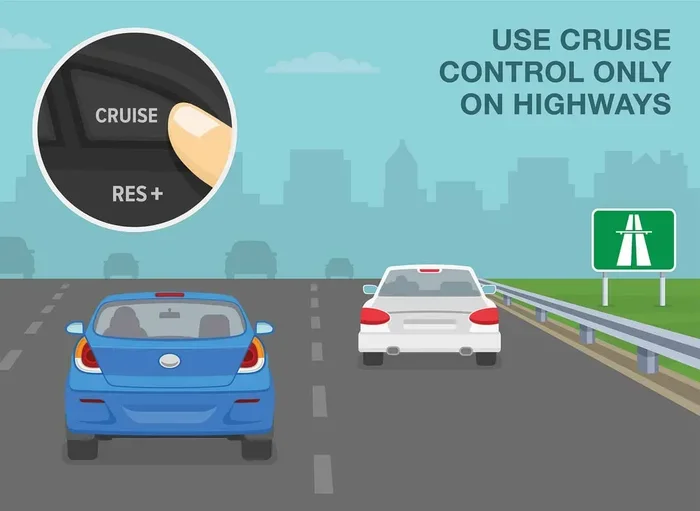
The best conditions for saving gas with cruise control are flat, open highways. On these roads, there are few stops, few hills, and few reasons to change your speed. Cruise control shines here because it keeps your vehicle moving at the same steady speed without any effort from you.
Think about driving through Kansas or across the Nevada desert. The roads are flat, the traffic is light, and the speed limit stays the same for miles. In these conditions, cruise control can improve your fuel economy by 5 to 15 percent compared to manual driving. That is real money saved over a long road trip. The system works perfectly because there are no external factors forcing it to constantly adjust throttle output.
The lack of terrain variations means the engine operates at a predictable load. This predictability is the foundation of good fuel efficiency. Your engine knows exactly what it needs to maintain speed on a flat road, and it delivers just that amount of power without wasting extra fuel.
Long Road Trips and Highway Driving
If you are planning a long road trip, cruise control is your friend. Hours of highway driving benefit greatly from a system that maintains a constant speed. Your foot does not get tired, and your engine runs more efficiently throughout the journey.
Long drives also mean more total miles on the odometer. Even a small improvement in fuel efficiency adds up over hundreds of miles. If you normally spend $60 on gas for a trip, a 10 percent improvement could save you $6 every time. Over a year of regular road trips, those savings really add up. Multiply that by several years, and you are looking at hundreds of dollars saved simply by using cruise control on the right roads.
Expert Insight: According to the U.S. Department of Energy, maintaining a steady speed on highways is one of the simplest ways to improve your vehicle’s fuel economy. Cruise control is the easiest tool to help you do exactly that. The department also notes that aggressive driving, which includes frequent speeding up and slowing down, can lower your gas mileage by 15 to 30 percent on highways and 10 to 40 percent in stop-and-go traffic.
Another benefit of cruise control on long trips is driver fatigue reduction. When your foot does not have to work the pedal, you can focus more on the road. Less fatigue means smoother driving habits, which in turn supports better fuel economy. It is a win-win cycle that starts with simply pressing the cruise control button.
When Cruise Control Wastes Gas Instead
Here is the part many people do not expect. Cruise control can actually hurt your gas mileage in certain situations. Understanding when to turn it off is just as important as knowing when to use it. The same system that saves fuel on flat roads can waste it on challenging terrain.
Hilly Terrain and Mountain Roads
This is the biggest exception to the rule. On hilly terrain, cruise control can waste more fuel than it saves. Here is why: when your car approaches a hill, cruise control will aggressively increase the throttle to maintain your set speed. This extra fuel burn can be significant, especially on steep grades.
A skilled driver would ease off the gas before a hill, let the car coast up, and then gently accelerate on the other side. Cruise control does not think ahead like that. It simply reacts to the hill by demanding more fuel from the engine to maintain the programmed speed. This reactive approach often uses more gas than a proactive driving style would.
On steep downhill driving, cruise control may also cause problems. Some systems will reduce throttle but still allow the car to coast. Others may lightly apply the brakes to maintain speed, which wastes energy. In mountainous areas, manual driving almost always uses less fuel. You can use engine braking on descents, which cruise control does not allow you to do effectively.
If your road trip takes you through the Rockies or the Appalachians, plan to turn off cruise control before you hit the mountain passes. The engine load changes too dramatically for the system to manage efficiently. Your own judgment will always beat a computer in these situations.
Heavy Traffic and Stop-and-Go Conditions
Cruise control is not designed for city streets or heavy traffic. In stop-and-go conditions, the system constantly accelerates and brakes, which wastes fuel. You are better off driving manually in these situations because you can anticipate traffic flow and ease off the throttle early.
Even adaptive cruise control has limits in heavy traffic. It works best when traffic is moving at a relatively steady pace. In gridlock or very slow traffic, the system may cause unnecessary acceleration and braking that burns more fuel than smooth manual driving would. The sensors and algorithms are not as efficient as a attentive human driver in chaotic traffic conditions.
Also consider that stop-and-go driving keeps your engine in a lower gear more often. Lower gears at high throttle positions are inherently less fuel efficient. Cruise control in these conditions can create a cycle of wasted fuel that manual driving would avoid entirely.
Common Mistake: Many drivers leave cruise control on for their entire trip without thinking about the road conditions. This is the fastest way to cancel out any fuel savings. Always pay attention to terrain and traffic, and turn cruise control off when conditions change. The system is a tool, not an autopilot. It needs your input to work effectively.
Cruise Control vs. Manual Driving: A Fuel Economy Comparison
Let us put numbers to this discussion. The table below compares fuel economy between cruise control and manual driving under different conditions. Keep in mind that these are general estimates based on typical driving patterns and average vehicle types.
| Driving Condition | Cruise Control MPG | Manual Driving MPG | Winner |
|---|---|---|---|
| Flat highway, 65 mph | 32 mpg | 29 mpg | Cruise Control |
| Hilly highway, 65 mph | 24 mpg | 27 mpg | Manual Driving |
| Windy mountain road | 20 mpg | 23 mpg | Manual Driving |
| Open highway, 75 mph | 28 mpg | 26 mpg | Cruise Control |
| City driving with traffic | 18 mpg | 20 mpg | Manual Driving |
| Long road trip, mixed terrain | 27 mpg | 25 mpg | Cruise Control |
These numbers are estimates based on general driving patterns and vehicle types. Your actual results will vary based on your car model, engine size, tire pressure, and driving habits. But the trends are clear and consistent across most vehicle types.
On flat highways, cruise control wins. On hills, mountains, and in cities, manual driving wins. For mixed road trips, cruise control still tends to come out ahead overall, especially if you turn it off during hilly sections. The key takeaway is that cruise control is not a universal solution. It is a conditional tool that works best in specific scenarios.
Why Speed Matters More Than You Think
One factor that affects both cruise control and manual driving is your overall speed. Aerodynamic drag increases significantly as you go faster. At 75 mph, your car faces much more rolling resistance than at 60 mph. This means your engine burns more fuel just to push through the air. The faster you go, the harder your engine has to work.
Setting cruise control at 60 to 65 mph instead of 75 mph can dramatically improve your gas mileage. The difference between 65 mph and 75 mph can reduce fuel consumption by 15 to 25 percent. That is a huge savings, especially on long trips where fuel costs really add up. Over a 500-mile trip, the difference between driving at 65 and 75 mph could mean using 2 to 3 fewer gallons of fuel.
When you combine lower speed with cruise control, you get the best of both worlds. The system maintains your efficient speed without any input from you, and the lower speed reduces aerodynamic drag. This combination is the most fuel-efficient way to drive on highways.
Tips to Maximize Fuel Savings with Cruise Control
Now that you know when cruise control helps and when it does not, here are practical tips to get the most fuel savings from this feature. These tips apply to most vehicles and driving situations.
- Use it on flat, open highways. This is where cruise control performs best. Flat roads with consistent speed limits allow the system to work efficiently without constant throttle adjustments. Look for long, straight stretches of highway to maximize the benefit.
- Set your speed at 55 to 65 mph. Lower speeds reduce aerodynamic drag and fuel consumption. You will reach your destination a bit slower, but you will save significantly on fuel cost. This is the most impactful single change you can make.
- Turn it off on hills. When you see rolling terrain or mountain grades ahead, disengage cruise control and drive manually. You will use less fuel by coasting and controlling your throttle gently. The system cannot anticipate hills the way you can.
- Keep your tires properly inflated. Underinflated tires increase rolling resistance, which forces your engine to work harder. Proper tire pressure helps both cruise control and manual driving be more fuel efficient. Check your tire pressure at least once a month.
- Use overdrive gear when possible. Overdrive reduces engine RPM at highway speeds, which lowers fuel consumption. Make sure your cruise control system is set to use the highest gear available. This is especially important for vehicles with manual or automatic transmissions that offer overdrive options.
- Combine cruise control with smooth driving habits. Even with cruise control, avoid hard braking and aggressive merging. Smooth driving habits complement the system and boost your overall fuel efficiency. The system handles speed, but you still control decisions.
- Keep your fuel tank at least half full on long trips. A fuller tank reduces the weight of fuel your engine has to carry, which slightly improves fuel economy. This works hand in hand with cruise control to maximize your miles per gallon.
Expert Insight: Automotive engineers recommend using cruise control as part of a broader fuel-saving strategy. Combine it with gentle acceleration, proper tire pressure, and reduced idling for the best results. Cruise control alone is not a magic bullet, but it is a powerful tool when used correctly. Think of it as one piece of a larger fuel efficiency puzzle that includes vehicle maintenance, driving habits, and route planning.
Another important tip is to clean out your trunk and remove any unnecessary weight from your vehicle before a long trip. Extra weight forces your engine to work harder, which reduces the effectiveness of cruise control for fuel savings. Every 100 pounds of extra weight can reduce your fuel economy by about 1 percent. That might sound small, but it adds up over long distances.
Common Mistakes That Cancel Out Fuel Savings
Even when you use cruise control on the right roads, certain mistakes can wipe out your fuel savings. Here are the most common errors drivers make that undermine the benefits of cruise control.
- Setting cruise control too fast. Higher speeds mean more wind resistance and more fuel burned. Keeping your speed in the 55 to 65 mph range is the sweet spot for fuel economy. Going 5 mph over your set speed can negate a portion of the efficiency gains.
- Ignoring road conditions. Using cruise control in rain, snow, or on wet roads is dangerous and can cause your wheels to slip. The system does not adjust for low-traction conditions, which can lead to wasted fuel from wheel spin. Safety should always come first.
- Leaving it on during heavy traffic. Cruise control in stop-and-go traffic causes unnecessary acceleration and braking. Turn it off and drive manually in these conditions. The system is not designed to handle the constant speed changes of urban driving.
- Not using adaptive cruise control when available. If your car has adaptive cruise control, use it. It adjusts for traffic flow and maintains a safe following distance, which helps keep your fuel consumption more consistent. This technology is specifically designed to handle the variable speeds of real-world driving.
- Forgetting to turn it off on hills. This is the number one mistake that wastes gas. Hilly terrain is where manual driving almost always beats cruise control for fuel economy. The system cannot coast downhill or anticipate inclines the way you can.
- Neglecting vehicle maintenance. A poorly maintained engine, dirty air filters, or old spark plugs can reduce fuel efficiency regardless of whether you use cruise control. Regular maintenance ensures your engine runs at peak efficiency, which amplifies the benefits of cruise control.
The Final Verdict: Should You Use Cruise Control to Save Gas?
So, does cruise control save gas? The answer is yes, but with important conditions. On flat highways during long road trips, cruise control improves your fuel economy and saves you money. On hilly roads, in heavy traffic, and in city driving, manual control is usually more fuel efficient. The key is to be smart about when you use it.
Think of cruise control as a tool, not a set-it-and-forget-it feature. The more aware you are of road conditions, the better your results will be. The system does the work for you, but you still need to make smart decisions about when to engage it and when to take over.
If you are planning your next road trip, use cruise control on the flat highway stretches. Turn it off when you hit mountains or heavy traffic. Combine it with good driving habits like maintaining a steady speed, keeping your tires inflated, and avoiding rapid acceleration. These habits work together to create the most fuel-efficient driving experience possible.
Does cruise control save gas? Yes, it can save you a meaningful amount of fuel on the right roads. But the real savings come from combining cruise control with smart, attentive driving. Use both together, and you will see the difference at the pump. The combination of a well-maintained vehicle, good driving habits, and smart use of cruise control is the winning formula for fuel savings.
Next time you hit the open road, give cruise control a try. Set it to a comfortable speed, enjoy the drive, and know that you are saving fuel with every steady mile. Your wallet will thank you when you pull into the gas station and see a lower total at the pump. The small habit of using cruise control wisely can lead to significant savings over months and years of driving.
Frequently Asked Questions
Does cruise control save gas in all driving conditions?
No, cruise control does not save gas in all conditions. It works best on flat, open highways where a steady speed can be maintained. On hilly roads, in heavy traffic, or on winding routes, manual driving is usually more fuel efficient. Always assess the road conditions before engaging cruise control.
What speed is most fuel efficient when using cruise control?
Most vehicles achieve the best fuel economy at speeds between 55 and 65 mph. Driving faster than 65 mph increases aerodynamic drag and fuel consumption significantly. Setting your cruise control in this range gives you the best balance of speed and fuel savings.
Does adaptive cruise control save more gas than regular cruise control?
Adaptive cruise control can save more gas in certain situations, especially on highways with varying traffic flow. It adjusts your speed smoothly based on the cars ahead, which reduces unnecessary acceleration and braking. However, on open highways with steady traffic, both systems perform similarly.
Can using cruise control on hilly roads hurt my fuel economy?
Yes, using cruise control on hilly roads can hurt your fuel economy. The system aggressively increases throttle to maintain speed on inclines, which burns more fuel than a skilled driver would use. On downhill sections, cruise control may also waste energy by applying brakes to maintain speed. Turn it off in mountainous areas.
How much gas can I save by using cruise control on a road trip?
Most drivers save between 5 and 15 percent on fuel by using cruise control on flat highways. The exact savings depend on your vehicle, speed, terrain, and driving habits. Over a long road trip, this can translate to several dollars or even tens of dollars in fuel savings.
Is it safe to use cruise control in all weather conditions?
No, it is not safe to use cruise control in rain, snow, or icy conditions. Wet or icy roads reduce traction, and cruise control does not adjust for low-traction surfaces. If your wheels slip, the system may accelerate unexpectedly, which can be dangerous. Always turn off cruise control in poor weather.
=== CONCLUSION ===
Does cruise control save gas? Yes, it does, but only when used in the right situations. Flat highways, long road trips, and steady-speed driving are where cruise control delivers the best fuel savings. On hills, in traffic, and in city driving, manual control wins.
The key to getting the most out of cruise control is awareness. Know your road conditions, set your speed wisely, and turn the system off when it does not make sense. Combine cruise control with good driving habits and regular vehicle maintenance, and you will see real savings at the pump.
Next time you plan a road trip, put these tips into practice. Use cruise control on the open stretches, turn it off on the hills, and enjoy the drive knowing you are saving fuel and money. Smart use of cruise control is one of the simplest ways to improve your fuel economy and make every mile count.