How to Choose the Best Car Ac Recharge Kit for Your Car
A car ac recharge kit is your go-to solution when your car’s air conditioning starts blowing warm air instead of cold. In this guide, we break down everything you need to know about refrigerant recharge kits, from choosing the right type to following a simple DIY car maintenance process that saves you time and money.
Key Takeaways
- Know your refrigerant type: Most modern cars use R134a or R1234yf, and using the wrong one can damage your AC system.
- Quality matters: A good car ac recharge kit includes a pressure gauge, hose, and proper sealant for a clean job.
- DIY is doable: Recharging your car AC is a straightforward task you can do at home with the right tools and a little patience.
- Check for leaks first: Never recharge a system with a refrigerant leak, or you will just waste refrigerant and money.
- Avoid overcharging: Too much refrigerant causes pressure problems and can hurt compressor performance.
- Professional help is sometimes needed: If your AC still blows warm after a recharge, a mechanic may need to inspect deeper issues.
📑 Table of Contents
Introduction
There is nothing worse than driving on a hot summer day and feeling warm air blow through your car vents instead of cool, refreshing air. When your car AC starts acting up, a car ac recharge kit often provides the quick fix you need. But with so many options on the market, how do you know which one is right for your vehicle?
In this guide, we walk you through everything about refrigerant recharge kits. You will learn what they are, how they work, and how to pick the best one. We also share a step-by-step recharging process, common mistakes to avoid, and when it is better to call a professional. Whether you are a DIY fan or just curious, this article has you covered.
What Is a Car AC Recharge Kit?
A car ac recharge kit is a set of tools and refrigerant designed to top off or refill your vehicle’s air conditioning system. When your AC loses cooling power, it usually means the system is low on refrigerant. A recharge kit lets you add more refrigerant back into the system without heading to a mechanic.
How Car AC Systems Work
Your car AC works in a simple cycle. The AC compressor pressurizes the refrigerant gas. That hot gas moves to the condenser, where it cools down into a liquid. The liquid then travels through the evaporator coil, where it absorbs heat from inside your car. The result is cold air blowing through your vents.
Over time, small amounts of refrigerant can escape through seals and connections. When the level drops too low, the system cannot cool properly. That is when a refrigerant top off becomes necessary.
Why Your Car AC Might Need a Recharge
Several things can cause your AC to lose refrigerant:
- Natural wear on seals and hoses over time.
- A small puncture or crack in an AC line.
- A faulty AC condenser or evaporator coil.
- Age of the vehicle and older refrigerant types breaking down.
Most of the time, a simple recharge solves the problem. But it is important to understand the process before jumping in.
Types of Car AC Recharge Kits
Not all car ac recharge kit options are the same. Different vehicles use different refrigerants, and kits come in various styles. Let us break down the main types so you can make an informed choice.
R134a Recharge Kits
R134a is the most common refrigerant used in cars made from the mid-1990s through the early 2020s. It replaced the older R12 refrigerant because it is less harmful to the ozone layer. Many automotive air conditioner systems still run on R134a today. If your car is within this age range, there is a good chance it uses this refrigerant type.
R134a recharge kits are widely available and affordable. You can find them at most auto parts stores, big-box retailers, and online. They typically come with a canister of refrigerant, a pressure hose, and a gauge.
R1234yf Recharge Kits
Newer cars, especially those made after 2021, increasingly use R1234yf refrigerant. This type is even more environmentally friendly than R134a. It has a much lower global warming potential, which automakers love for meeting emissions regulations.
R1234yf recharge kits are becoming more common, but they can be harder to find and sometimes more expensive. It is crucial to use R1234yf specifically for vehicles designed for it. Mixing refrigerants is never a good idea.
Universal vs. Vehicle-Specific Kits
Some kits are labeled as universal, meaning they work with multiple refrigerant types or vehicle models. Others are built for specific makes and models. Here is a quick comparison:
- Universal kits: Great for DIYers who own multiple vehicles. They often come with adapters and extra fittings.
- Vehicle-specific kits: Designed for a particular model. They usually include exactly what you need with no extra parts.
For most people, a universal car ac recharge kit offers the best value. If you only own one car, a vehicle-specific kit can save you some confusion.
How to Choose the Best Car AC Recharge Kit
Picking the right kit comes down to a few key factors. Let us walk through them so you feel confident in your choice.
Check Your Vehicle’s Refrigerant Type
This is the single most important step. Using the wrong refrigerant can cause serious damage to your cooling system. Check your owner’s manual or look for a label under the hood near the compressor. Some vehicles also list the required refrigerant type on the sticker inside the driver’s door jamb.
If you are unsure, a quick search with your vehicle’s year, make, and model will tell you what refrigerant to use. Never guess, because refrigerant leak problems can get worse with the wrong chemical.
Look for Quality Components
A good kit should include durable parts. Look for these essentials:
- A reliable AC pressure gauge that gives accurate readings.
- A sturdy hose with proper insulation to prevent leaks.
- Quality fittings and seals that connect snugly to your vehicle’s service port.
- A clean, properly sealed canister of refrigerant.
Cheap kits may save you money upfront but can lead to frustrating connections, inaccurate readings, or even spills. Spend a little more for a kit from a trusted brand.
Consider Kit Features and Accessories
Some car ac recharge kit options come packed with extra features that make the job easier:
- Built-in leak sealer: This can patch tiny leaks automatically as you recharge.
- UV dye included: The dye helps mechanics spot hidden leaks later using a black light.
- Digital gauge display: Makes it easier to read pressure levels at a glance.
- Extra refrigerant cans: Handy if your system is very low and needs more than one can.
Think about what features would help you the most. For beginners, a kit with leak sealer and a clear gauge is a great starting point.
Step-by-Step Guide to Recharging Your Car AC
Once you have the right kit, it is time to recharge. Here is a simple walkthrough to guide you through the process. Remember, this is a DIY car maintenance task, so take your time and stay safe.
Safety First
Before you start, park your car in a well-ventilated area. Do not work in a closed garage. Refrigerant can be harmful if inhaled in large amounts. Wear safety glasses and gloves. Also, make sure the engine is off and the car is cool to the touch before beginning.
Connecting the Recharge Kit
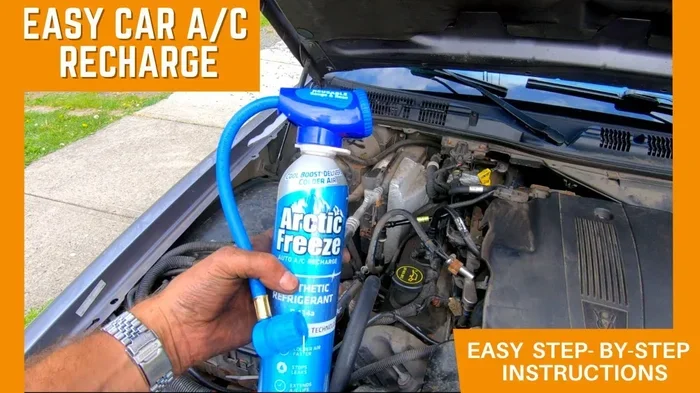
Locate the low-pressure service port on your vehicle. It is usually near the firewall on the passenger side, marked with a small cap that says L or LOW. Remove the cap and set it aside.
Attach the recharge hose to the service port. Push it on firmly until it clicks or locks in place. Most kits have a quick-connect fitting that makes this step simple. Double-check that the connection is tight before moving on.
Adding Refrigerant
Start your engine and turn the AC to the maximum cold setting with the blower on high. This helps the system circulate properly. Follow these steps:
- Check the current pressure on your gauge. Compare it to the recommended range for your vehicle.
- If pressure is low, open the valve on the refrigerant canister slowly.
- Let the system draw in the refrigerant. You may hear a hissing sound, which is normal.
- Keep the canister upright to ensure only liquid refrigerant enters the system.
- Monitor the gauge as pressure rises. Stop adding refrigerant once you reach the recommended level.
After recharging, let the AC run for a few minutes. Check that cold air is blowing from the vents. If it is, congratulations, you just completed a successful refrigerant recharge!
Common Mistakes to Avoid
Even with a simple task like recharging AC, mistakes happen. Here are a few to watch out for.
Overcharging the System
Adding too much refrigerant is a common error. Overcharging creates excess pressure inside the system, which can damage the compressor clutch and other components. Always check the pressure gauge and follow your vehicle’s recommended range. More is definitely not better here.
Ignoring Leaks
A refrigerant leak is often the real reason your AC lost pressure in the first place. Simply adding refrigerant without fixing the leak means you will likely need to recharge again soon. If you notice your AC losing coolness repeatedly, have a mechanic inspect the system for leaks. Many car ac recharge kit options include UV dye specifically to help find these hidden problems.
Using the Wrong Refrigerant
We cannot stress this enough. Never mix R134a and R1234yf. They are not compatible and can cause costly damage. Always confirm your vehicle’s required refrigerant before purchasing any kit. Using the wrong type also voids warranties on newer vehicles.
When to See a Professional Instead
A recharge kit is great for straightforward top-offs, but not every AC problem can be fixed with one. Sometimes, the issue goes deeper than low refrigerant.
Signs Your AC Needs Expert Help
Watch for these warning signs that suggest a professional should take a look:
- AC blows warm air even after a full recharge. This often points to a failing compressor or a clogged condenser.
- Strange noises from the AC system. Grinding or squealing sounds may indicate a worn compressor clutch or a damaged thermal expansion valve.
- Visible oil or refrigerant residue near AC lines. This signals a significant leak that needs professional sealing or part replacement.
- AC works intermittently. Electrical issues within the cooling system often require diagnostic tools beyond a basic kit.
Cost of Professional AC Repair vs. DIY
A car ac recharge kit typically costs between $25 and $80, depending on the brand and type. A professional recharge service usually runs $100 to $250, depending on your area and vehicle. The DIY approach saves money for simple top-offs, but if repairs are needed, professional diagnostics can save you from bigger headaches down the road.
Think of it this way: a recharge kit is perfect for maintenance. Professional service is essential for repairs. Both have their place.
Conclusion
Choosing the best car ac recharge kit does not have to be complicated. Start by confirming your vehicle’s refrigerant type. Then pick a quality kit with accurate gauges and solid fittings. Follow the step-by-step recharge process carefully, and always avoid common mistakes like overcharging or ignoring leaks.
A proper recharge brings your car air conditioning back to life on the hottest days. It is a satisfying DIY car maintenance win that saves you money and keeps you cool. But when problems go beyond a simple top-off, do not hesitate to see a professional. Your comfort and safety matter most.
Keep a refrigerant recharge kit in your trunk for emergencies. Stay proactive about cabin cooling, and your car AC will keep you comfortable for miles to come.
Frequently Asked Questions
How do I know if my car needs an AC recharge?
If your car AC blows warm or weak air instead of cold, it likely needs a recharge. You may also notice a clicking sound from the AC compressor or reduced airflow. Checking the pressure with a gauge from a car ac recharge kit will confirm if refrigerant levels are low.
Can I use an R134a recharge kit on a car that needs R1234yf?
No, never mix these refrigerants. R134a and R1234yf are chemically different and not compatible with each other. Always check your vehicle’s required refrigerant type before buying any refrigerant recharge kit. Using the wrong one can cause serious and expensive damage to your AC system.
How long does a car AC recharge last?
A proper recharge can last anywhere from one to three years depending on driving conditions and system health. However, if there is a refrigerant leak, the refrigerant will escape faster. Regular checks with an AC pressure gauge help you stay ahead of problems.
Is it safe to recharge my car AC myself?
Yes, it is safe if you follow the instructions carefully. Work in a ventilated area, wear gloves and eye protection, and make sure you use the correct refrigerant type. Most car ac recharge kit products are designed for easy DIY use by people with no mechanic experience.
What should I look for in a car AC recharge kit?
Look for a kit that matches your vehicle’s refrigerant type, includes a reliable pressure gauge, and has quality hose fittings. Extra features like leak sealer and UV dye are helpful bonuses. Trusted brands with good reviews will give you the best results for your automotive air conditioner needs.
What if my AC still blows warm after recharging?
If cold air does not return after recharging, there may be a deeper issue. Common culprits include a failing compressor, a clogged condenser, or a significant refrigerant leak. At this point, it is best to take your car to a professional for a thorough inspection and proper car AC repair.