Can You Pump a Car Tire With a Bike Pump Right Now
Yes, you can pump a car tire with a bike pump, but it takes patience and the right adapter. Most bike pumps use a Schrader valve that matches car tire valves, making the connection possible. However, car tires need much higher PSI than bike tires, so expect a slow process. This guide covers everything from tire pressure requirements to emergency tire inflation tricks.
You are standing by the side of the road. Your car tire is flat. You have a bike pump in the trunk. Can you actually pump a car tire with a bike pump? The short answer is yes. The longer answer is, it depends on your setup, your patience, and a few key details you need to know first.
Flat tires happen to everyone. They happen on highway shoulders, parking lots, and quiet country roads. Most people reach for a roadside kit or call for help. But if you have a bike pump and a little know-how, you can get back on the road yourself. This guide will show you exactly how it works, what you need, and what to watch out for.
We will cover every angle of emergency tire inflation using a hand pump designed for bicycles. You will learn about valve types, pressure requirements, step-by-step techniques, and common mistakes to avoid. By the end, you will feel confident using your bike pump on a car tire when it really counts.
Key Takeaways
- It works in a pinch: A bike pump can inflate a car tire, but it is slow and requires effort.
- Valve compatibility matters: Most car tires use Schrader valves, which match standard bike pump heads.
- PSI differences are huge: Car tires need 32-35 PSI, while bike tires range from 30-100+ PSI depending on the type.
- You need patience: Pumping a car tire by hand with a bike pump can take 10-20 minutes per tire.
- An adapter helps: A Presta-to-Schrader adapter makes the process smoother if your bike pump has a Presta head.
- Know your limits: A bike pump is a backup tool, not a replacement for a proper air compressor.
- Check pressure often: Use a tire pressure gauge frequently to avoid overinflating or underinflating.
📑 Table of Contents
- Understanding Tire Valves and Compatibility
- Can a Bike Pump Handle Car Tire Pressure?
- Step-by-Step: How to Pump a Car Tire With a Bike Pump
- Best Bike Pumps for Car Tire Emergencies
- Common Mistakes to Avoid
- When a Bike Pump Is Not Enough
- Expert Tips for Better Results
- Quick Tips at a Glance
- Frequently Asked Questions
- Conclusion
Understanding Tire Valves and Compatibility
The first thing you need to know is whether your bike pump can connect to your car tire. The answer lies in the valve. Car tires and bike tires use different valve types, but there is good news here. Most modern cars use the same valve type found on many bikes.
Schrader Valves: The Common Link
Schrader valves are the short, thick valves you see on most car tires. They are also found on mountain bikes and many hybrid bikes. If your car tire has a Schrader valve, your standard bike pump will connect directly. No adapter needed. This makes tire inflation straightforward.
Here is how to check. Look at the valve stem on your car tire. If it looks wide and has a small rubber cap on top, it is a Schrader valve. Your bike pump head should fit right over it. Push the pump chuck down, lock it in place, and you are ready to go.
Presta Valves: The Road Bike Valve
Presta valves are thin, tall valves found on most road bikes. They have a small nut at the top that you unscrew before inflating. Car tires do not use Presta valves. So if your bike pump has a Presta head, you will need a simple adapter. These adapters cost a few dollars and screw onto the Schrader valve on your car tire. Then your Presta pump head connects to the adapter.
This is an easy fix. Keep a Presta-to-Schrader adapter in your trunk if you ride a road bike and also drive a car. It takes two seconds to swap between valve types.
Dunlop Valves: The Forgotten Option
Some bikes, especially in Europe and Asia, use Dunlop valves. These are less common but still worth knowing about. Dunlop valves are wider than Presta but narrower than Schrader. Some bike pumps with Schrader heads can fit Dunlop valves with a slight adjustment. For car tires, this is rarely an issue since most cars use Schrader valves.
Can a Bike Pump Handle Car Tire Pressure?
This is the big question. Car tires need significantly more air than bike tires. Understanding the PSI requirements will help you decide if a bike pump is practical for your situation.
PSI Requirements: Car vs. Bike
Most passenger car tires need between 32 and 35 PSI. Some larger vehicles like trucks or SUVs may need 40 to 45 PSI or more. Bike tires, on the other hand, vary widely. Mountain bike tires typically run at 30 to 50 PSI. Road bike tires can go from 80 to 130 PSI. So the pressure ranges overlap in some cases.
But here is the catch. A floor pump for bikes can generate high pressure quickly because of its large cylinder and long handle. A handheld bike pump or a small portable bike pump has a much smaller cylinder. You will need many more strokes to reach 35 PSI for a car tire.
How Long Does It Take?
Using a standard portable bike pump, expect to spend 10 to 20 minutes on a single flat car tire. A floor pump will be faster, maybe 5 to 10 minutes. An air compressor at a gas station takes about 2 to 3 minutes. So a bike pump is not the fastest option, but it works when you have no other choice.
The key is to pump steadily and check the tire pressure gauge often. Do not wait until you are finished to check. Stop every few minutes and read the gauge. This prevents overinflation, which can be dangerous.
Step-by-Step: How to Pump a Car Tire With a Bike Pump
Now let us get into the practical steps. Follow this process carefully and you will successfully inflate your car tire with a bike pump.
Step 1: Find a Safe Spot
Pull over to a flat, stable surface. Turn on your hazard lights. Set the parking brake. You do not want the car rolling while you work. If you have wheel wedges, place them behind the tires opposite the flat.
Step 2: Remove the Valve Cap
Unscrew the small plastic cap from the valve stem on your car tire. Keep it in your pocket so you do not lose it. The valve stem is where you will attach the bike pump head.
Step 3: Check Current Pressure
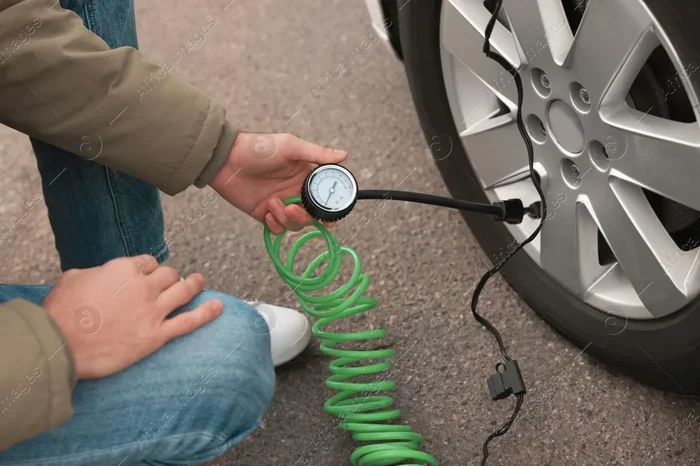
Use a tire pressure gauge to check how much air is already in the tire. If the tire is completely flat, you start from zero. If it has some air, note the current PSI so you know how much more you need. Most car tire labels show the recommended PSI on the driver’s side door jamb.
Step 4: Attach the Pump
Place the bike pump head over the valve stem. Push down firmly until the pump chuck locks onto the valve. You should feel a snug fit. If air leaks out around the connection, press harder or reposition the head. A tight seal is essential for effective tire inflation.
Step 5: Start Pumping
Begin pumping with smooth, steady strokes. Use your full body weight if you are using a floor pump. If you are using a handheld bike pump, pump with controlled motions. Listen for the sound of air entering the tire. It should be a steady hiss with each stroke.
Step 6: Check Pressure Frequently
Every 20 to 30 strokes, stop and check the tire pressure gauge. Do not guess. Guessing can lead to overinflation, which risks a blowout. Keep pumping until you reach the recommended PSI for your vehicle.
Step 7: Remove the Pump and Replace the Cap
Once you reach the correct pressure, carefully remove the bike pump head. Pull it straight up to avoid damaging the valve stem. Screw the valve cap back on. This protects the valve from dirt and moisture.
Step 8: Drive Safely
Drive to the nearest service station or auto repair shop. Even if you have successfully inflated the tire with a bike pump, the tire may need a proper inspection. A flat tire can damage the inner liner or sidewall. A professional should check it for safety.
Best Bike Pumps for Car Tire Emergencies
Not all bike pumps are created equal. If you want one that can handle a car tire emergency, you need to choose wisely.
Floor Pumps with High PSI
A quality floor pump with a gauge is the best option for tire inflation. Look for a pump rated to at least 160 PSI. This gives you plenty of headroom for car tires. Brands like Lezyne, Topeak, and Blackburn make excellent floor pumps that work on both bike and car valves.
Portable Handheld Pumps
If you need something compact for your trunk, a portable bike pump is a good backup. These small pumps fit in a saddlebag or trunk compartment. They usually come with a Schrader valve head and sometimes include a Presta adapter. The trade-off is speed. A handheld hand pump takes longer but gets the job done in an emergency.
CO2 Inflators: A Quick Alternative
CO2 inflators use small cartridges of compressed carbon dioxide. They are fast and compact. However, they are designed for bike tires and may not provide enough volume for a car tire. Some larger CO2 inflators can work on car tires in a pinch, but they are not the most reliable option for emergency tire inflation.
Common Mistakes to Avoid
Pumping a car tire with a bike pump is simple, but mistakes can happen. Here are the most common ones and how to avoid them.
Overinflating the Tire
This is the most dangerous mistake. Car tires have a maximum PSI rating printed on the sidewall. Never exceed this number. Overinflation causes a harsh ride, reduces traction, and increases the risk of a blowout. Always use a tire pressure gauge and stop at the recommended PSI.
Skipping the Valve Cap
It is tempting to leave the valve cap off while you pump. Do not do it. The valve cap keeps dirt and moisture out of the valve stem. Without it, debris can enter and cause a slow leak. Always replace the cap immediately after inflating.
Using the Wrong Pump Head
If your bike pump has a Presta head and your car tire has a Schrader valve, do not force the connection. You need an adapter or a pump with a dual-head design. Forcing the pump onto the wrong valve can damage the valve stem and cause air leaks.
Ignoring Temperature Effects
Tire pressure changes with temperature. Cold weather lowers PSI, while hot weather raises it. If you pump your car tire on a hot day, the pressure will increase as the tire warms up from driving. Check pressure when the tire is cool for the most accurate reading.
Not Checking for Leaks After Inflation
After you finish pumping, listen for any hissing sounds. You can also apply soapy water to the valve stem and look for bubbles. Bubbles indicate a leak. If you find one, you may need a tire sealant or a patch kit before driving far.
When a Bike Pump Is Not Enough
There are times when a bike pump simply will not cut it. Understanding these situations helps you make better decisions in an emergency.
If your tire is completely deflated and the sidewall is damaged, no amount of tire inflation will fix it. A damaged sidewall means the tire needs replacement. Driving on a damaged tire is extremely dangerous.
Also, if you are in a remote area with no safe place to work, a bike pump may not be practical. In these cases, call roadside assistance. A portable air compressor powered by your car’s 12V outlet is another great backup option. These small compressors plug into your cigarette lighter and can inflate a car tire in minutes.
The best approach is to carry both a bike pump and a portable air compressor in your vehicle. Together, they cover nearly every flat tire scenario you might face.
Expert Tips for Better Results
Here are some pro tips that make emergency tire inflation with a bike pump easier and safer.
- Warm up the pump: If your bike pump has been sitting in a cold trunk, let it warm up for a few minutes before use. Cold pump parts move less smoothly.
- Use body weight: If you have a floor pump, lean your body weight onto the handle. This makes each stroke more efficient and reduces fatigue.
- Keep the pump steady: Wiggly pump heads lose air. Press firmly and keep the connection tight throughout the process.
- Practice at home: Do not wait for a flat tire to try this for the first time. Practice at home so you know how your bike pump connects and how long it takes.
- Carry a gauge: A small tire pressure gauge is lightweight and invaluable. It takes the guesswork out of tire inflation.
Quick Tips at a Glance
- Always check the recommended PSI on your car’s door jamb before inflating.
- Use a Schrader-compatible bike pump for the easiest connection to car tires.
- Carry a Presta-to-Schrader adapter if your pump uses a Presta head.
- Pump in steady, controlled strokes rather than fast, jerky motions.
- Check pressure every 20 to 30 strokes to avoid overinflation.
- Replace the valve cap immediately after finishing.
- Inspect the tire for damage before driving on it after inflation.
Frequently Asked Questions
Can any bike pump inflate a car tire?
Most bike pumps with a Schrader valve head can inflate a car tire. The key is valve compatibility. If your pump has a Presta head, you will need a simple adapter. Floor pumps and portable handheld pumps both work, though floor pumps are faster and easier to use.
How long does it take to pump a car tire with a bike pump?
A portable handheld bike pump takes about 10 to 20 minutes per tire. A floor pump is faster, usually 5 to 10 minutes. The exact time depends on how flat the tire is and the pump’s cylinder size. A completely flat tire takes longer than one that is just low on air.
Is it safe to drive on a tire inflated with a bike pump?
It is safe for short distances. A bike pump can bring a car tire to the proper PSI for driving to the nearest service station. However, a bike pump is not a permanent fix. Have the tire professionally inspected and inflated with an air compressor as soon as possible.
What PSI do car tires need?
Most passenger car tires need between 32 and 35 PSI. Check the sticker on the driver’s side door jamb for your specific vehicle’s recommendation. Never exceed the maximum PSI listed on the tire sidewall.
Can a bike pump pop a car tire?
It is unlikely if you monitor the pressure carefully. The risk comes from overinflation. If you pump past the recommended PSI without checking, the tire could burst. Always use a tire pressure gauge and stop at the correct pressure.
What is the best pump to keep in my car for emergencies?
A portable 12V air compressor is the best emergency pump for cars. It plugs into your cigarette lighter and inflates tires quickly. A bike pump is a good secondary backup, especially for tire inflation when you do not have access to electricity. Carrying both gives you the best coverage for any flat tire situation.
Conclusion
Can you pump a car tire with a bike pump right now? Absolutely. With the right valve compatibility, a reliable tire pressure gauge, and a little patience, a bike pump is a practical tool for emergency tire inflation. It is not the fastest method, but it gets the job done when you are stranded.
Remember the key steps. Check your valve type. Attach the pump securely. Pump steadily. Monitor the PSI. And never drive far on a tire inflated only by a hand pump without getting a proper checkup.
Keep a bike pump or a portable air compressor in your vehicle. Practice the process at home so you are prepared when it matters most. Being stranded with a flat tire is stressful enough. Knowing you have the right tools and knowledge takes away one big worry. Stay prepared, stay safe, and never let a flat tire keep you down for long.