Can I Program My Own Chip Key Heres The Full Answer
Yes, you can program your own chip key in many cases, but it depends on your vehicle make, model, and key type. DIY chip key programming saves money and time when you have the right key programming tools and a bit of patience. This guide walks you through every step so you know exactly what to expect.
Have you ever stood in front of your car, staring at a dead key fob, and thought, “Can I just do this myself?” You are not alone. Thousands of car owners search this question every month. The good news is that programming your own chip key is possible in many situations. But it is not always a simple yes or no answer.
The truth is, your ability to program a transponder key at home depends on several factors. Your vehicle year, make, and model all play a role. The type of key your car uses matters too. And honestly, your comfort level with hands-on tasks makes a big difference. This guide breaks down everything you need to know about DIY key programming. By the end, you will know exactly what to do and when to get help.
We will walk you through how car key chips work, what tools you need, the step-by-step process, and the pitfalls to avoid. Whether you lost your only key, bought a used car with one key, or just want a spare, this article has you covered. Let us dive in.
Key Takeaways
- Programming is possible at home: Many modern vehicles allow self-programming with the right equipment.
- Tools matter: A quality key programming tool or key fob programmer makes the process much easier.
- Not all keys are equal: Transponder keys, smart keys, and remote key fobs each have different programming needs.
- Cost savings add up: DIY programming can save you $50 to $200 compared to a locksmith or dealer.
- Know when to call a pro: Some high-security keys and luxury vehicles require professional dealer programming.
- Common mistakes cause failures: Skipping steps or using the wrong blank key leads to frustration and wasted time.
📑 Table of Contents
- Understanding How Chip Keys Work
- Can You Actually Program a Chip Key Yourself?
- Tools and Equipment You Will Need
- Step-by-Step: Programming Your Chip Key
- When to Call a Professional Locksmith
- Common Mistakes to Avoid
- Cost Comparison: DIY vs Professional Programming
- Key Takeaways
- FAQ Section
- Conclusion
Understanding How Chip Keys Work
Before you try to program a chip key, it helps to understand what one actually does. Modern cars use an immobilizer system that prevents theft. The engine will not start unless the key sends the correct signal. This signal comes from a tiny computer chip inside the key head.
What Is a Transponder Key?
A transponder key has a small electronic chip embedded in the plastic head. When you insert the key into the ignition, the car’s immobilizer unit sends out a radio signal. The chip responds with a unique code. If the code matches, the engine starts. If it does not match, the car stays locked down.
This system was first introduced in the 1990s and has become standard on nearly every vehicle made today. The chip does not need a battery. It gets its power from the radio signal sent by the car. That is why people often ask, “Can I program my own chip key” — because the chip inside is what makes the difference between a regular key and a smart key.
Types of Chip Keys You Might Have
Not all chip keys are the same. Here are the main types you might encounter:
- Standard transponder keys: These look like regular metal keys but have a chip inside the plastic head. Common on older vehicles from the 1990s and 2000s.
- Remote key fobs: These combine a transponder chip with a remote for locking and unlocking doors. Most modern cars use these.
- Smart keys or proximity keys: These are keyless entry systems. You do not even need to take the key out of your pocket. The car detects the key nearby.
- Flip keys or switchblade keys: These have a retractable blade that folds into the fob. They contain a transponder chip inside.
- Laser-cut keys: These have a special cut pattern and often include a transponder chip for added security.
Each type has different programming requirements. A standard transponder key is usually the easiest to program yourself. Smart keys and proximity sensor keys tend to be more complex and may need professional equipment.
Can You Actually Program a Chip Key Yourself?
The short answer is yes, in most cases. But the longer answer comes with some important “it depends” statements. Let us break this down honestly so you do not waste time or money.
Vehicles That Allow DIY Programming
Many popular car brands support self-programming of chip keys. Here are some examples:
- Ford: Most Ford models from the 2000s onward allow you to program a new key using the existing working key and the ignition cycle method.
- Chevrolet: Many GM vehicles let you program a spare key through a simple sequence with the door locks and ignition.
- Toyota: Toyota and Lexus models often support DIY key programming with a working key and a specific button sequence.
- Honda: Honda vehicles from certain years allow self-programming using the key cycle method.
- Jeep: Many Jeep models let you program a new key fob with the existing key in the ignition.
These vehicles typically use a key programming tool or a manual sequence that you can follow. The process usually takes 10 to 30 minutes. You will need at least one working key to program a second key. This is a security feature built into all automotive key programming systems.
Vehicles That Require Professional Help
Some vehicles make DIY programming very difficult or impossible. Here is when you should consider calling a locksmith:
- Luxury brands like BMW, Mercedes, and Audi: These vehicles often require specialized dealer programming software and expensive diagnostic tools.
- European imports: Many European cars use advanced immobilizer systems that are not user-accessible.
- Smart key systems on newer models: Some 2020 and newer vehicles use encrypted smart key systems that need dealer-level equipment.
- When you have zero working keys: If you lost all keys, most vehicles will not let you program a new one from scratch without professional help.
In these cases, a professional locksmith chip key service or car dealer is your best bet. They have the right key programming tool and the training to get it done correctly.
Tools and Equipment You Will Need
If you decide to go the DIY route, you will need some basic tools. The good news is you do not need a garage full of expensive equipment. Here is what you typically need:
Essential Equipment
- A blank replacement key: This must be the correct blank for your vehicle. You can find blank keys online or at an automotive parts store. Make sure it matches your VIN number and key type.
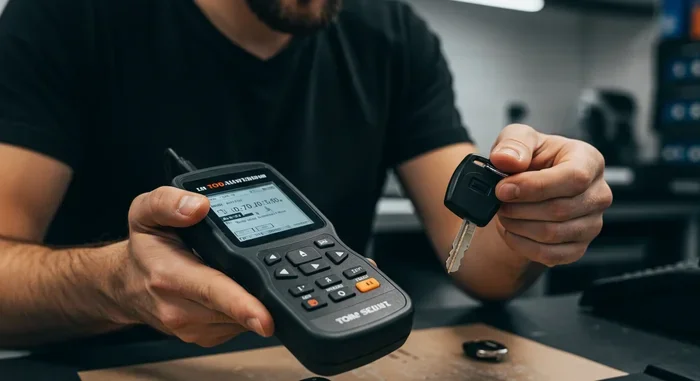
- A key programming tool: This is the device that actually writes the code to the chip. Options range from simple manual tools to advanced key fob programmers that connect to your phone.
- A working key: For most DIY programming methods, you need at least one key that already works with the vehicle.
- Your vehicle owner’s manual: This is gold. It often has the exact programming sequence for your specific model.
Optional but Helpful Tools
- Key cutting machine: If you buy an uncut blank key, you will need it cut to match your original. Some hardware stores offer key cutting service for a small fee.
- A multimeter: This helps you test the chip in the key to make sure it is working before you start programming.
- Online programming guides: Websites and YouTube channels dedicated to automotive key programming can walk you through model-specific steps.
You do not need to buy everything on this list. Start with what you have and only invest in tools if you plan to do this regularly. For a one-time need, borrowing a key fob programmer from a friend or renting one might be the smarter choice.
Step-by-Step: Programming Your Chip Key
Every vehicle has a slightly different process. However, most chip key programming follows a similar pattern. Here is a general walkthrough that applies to many popular brands.
Step 1: Get the Right Blank Key
Before anything else, make sure you have the correct blank key. Check your VIN number and your vehicle’s key code. You can find this on your original key or in the owner’s manual. A wrong blank key will not work, no matter how good your programming is.
Step 2: Insert the Working Key
Put the working key into the ignition. Turn it to the “On” position — not all the way to start, just to “On.” Wait a few seconds. This step lets the car’s immobilizer system recognize that a key is present.
Step 3: Follow the Programming Sequence
Now comes the specific steps for your vehicle. These usually involve a series of key turns, door lock/unlock actions, or button presses on the fob. Here is a common example:
- Turn the working key from “Off” to “On” five times within 10 seconds.
- Turn the key to “Off” and remove it.
- Within 10 seconds, insert the new uncut key into the ignition.
- Turn the new key to “On” and wait for the door locks to cycle.
- Turn the key back to “Off” and remove it.
- The locks should cycle again to confirm programming mode.
These steps vary by vehicle. Always double-check the sequence for your specific make and model. The owner’s manual or a trusted online guide will have the exact steps.
Step 4: Test the New Key
Once the programming sequence is complete, test the new key. Insert it into the ignition and try to start the engine. Also test the remote functions if your key has them. If the car starts and the locks work, you are good to go.
If the car does not start, do not panic. You may need to repeat the sequence. Sometimes the timing between steps matters a lot. Take your time and follow each step carefully.
Quick Tips for Success
- Work in a quiet environment: Distractions lead to missed steps.
- Have the owner’s manual open: Keep it right next to you while programming.
- Do not rush the timing: Wait the full seconds between steps.
- Practice with a working key first: If you have a second working key, use it to get comfortable with the process.
- Keep both keys after programming: Once you program a new key, test both old and new keys to make sure neither is affected.
When to Call a Professional Locksmith
There is no shame in calling a professional. In fact, knowing when to ask for help saves you time, money, and frustration. Here are clear situations where you should call a locksmith chip key expert.
You Have Lost All Keys
If you have zero working keys left, you cannot use the standard DIY programming method. Most vehicles require at least one working key to program a new one. A professional locksmith has specialized key programming tools that can bypass this requirement and program a key from scratch using your VIN number.
Your Vehicle Uses Advanced Security Systems
Luxury vehicles and newer models often use encrypted smart key systems with rolling codes. These change every time you use the key. Programming these requires expensive diagnostic equipment that most locksmiths and dealers carry. Trying to program one yourself could brick the system and cost you even more money.
You Are Not Comfortable with Hands-On Work
That is completely fine. Programming a chip key involves precise steps and timing. If you are not comfortable following detailed instructions or working with your vehicle’s electronics, a professional can handle it quickly and correctly. A locksmith typically charges between $50 and $200 for key programming, which is still cheaper than a dealer in most cases.
Expert Insight
According to automotive locksmiths, the most common reason DIY key programming fails is using the wrong blank key or rushing the steps. “Take your time, verify your key blank, and follow the sequence exactly,” says Mark D., a certified automotive locksmith with over 15 years of experience. “If something feels off, stop and research. A five-minute pause can save you an hour of troubleshooting.”
Common Mistakes to Avoid
Even experienced DIYers make mistakes when programming a chip key. Here are the most common ones and how to avoid them.
Using the Wrong Blank Key
This is the number one mistake people make. Not all keys look the same, and even small differences in the chip or cut pattern can cause failure. Always verify your key blank matches your vehicle’s exact make, model, and year. Check the key code on your original key or in the owner’s manual.
Skipping the Programming Sequence
It might be tempting to skip steps you think are unnecessary. Do not do it. Every step in the key programming process serves a purpose. The sequence tells the car’s immobilizer system to accept the new key. Skip a step, and the system will not recognize the new chip.
Not Having a Working Key
As mentioned earlier, most DIY programming methods require at least one working key. If you think you can program a brand-new key without any existing working key, you are likely setting yourself up for frustration. Check your vehicle’s specific requirements before you start.
Rushing the Timing
Timing is everything in chip key programming. The car’s computer needs specific windows of time to enter programming mode and accept a new key. If you move too fast between steps, the system will time out and you will have to start over.
Ignoring the Battery
Before you start programming, check the battery in your new key fob and in your vehicle. A weak battery can interfere with the signal between the key and the car. Replace the battery in the new key if needed. A fresh battery costs almost nothing and can save you hours of troubleshooting.
Cost Comparison: DIY vs Professional Programming
One of the main reasons people ask about programming their own chip key is cost. Let us look at how the costs compare.
| Option | Average Cost | Time Required | Skill Level Needed |
|---|---|---|---|
| DIY Programming | $10 – $50 (blank key only) | 15 – 45 minutes | Intermediate |
| Locksmith Programming | $50 – $200 | 15 – 60 minutes | None needed |
| Dealer Programming | $100 – $400 | 30 – 90 minutes | None needed |
| Key Cloning Service | $30 – $100 | 10 – 30 minutes | None needed |
As you can see, DIY programming is the most affordable option if you are comfortable with the process. You only pay for the blank key. However, if you make a mistake and need to call a locksmith anyway, you end up spending more than if you had just gone to the locksmith initially.
The sweet spot for most people is having one key professionally programmed and then using that key to program spare keys at home. This gives you a working key and saves you money on future replacements.
Key Takeaways
- Programming is possible at home: Many modern vehicles allow self-programming with the right equipment.
- Tools matter: A quality key programming tool or key fob programmer makes the process much easier.
- Not all keys are equal: Transponder keys, smart keys, and remote key fobs each have different programming needs.
- Cost savings add up: DIY programming can save you $50 to $200 compared to a locksmith or dealer.
- Know when to call a pro: Some high-security keys and luxury vehicles require professional dealer programming.
- Common mistakes cause failures: Skipping steps or using the wrong blank key leads to frustration and wasted time.
FAQ Section
Can I program a chip key without the original working key?
In most cases, you need at least one working key to program a new one. This is a built-in security feature of the immobilizer system. However, some locksmiths and dealers have specialized equipment that can program a key from scratch using only your VIN number. If you have lost all keys, calling a professional is your best option.
How much does it cost to program a chip key yourself?
The main cost is the blank key, which typically runs between $5 and $50 depending on your vehicle. If you already own a key programming tool, the cost is essentially just the blank key. If you need to rent or buy a programmer, the total may be higher but still cheaper than professional services.
What is the difference between a transponder key and a smart key?
A transponder key has a chip inside the key head that communicates with the car’s immobilizer system when inserted into the ignition. A smart key uses proximity sensors to detect the key nearby and allows you to start the car without inserting it. Smart keys are more complex and often require professional key fob programming.
Can any key programming tool work with any car?
No. Key programming tools are designed for specific vehicle brands, models, and years. Some universal tools cover a wide range of vehicles, but they may not support the latest models or advanced smart key systems. Always check compatibility before purchasing a programmer.
Will programming a new key erase the old key from the car’s system?
Usually no. Most vehicles allow multiple keys to be programmed and stored in the immobilizer system. When you program a new key, it gets added to the list of recognized keys. The old key should still work. However, some vehicles have a limit on how many keys can be stored, so check your owner’s manual.
Is it worth programming a chip key yourself or should I always go to a professional?
If you have a working key and your vehicle supports DIY programming, it is absolutely worth trying yourself. You save money and learn a useful skill. But if you have lost all keys, own a luxury vehicle, or feel uncertain about the process, investing in a professional locksmith or dealer is the safer choice. The cost difference is usually worth the peace of mind.
Conclusion
So, can you program your own chip key? The answer is a clear yes for many vehicles and situations. With the right blank key, a key programming tool, and a bit of patience, you can save significant money and time. DIY chip key programming is a practical skill that every car owner should know about.
That said, not every situation is a DIY job. Luxury vehicles, advanced smart key systems, and situations where you have lost all keys are best left to the professionals. Knowing the difference between what you can handle and what needs expert help is the key to success.
Start by checking your vehicle owner’s manual for the specific programming sequence. Verify your key blank matches your car’s requirements. And if you run into trouble, do not hesitate to call a trusted locksmith chip key specialist. The goal is a working key that keeps your car secure and gets you on the road safely.
Now that you have the full answer, you are ready to take action. Whether you program your key at home or call in a professional, you are empowered with the knowledge to make the right decision. Good luck, and happy driving!