How Does Toyota Use Artificial Intelligence in Cars
Toyota artificial intelligence is reshaping how cars are built, driven, and maintained. From advanced safety systems to smart manufacturing, Toyota AI powers some of the most innovative features in today’s vehicles. Learn how Toyota uses machine learning, sensors, and smart algorithms to make driving safer and more efficient.
Toyota artificial intelligence is changing the automotive world in ways that are hard to ignore. From the factory floor to your daily commute, Toyota AI is everywhere. The company has poured billions into developing smart systems that make cars safer, more efficient, and more responsive to driver needs.
If you drive a Toyota or are thinking about buying one, understanding Toyota artificial intelligence helps you appreciate what makes these vehicles stand out. This technology isn’t just about fancy gadgets. It’s about solving real problems like road safety, fuel efficiency, and manufacturing quality. Toyota AI touches every part of the car experience, and it’s only getting started.
In this article, we’ll break down exactly how Toyota uses artificial intelligence across its vehicles and operations. You’ll learn about the safety systems, the smart manufacturing processes, and the future of Toyota AI in driving. Whether you’re a tech enthusiast or just curious about your car, this guide covers it all.
Key Takeaways
- Toyota AI enhances safety: Pre-collision systems and driver monitoring use artificial intelligence to prevent accidents.
- Manufacturing gets smarter: Toyota uses AI robotics and predictive analytics to build better cars faster.
- Hybrid technology benefits from AI: Smart energy management in Toyota hybrids relies on artificial intelligence.
- Autonomous driving research is advancing: Toyota invests heavily in self-driving car technology using deep learning.
- Connected car features use AI: Toyota’s smart systems learn driver habits to personalize the experience.
- Maintenance is getting predictive: AI-powered diagnostics help Toyota owners stay ahead of repairs.
📑 Table of Contents
- Toyota AI: The Big Picture
- Toyota Artificial Intelligence in Safety Systems
- Toyota AI in Manufacturing and Production
- Toyota Artificial Intelligence in Hybrid and Electric Vehicles
- Toyota AI in Autonomous Driving Research
- Toyota AI and Connected Car Technology
- The Future of Toyota Artificial Intelligence
- Common Mistakes People Make About Toyota AI
- Key Takeaways
- Conclusion
Toyota AI: The Big Picture
Toyota has been working with artificial intelligence for over three decades. The company started exploring robotics and smart systems long before most automakers even thought about AI. Today, Toyota artificial intelligence spans everything from factory robots to the software inside your car.
The company’s approach to AI is unique. Toyota doesn’t just want to add tech for the sake of tech. They focus on solving actual problems. Their AI strategy centers on three main areas: safety, sustainability, and smart manufacturing. Each area uses different types of artificial intelligence to achieve specific goals.
One thing that sets Toyota apart is its long-term vision. While other companies chase quick wins with flashy AI features, Toyota builds systems that improve over time. Their machine learning models get better the more they’re used. This means Toyota AI features actually improve with age, which is a huge advantage.
What Makes Toyota AI Different
Toyota’s artificial intelligence strategy focuses on practical applications rather than hype. The company prioritizes reliability and real-world performance. Here’s what makes Toyota AI stand out from the competition:
- Data-driven approach: Toyota collects massive amounts of driving data to train its AI models. This real-world data makes their systems more accurate.
- Safety-first philosophy: Every Toyota AI feature is designed with safety as the top priority. The technology serves the driver, not the other way around.
- Integration with hybrid systems: Toyota combines AI with its world-leading hybrid technology for maximum efficiency.
- Long-term research commitment: Toyota Research Institute (TRI) invests in foundational AI research that may take years to produce results.
The company also partners with universities and tech firms worldwide. This collaborative approach helps Toyota stay at the forefront of AI in automotive technology. By working with experts outside the auto industry, Toyota brings fresh ideas to car manufacturing and design.
Toyota Artificial Intelligence in Safety Systems
Safety is where Toyota AI really shines. The company has developed some of the most advanced driver-assistance systems on the market. These systems use artificial intelligence to detect dangers and help drivers avoid accidents before they happen.
Toyota’s safety AI works through a network of cameras, radar, and sensors. These components feed data to onboard computers that process information in real time. The system can identify pedestrians, cyclists, other vehicles, and even road signs. When it detects a potential collision, it can alert the driver or take action automatically.
Pre-Collision System with AI
The Toyota Pre-Collision System is one of the most well-known AI safety features. It uses artificial intelligence to evaluate the risk of a front-end collision. The system monitors the road ahead and calculates whether a crash is likely.
If the driver doesn’t respond, the system can apply the brakes automatically. This happens in fractions of a second, much faster than a human reaction time. The AI also adjusts braking force based on road conditions and vehicle speed.
Recent models have improved this system even further. The AI can now detect vehicles at night and in poor weather conditions. It also recognizes motorcyclists and can distinguish between different types of obstacles on the road.
Driver Monitoring for Fatigue Detection
Toyota AI also includes driver monitoring systems that watch for signs of drowsiness or distraction. Cameras inside the cabin track eye movement and head position. The artificial intelligence analyzes these patterns to determine if the driver is impaired.
If the system detects fatigue, it issues alerts and may suggest taking a break. Some Toyota models can even adjust the driving assist settings when the driver seems tired. This kind of Toyota AI safety feature goes beyond traditional alerts and actually adapts to driver behavior.
The driver monitoring system also works with seatbelt sensors and steering input. By combining all these data points, the AI gets a comprehensive picture of driver alertness. This multi-layered approach makes Toyota’s fatigue detection more reliable than systems that rely on a single input.
Lane Tracing Assist and Road Sign Recognition
Toyota AI-powered lane tracing assist helps drivers stay in their lane on highways. The system uses cameras and machine learning to read lane markings and adjust steering. It works especially well on roads with clear lane lines and gentle curves.
Road sign recognition is another AI feature in newer Toyota models. The system uses image recognition to read speed limits and other traffic signs. It then displays this information on the dashboard and can adjust cruise control accordingly. This type of Toyota intelligent driving technology makes long drives less tiring and safer.
Toyota AI in Manufacturing and Production
Toyota is famous for its manufacturing excellence, and artificial intelligence has taken this to the next level. The company uses AI-powered robots and smart systems across its production facilities worldwide. This combination of Toyota manufacturing expertise and AI technology produces vehicles with exceptional quality.
The company’s approach to AI in manufacturing focuses on efficiency and precision. Robots equipped with machine learning can detect tiny defects that human inspectors might miss. These systems learn from each inspection, getting better at identifying problems over time.
Smart Robotics on the Assembly Line
Toyota assembly lines use advanced robots powered by artificial intelligence. These robots don’t just repeat the same motion over and over. They adapt to variations in materials and conditions. If a part doesn’t fit perfectly, the AI adjusts the robot’s movements in real time.
This level of adaptability reduces waste and improves build quality. Toyota’s AI robots also work safely alongside human workers. The systems can detect when a person is nearby and slow down or stop to prevent accidents. This human-robot collaboration is a key part of Toyota’s manufacturing AI strategy.
Predictive Maintenance in Factories
Toyota uses AI to predict when factory equipment needs maintenance before it breaks down. Sensors on machines collect data about vibration, temperature, and performance. The artificial intelligence analyzes this data to spot patterns that indicate future problems.
This predictive approach saves millions of dollars in downtime and repairs. It also keeps production lines running smoothly. The same technology that Toyota uses in factories could eventually be applied to vehicle maintenance. In fact, some Toyota models already use similar AI systems for predictive car maintenance, alerting owners about potential issues before they become serious problems.
Quality Control Through AI Vision
AI-powered vision systems inspect every vehicle that comes off the Toyota production line. High-resolution cameras scan the car for paint defects, misaligned parts, and other issues. The artificial intelligence compares each vehicle against thousands of quality standards.
These systems are incredibly precise. They can spot scratches, paint imperfections, and assembly errors that would be invisible to the human eye. This level of quality control ensures that every Toyota vehicle meets the company’s high standards. It’s one reason Toyota consistently ranks at the top for reliability and build quality.
Toyota Artificial Intelligence in Hybrid and Electric Vehicles
Toyota is a global leader in hybrid technology, and AI plays a crucial role in making these vehicles work efficiently. The company’s hybrid systems use artificial intelligence to optimize energy use, manage battery health, and improve overall driving performance.
When you combine Toyota’s hybrid expertise with AI, you get vehicles that are smarter about how they use energy. The AI learns your driving habits and adjusts the power delivery accordingly. This means better fuel economy without sacrificing performance.
AI-Powered Energy Management
Toyota hybrid vehicles use AI to decide when to use electric power versus gasoline. The system considers factors like driving speed, battery charge, and road conditions. It makes split-second decisions to maximize efficiency.
The AI also learns from your daily driving patterns. Over time, it anticipates your needs and adjusts the power blend before you even realize you need it. This smart energy management is a key reason why Toyota hybrids achieve such impressive fuel economy. If you’re curious about how hybrid technology works under the hood, check out how a hybrid car works step by step for a deeper look at the fundamentals.
Battery Management and Longevity
Toyota AI also manages battery health in hybrid and electric vehicles. The system monitors battery temperature, charge cycles, and degradation patterns. It adjusts charging and discharging rates to extend battery life.
This AI-powered battery management is one reason Toyota hybrid batteries last so long. The system prevents overcharging, minimizes stress on battery cells, and optimizes regenerative braking. The result is a hybrid vehicle that maintains its efficiency for hundreds of thousands of miles.
For owners wondering about fuel requirements for their Toyota vehicles, it’s worth noting that using the right fuel matters for optimal AI performance. Check out whether you can use 87 octane gas in your Toyota to ensure your vehicle runs at its best.
Smart Charging for Electric Toyota Models
Toyota’s electric vehicles also benefit from AI charging optimization. The system learns your charging habits and schedules charges during off-peak hours when electricity is cheaper. It also monitors grid conditions and adjusts charging speed to reduce strain on the electrical system.
The AI can also pre-condition the battery before fast charging. This means the battery is at the optimal temperature for rapid charging when you arrive at a station. These smart features make owning an electric Toyota more convenient and efficient than ever before.
Toyota AI in Autonomous Driving Research
Toyota has been investing in autonomous driving technology for years through its Toyota Research Institute. The company’s goal is to develop self-driving systems that are safer and more reliable than human drivers. While fully autonomous Toyota cars aren’t available to consumers yet, the research is advancing rapidly.
The company’s approach to autonomous driving focuses on building trust. Toyota wants AI systems that people feel comfortable using. This means prioritizing safety and predictability over flashy features. The company believes that gradual, proven advances will win public acceptance faster than rushing to full autonomy.
The Toyota Research Institute (TRI)
TRI is Toyota’s dedicated AI research arm. The institute works on fundamental artificial intelligence research that could take decades to reach production. Their work covers perception, decision-making, and human-robot interaction. TRI has made significant breakthroughs in AI perception, allowing vehicles to understand complex driving environments.
The institute also focuses on amplifying human ability rather than replacing it. This philosophy guides Toyota’s approach to all its AI development. The goal is to create technology that makes humans better drivers, not to remove humans from the equation entirely.
Testing and Real-World Data
Toyota tests its autonomous AI systems on public roads and closed tracks. The company has logged millions of miles of test driving data. This real-world data is essential for training the AI to handle unexpected situations.
The company also uses simulation to test its autonomous systems. Virtual environments allow Toyota AI to experience millions of driving scenarios in a short time. This combination of real-world testing and simulation helps Toyota build more robust self-driving technology.
Current Toyota Driver-Assist Features
While full autonomy is still in development, Toyota offers several AI-powered driver-assist features available today. These include adaptive cruise control, lane departure warning, and automatic emergency braking. These features use the same AI technology that Toyota is developing for fully autonomous driving.
Many of these features work together to create a safer driving experience. The AI monitors multiple aspects of driving simultaneously and can coordinate responses across different systems. This integrated approach to Toyota driver assistance gives drivers confidence that the technology is working together to keep them safe.
Toyota AI and Connected Car Technology
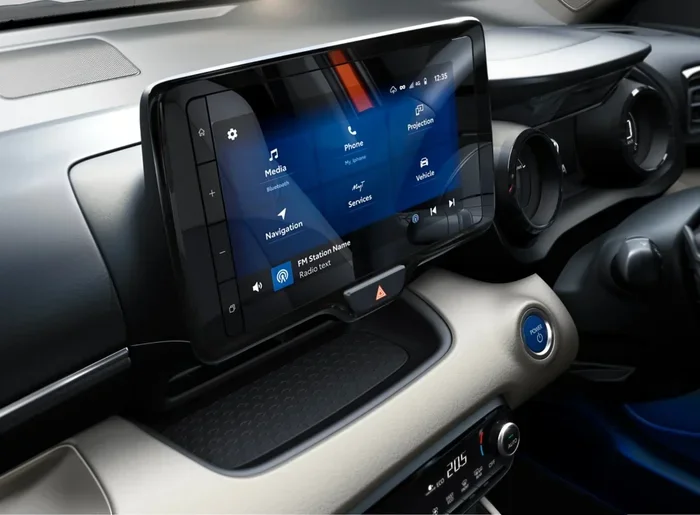
Modern Toyota vehicles are more connected than ever. The company uses artificial intelligence to make cars smarter about communicating with their environment. This connected car technology opens up new possibilities for safety, convenience, and entertainment.
Toyota’s connected AI systems can communicate with other vehicles, infrastructure, and even pedestrians. This vehicle-to-everything (V2X) communication uses AI to process the flood of data and make smart decisions in real time. It’s an important step toward smarter, safer roads for everyone.
Toyota Connected Services
Toyota Connected is the company’s suite of connected car services. It uses AI to provide features like remote vehicle monitoring, smart navigation, and predictive maintenance alerts. The system learns your driving patterns and can suggest optimal routes based on real-time traffic data.
Toyota Connected also includes emergency response features. If the AI detects a serious accident, it can automatically contact emergency services with location data. This kind of proactive safety feature shows how Toyota AI goes beyond just helping the driver. It can actually save lives in critical situations.
Personalized Driving Experiences
Toyota AI also personalizes the driving experience for each owner. The system learns your preferred seat position, climate settings, and music preferences. It can even adjust driving assist settings based on your comfort level.
This personalization extends to maintenance reminders and service scheduling. The AI tracks your driving habits and vehicle condition to suggest the right time for service. Instead of generic maintenance schedules, Toyota AI provides personalized recommendations that keep your vehicle running at its best.
For owners wondering about maintenance alerts, Toyota’s AI-powered systems are designed to notify you when service is needed. Learn more about how the maintenance light works on your Toyota and what it means for your vehicle’s health.
The Future of Toyota Artificial Intelligence
The future of Toyota AI looks incredibly promising. The company continues to invest heavily in artificial intelligence research and development. Several exciting developments are on the horizon that could transform the driving experience even further.
Toyota has announced plans to expand its AI capabilities across all vehicle models. The company envisions a future where every Toyota vehicle is connected, intelligent, and constantly learning. This vision extends beyond just cars to include mobility solutions for elderly and disabled drivers.
AI and Mobility for All
One of Toyota’s most ambitious AI projects focuses on mobility for people who can’t drive. The company is developing AI-powered mobility devices and autonomous shuttles for elderly communities. These systems use the same core AI technology as Toyota cars but are adapted for specific use cases.
Toyota believes AI should be inclusive. The company’s goal is to use artificial intelligence to give more people the freedom to move independently. This social mission sets Toyota apart from competitors who focus primarily on consumer convenience features.
Integration with Smart Cities
Toyota is also working on AI systems that integrate with smart city infrastructure. The vision is a future where vehicles communicate seamlessly with traffic lights, parking systems, and road sensors. AI would coordinate traffic flow across entire cities to reduce congestion and emissions.
This kind of integration requires massive amounts of data processing and real-time decision-making. Toyota’s AI research is specifically designed to handle these complex, large-scale challenges. The company’s experience in manufacturing and systems engineering gives it a unique advantage in building these smart city solutions.
Continuous Learning and Over-the-Air Updates
Future Toyota vehicles will receive AI updates over the air, just like smartphones. This means the AI in your car will keep getting smarter even after you drive it off the lot. The system will learn from data collected across the entire Toyota fleet to improve its performance.
Over-the-air AI updates also mean that safety features will improve without requiring a dealership visit. Toyota owners will benefit from the latest AI advancements automatically. This approach ensures that Toyota vehicles remain at the cutting edge of artificial intelligence for years to come.
Common Mistakes People Make About Toyota AI
There are several misconceptions about Toyota artificial intelligence that are worth addressing. Understanding what AI can and cannot do helps you use these features more effectively.
- Myth: Toyota AI means fully self-driving cars are here. Reality: Most Toyota AI features are driver-assist systems that require active human supervision. True autonomy is still in development.
- Myth: AI features don’t need maintenance. Reality: AI sensors and cameras need to be kept clean and calibrated. Regular maintenance ensures these systems work properly.
- Myth: AI makes driving completely hands-free. Reality: Toyota’s current AI features are designed to assist, not replace, the driver. You should always stay alert and keep your hands on the wheel.
- Myth: Toyota AI is only in expensive models. Reality: Many Toyota AI safety features are now standard across most trim levels, making them accessible to more buyers.
Understanding these limitations helps you use Toyota AI features safely and effectively. The technology is powerful, but it works best when paired with attentive driving.
Key Takeaways
- Toyota artificial intelligence spans safety, manufacturing, and hybrid technology across the entire vehicle ecosystem.
- Toyota AI safety systems like Pre-Collision and driver monitoring use machine learning to prevent accidents.
- Smart manufacturing powered by AI robots and predictive analytics delivers exceptional build quality.
- Hybrid AI technology optimizes energy use and battery management for maximum efficiency.
- Autonomous driving research through TRI focuses on safe, gradual improvements to self-driving capability.
- Connected car AI personalizes the driving experience and provides proactive safety alerts.
- The future of Toyota AI includes smart city integration, over-the-air updates, and inclusive mobility solutions.
Conclusion
Toyota artificial intelligence is transforming every aspect of the driving experience. From factory robots that build precision vehicles to AI systems that keep you safe on the road, Toyota AI delivers real value. The company’s commitment to practical, reliable AI technology sets it apart in the automotive industry.
Whether you’re interested in safety features, hybrid efficiency, or the future of autonomous driving, Toyota AI has something to offer. The technology is designed to make driving safer, more efficient, and more enjoyable for everyone. As Toyota continues to innovate, we can expect even more impressive AI features in the years ahead.
If you’re a Toyota owner or shopper, understanding these AI features helps you get the most out of your vehicle. Take time to explore the AI-powered systems in your Toyota. They represent years of research and development aimed at making your driving experience better. The future of driving is here, and Toyota artificial intelligence is leading the way.
Frequently Asked Questions
What does Toyota use artificial intelligence for?
Toyota uses artificial intelligence in safety systems like Pre-Collision and lane tracing assist, in hybrid energy management, in factory manufacturing robots, and in autonomous driving research through the Toyota Research Institute. The company applies AI across vehicles and production facilities to improve safety, efficiency, and quality.
Is Toyota AI available in all Toyota models?
Many Toyota AI safety features are now standard across most models. However, advanced AI features like full self-driving capabilities and premium connected services may only be available on higher trim levels or newer model years. Check your specific model for available AI features.
How does Toyota AI improve driving safety?
Toyota AI improves safety through systems that monitor the road, detect potential collisions, track driver alertness, and respond faster than humans. The AI processes data from cameras, radar, and sensors to identify risks and take corrective action when needed.
Will Toyota AI make cars fully autonomous soon?
Toyota is actively researching autonomous driving, but fully self-driving cars are not yet available to consumers. The company takes a cautious approach, focusing on proven safety improvements before advancing to full autonomy. Current Toyota AI features are driver-assist systems that require active human attention.
How does AI help Toyota hybrid vehicles?
AI in Toyota hybrids manages energy flow between the electric motor and gasoline engine. It learns driving patterns to optimize fuel economy, monitors battery health, and adjusts power delivery for the most efficient driving experience possible.
Can Toyota AI systems be affected by dirty sensors or cameras?
Yes, Toyota AI systems rely on clean sensors and cameras to work properly. Dirt, snow, or debris on these components can reduce accuracy. Regular cleaning and proper maintenance ensure your Toyota AI features perform at their best, which is another reason keeping up with full car diagnostics is important for Toyota owners.