How Does a Hybrid Car Work Step by Step Explained Simply
A hybrid car combines a gasoline engine and an electric motor to deliver better fuel efficiency and lower emissions. Understanding how a hybrid car works step by step helps you make smarter buying decisions. This guide breaks down every component, system, and driving phase in plain, simple language. You will learn about regenerative braking, battery packs, and the different hybrid types available today. By the end, you will feel confident explaining hybrid technology to anyone.
You have probably seen hybrid cars on the road and wondered what makes them different. Maybe a friend told you they save gas, or you saw a commercial about clean driving. The truth is, hybrid technology is simpler than most people think. At its core, a hybrid car blends two power sources to get the best of both worlds. This article will walk you through exactly how a hybrid car works step by step, using everyday language and clear examples.
Whether you are considering buying a hybrid or just curious about the technology, this guide covers everything you need to know. We will explore the main parts inside a hybrid, how they work together, and why this setup delivers such impressive fuel efficiency. You will also learn about the different types of hybrid systems and what they mean for your driving experience. By the time you finish reading, you will understand hybrid cars better than most people on the road.
Key Takeaways
- Dual Power Sources: A hybrid car uses both a gasoline engine and an electric motor working together for better performance.
- Regenerative Braking Saves Energy: This smart system captures energy during braking and stores it in the battery pack.
- Multiple Hybrid Types Exist: Parallel, series, and plug-in hybrids each offer unique advantages for different drivers.
- Fuel Efficiency Is Real: Hybrids deliver significantly better fuel economy compared to conventional cars.
- Lower Maintenance Costs: Fewer brake replacements and less engine wear mean long-term savings.
- Easy to Own: No special charging equipment is needed for standard hybrids, making them convenient for everyday use.
📑 Table of Contents
What Is a Hybrid Car and Why Should You Care?
A hybrid car is a vehicle that uses two or more power sources to move. Most commonly, these are a gasoline engine and an electric motor. Think of it like riding a bicycle with training wheels and a small motor assisting you. The gasoline engine handles the heavy lifting at higher speeds, while the electric motor kicks in during low-speed driving and stops. Together, they create a smoother, more efficient ride.
The reason hybrid cars matter is simple: they use less fuel and produce fewer emissions. In a world where gas prices keep changing and air quality matters, hybrids offer a practical middle ground. You do not need to plug in a standard hybrid, which makes them incredibly convenient. Meanwhile, plug-in hybrids let you charge at home for even greater fuel savings. Either way, you get the benefits of an electric vehicle without the range anxiety that comes with fully electric cars.
Why Hybrid Technology Has Grown So Fast
Hybrid technology has exploded in popularity over the last decade. Car makers like Toyota, Honda, Ford, and Hyundai all offer hybrid models now. People love hybrids because they deliver real-world fuel economy without changing their driving habits. You fill up at the gas station just like normal, but you visit it less often. The fuel efficiency gains are real and measurable, which is why millions of drivers have made the switch.
Another big reason is government incentives. Many regions offer tax credits, rebates, or reduced registration fees for hybrid owners. These perks make hybrids more affordable upfront. Add in the fact that hybrid batteries now last longer than ever, and you have a compelling package. The technology has matured, the prices have dropped, and the benefits are clear for everyday drivers.
The Key Components That Make It Work
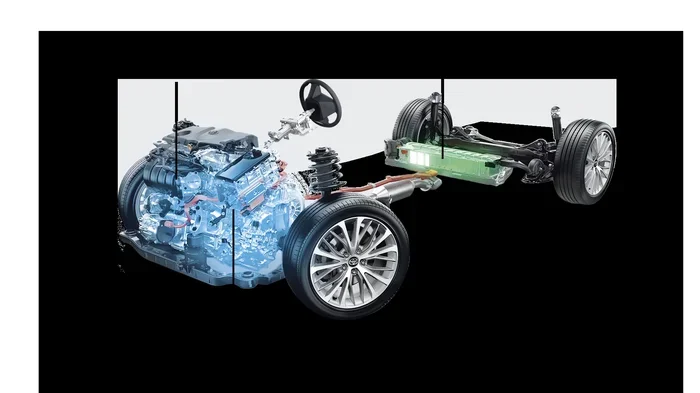
To understand how a hybrid car works step by step, you need to know the parts inside it. Each component plays a specific role, and they all work together seamlessly. Here are the main pieces that make a hybrid run.
Gasoline Engine
The gasoline engine is similar to what you find in a conventional car. It burns fuel to create power and turns the wheels at higher speeds. In a hybrid, this engine is usually smaller and more efficient than a standard engine. It works best when cruising at steady speeds on highways. The engine also charges the battery pack when needed, acting as a small generator.
Electric Motor
The electric motor is the heart of the hybrid system. It runs on electricity stored in the battery pack and provides instant torque. Torque is the twisting force that gets a car moving from a stop. Because electric motors deliver torque immediately, hybrids feel quick and responsive in city driving. The motor can also act as a generator during regenerative braking, converting motion back into stored energy.
Battery Pack
The battery pack stores electrical energy for the electric motor. In most hybrids, this is a nickel-metal hydride or lithium-ion battery. It is much smaller than the battery in a fully electric vehicle because it does not need to power the car alone. The battery recharges itself through regenerative braking and the gasoline engine. You never need to plug in a standard hybrid to keep the battery charged.
Power Control Unit
The power control unit is the brain of the hybrid system. It decides when to use the electric motor, the gasoline engine, or both. It manages the flow of electricity between the battery and the motor. This unit ensures smooth transitions between power sources so you barely notice them happening. It optimizes every driving situation for the best balance of performance and fuel efficiency.
Automatic Transmission
Most hybrids use a continuously variable transmission, or CVT. This type of transmission has no fixed gears. Instead, it smoothly adjusts the gear ratio for the best efficiency at any speed. Some hybrids use conventional automatic transmissions, but the CVT is more common because it pairs well with the electric motor. The result is a driving experience that feels seamless and effortless.
How a Hybrid Car Works Step by Step
Now that you know the parts, let us walk through how a hybrid car works step by step during a typical drive. This is where it all comes together.
Step 1: Starting the Car
When you press the start button, the hybrid car wakes up quietly. The gasoline engine stays off at first. Instead, the electric motor takes over for the initial moments. This is why hybrids are so quiet when you first get in. The power control unit checks the battery level and decides which power source to use. If the battery has enough charge, the electric motor handles everything at startup.
This silent start is not just a nice feature. It also saves fuel because the gasoline engine does not idle while you are warming up. In a conventional car, the engine runs even when you are just sitting in the driveway. A hybrid avoids that waste entirely.
Step 2: Low-Speed City Driving
When you pull out of your driveway and drive through neighborhoods, the electric motor does most of the work. At speeds under about 25 to 30 miles per hour, the gasoline engine stays off. The electric motor provides smooth, quiet power for stop-and-go traffic and residential streets. This is where hybrids really shine because city driving involves lots of slowing down and speeding up.
During this phase, the fuel economy is at its best. You might see your dashboard display showing electric-only driving. The gasoline engine remains off until you need more power, such as when merging onto a highway or climbing a hill. This smart switching happens automatically and without any input from you.
Step 3: Accelerating and Merging
When you need more power, the hybrid system springs into action. The gasoline engine fires up and works alongside the electric motor. This combined power delivery gives you the acceleration you need for highway merges and hill climbs. The power control unit coordinates both engines seamlessly so the transition feels natural.
During hard acceleration, both the electric motor and gasoline engine work together to maximize torque. This is called power blending. The system draws extra electricity from the battery pack to support the electric motor. Once you settle into cruising speed, the system may shut off the electric motor to conserve battery power.
Step 4: Cruising at Highway Speeds
On the highway at steady speeds, the gasoline engine takes the lead. It runs at its most efficient operating point, which is where it wastes the least fuel. The electric motor may run in reverse as a generator during this phase, sending energy back to the battery pack. This is called motor-generating mode, and it helps maintain the battery charge while you cruise.
Highway fuel economy in a hybrid is still excellent, though not quite as impressive as city driving. The gasoline engine handles the heavy lifting, and the electric motor provides support when needed. Overall, a hybrid car still uses significantly less fuel than a comparable conventional car on the highway.
Step 5: Braking and Slowing Down
Here is where hybrid technology gets really clever. When you take your foot off the accelerator or press the brake pedal, the electric motor switches into generator mode. As the wheels slow down, the motor captures kinetic energy and converts it back into electricity. This electricity flows back into the battery pack for later use.
This process is called regenerative braking, and it is one of the biggest advantages of hybrid technology. In a conventional car, braking simply wastes energy as heat. In a hybrid, that energy is recovered and reused. Over time, this energy recovery adds up to significant fuel savings. It also means your brake pads last longer because the electric motor handles much of the deceleration work.
Step 6: Coming to a Complete Stop
When you stop at a red light or in traffic, the hybrid system shuts off the gasoline engine completely. The car runs on the electric motor or goes into idle mode with both engines off. This eliminates idling waste, which is a major source of fuel consumption in conventional cars. When you release the brake pedal, the electric motor restarts the car instantly and silently.
Some hybrids can stay in electric mode for several minutes at a full stop if the battery has enough charge. This is especially useful in heavy traffic where you might be stopped for minutes at a time. The result is zero fuel burned while you wait, which adds up over a lifetime of driving.
Step 7: The Battery Recharges Itself
One of the most amazing things about a standard hybrid is that the battery recharges itself. You never need to plug it in. The regenerative braking system and the gasoline engine both contribute to keeping the battery charged. The power control unit manages this process automatically, ensuring the battery stays within the optimal charge range.
This self-charging feature is what makes hybrids so convenient. You do not need to find a charging station or install equipment at home. You simply drive and the car handles the rest. Plug-in hybrids are different because they have larger batteries that benefit from external charging. But even plug-in hybrids can recharge while driving, giving you the best of both worlds.
Types of Hybrid Systems Explained
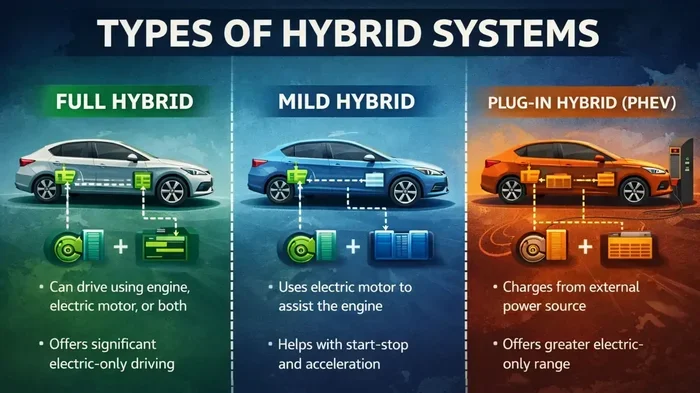
Not all hybrids work the same way. Different manufacturers use different hybrid system designs. Understanding these types helps you choose the right car for your needs.
Parallel Hybrid
In a parallel hybrid, both the gasoline engine and electric motor can turn the wheels directly. They work side by side, and the power control unit decides which one to use or whether to use both. This design is common in many Toyota and Honda hybrid models. Parallel hybrids are great for city driving because the electric motor handles low-speed stops efficiently.
The advantage of a parallel hybrid is simplicity. The mechanical connection between the engines and the wheels is straightforward. This means fewer complex parts and potentially lower repair costs. The trade-off is that the electric motor alone cannot power the car at highway speeds for long periods.
Series Hybrid
In a series hybrid, the gasoline engine never directly connects to the wheels. Instead, it acts as a generator that charges the battery or powers the electric motor. The electric motor is always the one turning the wheels. This design is used in some extended-range electric vehicles and certain plug-in hybrid models.
The series hybrid feels more like driving an electric vehicle because the gasoline engine is mostly hidden from the driver. It runs at a constant speed for maximum efficiency, which is a big advantage. The downside is that the system has more components, which can add weight and complexity. Series hybrids excel in stop-and-go city driving where the electric motor does most of the work.
Plug-In Hybrid
A plug-in hybrid, or PHEV, combines elements of both parallel and series designs. It has a larger battery pack that you can charge by plugging it into a wall outlet or charging station. This gives you a meaningful electric-only driving range, typically 20 to 50 miles depending on the model.
Plug-in hybrids are perfect for people with short daily commutes. You can drive to work on electricity alone and never burn a drop of gas. When the battery runs low, the gasoline engine kicks in just like a regular hybrid. This gives you the flexibility of a conventional car with the efficiency benefits of electric driving. The main downside is the higher purchase price compared to standard hybrids.
Regenerative Braking and Energy Recovery
Regenerative braking deserves its own spotlight because it is the feature that sets hybrids apart. This system turns your car into a self-charging machine every time you slow down or brake.
Here is how it works in simple terms. When a conventional car brakes, the brake pads create friction to slow the wheels. All that energy turns into heat and disappears. A hybrid car uses the electric motor in reverse during braking. Instead of using electricity to spin the wheels, the spinning wheels turn the motor, which generates electricity. That electricity flows into the battery pack for later use.
The result is remarkable energy efficiency. You are literally recapturing energy that would otherwise be wasted. Over a typical day of city driving, regenerative braking can recover a significant portion of the energy used during acceleration. This is why hybrids often achieve much better fuel economy in cities than on highways.
Quick Tip: If your hybrid has a driving mode selector, try using the “B” mode on hills. This increases regenerative braking resistance and helps recharge the battery faster while you descend. It is a small trick that can improve your overall fuel economy noticeably.
Hybrid vs. Conventional Cars: A Quick Comparison
Let us put things into perspective by comparing hybrids to conventional cars side by side.
| Feature | Hybrid Car | Conventional Car |
|---|---|---|
| Power Sources | Gasoline engine + electric motor | Gasoline engine only |
| Fuel Economy (City) | 40-60 mpg | 25-35 mpg |
| Fuel Economy (Highway) | 35-50 mpg | 30-40 mpg |
| Emissions | Lower emissions | Higher emissions |
| Regenerative Braking | Yes | No |
| Battery Recharging | Self-charging | N/A |
| Maintenance Costs | Lower brake wear | Higher brake wear |
| Purchase Price | Higher upfront cost | Lower upfront cost |
| Driving Range | Same as conventional | Same |
| Charging Required | No (standard hybrid) | N/A |
As you can see, hybrids offer clear advantages in fuel economy and emissions reduction. The higher upfront cost is often offset by fuel savings over several years of ownership. Many hybrid owners report saving hundreds of dollars per year on gas compared to their previous conventional car. The environmental benefits are also significant, with hybrids contributing to lower overall emissions reduction in your community.
Common Mistake: Do not assume a hybrid will always save you money. If you drive very few miles per year, the fuel savings may not offset the higher purchase price. Calculate your expected annual mileage and fuel costs before deciding. A hybrid makes the most sense for drivers who cover significant miles each year.
Tips and Maintenance for Hybrid Owners
Owning a hybrid is mostly the same as owning a conventional car, but there are a few things worth knowing. These tips will help you get the most out of your hybrid vehicle.
Follow the Manufacturer Maintenance Schedule
Hybrid cars still need regular oil changes, tire rotations, and fluid checks. The maintenance schedule is similar to a conventional car in most cases. The good news is that regenerative braking means your brake pads last much longer. You might go 80,000 to 100,000 miles before needing new brake pads, compared to 30,000 to 50,000 in a conventional car.
Drive Smoothly for Best Fuel Economy
Hybrid systems respond well to smooth, steady driving. Aggressive acceleration wastes energy and reduces fuel efficiency. Try to accelerate gently and maintain consistent speeds where possible. Using cruise control on highways is a great way to maximize your fuel economy. The electric motor will thank you for the gentle driving style.
Monitor Your Battery Health
Modern hybrid batteries are designed to last the lifetime of the car, often 100,000 to 150,000 miles or more. However, extreme temperatures can affect battery performance. If you live in a very hot or very cold climate, park in a garage when possible. Keeping the battery within its optimal temperature range helps maintain long-term health and performance.
Use Eco Driving Modes
Most hybrids come with an Eco mode that adjusts throttle response and climate control for maximum efficiency. Using Eco mode during daily commuting can noticeably improve your fuel economy. Some hybrids also have a EV mode that lets you drive on electric power alone for short distances at low speeds. Use these features wisely to squeeze every mile out of each gallon.
Expert Insight on Hybrid Battery Longevity
According to automotive experts, hybrid batteries have come a long way in the past decade. Early hybrids sometimes had battery issues after 80,000 miles, but modern batteries are far more durable. Toyota, for example, has reported many Prius models lasting over 200,000 miles on their original battery. The key is to avoid fully draining the battery and to keep it within the recommended charge range. Your hybrid battery is designed to be a long-life component, not a regular replacement item.
Conclusion
Understanding how a hybrid car works step by step reveals a brilliantly simple yet sophisticated system. From the electric motor that handles city driving to the regenerative braking system that captures wasted energy, every component works together to deliver exceptional fuel efficiency and lower emissions. The gasoline engine provides power when you need it, while the battery pack stores energy for later use. It is a seamless partnership that makes driving smarter and more economical.
Hybrid technology continues to evolve, with plug-in hybrids and advanced powertrain designs pushing the boundaries of what is possible. Whether you choose a standard hybrid or a plug-in hybrid, you are making a smart choice for your wallet and the environment. The fuel savings are real, the maintenance costs are manageable, and the driving experience is smooth and quiet.
If you have been curious about hybrids but were not sure where to start, now is the perfect time. Test drive a hybrid model near you and experience the step-by-step technology firsthand. Once you feel the seamless power delivery and see the fuel economy numbers on your dashboard, you will understand why millions of drivers have already made the switch. A hybrid car is not just a trend; it is a practical, proven technology that is here to stay.
Frequently Asked Questions
Do I need to plug in a standard hybrid car?
No, standard hybrids recharge their own batteries through regenerative braking and the gasoline engine. You never need to plug them in. Plug-in hybrids are different because they have larger batteries that benefit from external charging, but even those can recharge while driving.
How long do hybrid batteries last?
Most hybrid batteries are designed to last 100,000 to 150,000 miles or more. Many manufacturers warranty their hybrid batteries for 8 to 10 years. With proper care and normal driving habits, hybrid batteries often last the lifetime of the vehicle without needing replacement.
Are hybrid cars more expensive to maintain than conventional cars?
Actually, hybrids are often cheaper to maintain in the long run. Regenerative braking reduces wear on brake pads, and the gasoline engine experiences less stress because the electric motor shares the workload. The main cost difference is the higher upfront purchase price, which is usually offset by fuel savings over several years.
Can a hybrid car run on electric power alone?
Yes, most hybrids can run on electric power alone at low speeds and short distances. Standard hybrids typically have a limited electric-only range of 1 to 2 miles. Plug-in hybrids can go 20 to 50 miles on electricity alone before the gasoline engine kicks in. This makes plug-in hybrids ideal for short daily commutes.
Is regenerative braking really effective at saving fuel?
Yes, regenerative braking is highly effective, especially in city driving. Every time you slow down or brake, the system captures energy that would otherwise be lost as heat. Over a typical day of stop-and-go driving, this recovered energy can significantly reduce fuel consumption and extend your driving range.
What happens when a hybrid battery dies?
If a hybrid battery fails, the car can usually still run on the gasoline engine alone, though performance and fuel economy will suffer. Replacing a hybrid battery can be expensive, but many batteries last well beyond 150,000 miles. Some shops also offer refurbished or rebuilt hybrid batteries at a fraction of the cost of a new one.