How to Check Automatic Transmission Fluid Without a Dipstick
Checking your automatic transmission fluid without a dipstick is easier than you think. You can use the fill tube, a scan tool, or visit a shop to get an accurate reading. This guide walks you through every method so you can keep your transmission running smoothly and avoid costly repairs.
Your car’s transmission is one of the most important parts under the hood. It transfers power from the engine to the wheels and keeps everything running smoothly. But here is something many car owners overlook: transmission fluid. Just like engine oil, transmission fluid needs regular attention. The problem is that many newer vehicles do not come with a traditional dipstick. If you have ever popped open the hood and wondered where the dipstick even is, you are not alone.
So how do you check automatic transmission fluid without a dipstick? There are actually several straightforward ways to do it. Whether you use the fill tube method, a scan tool, or simply visit a trusted mechanic, you can stay on top of your transmission health. In this guide, we will walk you through each method step by step. You will also learn what healthy fluid looks like, what warning signs to watch for, and how to avoid common mistakes.
Taking five minutes to check your transmission fluid level can save you hundreds or even thousands of dollars in repairs down the road. Let us dive in and make it easy.
Key Takeaways
- No dipstick? No problem: Many modern vehicles do not have a transmission dipstick, but you can still check the fluid level using alternative methods.
- Use the fill tube method: You can insert a finger or a long stick into the transmission fill tube to gauge the fluid level.
- Scan tools help: OBD-II scan tools can read transmission fluid temperature and level data from your car’s computer.
- Fluid condition matters: The color, smell, and texture of your transmission fluid tell you a lot about your transmission health.
- Regular checks prevent repairs: Catching low or dirty fluid early can save you from expensive transmission rebuilds.
- Know when to seek help: Some methods require professional equipment, and that is perfectly okay.
📑 Table of Contents
- Why Checking Transmission Fluid Matters
- How to Check Automatic Transmission Fluid Without a Dipstick
- Tools and Materials You Will Need
- Step-by-Step Guide to Checking Your Transmission Fluid
- What Your Transmission Fluid Tells You
- Common Mistakes to Avoid
- When to See a Professional
- How Often Should You Check Transmission Fluid?
- Final Thoughts
Why Checking Transmission Fluid Matters
Transmission fluid does a lot of heavy lifting. It lubricates all the moving parts inside your transmission. It also helps with cooling and hydraulic pressure. Without proper fluid levels, your transmission can overheat, slip, or even fail completely. And transmission repairs are among the most expensive auto repairs you can face.
Here are a few reasons why regular transmission fluid checks should be part of your maintenance routine:
- Prevents overheating: Fresh fluid keeps temperatures in check, especially during heavy driving or towing.
- Extends transmission life: Clean fluid reduces wear on gears and internal components.
- Catches leaks early: A low fluid level often signals a leak that needs attention.
- Improves shifting: Proper fluid levels ensure smooth, responsive gear changes.
- Saves money: A fluid top-off costs very little compared to a full transmission rebuild.
Many drivers ignore their transmission fluid until something goes wrong. By then, the damage can already be done. Making it a habit to check your fluid regularly is one of the best things you can do for your vehicle.
How to Check Automatic Transmission Fluid Without a Dipstick
If your car does not have a transmission dipstick, you are not out of luck. There are several reliable methods you can use to check your fluid. Let us go through each one.
Method 1: The Fill Tube Method
This is the most common DIY method for vehicles without a dipstick. Most automatic transmissions have a fill tube or fill hole on top of the transmission housing. Here is how it works:
- Start the engine and let it warm up to normal operating temperature.
- Leave the engine running and shift through all gears, then return to park.
- Locate the fill tube on top of the transmission. It usually looks like a narrow metal or plastic tube.
- Remove the fill cap or plug from the tube.
- Insert your finger into the tube. You should feel fluid at the bottom if the level is correct.
- Alternatively, use a long stick or dipstick from another tool and insert it into the tube to check the level.
If you do not feel any fluid or the fluid is very low, you need to add more. Use the correct transmission fluid type for your vehicle. You can find this information in your owner’s manual.
Pro Tip: This method works best when the car is on a level surface. An uneven surface can give you a false reading.
Method 2: Using an OBD-II Scan Tool
Modern vehicles with electronic transmissions often store fluid level data in the car’s computer. You can access this information using an OBD-II scan tool. Here is what to do:
- Plug the scan tool into the OBD-II port under your dashboard.
- Turn the ignition on (do not start the engine).
- Navigate to the transmission module and look for fluid level or fluid temperature readings.
- Compare the readings to the specifications in your owner’s manual.
Some advanced scan tools can even show you live data from the transmission sensors. This method is especially useful if you suspect a low transmission fluid condition but cannot find the fill tube.
Many auto parts stores will let you borrow a scan tool for free. This is a great option if you do not want to buy one right away.
Method 3: The Service Port Check
Some transmissions have a service port or check plug on the side of the transmission housing. A mechanic can remove this plug while the car is running and check whether fluid flows out at the correct rate. This method is more common at professional shops and requires special tools.
You can also ask your mechanic to perform this check during your next oil change or routine service. Many shops, including places that handle transmission fluid checks during oil changes, can do this for you quickly and affordably.
Method 4: Visiting a Dealership or Transmission Specialist
If you are not comfortable doing any of the above methods yourself, visiting a dealership or transmission specialist is always a solid option. They have the right equipment and expertise to check your fluid accurately. This is especially helpful if your vehicle uses a sealed transmission that does not have user-accessible fill points.
Dealerships can also hook up their factory-level diagnostic computers to read transmission data. This gives you the most accurate picture of your fluid condition.
Tools and Materials You Will Need
Before you start checking your automatic transmission fluid, gather the right tools. Having everything ready makes the process much smoother.
- Correct transmission fluid: Check your owner’s manual for the exact type and amount needed.
- A funnel: This helps you add fluid without spilling.
- A long stick or probe: Useful for the fill tube method.
- Clean rags or paper towels: For wiping up any spills.
- An OBD-II scan tool: Optional but very helpful for modern vehicles.
- Jack and jack stands or ramps: Only needed if the fill tube is hard to reach.
You do not need a lot of fancy equipment to check your transmission fluid. Most of these items are affordable and easy to find at any auto parts store.
Step-by-Step Guide to Checking Your Transmission Fluid
Now let us walk through the complete process. Follow these steps carefully for the most accurate reading.
Step 1: Park on a Level Surface
This is critical. If your car is on a slope, the fluid will settle unevenly and give you a false reading. Park on a flat driveway or garage floor. Set the parking brake and make sure the car is stable.
Step 2: Warm Up the Engine
Transmission fluid expands when it is warm. For the most accurate reading, drive the car for a few minutes or let the engine idle for 5 to 10 minutes. Some manufacturers recommend checking the fluid when the engine is warm but not hot. Always refer to your owner’s manual for specific guidance.
One important note: do you leave the car running when checking transmission fluid? In most cases, yes. The transmission needs to be pressurized for an accurate reading. However, some vehicles require the engine to be off. Check your manual to be sure.
Step 3: Locate the Fill Tube or Service Port
Open the hood and look for the transmission fill tube. It is usually located near the back of the engine, close to the firewall. On some vehicles, you may need to look from underneath the car. The tube is typically narrow and may have a cap or plug on top.
Step 4: Check the Fluid Level
Remove the fill cap and insert your finger or a long stick into the tube. You should feel fluid at the bottom of the tube. If the tube feels empty or the fluid level is below the opening, you need to add more fluid.
Step 5: Add Fluid If Needed
Use a funnel to add the correct transmission fluid slowly. Add small amounts and recheck the level. Overfilling can be just as problematic as underfilling. Stop when you feel fluid at the bottom of the fill tube.
Step 6: Recheck and Clean Up
After adding fluid, shift through all the gears and return to park. Recheck the level one more time. Wipe up any spills and replace the fill cap securely.
What Your Transmission Fluid Tells You
Checking the fluid level is only half the battle. The condition of the fluid itself gives you valuable insight into the health of your transmission. Here is what to look for.
Fluid Color
- Bright red or pink: This is healthy fluid. It means the fluid is fresh and doing its job.
- Dark red or brown: The fluid is aging but still functional. Consider a transmission fluid change soon.
- Brown or black: This fluid is burnt and dirty. It needs to be changed immediately.
- Milky or frothy: This indicates water or coolant contamination. This is a serious problem that needs professional attention.
Fluid Smell
Healthy transmission fluid has a slightly sweet or tart smell. If you notice a burning smell coming from the fluid, it means the fluid is overheating or degrading. A burnt smell is a warning sign that should not be ignored.
Fluid Texture
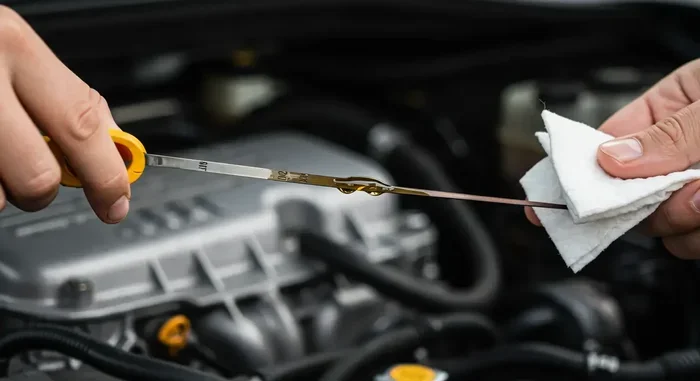
Good transmission fluid feels smooth and slippery between your fingers. If it feels gritty or rough, there may be metal particles or debris inside the transmission. This could indicate internal wear.
Common Mistakes to Avoid
Checking transmission fluid seems simple, but small mistakes can lead to inaccurate readings or even damage. Here are some common errors to watch out for.
- Checking the fluid when the engine is cold: This can give you a false low reading. Always warm up the engine first.
- Using the wrong fluid type: Not all transmission fluids are the same. Using the wrong one can damage your transmission. Always check your owner’s manual.
- Overfilling the transmission: Too much fluid can cause foaming and pressure buildup. Add fluid slowly and in small amounts.
- Ignoring leaks: If you keep losing fluid, there is likely a leak somewhere. Address it promptly.
- Skipping regular checks: Even if your transmission seems fine, regular checks catch problems early.
If you want to learn more about proper transmission fluid procedures, check out our article on whether you should leave the car running when checking transmission fluid. It covers important details that many people overlook.
When to See a Professional
There are times when a DIY fluid check is not enough. You should see a professional if you notice any of the following:
- The fluid is leaking badly: Puddles of fluid under your car are never a good sign.
- Your transmission is slipping: Gears slipping in and out is a serious problem.
- The fluid is milky or contaminated: This suggests a deeper issue that needs professional diagnosis.
- You get a check engine light: Sometimes transmission problems trigger the check engine light. You can run diagnostics even without a check engine light to investigate further.
- You are unsure about the fluid type: A professional can confirm the right fluid for your vehicle.
Transmission problems can escalate quickly. When in doubt, it is always better to get a professional opinion. A quick inspection can save you from a major repair bill.
How Often Should You Check Transmission Fluid?
Most manufacturers recommend checking your transmission fluid every 30,000 to 60,000 miles. However, if you drive in severe conditions, such as heavy traffic, towing, or extreme temperatures, you should check it more often. Some experts even recommend checking it every 15,000 miles for vehicles used in tough conditions.
Regular checks are especially important for older vehicles or cars with high mileage. As transmissions age, they tend to consume more fluid. Staying on top of the level helps you catch small problems before they become big ones.
And remember, checking your fluid is not the same as changing it. A transmission fluid change involves draining the old fluid and replacing it with fresh fluid. This is typically done less often than a fluid check, usually every 60,000 to 100,000 miles depending on your vehicle and driving conditions.
Final Thoughts
Checking automatic transmission fluid without a dipstick is something every car owner can do with a little knowledge and the right approach. Whether you use the fill tube method, a scan tool, or visit a professional, the key is to make it a regular part of your maintenance routine. Healthy fluid means a healthier transmission, and that means fewer surprises and lower repair costs over the life of your vehicle.
Do not wait until you notice a problem. Grab your tools, pop the hood, and give your transmission fluid a quick check today. Your car will thank you for it.
For more information on related topics, you might want to read about adding transmission fluid while the engine is running and how it fits into your overall maintenance routine.
Frequently Asked Questions
Can I check my transmission fluid with the engine off?
It depends on your vehicle. Some manufacturers recommend checking the fluid with the engine off and cool, while others require the engine to be warm and running. Always check your owner’s manual for the correct procedure. Using the wrong method can give you an inaccurate reading.
What happens if my transmission fluid is low?
Low transmission fluid can cause slipping gears, rough shifting, overheating, and eventually transmission failure. If you notice any of these symptoms, check your fluid level right away and top it off if needed. Ignoring low fluid can lead to very expensive repairs.
How do I know what type of transmission fluid to use?
Your owner’s manual will list the exact type and specification of transmission fluid your vehicle needs. Using the wrong fluid can damage internal components. If you are unsure, ask a dealer or mechanic for the correct part number.
Can a sealed transmission be checked at home?
Yes, but it is more challenging. Sealed transmissions do not have user-accessible fill tubes or dipsticks. You can use an OBD-II scan tool or visit a mechanic who can access the service port. Some sealed transmissions also have a fill plug that can be removed when the car is on a lift.
Is it normal for transmission fluid to get low over time?
A small amount of fluid consumption is normal, especially in older vehicles. However, if you are frequently topping off the fluid, you likely have a leak that needs to be addressed. Leaks can occur at seals, gaskets, or the transmission pan.
How long does transmission fluid last?
Most manufacturers recommend changing transmission fluid every 60,000 to 100,000 miles. However, severe driving conditions can shorten this interval. Regular fluid checks help you monitor the condition and decide when a change is needed.
=== CONCLUSION ===
Checking your automatic transmission fluid without a dipstick is a simple but powerful way to protect your vehicle. With the fill tube method, a scan tool, or a visit to your mechanic, you can keep your transmission in great shape. Pay attention to the fluid color, smell, and texture, and always use the correct fluid type for your car. Make fluid checks a regular habit, and you will enjoy smoother shifting, better performance, and fewer unexpected repairs for years to come.