Does AutoZone Program TPMS Sensors for Your Vehicle
Does AutoZone program TPMS sensors? The short answer is yes, but with some important details you should know. AutoZone offers select TPMS services at many locations, including sensor replacement and tire pressure reset. However, full sensor programming depends on your vehicle model and the tools available at your local store. This guide covers everything you need to know about getting your tire pressure monitoring system handled at AutoZone.
Key Takeaways
- AutoZone does offer TPMS services: Many AutoZone locations can help with TPMS sensor replacement and reset, but full programming varies by store.
- Not all stores have the same tools: Some AutoZone locations carry advanced TPMS programming tools, while others may refer you to a tire shop.
- Cost varies by service: TPMS sensor replacement at AutoZone can range from affordable to moderate, depending on your vehicle.
- DIY options exist: You can also program TPMS sensors at home with the right OBD scanner and a little know-how.
- Know when to replace: Understanding the signs of a failing TPMS sensor can save you time and money.
- Direct and indirect TPMS differ: The type of system in your vehicle affects how it is programmed and serviced.
📑 Table of Contents
- Does AutoZone Program TPMS Sensors?
- Understanding TPMS and Why It Matters
- AutoZone TPMS Services at a Glance
- How TPMS Programming Actually Works
- Quick Tips for TPMS Success
- Common Mistakes to Avoid with TPMS Programming
- AutoZone vs. Other Options for TPMS Programming
- When Should You Replace Your TPMS Sensor?
- Key Takeaways
- Conclusion
Does AutoZone Program TPMS Sensors?
If you have ever driven down the road and seen that little light on your dashboard shaped like a horseshoe with an exclamation mark, you know the worry that comes with it. That is your tire pressure monitoring system, or TPMS, telling you something is off. And the first place many car owners think to go is AutoZone. But does AutoZone program TPMS sensors? The answer is more nuanced than a simple yes or no.
AutoZone is one of the largest auto parts retailers in the United States. Millions of people trust it for batteries, brakes, oil changes, and more. When it comes to TPMS services, AutoZone does provide help at many locations. But the level of service you get depends on several factors. These include your vehicle type, the tools available at your local store, and the specific TPMS service you need.
In this article, we will break down everything you need to know. We will cover what TPMS is, how AutoZone handles it, what services they offer, and what your options are if AutoZone cannot fully program your sensors. By the end, you will have a clear picture of what to expect and how to get your tire pressure monitoring system back in working order.
So let us dive right in and explore the world of TPMS programming at AutoZone. Whether your tire pressure light is on or you are just trying to be proactive, this guide has you covered.
Understanding TPMS and Why It Matters
What Is a TPMS Sensor?
Your tire pressure monitoring system is a safety feature in modern vehicles. It uses sensors to check the air pressure inside each tire. When pressure drops below the recommended level, the system triggers a warning light on your dashboard. This is your tire pressure warning, and it should never be ignored.
There are two main types of TPMS systems. The first is direct TPMS. This system uses a small sensor mounted inside each tire, usually on the valve stem. The sensor measures the exact air pressure and sends a signal to your car’s computer. The second type is indirect TPMS. This system does not use physical sensors inside the tire. Instead, it uses the wheel speed sensors from your anti-lock braking system to detect differences in tire size caused by low pressure.
Most vehicles made after 2007 in the United States come equipped with direct TPMS. These systems are more accurate and provide real-time pressure readings. They also require sensor programming when sensors are replaced or rotated between wheels.
Why TPMS Programming Is Necessary
When you install new TPMS sensors, they need to be programmed to your specific vehicle. Each sensor has a unique identification number. Your car’s computer needs to recognize that number. Without proper programming, the system may not read the sensors correctly. This means your tire pressure light could stay on even when your tires are fine.
TPMS programming also involves registering the sensors with your vehicle’s onboard computer. This process ensures that each tire is monitored properly. It is not just a matter of screwing in a new sensor and calling it done. The sensor must communicate with the car’s TPMS module. This is why having the right tools and knowledge matters so much.
AutoZone TPMS Services at a Glance
What Services Does AutoZone Offer?
AutoZone provides a range of services related to tire pressure monitoring. These services can vary from one store to another. Here is a look at what AutoZone typically offers when it comes to TPMS:
- TPMS sensor replacement: AutoZone sells TPMS sensors and can help with installation at participating locations.
- Tire pressure reset: Many AutoZone stores can perform a TPMS reset after you have inflated your tires or replaced a sensor.
- Sensor diagnostics: Some locations can scan your TPMS system to identify faulty sensors or battery issues.
- Valve stem service: AutoZone can help with valve stem replacement, which is often needed when servicing TPMS sensors.
It is important to note that not every AutoZone location offers all of these services. Larger stores with full service bays are more likely to have TPMS programming tools. Smaller stores that focus mainly on parts sales may not offer installation or programming at all.
Can AutoZone Program TPMS Sensors Fully?
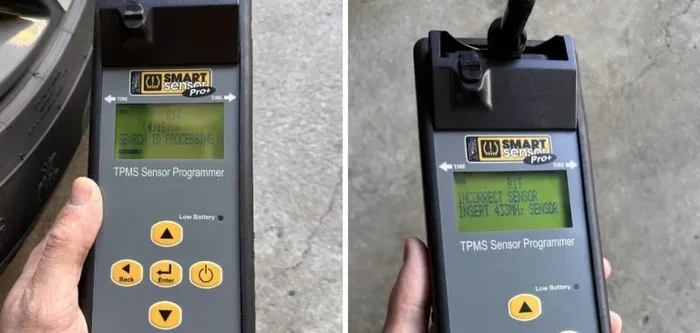
Here is where things get a bit tricky. AutoZone can handle basic TPMS tasks like resets and sensor replacement. But full sensor programming requires specialized equipment. Some AutoZone stores carry TPMS programming tools that can register new sensors with your vehicle’s computer. However, not all stores have this capability.
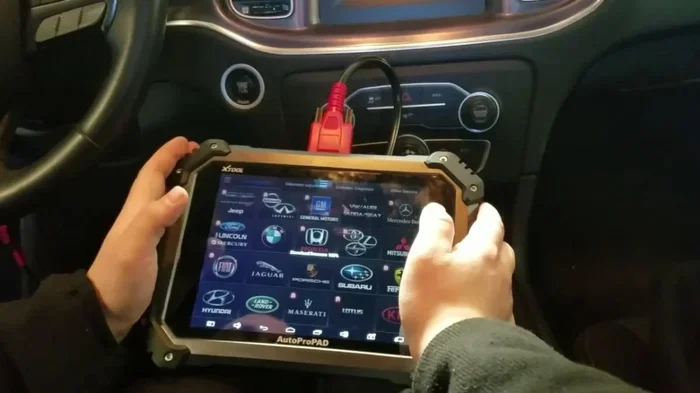
If you visit an AutoZone that does have the tools, the process is usually straightforward. A trained associate can connect the tool to your vehicle’s OBD port. The tool reads the sensor IDs and programs them into the system. This process typically takes about 15 to 30 minutes. But if your local store lacks the right equipment, you may need to visit a tire shop or dealership for full programming.
How TPMS Programming Actually Works
The Step-by-Step Process
If you are curious about how TPMS sensor programming works, here is a simplified look at the process. Understanding the steps can help you feel more confident when you take your vehicle in for service.
- Identify the sensor type: The technician first determines whether your vehicle uses a direct or indirect TPMS system. This affects the tools and methods needed.
- Connect the programming tool: A TPMS tool is connected to your vehicle’s OBD-II port. This port is usually located under the dashboard on the driver’s side.
- Read existing sensor data: The tool pulls the current sensor IDs and pressure data from the vehicle’s computer.
- Activate the new sensor: Each new sensor is activated using the TPMS tool. This sends a signal that the tool can read.
- Program the sensor to the vehicle: The tool registers the new sensor ID with your car’s TPMS module. This ensures the system recognizes the sensor.
- Verify the system: The technician checks that all sensors are reading correctly and the warning light has turned off.
This process applies to most direct TPMS systems. Indirect systems do not require sensor programming in the same way. Instead, they rely on a reset procedure after tire changes or pressure adjustments.
Direct TPMS vs. Indirect TPMS: Key Differences
Understanding the difference between direct and indirect TPMS can help you know what to expect when you visit AutoZone or any other service provider. Here is a quick comparison:
| Feature | Direct TPMS | Indirect TPMS |
|---|---|---|
| Sensors inside tires | Yes | No |
| Sensor programming needed | Yes | No |
| Accuracy | High | Moderate |
| Reset required after tire change | Yes | Yes |
| Cost of service | Higher | Lower |
| Common in vehicles | Most cars after 2007 | Older models and some economy cars |
Most modern vehicles use direct TPMS. If your car was made after 2007, there is a good chance it has direct sensors. These sensors are more precise but also more expensive to replace. They also require programming when new sensors are installed.
Quick Tips for TPMS Success
Whether you are heading to AutoZone or handling things yourself, a few quick tips can make the process much smoother. Here is what every car owner should know about TPMS maintenance and programming.
- Check your owner’s manual first: Your manual will tell you the recommended tire pressure for your vehicle. It may also have specific instructions for TPMS reset and programming.
- Keep a tire pressure gauge in your glove box: Do not rely solely on your TPMS light. Check your tire pressure monthly with a quality gauge. This helps you catch slow leaks early.
- Replace TPMS sensor batteries when needed: Most TPMS sensor batteries last between 5 and 10 years. When the battery dies, the sensor needs to be replaced entirely. A low battery often triggers a flashing TPMS light.
- Always reset the system after tire service: Whether you rotated your tires, changed a flat, or added air, perform a TPMS reset afterward. This recalibrates the system to your current tire conditions.
- Use the correct sensor for your vehicle: Not all TPMS sensors are universal. Make sure you get the right sensor for your make and model. AutoZone can help you find the correct part.
- Drive at steady speeds after a reset: After performing a TPMS reset, drive your vehicle at a steady speed for a few miles. This allows the system to recalibrate and confirm that all tires are at the proper pressure.
Common Mistakes to Avoid with TPMS Programming
Even experienced car owners can make mistakes when dealing with TPMS sensors. Avoiding these common errors can save you time, money, and frustration.
- Ignoring the TPMS light: Some people ignore the tire pressure warning for weeks or even months. This is a bad idea. Low tire pressure can reduce fuel efficiency, cause uneven tire wear, and increase the risk of a blowout.
- Using the wrong sensor: Not all TPMS sensors are interchangeable. Using the wrong sensor can lead to programming errors or a system that does not work at all. Always verify compatibility before purchasing a replacement sensor.
- Skipping the programming step: After installing new sensors, some people assume the system will work automatically. It will not. The sensors must be programmed to the vehicle. Skipping this step leaves your tire pressure light on and your system nonfunctional.
- Over-tightening the valve stem: When installing a new sensor, it is tempting to crank down on the valve stem nut. Over-tightening can damage the sensor or the valve stem itself. Hand-tight plus a quarter turn with a wrench is usually sufficient.
- Forgetting to reset after tire rotation: If you rotate your tires, the TPMS sensors change positions. The system needs to be reset so it knows which sensor is on which wheel. Skipping this step can cause confusing pressure readings.
AutoZone vs. Other Options for TPMS Programming
Where Else Can You Get TPMS Sensors Programmed?
If your local AutoZone cannot program your TPMS sensors, where else can you go? There are several alternatives, each with its own pros and cons. Here is a look at the most common options:
- Tire shops: Stores like Discount Tire and Tire Rack offer full TPMS services, including sensor programming and replacement. They usually have the latest tools and trained technicians.
- Dealerships: Your vehicle’s dealership can program TPMS sensors using factory-specific tools. This is the most reliable option but also the most expensive.
- Independent auto repair shops: Many local mechanics offer TPMS programming at competitive prices. Look for shops that advertise TPMS services specifically.
- DIY with an OBD scanner: If you are handy with tools, you can purchase a TPMS programming tool and do it yourself. This saves money but requires some technical knowledge.
Comparison Table: TPMS Programming Options
| Option | Cost Range | Programming Capability | Convenience | Best For |
|---|---|---|---|---|
| AutoZone | Low to moderate | Basic reset and sensor replacement at some locations | High (many locations) | Quick resets and simple sensor swaps |
| Tire shops | Moderate | Full programming and sensor replacement | Moderate | Full TPMS service and tire packages |
| Dealership | Higher | Full factory-level programming | Lower (longer wait times) | Warranty-related work and complex systems |
| DIY with OBD tool | One-time tool cost | Full programming if tool is compatible | Highest for experienced users | Savvy DIYers with the right tools |
| Independent repair shop | Moderate | Full programming and repair | Moderate | Personalized service and competitive pricing |
Expert Insights on TPMS Programming
Many automotive experts agree that TPMS programming is becoming more complex with each new vehicle model. Modern cars use advanced communication protocols between the TPMS sensors and the vehicle’s computer. This means that older programming tools may not work on newer vehicles.
Experts also recommend always replacing TPMS sensors in pairs. If one sensor fails, the other is likely close to the end of its battery life. Replacing both sensors at the same time saves you a second trip and ensures consistent performance across all four tires.
Another expert tip is to keep track of your sensor replacement dates. TPMS sensors are not designed to last forever. Knowing when they were installed helps you plan for future replacements and avoid being caught off guard by a dead sensor battery.
When Should You Replace Your TPMS Sensor?
Signs Your TPMS Sensor Needs Replacement
How do you know when it is time to replace a TPMS sensor? Here are the most common signs that your tire pressure sensor is failing:
- The TPMS light stays on: If your tire pressure warning light remains illuminated even after you have checked and inflated your tires, a sensor may be faulty.
- The light flashes then stays solid: A flashing TPMS light followed by a solid light often indicates a problem with the sensor system itself, not the tire pressure.
- Inaccurate pressure readings: If your dashboard shows one tire at a very different pressure than the others, the sensor in that tire may be malfunctioning.
- The sensor is over 10 years old: TPMS sensor batteries typically last 5 to 10 years. If your sensors are older than that, consider replacing them proactively.
- Corrosion on the valve stem: Visible rust or corrosion around the valve stem can prevent the sensor from working properly.
- You hear a rattling sound: A loose or damaged sensor inside the tire can cause a rattling noise while driving.
If you notice any of these signs, it is important to address the issue promptly. A failing TPMS sensor does more than just trigger a warning light. It means you are not getting accurate pressure readings, which can affect your safety and fuel economy.
Key Takeaways
- Does AutoZone program TPMS sensors? Yes, at many locations, but full programming depends on store capabilities and equipment.
- AutoZone offers basic TPMS services: Sensor replacement, tire pressure reset, and diagnostics are commonly available.
- Direct TPMS requires programming: New sensors must be registered with your vehicle’s computer using a TPMS programming tool.
- Not all AutoZone stores are the same: Larger stores with service bays are more likely to have full TPMS programming tools.
- Alternatives exist: Tire shops, dealerships, independent mechanics, and DIY options are all viable paths for TPMS programming.
- Regular maintenance matters: Checking tire pressure monthly and replacing aging sensors prevents unexpected TPMS issues.
- Know the signs of failure: A constantly lit or flashing TPMS light is your cue to inspect the sensors and get professional help if needed.
Conclusion
So, does AutoZone program TPMS sensors? The answer is a qualified yes. AutoZone provides valuable TPMS services at many of its locations. From tire pressure resets to sensor replacement, they can handle a lot of the basic work. However, full sensor programming is not guaranteed at every store. The best approach is to call your local AutoZone ahead of time and ask about their TPMS capabilities.
If your local AutoZone cannot program your sensors, do not worry. You have plenty of other options. Tire shops, dealerships, and independent repair shops can all handle the job. And if you are a DIY enthusiast, investing in a quality TPMS programming tool gives you the freedom to handle it yourself.
Your TPMS is a critical safety feature. It keeps you informed about your tire pressure and helps prevent dangerous situations on the road. Taking care of it properly, whether at AutoZone or elsewhere, is always worth the effort. Keep your tires properly inflated, replace sensors when needed, and never ignore that little warning light on your dash.
With the right knowledge and the right service provider, keeping your tire pressure monitoring system in top shape is easy. Drive safe, stay informed, and make sure your TPMS is doing its job.
Frequently Asked Questions
Can I program TPMS sensors myself at home?
Yes, you can program TPMS sensors at home if you have the right tools. A TPMS programming tool and an OBD-II scanner that supports sensor programming are required. However, the process varies by vehicle make and model. Always consult your owner’s manual or a reliable guide before attempting DIY programming.
How much does it cost to program TPMS sensors at AutoZone?
The cost depends on the service you need. A simple TPMS reset at AutoZone is often free or low-cost. Sensor replacement can range from $50 to $150 per sensor, depending on your vehicle. Full programming services may not be available at all locations, so it is best to call ahead and confirm pricing.
How long does TPMS sensor programming take?
At most service centers, including AutoZone, TPMS programming takes about 15 to 30 minutes. The exact time depends on the number of sensors being programmed and the complexity of your vehicle’s system. Some newer vehicles with advanced TPMS systems may take a bit longer.
What happens if I don’t program a new TPMS sensor?
If you install a new TPMS sensor without programming it, your vehicle will not recognize the sensor. The tire pressure light will likely stay on, and the system will not monitor that tire. This defeats the purpose of having a TPMS and can leave you unaware of low tire pressure.
Does AutoZone sell TPMS sensors?
Yes, AutoZone sells TPMS sensors for a wide range of vehicle makes and models. You can find both OEM-quality and aftermarket options. If you purchase a sensor from AutoZone, staff at participating locations can assist with installation and basic programming where equipment is available.
How often should TPMS sensors be replaced?
TPMS sensors typically last between 5 and 10 years. The sensor battery is not replaceable in most designs, so the entire sensor must be replaced when the battery dies. If your TPMS light is flashing or your sensors are over 10 years old, it is a good idea to have them inspected and replaced if necessary.