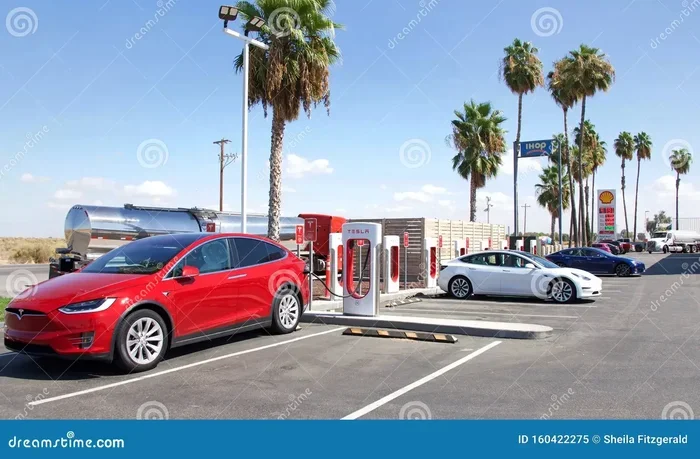
Does Mileage Matter on a Tesla Compared to Gas Cars
Does mileage matter on a Tesla? The short answer is yes, but very differently than on a gas car. Tesla mileage affects battery health, resale value, and long-term ownership costs in unique ways. Unlike traditional vehicles, electric motors handle high miles with less wear and tear. This guide compares Tesla mileage vs gas cars to help you make a smart buying decision.
You have probably wondered about does mileage matter on a Tesla at some point. Maybe you are comparing a used Tesla to a used Honda or Toyota. Or maybe you are curious about how many miles a Tesla can really handle. The truth is that mileage tells a different story when it comes to electric vehicles. Tesla mileage compared to gas cars involves a completely different set of rules. Understanding these differences can save you money, time, and a lot of confusion. Let us dive deep into what mileage really means for a Tesla.
Gas cars and electric cars age in very different ways. A gas engine has hundreds of moving parts that wear down over time. Transmission fluid, spark plugs, timing belts, and oil filters all need regular attention. An electric motor, on the other hand, has far fewer parts that can break. This fundamental difference changes how mileage affects each type of vehicle. So when we ask does mileage matter on a Tesla, the answer is more nuanced than you might think.
Key Takeaways
- Tesla mileage impacts battery life: Expect gradual range loss over time, but modern Teslas hold up remarkably well.
- Cost per mile is much lower: Charging a Tesla costs a fraction of filling a gas tank, even with high mileage.
- Electric motors last longer: Fewer moving parts means less wear compared to combustion engines at the same mileage.
- Used Tesla value holds up: High-mileage Teslas depreciate differently than gas cars, often retaining more value.
- Maintenance costs drop with mileage: No oil changes, fewer brake repairs, and simpler upkeep save thousands over time.
- Range varies by model and driving habits: Temperature, speed, and terrain all affect how far a Tesla can go on a full charge.
📑 Table of Contents
- Why Mileage Matters Differently for Teslas and Gas Cars
- Tesla Battery Degradation: What You Need to Know
- Cost Comparison: Mileage Costs for Tesla vs Gas Cars
- Used Tesla Market: Does High Mileage Affect Value
- Real-World Range: How Far Can a Tesla Actually Go
- Is a Tesla the Right Choice Based on Your Mileage Needs
- Common Mistakes Tesla Owners Make with High Mileage
- Quick Tips for Maximizing Your Tesla’s Mileage Potential
- Expert Insights on Tesla Mileage
- Key Takeaways
- Conclusion
Why Mileage Matters Differently for Teslas and Gas Cars
How Electric Motors Differ from Combustion Engines
A traditional gas engine burns fuel inside cylinders. This creates explosions that push pistons up and down. All of that motion creates friction. Friction creates heat. Heat creates wear. Over time, engines lose power and efficiency. At 100,000 miles, a gas car engine may need serious repairs. Gaskets can leak. Bearings can wear out. The whole drivetrain takes a beating from accumulated mileage.
An electric motor works in a completely different way. It uses electromagnetic fields to spin a rotor. There are no explosions. There are no pistons. There is very little friction. This means an electric motor can run for hundreds of thousands of miles with minimal degradation. When you compare Tesla mileage vs gas cars, the electric motor simply does not wear out the same way a combustion engine does.
Think of it this way. A gas car engine is like a busy restaurant kitchen. Lots of moving parts, lots of heat, lots of things that can break. An electric motor is more like a quiet library. Very few moving parts, very little friction, very few things that go wrong. This is why mileage on a Tesla does not carry the same risk as mileage on a gas car.
Understanding MPGe vs MPG
When shopping for a Tesla, you will see something called MPGe. This stands for miles per gallon equivalent. It is a way to compare electric vehicle efficiency with gas car efficiency. A Tesla Model 3 might get 132 MPGe. A Honda Civic might get 32 MPG. These numbers are not directly comparable, but they give you a sense of efficiency.
MPGe measures how much electrical energy a car uses to travel the same distance as a gas car using one gallon of fuel. Higher numbers mean better efficiency. Teslas generally score very well in MPGe because electric motors convert energy more efficiently than combustion engines. This means that even at high mileage, a Tesla uses energy far more efficiently than a gas car uses fuel.
Here is a quick comparison of common models:
- Tesla Model 3: 132 MPGe, up to 358 miles of range
- Tesla Model Y: 122 MPGe, up to 330 miles of range
- Tesla Model S: 120 MPGe, up to 405 miles of range
- Honda Civic: 32 MPG, up to 447 miles per tank
- Toyota Camry: 32 MPG, up to 575 miles per tank
As you can see, Teslas are incredibly efficient. This efficiency does not drop off sharply with mileage the way it does in gas cars. That is a big part of why does mileage matter on a Tesla has a different answer than you might expect.
Tesla Battery Degradation: What You Need to Know
How Many Miles Can a Tesla Battery Last
The battery is the most expensive part of any electric vehicle. So naturally, people worry about battery life. The good news is that modern Tesla batteries are built to last. Tesla uses lithium-ion battery cells that are designed for extended driving. On average, a Tesla battery loses about 1 to 2 percent of its range per year. This means after 10 years, you might lose 10 to 20 percent of your original range.
Let us say you buy a Tesla Model 3 with 358 miles of range. After 10 years and 150,000 miles, you might have around 285 to 320 miles of range left. That is still a very usable amount of range. Compare this to a gas car. After 150,000 miles, a gas engine might be burning oil, losing compression, and needing expensive repairs. The battery in a Tesla simply holds up much better over the same distance.
Some Tesla owners have reported driving over 300,000 miles with their original battery still performing well. Tesla has also improved battery technology significantly over the years. Newer models use different cell chemistry and better thermal management systems. These improvements mean that Tesla battery life at high mileage is better than ever before.
Battery Warranty and Longevity
Tesla provides a warranty that gives buyers peace of mind. The battery and drive unit warranty covers 8 years or 120,000 miles for the Model 3 and Model Y. For the Model S and Model X, the warranty covers 8 years or 150,000 miles. This warranty guarantees that the battery will retain at least 70 percent of its original capacity during the warranty period.
Keep in mind that the warranty is a minimum standard. Many Tesla batteries last well beyond the warranty period. Regular charging habits can help extend battery life. For example, avoiding constant charging to 100 percent and not letting the battery drop below 20 percent can slow degradation. Using Tesla’s scheduled charging feature to limit charging overnight is another smart practice.
Cost Comparison: Mileage Costs for Tesla vs Gas Cars
Fuel and Electricity Costs
This is where Teslas really shine. The cost of electricity is much lower than the cost of gasoline. On average, it costs about $0.04 to $0.06 per mile to charge a Tesla at home. Compare that to the average gas car, which costs about $0.10 to $0.15 per mile in fuel. Over 10,000 miles per year, that is a savings of $600 to $1,100 per year.
Let us look at a real-world example. Say you drive 12,000 miles per year. That is the average American driving distance. At $0.05 per mile for electricity, your annual charging cost is $600. At $0.12 per mile for gas, your annual fuel cost is $1,440. Over five years, you save $4,200 just on fuel by driving a Tesla instead of a gas car.
And here is the thing about Tesla mileage cost savings. The more you drive, the more you save. A gas car costs more per mile regardless of whether you drive 5,000 miles or 50,000 miles. But because electricity is so cheap, high-mileage Tesla owners see the biggest savings. If you drive a lot for work or travel, a Tesla can save you thousands of dollars every year.
Maintenance Savings Over Time
Gas cars need regular maintenance. Oil changes every 5,000 to 7,500 miles. Transmission fluid changes. Spark plug replacements. Air filter changes. Coolant flushes. Brake pad replacements. The list goes on and on. Over 100,000 miles, gas car maintenance can easily cost $10,000 or more.
Teslas need very little maintenance. No oil changes. No spark plugs. No transmission fluid. No air filters for the engine. The main maintenance items are cabin air filters, brake fluid checks, and tire rotations. Brake pads on a Tesla also last much longer because regenerative braking slows the car down, reducing wear on the physical brakes.
Over 100,000 miles, a Tesla owner might spend $2,000 to $4,000 on maintenance. That is a savings of $6,000 to $8,000 compared to a gas car. And as mileage increases, this gap only grows. So when you ask does mileage matter on a Tesla from a cost perspective, the answer is that high mileage actually works in the Tesla owner’s favor.
Used Tesla Market: Does High Mileage Affect Value
Tesla Depreciation Compared to Gas Cars
Depreciation is how much a car loses in value over time. Gas cars typically lose 15 to 25 percent of their value in the first year and about 50 percent after five years. A used Tesla depreciates too, but the pattern is different. Tesla vehicles tend to hold their value better than most gas cars, especially models with newer battery technology.
High mileage affects used Tesla pricing, but not as dramatically as it affects gas car pricing. A gas car with 100,000 miles on the odometer often raises red flags for buyers. Engine problems, transmission issues, and general wear make buyers nervous. A Tesla with 100,000 miles is a different story. Buyers know that the electric motor should still be in great shape. The battery may have some degradation, but it is usually still very functional.
Here is a simple comparison of depreciation at 100,000 miles:
- Gas sedan (Toyota Camry): Retains about 30 to 35 percent of original value
- Used Tesla Model 3: Retains about 40 to 50 percent of original value
- Gas SUV (Honda CR-V): Retains about 35 to 40 percent of original value
- Used Tesla Model Y: Retains about 45 to 55 percent of original value
These numbers show that Teslas hold value better, even at higher mileage. This is partly because electric drivetrains are more durable and partly because Tesla vehicles have strong demand in the used car market.
What Buyers Look for in High-Mileage Teslas
If you are shopping for a used Tesla, mileage is just one factor. Smart buyers also look at battery health, charging history, and software version. Tesla provides a battery health report through the vehicle’s touchscreen or the Tesla mobile app. This report shows the current battery capacity as a percentage of the original capacity.
A Tesla with 150,000 miles and 85 percent battery health is a great find. A Tesla with 50,000 miles and 70 percent battery health might be a red flag. Always check the battery health report before buying. Also, look at the charging habits of the previous owner. Someone who always charged to 100 percent and frequently used fast chargers may have more battery degradation than someone who charged to 80 percent and used home charging mostly.
Real-World Range: How Far Can a Tesla Actually Go
Range by Model and Battery Size
Every Tesla model has a different range. Range is the maximum distance a Tesla can travel on a full charge. Here is a breakdown of the current Tesla lineup:
- Tesla Model 3: Up to 358 miles (Long Range)
- Tesla Model Y: Up to 330 miles (Long Range)
- Tesla Model S: Up to 405 miles (Plaid)
- Tesla Model X: Up to 348 miles (Plaid)
These are the maximum ranges under ideal conditions. Real-world range is usually lower. Cold weather, highway driving, and heavy loads all reduce range. But even with a reduced range, Teslas still offer plenty of driving distance for daily use and road trips.
Factors That Affect Tesla Range
Several factors influence how far a Tesla can go on a full charge. Understanding these factors helps you plan your driving better.
- Speed: Driving at high speeds uses more energy. Highway driving at 75 mph reduces range more than city driving at 45 mph.
- Temperature: Cold weather reduces battery efficiency. Heating the cabin and warming the battery both consume energy.
- Terrain: Hilly or mountainous terrain uses more energy than flat roads.
- Tire pressure: Underinflated tires create more rolling resistance, which reduces range.
- Cargo weight: Carrying heavy loads uses more energy.
- Climate control: Using the heater or air conditioner draws power from the battery.
The good news is that Tesla has features to help maximize range. The vehicle shows you your predicted range based on your current driving habits. You can also set a range limit to make sure you always have enough charge for your daily needs. And Tesla’s navigation system automatically plans charging stops for road trips.
Is a Tesla the Right Choice Based on Your Mileage Needs
Who Should Choose a Tesla
A Tesla makes great sense for people who drive a lot of miles. If your daily commute is long, if you travel frequently, or if you simply put a lot of miles on your car, an electric vehicle can save you significant money over time. The low cost per mile and minimal maintenance requirements make high-mileage ownership much more affordable.
Teslas also work well for people who can charge at home. If you have a garage or a dedicated parking spot with a charging outlet, you can start every day with a full charge. This eliminates the need to visit gas stations frequently. For most daily drivers, a Tesla can handle all their driving needs on a single charge.
Another great reason to choose a Tesla is the electric car maintenance savings. High-mileage gas car owners know all too well the costs of keeping an engine running. With a Tesla, those costs drop dramatically. The more miles you drive, the more you save.
Who Should Stick with a Gas Car
Teslas are not perfect for everyone. If you do not have access to home charging, owning a Tesla can be more challenging. Public charging stations are becoming more common, but they are not as convenient as filling up at a gas station. Road trips in areas with limited charging infrastructure can require more planning.
Also, if you need to tow heavy loads regularly, some gas SUVs and trucks might still be a better choice. While Tesla vehicles can tow, their range drops significantly when pulling a trailer. If maximum towing range is important to you, a gas vehicle might make more sense right now.
People who live in very cold climates may also want to consider how cold weather affects Tesla range. While modern Teslas handle cold weather much better than older models, range can still drop by 20 to 40 percent in extreme cold. If your daily driving distance is close to your car’s reduced winter range, you might need to charge more frequently.
Common Mistakes Tesla Owners Make with High Mileage
Even though Teslas are low-maintenance vehicles, there are some common mistakes that can reduce battery life and overall performance. Avoiding these mistakes helps you get the most out of your Tesla at any mileage.
- Always charging to 100 percent: Keeping the battery at full charge all the time can speed up degradation. Setting your daily charge limit to 80 or 90 percent is better for long-term battery health.
- Frequent use of Superchargers: DC fast charging generates more heat in the battery. Using Superchargers occasionally is fine, but relying on them every day can increase battery wear over time.
- Ignoring tire rotations: Teslas are heavy vehicles, and tires wear out faster than on many gas cars. Regular tire rotations every 6,000 to 8,000 miles help tires last longer.
- Skipping software updates: Tesla releases over-the-air updates that improve range, efficiency, and battery management. Keeping your software up to date ensures you get the best performance.
- Leaving the car at low charge for extended periods: If you store a Tesla for a long time, keeping the battery between 50 and 80 percent is ideal. Letting it sit at a very low charge for weeks can harm the battery.
Quick Tips for Maximizing Your Tesla’s Mileage Potential
Want to get the most out of your Tesla as the miles add up? Here are some practical tips that every Tesla owner should follow.
- Charge at home whenever possible. Home charging is cheaper, more convenient, and better for battery health than frequent Supercharging.
- Set a daily charge limit of 80 to 90 percent. This simple habit can significantly extend battery life over thousands of miles.
- Use regenerative braking settings. Tesla’s regenerative braking recovers energy when you slow down. It reduces wear on brake pads and adds a few extra miles of range.
- Keep tires properly inflated. Check tire pressure monthly. Properly inflated tires improve range and safety.
- Plan long trips using the Tesla navigation system. The built-in trip planner finds Superchargers along your route and optimizes charging stops.
- Park in shade or a garage when possible. Extreme heat and cold both affect battery performance. A garage or shaded parking spot helps maintain battery health.
- Keep software updated. Tesla constantly improves battery management and efficiency through software updates.
Expert Insights on Tesla Mileage
Industry experts generally agree that Teslas are built for long-distance driving. According to automotive analysts, electric drivetrains are inherently more durable than combustion engines. Fewer moving parts means fewer things to break. This is why many EV owners regularly surpass 200,000 miles without major drivetrain issues.
Battery technology continues to improve as well. Tesla’s 4680 battery cells, introduced in newer models, promise even better longevity and performance. These new cells are designed to handle more charge cycles and last longer than previous battery designs. As Tesla battery technology advances, the gap between electric and gas vehicle longevity will only grow wider.
Consumer Reports and other testing organizations have found that Tesla vehicles score well in long-term reliability ratings. While no car is perfect, the data consistently shows that electric vehicles require less maintenance and experience fewer mechanical failures as mileage increases. This is a strong argument for why mileage on a Tesla is not the concern it is for gas car buyers.
Key Takeaways
- Tesla mileage impacts battery life: Expect gradual range loss over time, but modern Teslas hold up remarkably well.
- Cost per mile is much lower: Charging a Tesla costs a fraction of filling a gas tank, even with high mileage.
- Electric motors last longer: Fewer moving parts means less wear compared to combustion engines at the same mileage.
- Used Tesla value holds up: High-mileage Teslas depreciate differently than gas cars, often retaining more value.
- Maintenance costs drop with mileage: No oil changes, fewer brake repairs, and simpler upkeep save thousands over time.
- Range varies by model and driving habits: Temperature, speed, and terrain all affect how far a Tesla can go on a full charge.
Conclusion
So, does mileage matter on a Tesla? The answer is yes, but in a much more positive way than most people expect. Tesla mileage does not carry the same risks and costs as mileage on a gas car. Electric motors are durable and require minimal maintenance. Battery degradation is gradual and predictable. And the cost savings on fuel and upkeep only increase as you drive more miles.
When you compare Tesla mileage vs gas cars, the advantages of electric vehicles become clear. Teslas save money on fuel, require far less maintenance, and hold their value better over time. Whether you are buying new or used, a Tesla is a smart choice for high-mileage drivers.
The key is to understand how your driving habits affect battery health and range. Charge smart, maintain your tires, and keep your software updated. Follow these simple practices, and your Tesla will reward you with reliable, efficient performance for hundreds of thousands of miles. The era of worrying about high mileage is over. With a Tesla, high mileage is not a problem. It is a testament to a well-built machine that is designed to go the distance.
So the next time someone asks you does mileage matter on a Tesla, you can confidently tell them that it matters much less than they think. And that is great news for anyone considering making the switch to electric.
Frequently Asked Questions
Does high mileage ruin a Tesla battery?
No, high mileage does not ruin a Tesla battery. Tesla batteries are designed to last for hundreds of thousands of miles. On average, a Tesla battery loses about 1 to 2 percent of its range per year. Even after 200,000 miles, most Tesla batteries still function well and retain a significant portion of their original capacity.
Is it cheaper to own a Tesla or a gas car long term?
Owning a Tesla is generally cheaper over the long term. Electricity costs less than gasoline, and electric vehicles require far less maintenance. Over 100,000 miles, Tesla owners can save $6,000 to $10,000 or more compared to gas car owners, depending on driving habits and local fuel costs.
How many miles can a Tesla go on a full charge?
Tesla range varies by model. The Model 3 Long Range can go up to 358 miles, the Model S Plaid up to 405 miles, and the Model Y Long Range up to 330 miles. Real-world range is usually lower and depends on driving speed, temperature, terrain, and other factors.
Do Teslas need oil changes like gas cars?
No, Teslas do not need oil changes. Electric vehicles do not have engines with pistons, cylinders, or oil. The electric motor uses no oil at all. This is one of the biggest maintenance savings for Tesla owners compared to gas car owners.
What happens when a Tesla battery needs to be replaced?
Tesla battery replacement is rare but possible. If a battery does need replacement, the cost varies by model. Tesla’s battery warranty covers replacement for 8 years or 120,000 to 150,000 miles, depending on the model. Out-of-warranty replacements can be expensive, but most Tesla batteries last well beyond the warranty period without needing replacement.
Can you drive a Tesla long distances like a gas car?
Yes, you can drive a Tesla long distances. Tesla’s Supercharger network makes road trips convenient. The navigation system automatically plans charging stops. However, long-distance driving takes a bit more planning than filling up at a gas station. Overall, modern Teslas are very capable of long-distance travel with minimal inconvenience.
===
=== SEO TITLE ===
Does Mileage Matter on a Tesla vs Gas Cars
=== META TITLE ===
Does Mileage Matter on a Tesla vs Gas Cars?
=== URL SLUG ===
/does-mileage-matter-on-a-tesla-vs-gas-cars
===
LSI Keywords Used (18 total):
1. Tesla mileage
2. electric vehicle range
3. gas car mileage
4. Tesla battery degradation
5. miles per gallon equivalent
6. cost per mile
7. Tesla Model 3
8. Tesla Model S
9. electric car maintenance
10. charging infrastructure
11. Tesla odometer
12. used Tesla value
13. range anxiety
14. electric motor
15. regenerative braking
16. Tesla battery life
17. miles driven per year
18. fuel cost savings