How to Fix P0420 on a Nissan with These Simple Tips
The P0420 code on a Nissan means your catalyst system efficiency is below threshold, usually pointing to a failing catalytic converter or oxygen sensor. This guide walks you through the most common causes, symptoms, and practical fixes you can try at home or with a trusted mechanic. Fixing P0420 early can prevent expensive repairs and keep your Nissan running smoothly.
You were just driving your Nissan down the road when the check engine light popped on. Then you grabbed a scanner or visited AutoZone and saw the dreaded P0420 code. If you have ever seen this code, you know the panic that sets in. The good news is that P0420 on a Nissan is one of the most common trouble codes, and it is often fixable without breaking the bank.
This article breaks down everything you need to know about the P0420 code on a Nissan. We will cover what it means, what causes it, how to diagnose it, and the best ways to fix it. Whether you drive a Nissan Altima, Nissan Rogue, or any other model, this guide has you covered. Let us get into it.
Key Takeaways
- P0420 means your catalytic converter is not working efficiently enough on Bank 1 of your Nissan.
- Common causes include a bad catalytic converter, faulty oxygen sensors, or exhaust leaks.
- You can often fix P0420 without replacing the catalytic converter, saving hundreds of dollars.
- A diagnostic scan tool is essential for confirming the code and checking related codes.
- Driving with P0420 for a short time is usually safe, but long-term damage is possible.
- Repair costs range from $50 for a sensor swap to $1,500+ for a full catalytic converter replacement.
📑 Table of Contents
What Does P0420 Mean on a Nissan?
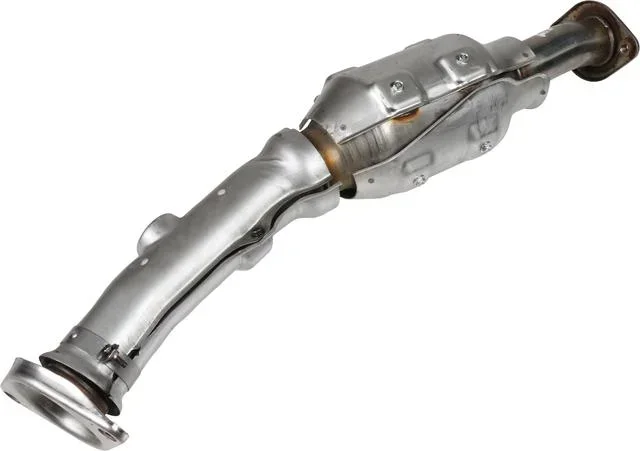
The P0420 code is an OBD-II trouble code that reads “Catalyst System Efficiency Below Threshold (Bank 1).” In plain English, this means your Nissan’s catalytic converter is not doing its job properly. The catalytic converter is part of your exhaust system. It cleans up harmful exhaust gases before they leave the tailpipe.
Your Nissan uses oxygen sensors to measure how well the catalytic converter is working. When the sensors detect that the converter is not reducing emissions enough, the check engine light comes on and the P0420 code gets stored. Bank 1 refers to the side of the engine that contains cylinder number one.
It is important to understand that P0420 is not always a death sentence for your catalytic converter. Sometimes the fix is simple and cheap. Other times, it does require a full catalytic converter replacement. The key is to diagnose the root cause correctly before spending money on parts.
Common Symptoms of P0420 on a Nissan
How do you know if your Nissan has a P0420 problem? There are several warning signs to watch for. Here are the most common symptoms:
- Check engine light stays on. This is the most obvious sign. The light will not go away until the issue is fixed or the code is cleared.
- Reduced fuel economy. A failing catalytic converter can mess with your fuel mixture, causing you to burn more gas than usual.
- Rotten egg smell from the exhaust. A bad converter cannot properly process sulfur in the fuel, leading to a strong, unpleasant odor.
- Reduced engine performance. You may notice sluggish acceleration or a lack of power, especially under heavy load.
- Dark or smoky exhaust. In some cases, the exhaust may appear darker than normal or produce excess smoke.
- Failed emissions test. If your Nissan fails an inspection, P0420 is one of the most common reasons.
If you notice any of these symptoms, it is a good idea to address the problem quickly. Ignoring the P0420 code can lead to more serious engine and exhaust issues over time.
What Causes P0420 on a Nissan?
There are several reasons your Nissan might throw a P0420 code. Understanding the root cause is the first step toward a proper fix. Here are the most common culprits:
1. Failing Catalytic Converter
The most common cause of P0420 is a worn-out or damaged catalytic converter. Over time, the internal honeycomb structure of the converter can break down or become clogged. When this happens, it cannot process exhaust gases efficiently. Nissan vehicles with high mileage are especially prone to this issue.
2. Faulty Oxygen Sensors
Your Nissan has upstream and downstream oxygen sensors that monitor the catalytic converter’s performance. If one of these sensors fails or gives inaccurate readings, it can trigger P0420. A bad oxygen sensor is often easier and cheaper to fix than replacing the converter itself.
3. Exhaust Leak
An exhaust leak anywhere before the catalytic converter can cause false readings. The leak changes the pressure and flow of exhaust gases, which can confuse the oxygen sensors. Common leak points include the exhaust manifold, gaskets, and pipe connections.
4. Engine Misfire
An engine misfire sends unburned fuel into the exhaust system. This raw fuel can damage the catalytic converter over time and trigger the P0420 code. Misfires are often caused by bad spark plugs, ignition coils, or fuel injectors.
5. Rich or Lean Fuel Mixture
If your Nissan is running too rich (too much fuel) or too lean (too little fuel), it affects how the catalytic converter works. A rich fuel mixture is a very common cause of P0420. This can be caused by leaking fuel injectors, a faulty mass airflow sensor, or a bad fuel pressure regulator.
6. Oil or Coolant Contamination
Internal engine problems like worn piston rings or head gasket leaks can introduce oil or coolant into the combustion chamber. These contaminants coat the catalytic converter and reduce its efficiency. This type of issue usually comes with other symptoms as well.
How to Diagnose P0420 on Your Nissan
Before you start replacing parts, you need to properly diagnose the problem. A full car diagnostic at a shop or with your own scan tool is the best first step. Here is how to approach the diagnosis:
- Read the code and check for related codes. P0420 rarely comes alone. Look for codes like P0300 (misfire), P0171 (lean condition), or P0130 (oxygen sensor circuit). These related codes give you big clues about the root cause.
- Check the oxygen sensor readings. Use a live data scanner to watch the upstream and downstream oxygen sensor voltages. The downstream sensor should show a relatively steady voltage. If it fluctuates like the upstream sensor, the catalytic converter is likely failing.
- Inspect for exhaust leaks. Visually check the entire exhaust system from the manifold to the tailpipe. Listen for hissing or ticking sounds that indicate a leak.
- Check for engine misfires. A misfire will often show up as a separate code. Fix any misfire codes first before addressing P0420.
- Inspect the catalytic converter physically. Tap the converter gently with a rubber mallet. Loose internal parts will rattle. Also check for any physical damage or heat discoloration.
Proper diagnosis saves you from throwing money at unnecessary parts. Many people replace their catalytic converter when the real problem is a $50 oxygen sensor. Take your time and be thorough.
Step-by-Step Fixes for P0420 on a Nissan
Once you have identified the cause, it is time to fix the problem. Here are the most effective solutions for resolving the P0420 code on a Nissan:
Fix 1: Replace the Oxygen Sensor
If your diagnosis shows a faulty downstream oxygen sensor, this is the easiest and cheapest fix. The sensor is usually located on the exhaust pipe near the catalytic converter. Here is how to do it:
- Locate the downstream oxygen sensor on Bank 1.
- Disconnect the electrical connector.
- Remove the old sensor using an oxygen sensor socket.
- Apply anti-seize compound to the new sensor threads.
- Install the new sensor and reconnect the connector.
- Clear the code with a scan tool and test drive.
This fix typically costs between $50 and $150 for parts and labor. It resolves P0420 in many cases where the catalytic converter is still in good condition.
Fix 2: Repair an Exhaust Leak
If you found an exhaust leak during your diagnosis, repairing it can clear the P0420 code. The repair method depends on where the leak is located. Small leaks at gaskets can often be fixed by replacing the gasket. Larger leaks in the pipe may require welding or using a patch kit.
After the repair, clear the code and monitor the oxygen sensor readings. If the readings stabilize, the leak was the cause of your P0420 code.
Fix 3: Address Engine Misfires
If your Nissan has a misfire code along with P0420, fix the misfire first. Common misfire repairs include:
- Replacing spark plugs
- Replacing ignition coils
- Cleaning or replacing fuel injectors
- Fixing vacuum leaks
Once the misfire is resolved, the excess fuel will stop damaging the catalytic converter. You may need to clear the P0420 code and drive for a few days to see if it returns.
Fix 4: Replace the Catalytic Converter
If the catalytic converter is truly failed, replacement is the only permanent fix. This is the most expensive option, but it is sometimes unavoidable. Here is what to expect:
- The cost for a Nissan catalytic converter replacement typically ranges from $1,000 to $2,500 depending on the model.
- Aftermarket converters are cheaper than OEM but may not last as long.
- Make sure the replacement converter meets EPA regulations for your state.
- After installation, clear the code and take the car for a test drive to verify the fix.
Fix 5: Use a Catalytic Converter Cleaner
For mild cases of P0420, a catalytic converter cleaner additive might help. These products are added to your fuel tank and can break up carbon deposits inside the converter. This is not a guaranteed fix, but it is worth trying if the converter is only mildly clogged. Results are often seen after driving for 100 to 200 miles.
P0420 Repair Cost for Nissan Vehicles
The cost to fix P0420 on a Nissan varies widely depending on the root cause. Here is a quick comparison of repair costs:
| Repair | Parts Cost | Labor Cost | Total Cost |
|---|---|---|---|
| Oxygen Sensor Replacement | $50 – $150 | $50 – $100 | $100 – $250 |
| Exhaust Leak Repair | $20 – $100 | $50 – $200 | $70 – $300 |
| Engine Misfire Repair | $50 – $300 | $50 – $150 | $100 – $450 |
| Catalytic Converter Replacement | $500 – $2,000 | $200 – $500 | $700 – $2,500 |
| Catalytic Converter Cleaner | $15 – $50 | $0 | $15 – $50 |
As you can see, the earlier you catch P0420, the less it will cost to fix. A simple oxygen sensor replacement is a fraction of the cost of a new catalytic converter. This is why quick action matters when the check engine light comes on.
Can You Drive with P0420 on a Nissan?
Many car owners wonder if it is safe to keep driving when the P0420 code is present. The short answer is yes, in most cases you can drive a short distance. However, there are some important caveats to keep in mind.
Driving with P0420 for a few days to get to a mechanic is generally fine. But if you ignore the code for weeks or months, you risk causing more damage. A failing catalytic converter can overheat and potentially damage other exhaust components. In rare cases, a completely clogged converter can cause engine stalling or starting problems.
If you are wondering about driving with warning lights on, check out our guide on driving with a maintenance required light on for more general advice about operating your vehicle with warning indicators active.
Also, keep in mind that a vehicle with P0420 will likely fail an emissions inspection. If you need to pass inspection, you should address the code before the test. In the meantime, you can monitor whether the check engine light might clear on its own under certain conditions.
Preventing P0420 on Your Nissan
The best way to deal with P0420 is to prevent it from happening in the first place. Here are some tips to keep your Nissan’s catalytic converter and exhaust system healthy:
- Keep up with regular maintenance. Change your spark plugs, air filter, and fuel filter on schedule. This helps prevent misfires and rich fuel mixtures that damage the converter.
- Address engine problems promptly. Do not ignore misfires, rough idling, or check engine lights. Small problems become big problems fast.
- Use quality fuel. Low-quality fuel contains more impurities that can clog your catalytic converter over time.
- Avoid short trips when possible. Short trips do not allow the catalytic converter to reach full operating temperature, which can cause carbon buildup.
- Get regular oil changes. Oil consumption issues can lead to contamination of the exhaust system and converter.
Following these simple maintenance habits can extend the life of your catalytic converter and help you avoid the P0420 code altogether. Prevention is always cheaper than repair.
Remember that if you are unsure about any diagnosis or repair, it is always best to consult a qualified mechanic. A professional can run a full car diagnostic and pinpoint the exact cause of your P0420 code with confidence. Taking your Nissan to a specialist who knows these models well can save you time and money in the long run.
Conclusion
The P0420 code on a Nissan is a common but manageable problem. Whether the cause is a faulty oxygen sensor, an exhaust leak, or a failing catalytic converter, there is almost always a solution. The key is to diagnose the problem correctly before jumping to expensive repairs. Start with a scan tool, check for related codes, and work through the fixes in order of cost and complexity.
Most P0420 repairs are affordable and can be done in an afternoon. Even catalytic converter replacement, while more expensive, is a well-understood repair that any qualified shop can handle. Do not ignore the code or hope it goes away on its own. Taking action quickly will protect your Nissan and your wallet.
Use the tips in this guide to tackle P0420 with confidence. Your Nissan will thank you for it, and you will be back on the road with peace of mind in no time.
Frequently Asked Questions
Can I clear the P0420 code without fixing the problem?
Yes, you can clear the code with a scan tool, but it will likely return if the underlying issue is not fixed. Clearing the code without addressing the root cause is only a temporary solution and will not pass an emissions test.
How long can I drive my Nissan with a P0420 code?
You can drive short distances with P0420, but avoid long trips. Prolonged driving with a failing catalytic converter can cause overheating and damage to other exhaust components. Get the code diagnosed as soon as possible.
Is P0420 covered under Nissan warranty?
P0420 coverage depends on your Nissan’s warranty terms and mileage. The catalytic converter is typically covered under the emissions warranty, which may extend beyond the basic warranty. Check with your dealer for specific coverage details.
What is the most common Nissan model affected by P0420?
The Nissan Altima and Nissan Rogue are among the most common models to experience P0420, especially those with higher mileage. However, any Nissan model can develop this code depending on driving conditions and maintenance history.
Can a bad fuel injector cause P0420?
Yes, a leaking or clogged fuel injector can cause a rich fuel mixture, which sends unburned fuel into the catalytic converter. This can damage the converter over time and trigger the P0420 code.
Will a catalytic converter cleaner fix P0420?
A catalytic converter cleaner may help in mild cases where carbon buildup is the issue. However, it will not fix a completely failed or physically damaged converter. Results vary depending on the severity of the problem.