How to Change kPa to PSI on a Subaru Dashboard Gauge
Changing your Subaru dashboard gauge from kPa to PSI is a simple process you can do in minutes. Whether you prefer pounds per square inch or kilopascals, your Subaru lets you switch between units through the instrument cluster or infotainment system. This guide walks you through every step so you can read your tire pressure in the units you understand best.
Every Subaru owner knows the feeling of hopping behind the wheel and glancing at the dashboard. You check your speed, your fuel level, and — most importantly — your tire pressure. But what happens when the numbers on your gauge don’t make sense? If your Subaru displays pressure in kPa and you need PSI, you’re not alone. Many Subaru drivers want to know how to change kPa to PSI on a Subaru dashboard gauge, and the good news is it’s easier than you think.
Tire pressure units matter more than most people realize. When your readings are in the wrong unit, you might overinflate or underinflate your tires without even knowing it. That leads to uneven wear, poor fuel economy, and — in worst cases — a dangerous blowout. Switching your Subaru gauge to display PSI gives you immediate clarity and confidence every time you check your tires.
In this guide, we walk you through the entire process step by step. We cover different Subaru models, common menu paths, troubleshooting tips, and everything else you need. By the end, you’ll have your dashboard showing the units you want in just a few minutes.
Key Takeaways
- Quick Switch: You can change kPa to PSI on most Subaru models through the steering wheel controls or the infotainment display.
- No Tools Needed: The process is a simple menu navigation — no mechanic or special equipment required.
- Tire Pressure Matters: Knowing your correct PSI reading helps keep your tires safe and your fuel economy optimized.
- Model Variations: Different Subaru years and models may have slightly different menu paths for changing units.
- Reset After Changes: Always verify your readings after switching units to make sure everything displays correctly.
- Owner’s Manual Helps: Your Subaru owner’s manual has model-specific instructions if the general steps don’t match your vehicle.
📑 Table of Contents
- Understanding kPa and PSI on Your Subaru Dashboard
- Why You Should Switch from kPa to PSI
- How to Change kPa to PSI on a Subaru: Step-by-Step Guide
- Model-Specific Instructions for Popular Subaru Models
- Troubleshooting When the Gauge Won’t Change
- Understanding Your Tire Pressure Specifications
- Quick Tips for Subaru Dashboard Management
- Common Mistakes to Avoid When Changing Gauge Units
- Expert Insights: Getting the Most from Your Subaru Gauge
- Key Takeaways
Understanding kPa and PSI on Your Subaru Dashboard
What Is kPa?
Kilopascal, or kPa, is a metric unit of pressure. Many Subaru models — especially those sold outside the United States — default to kPa for tire pressure readings. One kPa equals about 0.145 PSI. So when your Subaru shows 230 kPa, that’s roughly 33 PSI. The metric system works fine for most drivers, but if you grew up with PSI readings, kPa can feel confusing.
What Is PSI?
Pounds per square inch, or PSI, is the standard pressure unit in the United States. When you visit a gas station air pump, the display shows PSI. Most tire pressure recommendations from Subaru are also listed in PSI in American owner’s manuals. Switching your gauge to PSI means you can match your dashboard reading directly to the recommended pressure printed on your door jamb sticker.
Why Subarus Use kPa by Default
Subaru is a Japanese manufacturer. Many of their vehicles are designed with global markets in mind. That means the dashboard gauge often defaults to metric units like kPa or bar. If you live in the US or another country that uses imperial measurements, you’ll want to switch to PSI for everyday convenience. The good news is Subaru builds this option right into the vehicle settings.
Why You Should Switch from kPa to PSI
Better Understanding of Tire Pressure
When you see 220 kPa on your dash, does that tell you if your tires are properly inflated? For most American drivers, the answer is no. But 32 PSI? That clicks instantly. You know the recommended pressure for your Subaru is probably somewhere between 30 and 35 PSI. Seeing that number on your dashboard gives you immediate peace of mind.
Matching Gas Station Air Pumps
Every air pump at every gas station in the US displays PSI. When your Subaru gauge shows PSI, you can add air and watch the numbers match in real time. No mental math. No guessing. You just set the pressure and stop when the gauge says you’re there.
Safety and Fuel Economy
Correct tire pressure keeps you safe on the road. Underinflated tires flex too much and overheat, which can cause blowouts. Overinflated tires wear out the center of the tread and give you a harsher ride. Switching to PSI helps you maintain the exact pressure your Subaru needs. Properly inflated tires also improve your fuel economy by reducing rolling resistance. Over time, that saves you real money at the pump.
How to Change kPa to PSI on a Subaru: Step-by-Step Guide
Step 1: Start Your Subaru
Turn the ignition to the “On” position or start the engine. You don’t need to drive anywhere — just power up the vehicle. The dashboard lights will illuminate, and the instrument cluster will activate. On newer Subaru models with push-button start, just press the button without pressing the brake pedal.
Step 2: Locate the Steering Wheel Controls
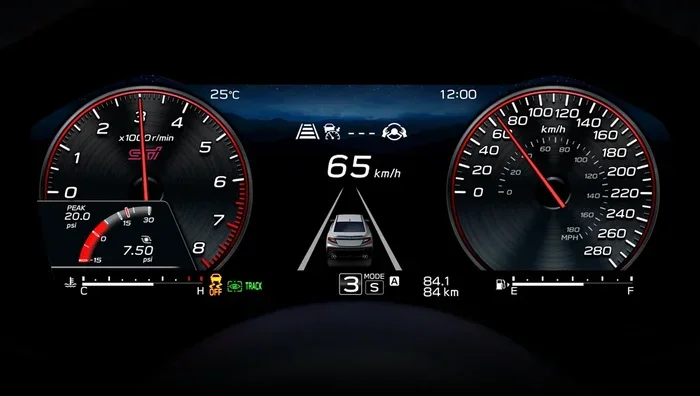
Most Subaru models use the steering wheel buttons to navigate the instrument display. Look for the up and down arrow buttons on the left side of the steering wheel. On the right side, you’ll find the OK or Enter button. Some models also have a “Menu” or “Set” button on the right stalk or near the steering column.
Step 3: Access the Vehicle Information Menu
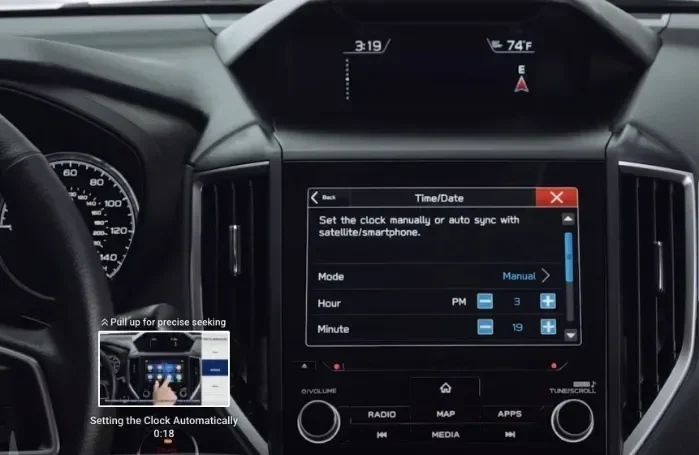
Press the up or down arrow button to scroll through the dashboard display options. You’re looking for a menu labeled “Vehicle Info,” “Settings,” or “Display.” On older Subaru models, you might need to press the “Info” button on the instrument panel. On newer models with a color display, look for the gear icon or settings icon on the screen.
Step 4: Find the Unit Display Settings
Once you’re in the settings or vehicle info menu, scroll to find “Unit Display,” “Gauge Units,” or “Display Units.” This option controls whether your tire pressure, speed, and other measurements show in metric or imperial units. Select this option to enter the unit preferences screen.
Step 5: Switch from kPa to PSI
In the unit display menu, you’ll see options for pressure units. Select PSI instead of kPa. On some Subaru models, you may also see the option to switch between kPa, bar, and PSI. Choose PSI and confirm your selection. The dashboard gauge should immediately update to show your tire pressure in pounds per square inch.
Step 6: Verify the Change
After switching, check your tire pressure reading to make sure it now displays in PSI. Compare it to the recommended pressure listed on the sticker inside your driver’s door. If the numbers look right, you’re all set. If the display didn’t change, try restarting your Subaru and checking again.
Model-Specific Instructions for Popular Subaru Models
Subaru Forester
The Subaru Forester makes it easy to switch units. On most Forester models from 2013 onward, press the “Info” button on the left side of the steering wheel. Scroll to “Settings,” then “Unit Display.” Choose PSI, and press OK. On older Forester models, the process is similar but uses the trip computer buttons on the instrument panel instead.
Subaru Outback
The Outback follows the same general process. Use the steering wheel controls to navigate to the settings menu. The Outback’s higher-end trims may have a touchscreen infotainment system where you can tap through to “Vehicle Settings” and then “Display Units.” Select PSI and confirm.
Subaru Crosstrek
The Crosstrek uses the standard Subaru instrument cluster layout. Press the steering wheel buttons to access the vehicle info screen. Scroll down to “Settings” and look for the unit preference option. Switch to PSI, and your tire pressure gauge will update immediately.
Subaru Impreza
On the Impreza, the process is very similar to other Subaru models. Use the up and down arrows to scroll through the display menus. The unit setting is usually found under “Vehicle Info” or “Settings.” Select PSI, and you’re done. The Impreza’s display is straightforward, so even first-time Subaru owners can find the option quickly.
Troubleshooting When the Gauge Won’t Change
Dashboard Display Not Updating
If you followed the steps but your Subaru still shows kPa, don’t panic. Try turning the vehicle off and back on again. Sometimes the display needs a full restart to apply new settings. On some models, you may also need to hold the OK button for a few seconds to confirm the unit change.
Missing PSI Option in the Menu
On certain older Subaru models, the PSI option might not appear in the unit menu. This is more common on base trim levels with simpler instrument clusters. If you can’t find the PSI option, check your owner’s manual for model-specific instructions. You can also visit a Subaru dealership, and they can make the change for you — often at no cost.
Check Engine or TPMS Light After Switching
Sometimes, changing the display units can trigger a warning light on the dash. If your tire pressure monitoring system light comes on after switching from kPa to PSI, don’t worry. This usually happens because the system resets when you change settings. Drive the vehicle for a few minutes and see if the light goes away. If it stays on, you may want to check whether the check engine light can turn off on its own for more guidance.
When to See a Professional
If none of the troubleshooting steps work, it’s perfectly fine to seek professional help. A Subaru dealership or trusted mechanic can access the vehicle’s settings and make the change in minutes. This is especially helpful if your model has a unique menu structure or if you’re not comfortable navigating the digital displays. You can also refer to the full car diagnostic process if you want to understand how technicians check your vehicle’s systems.
Understanding Your Tire Pressure Specifications
Where to Find the Right PSI for Your Subaru
The recommended tire pressure for your Subaru is printed on a sticker inside the driver’s door frame. Look for a white or yellow sticker with a series of numbers. You’ll see something like “Front: 33 PSI, Rear: 33 PSI.” Always inflate your tires to this pressure for the best performance, safety, and fuel economy.
How Often to Check Tire Pressure
Subaru recommends checking your tire pressure at least once a month. Tires naturally lose about 1 PSI per month, so regular checks keep you in the safe zone. Temperature changes also affect tire pressure. Cold weather can drop your PSI by several points, so check more often during winter months. A simple tire pressure gauge from any auto parts store costs just a few dollars and takes seconds to use.
The Connection Between Tire Pressure and Fuel Economy
Properly inflated tires roll more efficiently. That means your engine doesn’t have to work as hard, which improves your miles per gallon. According to the Department of Energy, underinflated tires can reduce fuel economy by about 3%. Over a year of driving, that adds up to real money. Keeping your Subaru’s gauge set to PSI makes it much easier to stay on top of the right pressure.
Quick Tips for Subaru Dashboard Management
- Save your settings: Once you switch to PSI, the display should remember your preference even after you turn the car off. No need to change it again.
- Keep your owner’s manual handy: It has detailed instructions for every menu on your specific Subaru model and year.
- Check all four tires: Don’t just look at one gauge reading. Make sure all tires are at the recommended PSI.
- Check tire pressure when cold: Always check before driving or after the car has sat for at least three hours for the most accurate reading.
- Don’t ignore warning lights: If your tire pressure light stays on after you’ve set the correct PSI, have the system inspected. A persistent light could indicate a slow leak.
Common Mistakes to Avoid When Changing Gauge Units
- Confusing kPa with bar: Some Subaru models offer kPa, bar, and PSI options. Make sure you select PSI and not bar, which is another metric unit.
- Not restarting the vehicle: A simple restart often fixes display glitches after changing settings. Always try this before assuming something is broken.
- Ignoring the door jamb sticker: The sticker on your door frame has the exact PSI recommendation for your specific model and trim. Don’t guess — use the official number.
- Forgetting to check the spare tire: If your Subaru has a spare, check its pressure too. Spares often need a different PSI than the regular tires.
- Assuming all Subaru models work the same: Different years and trims have different menu layouts. Always cross-reference with your specific model’s instructions.
Expert Insights: Getting the Most from Your Subaru Gauge
Changing your Subaru’s display from kPa to PSI is more than a cosmetic preference — it’s a practical safety decision. When you can read your tire pressure in the units you understand instantly, you’re more likely to check regularly and maintain the correct pressure. That means safer drives, better handling, and lower fuel costs over time.
If you’re new to Subarus, take a few minutes to explore all the display settings on your vehicle. Beyond tire pressure units, you can adjust brightness, switch between trip meters, and customize how information appears on your dashboard. These small tweaks make a big difference in your daily driving experience.
For drivers who frequently tow or carry heavy loads, accurate tire pressure becomes even more critical. Subaru’s recommended PSI increases when the vehicle is fully loaded. Having your gauge set to PSI makes it easy to see when you need to add air after loading up the car or trailer. If you’re planning a trip and want to make sure your Subaru is ready, understanding your tire pressure system is a great first step.
Some drivers also wonder about the relationship between their dashboard readings and the tire pressure monitoring system (TPMS). The TPMS uses sensors in each wheel to monitor pressure in real time. When the system detects a significant drop, it triggers the warning light on the dash. Switching your gauge to PSI doesn’t change how the TPMS works — it just makes the numbers easier for you to read and act on.
Key Takeaways
- Simple Process: Changing kPa to PSI on your Subaru dashboard gauge takes just a few minutes and requires no special tools.
- Steering Wheel Controls: Use the arrow and OK buttons on your steering wheel to navigate to the unit display settings.
- Model Differences: While the general process is similar across Subaru models, always check your owner’s manual for model-specific instructions.
- Safety First: Correct tire pressure in PSI keeps your tires wearing evenly and your rides safe and comfortable.
- Restart if Needed: If the display doesn’t update, turn your Subaru off and back on to apply the changes.
- Regular Checks: Once set to PSI, make tire pressure checks part of your monthly routine for best results.
Switching your Subaru dashboard gauge from kPa to PSI is one of the easiest and most useful things you can do as a vehicle owner. It removes confusion, improves safety, and helps you maintain your tires the right way. Follow the steps in this guide, and you’ll be reading your tire pressure in PSI before you know it. Your Subaru was built to make this change simple — now you just need to take the few minutes to do it.
Once your gauge is set correctly, you’ll wonder why you didn’t switch sooner. Every time you pull into a gas station or check your tires in the driveway, the PSI numbers will feel natural and familiar. That’s the power of a small settings change that makes a big difference in your daily driving.
Frequently Asked Questions
Can I switch back from PSI to kPa on my Subaru?
Yes, absolutely. The same menu path you used to switch to PSI will let you switch back to kPa at any time. Just go to the unit display settings and select kPa instead. Your Subaru saves your preference, so you won’t need to change it again unless you want to.
Do all Subaru models let you change the pressure unit?
Most Subaru models from the past decade offer this option. However, some older or base-trim models may have limited display customization. If your model doesn’t show a PSI option in the settings menu, check your owner’s manual or visit a Subaru dealer for assistance.
Will changing the gauge unit affect my tire pressure readings?
No, changing the display unit does not change the actual tire pressure. It only changes how the number appears on your dashboard. Your tires stay at the same PSI regardless of whether the gauge shows kPa or PSI.
What if my tire pressure light stays on after switching units?
The TPMS light may briefly stay on after changing display settings because the system resets. Drive the vehicle for a few minutes and check if the light turns off. If it remains on, your tires may actually need air, or there could be a sensor issue that needs inspection.
Is it safe to drive with the wrong pressure unit displayed?
It can be unsafe because you might misread your tire pressure. For example, 230 kPa looks very different from 33 PSI, and confusing the two could lead to overinflation or underinflation. Switching to the unit you understand best helps you maintain safe tire pressure every time.
How often should I check my Subaru’s tire pressure?
Subaru recommends checking tire pressure at least once a month and before long trips. Tires lose about 1 PSI per month naturally, and temperature changes can cause additional fluctuations. Keeping a regular check routine ensures your tires stay properly inflated for safety and fuel efficiency.