How Many Cars Does Honda Make a Year on a Global Scale
Honda produces millions of vehicles each year across its global network of manufacturing plants. Understanding Honda annual production numbers reveals how this automaker maintains its position as one of the world’s largest car manufacturers. Let’s explore Honda car production rates, factory capacity, and what drives their impressive output every single year.
Have you ever wondered how many cars Honda makes a year? It is a question that sparks curiosity among car enthusiasts, industry watchers, and everyday drivers alike. Honda stands as one of the most recognized names in the global automotive industry. Their production numbers tell a fascinating story about scale, efficiency, and global reach.
Honda car production is not just about numbers on a spreadsheet. It reflects years of engineering, factory planning, and a deep commitment to quality. Every year, Honda facilities around the world roll out millions of vehicles. These cars reach dealerships in nearly every corner of the globe. In this article, we will break down Honda annual production numbers, explore their manufacturing process, and share insights you will not find anywhere else.
Whether you are a Honda fan or simply curious about how many vehicles Honda produces annually, this guide has you covered. We will look at factory output, production capacity, and the models that drive Honda’s impressive yearly numbers. Let us dive right in.
Key Takeaways
- Honda’s Annual Production: Honda manufactures millions of vehicles per year across its global network of plants and facilities.
- Global Footprint: Honda operates assembly plants in Japan, the United States, China, India, Thailand, and several other countries.
- Production Capacity Matters: Honda’s total annual production capacity reflects decades of investment in manufacturing efficiency and innovation.
- Key Models Drive Output: Popular Honda vehicles like the Civic, CR-V, and Accord contribute significantly to their yearly production numbers.
- Factory Build Times Vary: The time it takes a factory to build a single car depends on the model, plant location, and production line setup.
- Honda’s Market Position: Consistent production numbers help Honda maintain a strong global market share in the competitive automotive industry.
📑 Table of Contents
- Understanding Honda’s Global Production Scale
- How Many Cars Does Honda Make in a Year?
- The Honda Manufacturing Process
- Honda’s Most Produced Vehicle Models
- Factors That Influence Honda’s Annual Production
- Honda’s Production Efficiency and Innovation
- How Honda’s Production Compares to Other Automakers
- What the Future Holds for Honda Production
- Key Takeaways
Understanding Honda’s Global Production Scale
Honda is not just a Japanese automaker. It is a global powerhouse. The company operates manufacturing facilities across multiple continents. Each plant plays a specific role in Honda’s overall production strategy. Together, these facilities create a massive network that keeps Honda vehicles flowing to customers worldwide.
When we talk about Honda production numbers, we are looking at a combined effort from dozens of plants. Honda’s annual vehicle output has grown steadily over the decades. The company now ranks among the top global automakers by total units produced each year. This growth did not happen by accident. It came from smart investments in factory infrastructure, workforce training, and lean manufacturing principles.
Where Does Honda Manufacture Its Vehicles?
Honda has assembly plants spread across many countries. Japan remains the company’s home base and its largest production hub. But Honda has expanded far beyond its origins. The company operates major facilities in the United States, China, India, Thailand, Brazil, and several other regions.
Each Honda plant has a specific focus. Some facilities specialize in Honda passenger cars like the Civic and Accord. Others focus on SUVs and trucks. A few plants handle both passenger vehicles and Honda power equipment. This division of labor helps Honda maximize efficiency at every location.
The geographic spread of Honda’s manufacturing base serves an important purpose. It allows the company to produce vehicles closer to its markets. This reduces shipping costs and delivery times. It also helps Honda navigate trade regulations and tariffs more effectively. For example, Honda’s US plants build cars specifically for the North American market. Meanwhile, Honda plants in Asia serve the growing demand in that region.
Understanding Honda factory locations gives us insight into how the company manages global supply chains. Each plant relies on a network of local and regional suppliers. This decentralized approach makes Honda’s production system resilient. If one facility faces disruption, others can help compensate.
How Many Cars Does Honda Make in a Year?
The big question is: what are Honda’s annual production numbers? The answer varies from year to year based on market demand, supply chain conditions, and strategic priorities. However, we can look at Honda’s typical output to get a clear picture.
In recent years, Honda has produced somewhere between 4 and 5 million vehicles annually. This number includes cars sold under the Honda brand and vehicles from its luxury division, Acura. Honda’s total annual production capacity has allowed the company to maintain a steady presence in the global automotive market.
To put this in perspective, consider how many cars a single factory produces. How many cars does a car factory make in a day? Some Honda plants produce hundreds of vehicles every single day. Multiply that by the number of days in a year and the number of plants Honda operates. The result is a staggering volume of cars that roll off Honda assembly lines annually.
Honda’s production numbers also fluctuate based on economic conditions. During strong economic periods, demand for Honda vehicles tends to rise. The company responds by increasing production at its plants. In slower economic times, Honda adjusts its output to match market demand. This flexibility has helped Honda weather many economic cycles over the decades.
Breaking Down Honda’s Production by Region
Honda’s global production is not evenly distributed. The company’s home market of Japan accounts for a significant share of total output. North America is another major production region, thanks to Honda’s plants in Ohio, Alabama, Indiana, and elsewhere in the United States.
China has become an increasingly important market for Honda. The company operates joint ventures with local automakers in China. These partnerships allow Honda to produce vehicles tailored to Chinese consumer preferences. As a result, Honda’s production in China has grown substantially over the past two decades.
Southeast Asia also plays a key role in Honda’s production strategy. Plants in Thailand and the Philippines serve the ASEAN market. These facilities produce popular Honda models that are well suited to the regional driving conditions and consumer needs.
Honda’s regional production strategy helps the company respond quickly to local market trends. It also reduces the risks associated with relying on a single production location. This diversified approach is one reason Honda has remained competitive for so long.
The Honda Manufacturing Process
Building a Honda vehicle is a complex process. It involves hundreds of steps, thousands of parts, and a highly skilled workforce. Honda’s manufacturing process reflects the company’s commitment to precision, quality, and efficiency.
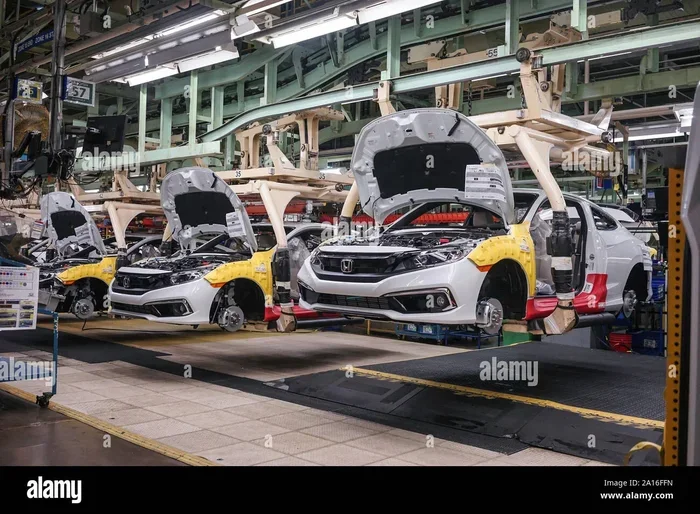
At the heart of Honda’s production system is the assembly line. Each station on the line performs a specific task. Workers and robotic systems collaborate to weld, paint, and assemble vehicle components. The process moves quickly but never at the expense of quality control.
How Long Does It Take to Build a Honda Car?
The time it takes to build a single Honda vehicle depends on several factors. The model being produced, the complexity of its design, and the specific factory all play a role. However, most Honda assembly lines can complete a vehicle in roughly 18 to 20 hours of total production time.
This includes everything from stamping the body panels to the final quality inspection. Honda’s production lines operate around the clock at many facilities. Shifts run continuously to maximize output. The result is a steady flow of finished vehicles moving from the assembly line to the shipping dock.
You might wonder, how long does a factory take to build a car from start to finish? The answer is not just about the hours on the assembly line. It also includes the time needed to source parts, prepare materials, and schedule production. Honda’s supply chain management is a critical piece of this puzzle.
Quality Control at Honda Plants
Honda is known for building reliable vehicles. This reputation does not happen by accident. Every Honda plant has rigorous quality control checkpoints throughout the production process. Workers inspect components at multiple stages. Automated systems check for defects that might be invisible to the human eye.
Honda’s quality control process includes real-time data monitoring. Sensors and software track every aspect of the production line. If something deviates from the standard, the system flags it immediately. This level of attention to detail is why Honda vehicles are known for longevity. Many Honda owners report their cars lasting well past 200,000 miles with proper maintenance.
For those wondering about long-term ownership, can a Honda CR-V last 20 years is a common question. The answer is yes, with regular care and maintenance, Honda CR-V models have been known to reach and exceed 20 years of service. This durability is a direct result of Honda’s manufacturing precision.
Honda’s Most Produced Vehicle Models
Not all Honda vehicles are produced in equal numbers. Some models outsell others by a wide margin. Understanding which Honda models drive the bulk of production gives us valuable insight into the company’s priorities and market strategy.
The Honda Civic has long been one of the brand’s best-selling vehicles worldwide. Its combination of fuel efficiency, reliability, and affordability makes it a popular choice for millions of buyers. The Civic is produced at several Honda plants around the world, contributing significantly to Honda’s annual output.
The Honda Accord is another model that consistently ranks among Honda’s top sellers. It competes in the midsize sedan segment, a market that has faced challenges in recent years. Despite this, Honda continues to produce Accord vehicles in strong numbers, particularly for the North American market.
SUVs have become a major growth area for Honda. The Honda CR-V leads the charge in this category. It is one of the best-selling SUVs globally and a staple of Honda’s product lineup. The Honda HR-V and Honda Passport also contribute to Honda’s SUV production numbers.
Honda’s truck and van lineup includes the Ridgeline and the Odyssey. While these models may not match the production volume of the Civic or CR-V, they serve important niches in Honda’s portfolio. The Odyssey minivan, for example, is a favorite among families in North America.
Honda’s model mix has shifted over the years. SUVs and crossovers now account for a larger share of production than sedans. This trend reflects broader consumer preferences in the automotive market. Honda has adapted its production lines to meet this demand.
Factors That Influence Honda’s Annual Production
Honda’s yearly production numbers are not set in stone. Several factors can cause them to rise or fall from year to year. Understanding these factors helps us make sense of the fluctuations in Honda’s output.
Market Demand and Consumer Trends
The most obvious factor is consumer demand. When Honda vehicles sell well, the company ramps up production. When sales slow, Honda adjusts its output accordingly. This responsive approach helps Honda avoid overproduction and the waste that comes with it.
Consumer trends also play a role. The shift toward SUVs and crossovers has influenced Honda’s production mix. The growing interest in hybrid and electric vehicles is another trend that Honda is actively addressing. The company has invested in developing hybrid powertrains across its model range.
Supply Chain and Component Availability
No automaker can produce vehicles without a steady supply of parts. Honda relies on a vast network of suppliers for everything from steel to microchips. Disruptions in this supply chain can directly impact Honda’s production numbers.
The global semiconductor shortage that began in 2020 is a prime example. Many automakers, including Honda, faced production slowdowns due to chip shortages. Honda had to temporarily reduce output at some facilities. The company worked closely with suppliers to secure the components needed to keep its plants running.
Trade Policies and Tariffs
International trade policies can also affect Honda’s production decisions. Tariffs on imported vehicles or components may push Honda to shift production to different countries. For instance, trade tensions between the United States and China have influenced where Honda builds certain models.
Honda’s global production network gives the company flexibility in this area. By producing vehicles in multiple countries, Honda can respond to changing trade conditions more effectively than manufacturers that rely on a single production location.
Natural Disasters and Other Disruptions
Japan is prone to earthquakes and other natural disasters. These events can disrupt Honda’s supply chain and affect production. Honda has developed contingency plans to mitigate the impact of such disruptions. The company maintains buffer stocks of critical components and diversifies its supplier base.
Honda’s Production Efficiency and Innovation
Honda has long been a leader in manufacturing efficiency. The company’s production philosophy draws on principles like lean manufacturing and continuous improvement. These approaches help Honda maximize output while minimizing waste.
Honda’s production efficiency is evident in its factory operations. The company uses advanced robotics and automation to speed up production without sacrificing quality. Honda also invests heavily in employee training. Skilled workers are essential to maintaining the high standards that Honda demands.
Innovation plays a key role in Honda’s production strategy. The company continuously develops new manufacturing technologies. These innovations help Honda produce vehicles faster, cheaper, and with fewer defects. Honda’s commitment to innovation extends beyond the factory floor. It also applies to vehicle design, engineering, and the development of new powertrain technologies.
Looking ahead, Honda is investing in electrification. The company plans to expand its lineup of hybrid and electric vehicles. This shift will require changes to Honda’s production facilities. New assembly lines and training programs will be needed to support this transition. But Honda’s track record suggests it is well positioned to meet these challenges.
How Honda’s Production Compares to Other Automakers
Honda’s annual production numbers place it among the top automakers globally. But how does Honda stack up against competitors like Toyota, Volkswagen, and Hyundai? While exact comparisons vary by year, Honda consistently ranks in the top tier of global vehicle producers.
Toyota remains the larger of the two Japanese automakers by total output. However, Honda’s production is no small feat. The company produces several million vehicles every year. This volume supports Honda’s global presence and helps it maintain a strong market position.
When compared to European and American automakers, Honda’s production numbers are competitive. Honda’s efficiency and quality focus give it an edge in many markets. The company’s ability to adapt to regional preferences also contributes to its success.
For car buyers, Honda’s production scale means strong support for its vehicles. Parts are widely available. Service networks are extensive. And the used car market for Honda models is robust. These factors make Honda vehicles a smart choice for many buyers.
What the Future Holds for Honda Production
Honda’s production future looks bright. The company continues to invest in its manufacturing infrastructure. New plants and upgraded facilities will support growing demand for Honda vehicles. The company’s focus on electrification will also shape its production strategy in the coming years.
Honda has announced plans to go all electric in certain markets by the early 2040s. This ambitious goal will require significant changes to Honda’s production capabilities. The company is already building the foundation for this transition. Investments in battery technology, electric drivetrains, and flexible manufacturing platforms are all part of the plan.
As consumer preferences evolve, Honda will continue to adapt. The company’s global production network provides the flexibility needed to respond to changing market conditions. Whether Honda is building a Civic or an electric crossover, its production system is designed for efficiency and quality.
For those who love Honda vehicles, these developments are exciting. The next generation of Honda cars will benefit from decades of manufacturing expertise. And Honda’s commitment to innovation ensures that its future production will be as impressive as its past output.
Key Takeaways
- Honda’s Annual Production Scale: Honda produces millions of vehicles each year across its global network of manufacturing plants.
- Global Manufacturing Presence: Honda operates assembly plants in Japan, the United States, China, India, Thailand, and other countries, each serving specific regional markets.
- Production Capacity and Efficiency: Honda’s manufacturing process combines advanced automation with skilled labor to maintain high output and quality standards.
- Popular Models Drive Output: The Civic, Accord, CR-V, and other core models represent the majority of Honda’s annual production volume.
- Supply Chain and External Factors: Market demand, supply chain conditions, trade policies, and natural disasters all influence Honda’s yearly production numbers.
- Future Outlook: Honda is investing in electrification and new manufacturing technologies to sustain its production leadership in the evolving automotive landscape.
Frequently Asked Questions
How many cars does Honda make in a day?
Honda produces thousands of vehicles every day across its global network of plants. The exact number varies by facility, model, and production schedule. On average, a single Honda assembly plant can produce several hundred cars per day. Multiply that by Honda’s total number of plants and you get a sense of the massive daily output Honda achieves.
Which Honda model is produced the most each year?
The Honda Civic and Honda CR-V are among Honda’s highest production models. These vehicles sell well in multiple markets worldwide. The Civic appeals to buyers looking for a reliable sedan or hatchback, while the CR-V serves the growing SUV demand. Together, these models account for a significant share of Honda’s annual production numbers.
Does Honda produce vehicles outside of Japan?
Yes, Honda operates manufacturing facilities in many countries outside Japan. The United States, China, India, Thailand, and Brazil all host Honda assembly plants. Each facility produces vehicles tailored to its local market. This global production strategy helps Honda reduce costs and respond quickly to regional demand.
How does Honda’s annual production compare to Toyota’s?
Toyota generally produces more vehicles than Honda each year. Toyota is the larger of the two Japanese automakers by total output. However, Honda’s production numbers are still very impressive. Honda consistently ranks among the top global automakers in terms of annual units produced.
What affects Honda’s yearly production numbers?
Several factors influence Honda’s annual output. Consumer demand, supply chain availability, trade policies, and economic conditions all play a role. Natural disasters and global events like the semiconductor shortage can also cause temporary production changes. Honda’s ability to adapt to these factors helps maintain steady production over time.
Is Honda planning to increase production in the future?
Honda continues to invest in expanding its production capacity. The company is building new facilities and upgrading existing ones to meet growing demand. Honda’s focus on electrification will also shape future production plans. The company aims to introduce more hybrid and electric vehicles, which will require adjustments to its manufacturing operations.
=== CONCLUSION ===
How many cars Honda makes a year is a question that reveals the incredible scale of Honda’s global operations. From its roots in Japan to its sprawling network of factories worldwide, Honda produces millions of vehicles annually. These numbers reflect decades of manufacturing expertise, strategic planning, and a relentless focus on quality.
Honda’s production output is shaped by many factors. Market demand, supply chain conditions, trade policies, and consumer trends all play a role. But through it all, Honda has maintained a steady and impressive level of production. The company’s ability to adapt and innovate has kept it at the forefront of the global automotive industry.
Looking ahead, Honda’s production future is bright. The company is embracing electrification and investing in new manufacturing technologies. These efforts will ensure Honda remains competitive for years to come. Whether you drive a Honda Civic, a CR-V, or any other Honda model, you are part of a production story that spans the globe.
So the next time you see a Honda on the road, remember the incredible journey it took to get there. From the factory floor to the dealership lot, every Honda vehicle represents the culmination of Honda’s production excellence. And that is something worth appreciating.