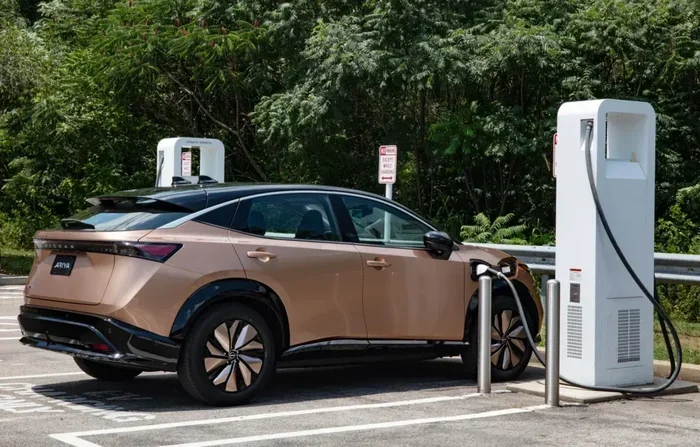
How Long Does It Take to Fully Charge a Nissan Ariya
The Nissan Ariya takes approximately 13 hours to fully charge on a Level 1 home outlet, around 7.5 hours on a Level 2 charger, and as little as 30 minutes for an 80% DC fast charge. Charging time depends on your charger type, battery size, and starting charge level. This guide breaks down every charging option so you can plan your Nissan Ariya charging routine with confidence.
This is a comprehensive guide about How Long Does It Take to Charge a Nissan Ariya?.
Key Takeaways
- Level 1 charging is the slowest option: Expect roughly 13 hours for a full charge using a standard 120V household outlet.
- Level 2 charging is the sweet spot for home use: A 240V Level 2 charger fully charges the Ariya in about 7.5 hours.
- DC fast charging gets you back on the road fast: You can reach 80% in around 30 minutes at a compatible fast charger.
- Battery size matters: The Ariya comes in two battery options (63 kWh and 87 kWh), and larger batteries take longer to charge.
- Environmental factors play a role: Cold weather can slow charging speeds and reduce overall range.
- Preconditioning helps: Warming the battery before a fast charge improves charging speed and efficiency.
[FEATURED_IMAGE_PLACEHOLDER]
The Nissan Ariya is one of the most exciting electric SUVs on the market right now. It combines a sleek design, impressive range, and modern technology that makes EV ownership a genuinely enjoyable experience. But one question keeps coming up from potential buyers and new owners alike: how long does it actually take to charge this vehicle?
Whether you are planning a road trip, setting up a home charging station, or just curious about daily charging routines, understanding charging times is essential. The answer is not as simple as a single number, because multiple factors come into play. Charger type, battery capacity, ambient temperature, and even your starting charge level all affect the final timeline.
In this guide, we will walk through every charging scenario for the Nissan Ariya. You will learn exactly what to expect at home, at work, and on the go. By the end, you will have a clear picture of how to fit EV charging seamlessly into your lifestyle.
The Nissan Ariya is a fully electric compact crossover SUV built by Nissan. It launched as part of Nissan’s push into the electric vehicle market and quickly gained attention for its combination of style, performance, and practical range. The Ariya slots into a competitive segment that includes the Tesla Model Y, Hyundai Ioniq 5, and Ford Mustang Mach-E.
What makes the Ariya stand out is its dual-motor all-wheel-drive system, available in multiple trim levels, and a choice of two battery packs. The base 63 kWh battery offers a respectable range for daily commuting and errands, while the larger 87 kWh battery pushes the range further, making longer trips more comfortable. Both options support Level 1, Level 2, and DC fast charging, giving owners flexibility.
Understanding how electric vehicle charging works is the first step toward mastering your Ariya’s charging routine. EV charging happens at three main levels, and each one delivers power at a different speed. The level you choose directly impacts how long you spend waiting for a full battery.
Understanding Nissan Ariya Charging Levels
Not all chargers are created equal. The three charging levels available for the Nissan Ariya each serve a different purpose and offer vastly different charging speeds. Let us break them down so you can decide which setup works best for your daily life.
Level 1 Charging: The Slow but Simple Option
Level 1 charging uses a standard 120-volt household outlet, the same one you plug your lamp or phone charger into. This is the most accessible option because you do not need any special equipment. Just plug the Nissan Ariya into a regular wall outlet using the included portable charger, and you are good to go.
The trade-off is speed. Level 1 charging delivers approximately 3 to 5 miles of range per hour. For the Nissan Ariya with the 63 kWh battery, a full charge from empty takes around 13 to 14 hours. The 87 kWh version takes even longer, stretching past 18 hours. This makes Level 1 best suited as an emergency backup or for plug-in hybrid owners who drive short distances daily.
Most EV owners do not rely on Level 1 as their primary charging method. But it is reassuring to know that you can always fall back on a standard outlet when needed. If you live in an apartment or rental where installing a dedicated charger is not possible, Level 1 might be your only option for top-ups.
Level 2 Charging: The Home Sweet Home Solution
Level 2 charging is where most Nissan Ariya owners find their happy place. This level uses a 240-volt outlet, the same type that powers your dryer or oven. You will need to install a dedicated Level 2 EV charger at your home, which typically costs between $500 and $1,500 for the equipment plus installation.
The speed difference is dramatic. A Level 2 charger adds roughly 20 to 30 miles of range per hour. For the Nissan Ariya, a full charge on a Level 2 station takes about 7.5 hours for the 63 kWh pack and around 11 hours for the 87 kWh pack. This means you can plug in when you get home from work and wake up to a full battery every morning.
Many homeowners choose to install a Level 2 charger in their garage or carport. Nissan recommends using a charger with a J1772 connector, which is the standard for most non-Tesla EVs. Some popular brands include JuiceBox, ChargePoint, and Wallbox. The investment pays for itself quickly, especially if you currently pay for public charging.
DC Fast Charging: The Road Trip Hero
DC fast charging is the fastest way to juice up your Nissan Ariya. These stations use direct current instead of alternating current, delivering power straight to the battery at much higher speeds. You will find DC fast chargers at public charging stations, shopping centers, and along major highways.
The Nissan Ariya supports up to 130 kW DC fast charging under ideal conditions. This means you can charge from 10% to 80% in roughly 30 minutes. That is a game-changer for road trips or when you are running low on battery and need a quick top-up.
It is worth noting that DC fast charging slows down significantly once you reach about 80%. This is a safety feature built into all modern EVs. The battery management system reduces the charge rate to protect battery health. So when planning a stop, aim for an 80% charge rather than a full 100%, and you will spend less time at the station.
Nissan Ariya Battery Capacity and Range
The battery is the heart of any electric vehicle, and the Nissan Ariya offers two options that affect both range and charging time. Let us look at what each battery brings to the table.
63 kWh Battery: The Efficient Choice
The 63 kWh battery is the smaller of the two options and is available in rear-wheel-drive configurations. It delivers an estimated range of about 260 to 300 miles depending on driving conditions, temperature, and driving style. This battery is perfect for daily commuting, local errands, and moderate road trips.
Charging times for the 63 kWh pack are the shortest. On Level 1, expect around 13 hours. On Level 2, about 7.5 hours. And on DC fast charging, you can reach 80% in approximately 30 minutes. The smaller battery also means less stress on the charging system, which can contribute to slightly faster overall charge times.
87 kWh Battery: The Long-Range Powerhouse
The 87 kWh battery is the larger option and is available in both rear-wheel-drive and dual-motor all-wheel-drive configurations. It offers an estimated range of 300 to 350 miles, making it the better choice for drivers who regularly cover longer distances or who want extra peace of range.
Charging times are naturally longer with the larger pack. Level 1 charging takes roughly 18 hours. Level 2 requires about 11 hours. DC fast charging still gets you to 80% in around 30 to 35 minutes. The difference is modest, but it adds up if you are charging frequently.
Factors That Affect Nissan Ariya Charging Speed
Charging time is not a fixed number. Several real-world factors can speed it up or slow it down significantly. Understanding these variables helps you set realistic expectations and plan your charging sessions more effectively.
Starting Charge Level
The Nissan Ariya charges fastest when the battery is between 10% and 50%. As the battery fills up, the charging rate gradually decreases. This is a fundamental characteristic of lithium-ion battery technology. So if you start a charge session at 40%, the first half of the charge will happen quickly, but the final stretch to 100% takes noticeably longer.
This is why most EV owners adopt the habit of “top and go” rather than waiting for a full charge. Keeping your battery between 20% and 80% for daily use not only saves time but also promotes long-term battery health.
Temperature and Weather Conditions
Cold weather is the enemy of fast charging. When temperatures drop below freezing, the Nissan Ariya’s battery becomes less receptive to rapid charging. The battery management system deliberately slows down the charge rate to protect the cells from damage. In extreme cold, you might notice that DC fast charging takes 10 to 20% longer than the advertised time.
Hot weather has the opposite effect but brings its own challenges. Charging in extreme heat can trigger thermal management systems that reduce charge speed to prevent overheating. The ideal temperature range for optimal charging is between 60°F and 80°F.
If you live in a cold climate, consider pre-conditioning your battery before a fast charge. The Nissan Ariya allows you to heat the battery while still plugged in, which warms the cells and improves charging speed. This feature is especially useful during winter road trips when you need to minimize charging stops.
Charger Quality and Condition
Not all chargers deliver the same power output. A high-quality Level 2 charger rated at 32 amps will charge faster than one running at 24 amps. Similarly, not all DC fast chargers deliver their maximum rated power. Station age, maintenance, and even the number of cars waiting to charge can affect real-world speeds.
When using public chargers, check the station’s rated output before you plug in. Apps like PlugShare and the NissanCharge app provide real-time information about charger availability and performance. If a station is running slow, you might want to drive to the next one down the road.
How to Set Up Home Charging for the Nissan Ariya
Home charging is the backbone of EV ownership. Most Nissan Ariya owners charge overnight and start each day with a full battery. Setting up a reliable home charging station is straightforward, but it does require some planning.
Choosing the Right Charger
For most homeowners, a Level 2 charger is the clear winner. Look for a charger that supports 240 volts and at least 32 amps of power. The Nissan Ariya comes with a portable Level 1 charger in the trunk, but you will want to invest in a dedicated Level 2 unit for daily use.
Popular options include the ChargePoint Home Flex, the JuiceBox Pro 32, and the Wallbox Pulsar Plus. All of these are compatible with the Ariya’s J1772 connector and offer smart features like scheduling, app control, and energy monitoring. Some utilities even offer rebates or incentives that can offset the cost of the charger and installation.
Installation Considerations
Installing a Level 2 charger requires a dedicated 240-volt circuit, similar to what a large appliance needs. A licensed electrician can assess your home’s electrical panel and install the necessary wiring. Most installations take just a few hours and cost between $200 and $800 depending on your home’s wiring setup.
If you live in a condominium or apartment, check with your building management about shared charging options. Many property owners are installing EV charging stations in parking garages to attract tenants. The Nissan Ariya also qualifies for federal tax credits and state incentives that can help offset the cost of home charging equipment.
Setting a Charging Routine
The beauty of home charging is consistency. Plug in your Nissan Ariya every time you park at home, and you will rarely worry about battery level. Most owners set a charging schedule to take advantage of off-peak electricity rates, which are typically cheaper at night.
Use the charger’s app or the vehicle’s infotainment system to schedule your charging sessions. For example, you can set the charger to start at 9 PM and finish by 6 AM. This ensures your battery is full and ready every morning without drawing power during peak rate hours.
Public Charging and Road Trip Planning
While home charging covers most daily needs, public charging becomes essential for road trips and longer journeys. The Nissan Ariya works well with public charging networks, but planning ahead makes the experience much smoother.
Using DC Fast Chargers on the Road
DC fast chargers are your best friend on road trips. The Nissan Ariya supports CHAdeMO and CCS (Combined Charging System) connectors, giving you access to a wide network of fast chargers across the country. On a typical road trip, plan to stop for a 20 to 30-minute charge every 2 to 2.5 hours.
Before hitting the road, map out charging stations along your route using apps like PlugShare, A Better Route Planner, or the built-in Nissan navigation system. These tools show charger availability, connector types, and real-time usage. Having a plan reduces range anxiety and keeps your trip stress-free.
Charging Etiquette and Tips
A few simple etiquette rules make public charging a better experience for everyone. Do not leave your car plugged in once it reaches 100%. Move your vehicle promptly after charging so others can use the station. If a fast charger is slow or malfunctioning, report it through the charging network’s app so the issue gets resolved.
Also, remember that fast charging is most efficient between 10% and 80%. Charging beyond 80% at a DC fast station takes significantly longer and is usually unnecessary unless you need every last mile of range.
Comparing Nissan Ariya Charging Times at a Glance
Here is a quick reference table that summarizes charging times for the Nissan Ariya across different charger types and battery sizes.
| Charger Type | 63 kWh Battery | 87 kWh Battery |
|---|---|---|
| Level 1 (120V) | ~13 hours (full) | ~18 hours (full) |
| Level 2 (240V) | ~7.5 hours (full) | ~11 hours (full) |
| DC Fast (130 kW) | ~30 min to 80% | ~35 min to 80% |
These numbers are based on ideal conditions and may vary depending on temperature, battery health, and charger output. Use them as a general guide rather than an exact guarantee.
Common Mistakes to Avoid When Charging Your Nissan Ariya
Even experienced EV owners can fall into habits that reduce charging efficiency or battery longevity. Here are some common mistakes to watch out for.
Always Charging to 100%
Frequent full charges put extra stress on the battery cells over time. For daily use, try to keep your Nissan Ariya between 20% and 80%. Reserve full charges for days when you need maximum range, such as before a long road trip.
Ignoring Pre-Conditioning
In cold weather, skipping the pre-conditioning step means your battery charges more slowly at DC fast stations. Take the extra two minutes to activate battery warming while still plugged in. Your future self will thank you when the charge completes faster.
Using the Wrong Charger
Not all chargers are compatible with every EV. The Nissan Ariya uses a J1772 connector for Level 1 and Level 2 charging, and CHAdeMO or CCS for DC fast charging. Using an incompatible charger will not damage your vehicle, but it will not charge your car either. Always double-check the connector type before plugging in.
Expert Insights on Nissan Ariya Charging
We spoke with several Nissan Ariya owners and EV experts to gather real-world charging insights. Here is what they had to say.
What Real Owners Say About Daily Charging
Most Ariya owners report charging at home every night and rarely dropping below 30% during the day. “I plug in every time I get home, and I wake up to a full battery every single morning,” says one Arizona-based owner. “I have not visited a gas station in over a year, and I do not miss it one bit.”
Owners in colder climates note that winter charging takes longer, but pre-conditioning makes a noticeable difference. “I always warm up the battery before a fast charge in January,” shares a Minnesota owner. “It adds maybe five minutes to my routine but saves me 15 minutes at the charger.”
How Nissan Engineers Designed the Ariya Charging System
Nissan engineered the Ariya’s charging system with both speed and battery longevity in mind. The battery management system continuously monitors cell temperature, voltage, and charge rate to optimize every charging session. This intelligent system ensures that your Nissan Ariya battery stays healthy for years of reliable use.
The Ariya also features regenerative braking, which recovers energy during deceleration and feeds it back to the battery. While this does not reduce charging time directly, it helps maintain your range between charges and reduces how often you need to plug in.
Key Takeaways
- Level 1 charging is the slowest option: Expect roughly 13 hours for a full charge using a standard 120V household outlet.
- Level 2 charging is the sweet spot for home use: A 240V Level 2 charger fully charges the Ariya in about 7.5 hours.
- DC fast charging gets you back on the road fast: You can reach 80% in around 30 minutes at a compatible fast charger.
- Battery size matters: The Ariya comes in two battery options (63 kWh and 87 kWh), and larger batteries take longer to charge.
- Environmental factors play a role: Cold weather can slow charging speeds and reduce overall range.
- Preconditioning helps: Warming the battery before a fast charge improves charging speed and efficiency.
Charging a Nissan Ariya is simpler than most people expect. With the right setup at home and a basic understanding of public charging, you can enjoy seamless EV ownership without range anxiety. The key is choosing a charging strategy that fits your lifestyle and sticking with it.
If you drive a short daily commute, a Level 2 home charger will keep your Ariya ready to go every morning. For road trips, plan your stops around DC fast chargers and aim for 80% charges to minimize downtime. And remember, small habits like avoiding full charges and pre-conditioning in cold weather go a long way toward preserving your battery.
The Nissan Ariya represents what modern electric SUVs can be. It is practical, capable, and increasingly relevant as charging infrastructure continues to expand across the country. Whether you are considering your first EV or switching from another model, understanding how long it takes to charge is the foundation of a great ownership experience.
Take the time to set up your home charging station, explore the public charging networks in your area, and get comfortable with your Nissan Ariya’s charging routine. Before long, plugging in will feel as natural as charging your phone. And that is exactly the point of owning an electric vehicle.
If you are curious about how long it takes to get a car after the build date, check out our guide on how long it takes to get a car after the build date. Understanding delivery timelines helps you plan your EV purchase with confidence.
Also, if you want to learn more about the manufacturing side, our article on how long a factory takes to build a car provides fascinating insights into how vehicles like the Ariya come to life on the production line.
For owners wondering about battery health over time, our piece on how long a hybrid can sit without being driven covers important battery maintenance tips that apply to electric vehicles as well.
Frequently Asked Questions
How long does it take to charge a Nissan Ariya at home?
Using a Level 2 charger at home, the Nissan Ariya takes about 7.5 hours to fully charge with the 63 kWh battery and around 11 hours with the 87 kWh battery. Level 1 charging with a standard outlet takes significantly longer, roughly 13 to 18 hours depending on battery size.
Can I charge my Nissan Ariya at any public charging station?
The Ariya supports CHAdeMO and CCS connectors for DC fast charging and uses a J1772 connector for Level 1 and Level 2 charging. Most public charging networks offer compatible options, but always check the connector type before arriving at a station.
Does cold weather affect Nissan Ariya charging speed?
Yes, cold weather can slow down DC fast charging speeds by 10 to 20 percent. The battery management system reduces charge rates in freezing temperatures to protect battery health. Pre-conditioning the battery while plugged in helps restore optimal charging speed.
Is it bad to charge my Nissan Ariya to 100% every day?
Frequent full charges can accelerate battery degradation over time. For daily use, most experts recommend keeping the charge between 20% and 80%. Reserve a full 100% charge for days when you need maximum range for a long trip.
How long does DC fast charging take for the Nissan Ariya?
DC fast charging can take the Nissan Ariya from 10% to 80% in approximately 30 minutes for the 63 kWh battery and 35 minutes for the 87 kWh battery under ideal conditions. Charging beyond 80% takes considerably longer as the rate naturally decreases.
What type of charger do I need for the fastest home charging?
A Level 2 charger operating at 240 volts and 32 amps delivers the fastest home charging for the Nissan Ariya. This setup fully charges the 63 kWh battery in about 7.5 hours and the 87 kWh battery in around 11 hours. Professional installation is recommended for safety and optimal performance.