How Do I Interpret My VIN Number And Decode Its Meaning
Understanding how to interpret your VIN number is easier than you think. Every car on the road carries a unique 17-character code that holds details about its manufacturer, model year, assembly plant, and more. This guide walks you through each section step by step so you can decode your VIN like a pro.
Have you ever looked at the long string of letters and numbers on your car and wondered what it all means? That code is your VIN number, and it holds a treasure trove of information about your vehicle. Whether you are buying a used car, ordering parts, or just curious, learning how to interpret your VIN number is a skill that pays off fast.
Every car manufactured since 1981 has a vehicle identification number made up of exactly 17 characters. No two vehicles in the world share the same VIN. Think of it as your car’s social security number. In this guide, we will break down each section of the VIN so you can decode it with confidence.
By the end of this article, you will know exactly what each character means, where to find your VIN, and why interpreting it correctly matters. Let us dive in.
Key Takeaways
- Every VIN is unique: No two vehicles share the same 17-character code, making it your car’s fingerprint.
- The first three characters identify the manufacturer: This is called the World Manufacturer Identifier and tells you who built the vehicle and where.
- Characters 4 through 8 describe the vehicle: These reveal the model, body type, engine type, and other key specifications.
- The 10th character is your model year: A simple letter or number that tells you when the vehicle was made.
- The last six characters are the serial number: This is the unique production number assigned to your specific car.
- You can use free online VIN decoders: Many trusted tools let you decode your VIN instantly without any cost.
- Always double-check your VIN: Mistakes in interpretation can lead to buying a vehicle with hidden problems.
📑 Table of Contents
What Is a VIN Number and Why Does It Matter?
A VIN number is a special code assigned to every vehicle during manufacturing. It acts as a unique identifier that tracks the car from the factory floor to the dealership and beyond. The vehicle identification number is used by manufacturers, law enforcement, insurance companies, and buyers to verify a vehicle’s identity and history.
Your VIN matters for many reasons. When you want to run a VIN check or get a car history report, the VIN is the key that unlocks all the data. It tells you whether the car has been in accidents, whether it has open recalls, and what its original specifications were. Without a VIN, you would have no way to verify a vehicle’s true background.
How Is a VIN Structured?
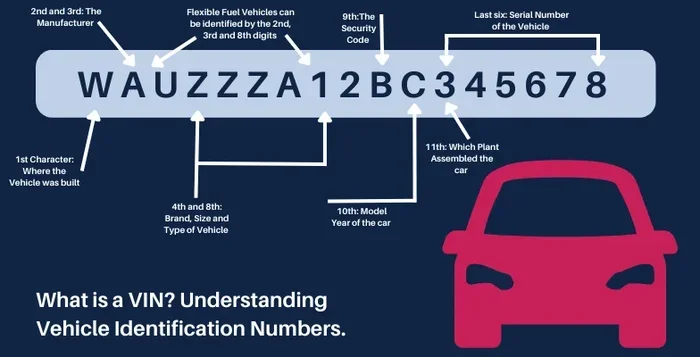
The VIN structure follows a universal standard set by the International Organization for Standardization, or ISO. Every VIN contains 17 characters, and each position has a specific meaning. The code is divided into three main sections:
- World Manufacturer Identifier (WMI): The first three characters identify who made the vehicle and where.
- Vehicle Descriptor Section (VDS): Characters 4 through 8 describe the vehicle’s features and specifications.
- Vehicle Identifier Section (VIS): Characters 10 through 17 identify the specific car, including its model year and serial number.
This standardized format makes it possible for anyone to decode VIN information consistently, no matter where the vehicle was made.
Where to Find Your VIN Number
Before you can interpret your VIN, you need to locate it. The good news is that the VIN is printed in several places on every vehicle. Here are the most common spots to check:
- Dashboard: Look through the windshield on the driver’s side. The VIN plate is usually visible from outside the car.
- Driver’s side door jamb: Open the driver’s door and look for a sticker on the door frame. This is one of the easiest places to find the VIN.
- Engine block: Many manufacturers stamp the VIN directly onto the engine block.
- Vehicle title and registration: Your legal documents will always list the VIN.
- Insurance card: Your auto insurance policy includes the VIN.
If you are looking at a motorcycle, the VIN is often found on the steering neck or the engine mounts. For larger vehicles like trucks and SUVs, check near the front axle or the cab area.
Quick Tips for Locating Your VIN
- Always verify that the VIN on the car matches the VIN on the title and registration.
- Use a flashlight to check dark areas like the dashboard and engine bay.
- If the VIN plate looks tampered with or scratched, proceed with caution.
The 17 Characters Explained
Now let us get into the heart of the matter. Each of the 17 positions in a VIN number carries specific meaning. Let us walk through them one by one with a practical example.
Imagine this VIN: 1G1BL52P7TR115520. We will break it down section by section so you can see exactly how to interpret each part.
Characters 1-3: World Manufacturer Identifier
The first three characters tell you who made the vehicle and where it was assembled. This section is called the World Manufacturer Identifier, or WMI.
- Character 1: Identifies the country of origin. For example, 1 or 4 means the United States, J means Japan, and W means Germany.
- Character 2: Identifies the manufacturer. G stands for General Motors in this example.
- Character 3: Identifies the vehicle type or division within the manufacturer.
In our example, 1G1 means a vehicle made by General Motors in the United States. This is the manufacturer code that starts every VIN lookup.
Characters 4-8: Vehicle Descriptor Section
The next five characters describe the vehicle itself. This is the Vehicle Descriptor Section, and it contains details about the model, body style, engine type, and more.
- Characters 4-8: Together, these characters specify the model line, body type, restraint system, and engine code.
Different manufacturers use these positions differently, but they all follow the same general pattern. A VIN decoder tool can help you translate these characters into plain English.
Character 9: Check Digit
The ninth character is a mathematically calculated check digit. Its purpose is to detect fake or invalid VINs. The U.S. Department of Transportation requires this digit for all vehicles sold in North America. You do not need to calculate it yourself, but knowing it exists helps you understand why VINs are so reliable.
Character 10: Model Year
The tenth character tells you the model year of the vehicle. From 2001 to 2009, the numbers 1 through 9 were used. From 2010 onward, letters A through Y are used (skipping I, O, Q, and U to avoid confusion).
In our example, the letter T represents the year 2024. This is a quick way to confirm whether a vehicle’s claimed age matches its VIN.
Character 11: Assembly Plant
The eleventh character identifies the specific factory or assembly plant where the vehicle was built. Each manufacturer has its own set of plant codes. For instance, a certain letter might mean the car was assembled in Detroit, while another letter means it came from a plant in Mexico.
Characters 12-17: Serial Number
The last six characters form the serial number of the vehicle. This is the unique production number that distinguishes your car from every other car of the same make, model, and year rolling off the assembly line. No two vehicles will ever share these final six digits.
How to Decode Each Section of Your VIN
Now that you understand the structure, let us talk about the actual process of decoding. There are two main ways to interpret your VIN: manually and with a tool.
Manual Decoding
Manual decoding works well for the first three characters and the model year. You can look up WMI codes online to find the manufacturer and country. The model year character follows a simple pattern that repeats every 30 years.
However, manual decoding has its limits. The middle section of the VIN (characters 4 through 8) varies by manufacturer, so it is hard to decode those without a reference guide specific to each brand.
Using a VIN Decoder Tool
The easiest and most accurate way to decode a VIN is to use a free VIN decoder tool online. Simply enter your 17-character code, and the tool will instantly return a detailed breakdown of your vehicle’s information. Most decoders provide:
- Manufacturer and country of origin
- Model name and trim level
- Engine type and displacement
- Transmission style
- Model year and assembly plant
- Optional equipment details
Some popular VIN lookup services include the National Insurance Crime Bureau (NICB), Carfax, and AutoCheck. These tools also pull vehicle history reports that show accidents, title brands, and service records.
Comparison: Free vs. Paid VIN Decoders
| Feature | Free Decoders | Paid Services |
|---|---|---|
| Basic VIN decoding | Yes | Yes |
| Vehicle history report | Limited | Full report |
| Recall information | Yes | Yes |
| Market value estimate | No | Yes |
| Accident history | No | Yes |
| Title brand check | Limited | Yes |
For most people, a free decoder is enough to get the basic vehicle specifications. If you are buying a used car, investing in a paid history report is well worth the small cost.
Common Mistakes When Interpreting a VIN
Interpreting a VIN seems straightforward, but mistakes happen. Here are the most common errors people make and how to avoid them:
Confusing Similar-Looking Characters
VINs use only certain letters and numbers. The letters I, O, and Q are never used because they look too much like the numbers 1 and 0. If you see one of these letters in a VIN, double-check your reading. A single misread character can lead to completely wrong results.
Ignoring the Check Digit
Some people skip the ninth character when manually entering a VIN into a decoder. Always include all 17 characters. Leaving one out, even by accident, will cause the decoder to return incorrect or no results at all.
Assuming All VINs Are 17 Characters
Before 1981, VINs varied in length from 11 to 17 characters. If you are decoding an older vehicle, the format will be different. Always check the year of the vehicle first before attempting to decode it.
Not Verifying the VIN on Multiple Sources
Always compare the VIN on the car with the VIN on the title, registration, and insurance documents. Mismatches can signal fraud or paperwork errors. A quick check can save you from a costly mistake.
Expert Insight: “When buying a used car, I always run a VIN check before anything else. It takes five minutes and can save you thousands of dollars in hidden repairs. Look for title brands, accident history, and service records before you commit to a purchase.” — Automotive Industry Professional
Why Interpreting Your VIN Matters
You might wonder why it is worth the effort to learn how to interpret your VIN number. The answer is simple: knowledge is power. Here are the top reasons why understanding your VIN matters:
- Verify authenticity: A VIN check can confirm whether a vehicle is genuine or potentially stolen.
- Check for recalls: Manufacturers use VINs to issue targeted recalls. Entering your VIN on the manufacturer’s website reveals any open recalls on your specific vehicle.
- Find the right parts: Auto parts stores use your VIN to ensure you get the correct parts for your exact model and engine type.
- Insurance purposes: Insurance companies rely on the VIN to verify the vehicle and set the correct premium.
- Track vehicle history: A car history report built from the VIN reveals past accidents, title problems, and ownership changes.
- Resale value: Buyers trust sellers who provide a clean VIN history. Transparency builds confidence and can help you get a better price.
Quick Tips for Using Your VIN
- Always keep a photo of your VIN in your phone for emergencies.
- Use the VIN to search for compatible accessories and upgrades online.
- Check the VIN before listing your car for sale to address any issues proactively.
- Share the VIN with your mechanic for accurate diagnostics and repairs.
Key Takeaways
- Every VIN is unique: No two vehicles share the same 17-character code, making it your car’s fingerprint.
- The first three characters identify the manufacturer: This is called the World Manufacturer Identifier and tells you who built the vehicle and where.
- Characters 4 through 8 describe the vehicle: These reveal the model, body type, engine type, and other key specifications.
- The 10th character is your model year: A simple letter or number that tells you when the vehicle was made.
- The last six characters are the serial number: This is the unique production number assigned to your specific car.
- You can use free online VIN decoders: Many trusted tools let you decode your VIN instantly without any cost.
- Always double-check your VIN: Mistakes in interpretation can lead to buying a vehicle with hidden problems.
Conclusion
Learning how to interpret your VIN number opens a door to understanding your vehicle like never before. From the manufacturer and model year to the assembly plant and serial number, every character in your 17-character code tells a story. Whether you are a car buyer, a current owner, or someone who simply wants to know more about their ride, mastering the basics of VIN decoding is a valuable skill.
The process is simpler than it looks. Start by locating your VIN, then use a reliable VIN decoder to break down each section. Always verify your results by cross-referencing multiple sources, and never skip a VIN check when buying a used vehicle. With the knowledge you have gained from this guide, you can decode your VIN with confidence and make smarter decisions about your car.
Take a few minutes today to look up your own VIN. You might be surprised by what you discover. The more you know about your vehicle, the better equipped you are to maintain it, insure it, and protect your investment.
Frequently Asked Questions
What does a VIN number tell you?
A VIN number reveals the vehicle’s manufacturer, country of origin, model year, engine type, body style, assembly plant, and unique serial number. It is essentially a complete identity card for your car. You can use a free online VIN decoder to access all of this information instantly.
Where is the VIN located on a car?
The most common locations are the dashboard on the driver’s side, the driver’s side door jamb, and the engine block. You can also find it on your vehicle title, registration, and insurance card. Always verify that the VIN on the car matches the VIN on your documents.
Can two cars have the same VIN number?
No. Every vehicle produced since 1981 receives a unique 17-character VIN that is never repeated. If you find two vehicles with the same VIN, it is a serious red flag that could indicate fraud or tampering. Always report duplicate VINs to the proper authorities.
How do I decode my VIN for free?
You can use free online tools from the National Insurance Crime Bureau, the manufacturer’s website, or third-party services like Carfax and AutoCheck. Simply enter your 17-character VIN and the tool will return a detailed breakdown of your vehicle’s specifications and history.
What should I do if my VIN looks damaged or altered?
If your VIN plate is scratched, peeling, or looks tampered with, have a trusted mechanic or dealership inspect it right away. A damaged VIN can cause problems with registration, insurance, and resale. In some cases, the manufacturer can reissue a VIN plate if the original is illegible.
Do older vehicles have 17-character VINs?
No. The standardized 17-character VIN format was required starting in 1981. Vehicles made before 1981 may have shorter VINs with varying formats. If you are decoding an older vehicle, you may need to consult the manufacturer directly or use a specialized decoder for pre-1981 models.