Does Mitsubishi Still Make Sports Cars?
Mitsubishi once ruled the sports car world with legends like the Eclipse and the Evo X. Today, the brand has shifted focus away from pure sports cars toward SUVs and crossovers. While no current Mitsubishi model is a true sports car, the company still builds vehicles with performance DNA. Enthusiasts can still find sporty options, but a dedicated sports car return remains unlikely in the near future.
For decades, Mitsubishi was a household name among sports car fans. The Eclipse and the Lancer Evolution dominated winding roads and rally stages around the world. These cars earned a loyal following that still talks about them today. But things have changed. Mitsubishi’s current lineup looks very different from what it used to be. So the big question remains: does Mitsubishi still make sports cars?
The short answer is no. Mitsubishi does not currently produce a dedicated sports car. The brand has pivoted its focus entirely toward SUVs and crossovers. This shift happened gradually over the past decade. Fans of the brand have watched their favorite performance models disappear one by one. But the story is more nuanced than a simple yes or no. There is still a lot to unpack about where Mitsubishi stands today and what its future might hold.
Key Takeaways
- Mitsubishi retired its iconic sports cars: The Eclipse and Lancer Evolution are no longer in production, marking the end of an era for the brand.
- The current lineup focuses on SUVs and crossovers: Models like the Outlander and Eclipse Cross dominate Mitsubishi’s offerings today.
- Performance DNA still exists in some models: The Eclipse Cross and Outlander Sport offer sporty styling and decent handling.
- Mitsubishi has no announced plans for a new sports car: The company has not hinted at returning to the sports car segment.
- The Evo and Eclipse legacy lives on: Used models remain highly sought after by enthusiasts and collectors.
- JDM sports car fans have alternatives: Brands like Toyota, Honda, and Mazda still offer exciting sports car options.
- Mitsubishi’s rally heritage shaped its identity: The WRC dominance with the Evo gave the brand a performance reputation that endures today.
📑 Table of Contents
- The Golden Era of Mitsubishi Sports Cars
- Why Mitsubishi Stopped Making Sports Cars
- What Mitsubishi Offers Today
- Does Mitsubishi Still Make Sports Cars: The Future Outlook
- Mitsubishi’s Legacy in the Sports Car World
- Sports Car Alternatives to Consider
- Common Mistakes People Make When Shopping for Used Sports Cars
- Quick Tips for Mitsubishi Sports Car Owners
- Expert Insights on Mitsubishi’s Sports Car Future
- Conclusion
The Golden Era of Mitsubishi Sports Cars
To understand where Mitsubishi is now, you need to look back at where it came from. Mitsubishi built some of the most iconic sports cars ever made. These vehicles earned a reputation for being affordable, powerful, and incredibly fun to drive. They carved out a special place in automotive history.
The Mitsubishi Eclipse: A Legend Is Born
The Eclipse first hit the market in 1989. It quickly became one of the most popular sports cars in the world. The first generation was a sleek, affordable coupe that offered real performance. By the time the fourth generation arrived in 1994, the Eclipse had become a global sensation.
The Eclipse was part of the DSM era. That stands for Diamond-Star Motors, a joint venture between Mitsubishi, Chrysler, and Plymouth. The Eclipse shared its platform with the Plymouth Laser and the Eagle Talon. This gave buyers three great options from one factory line. The DSM cars became cult classics that are still loved today.
The Eclipse GSX came with all-wheel drive and a turbocharged engine. The GS model offered a naturally aspirated four-cylinder. Both versions delivered a thrilling driving experience. The Eclipse was affordable, reliable, and easy to modify. It became the go-to sports car for young enthusiasts and tuners everywhere.
The Mitsubishi Lancer Evolution: Rally King
No discussion of Mitsubishi sports cars is complete without the Lancer Evolution. The Evo started as a rally-inspired version of the standard Lancer. Mitsubishi built it to compete in the World Rally Championship. What came out of the factory was a turbocharged, all-wheel-drive monster.
The Evo I arrived in 1992. Each new generation brought more power and more advanced technology. By the time the Evo X launched in 2007, it had over 300 horsepower. It featured a twin-clutch transmission and sophisticated AWD systems. The Evo X was a technological masterpiece.
Mitsubishi dominated rally stages around the world. The brand won multiple Manufacturers’ Championships with the Evo. Rally fans around the globe worshipped these cars. The Evo became a symbol of Japanese performance engineering. Even today, used Evos hold their value remarkably well.
The Mitsubishi 3000GT: A Japanese Supercar
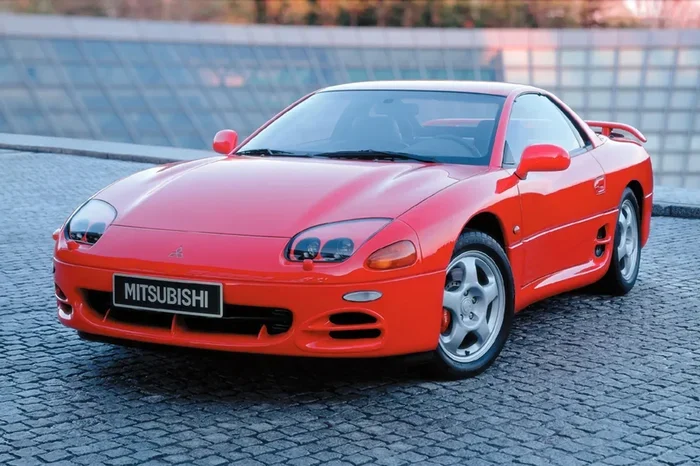
Before the Eclipse became a household name, there was the 3000GT. Launched in 1990, this car was Mitsubishi’s attempt at a supercar. It featured pop-up headlights, active aerodynamics, and a twin-turbo V6. The 3000GT VR-4 produced over 320 horsepower.
This was an incredibly advanced car for its time. It had all-wheel steering, active suspension, and a viscous coupling AWD system. The 3000GT could compete with European supercars at a fraction of the price. Unfortunately, it was heavy and complex. Reliability issues and high production costs hurt its sales. Today, the 3000GT is a rare and underrated classic.
Why Mitsubishi Stopped Making Sports Cars
Mitsubishi’s departure from the sports car segment did not happen overnight. Several factors contributed to this shift. Understanding these reasons helps explain why does Mitsubishi still make sports cars is a question with a disappointing answer.
Falling Sales and Rising Costs
Sports cars are niche products. They sell in small numbers compared to SUVs and sedans. As global sales declined, Mitsubishi had to make tough decisions. The Eclipse ended production in 2011. The Evo X was discontinued in 2015. The 3000GT had already been gone for years.
Developing a new sports car is incredibly expensive. Mitsubishi needed to invest in more profitable segments. SUVs and crossovers offered higher profit margins. The company redirected its resources toward those models. The sports car program simply could not justify the cost.
Shifting Consumer Preferences
The automotive market changed dramatically over the past two decades. Consumers started buying SUVs in massive numbers. Crossovers became the default choice for families. Sports cars became a smaller and smaller part of the market.
Mitsubishi followed its customers. The brand shifted its focus toward practical, family-friendly vehicles. The Outlander became one of its best-selling models. The Eclipse Cross offered a sporty twist on the crossover formula. This strategy made business sense, even if it disappointed enthusiasts.
Financial Struggles and Restructuring
Mitsubishi Motors faced serious financial challenges. The company went through a major restructuring in the mid-2010s. Cost-cutting measures became a priority. Unprofitable lines were eliminated. The sports car segment was among the first to go.
The company also needed to focus on its core markets. Mitsubishi has strong sales in Japan, Southeast Asia, and parts of Europe. These markets prefer practical vehicles over sports cars. The brand’s strategy aligned with what its customers actually wanted.
What Mitsubishi Offers Today
While Mitsubishi no longer makes traditional sports cars, the brand is not gone. The company still builds vehicles with sporty character. Some current models offer performance-oriented features that enthusiasts can appreciate.
The Mitsubishi Eclipse Cross
The Eclipse Cross is the closest thing Mitsubishi offers to a sports car today. It is a compact crossover with a sporty design. The name pays homage to the legendary Eclipse. The Eclipse Cross features a turbocharged 1.5-liter engine that produces 161 horsepower.
It comes with S-AWC, which stands for Super All-Wheel Control. This system is a descendant of the technology used in the Evo. The Eclipse Cross handles better than most crossovers in its class. It offers sharp steering and confident cornering.
However, it is not a sports car. It is a crossover first and foremost. The ride is comfortable, and the interior is practical. It is a great daily driver with a sporty edge. For enthusiasts, it is a consolation prize rather than a replacement for the Evo or Eclipse.
If you are curious about the current Mitsubishi lineup and how it compares to its past, check out how long a full car diagnostic takes to understand the technology in modern Mitsubishis.
The Mitsubishi Outlander
The Outlander is Mitsubishi’s best-selling SUV globally. It is a mid-size crossover that seats seven passengers. The Outlander Plug-In Hybrid is one of the most efficient SUVs on the market. It offers an electric-only range of around 38 miles.
The Outlander is not a sports car by any stretch. But it does offer a PHEV powertrain that delivers instant torque. The handling is better than you would expect from a family SUV. Mitsubishi applied some of its rally-derived AWD expertise to this vehicle.
For those who want a Mitsubishi with some performance character, the Outlander is worth looking at. It is practical, efficient, and surprisingly engaging to drive. You can learn more about the Mitsubishi Outlander’s towing capability if you are considering this model.
The Mitsubishi L200 (Triton)
The L200, known as the Triton in some markets, is a pickup truck. It is one of the most popular models in Mitsubishi’s global lineup. The L200 offers a 4WD system and a capable chassis. It is built for both work and leisure.
While not a sports car, the L200 has a rugged, performance-oriented feel. It handles well for a truck and offers decent fuel economy. Mitsubishi has built a strong reputation for durability with this model. It competes in a crowded pickup segment and holds its own.
Does Mitsubishi Still Make Sports Cars: The Future Outlook
So what does the future hold for Mitsubishi? Will the brand ever return to making sports cars? Let us explore what we know.
No Plans for a New Sports Car
As of now, Mitsubishi has not announced any plans for a new sports car. The company’s focus remains on SUVs, crossovers, and electrification. The automotive industry is shifting toward electric vehicles. Mitsubishi is investing in its e-Evolution concept and plug-in hybrid technology.
An electric sports car would be a natural fit for the brand. Mitsubishi has the engineering knowledge from the Evo and the 3000GT. An electric performance vehicle could combine that heritage with modern technology. But there has been no official confirmation of such a project.
The Electric Vehicle Push
Mitsubishi is investing heavily in electrification. The Outlander PHEV leads the charge. The company plans to expand its electric lineup in the coming years. This strategy aligns with global emissions regulations and consumer demand.
An electric sports car could fit into this plan. Mitsubishi has the brand recognition and the engineering pedigree. But the company needs to prioritize profitability. A niche sports car may not generate the revenue needed to justify the investment.
Could a Revival Happen?
Automotive revivals are not unheard of. Many brands have brought back classic nameplates. The Volkswagen ID. Buzz proved that nostalgia sells. Could Mitsubishi bring back the Eclipse or the Evo in electric form?
It is possible, but not imminent. The brand needs to stabilize its financial position first. A sports car revival would likely come only after Mitsubishi establishes a stronger presence in the EV market. For now, enthusiasts will have to enjoy the classics and look elsewhere for new sports cars.
Mitsubishi’s Legacy in the Sports Car World
Even though Mitsubishi no longer makes sports cars, its legacy is undeniable. The brand shaped the sports car landscape in meaningful ways. The Eclipse and the Evo became icons of affordable performance. They proved that you did not need a six-figure budget to enjoy thrilling driving.
Mitsubishi’s rally heritage gave the brand a performance credibility that few manufacturers can match. The WRC dominance with the Evo put Mitsubishi on the map. The brand’s AWD technology became legendary. The SAWC system influenced drivetrain design across the industry.
Used Mitsubishi sports cars remain highly desirable. The Eclipse GSX, the Evo IX, and the 3000GT VR-4 are all collectible. Enthusiast communities around the world keep these cars alive. Toyota Camrys and other Japanese classics share the same enthusiast following that Mitsubishi sports cars enjoy.
Sports Car Alternatives to Consider
If you are missing Mitsubishi sports cars, you are not alone. Many fans of the brand look for alternatives that capture the same spirit. Fortunately, there are plenty of options available today.
Toyota GR86 and Subaru BRZ
The GR86 and BRZ are the spiritual successors to the affordable sports car tradition. They are lightweight, rear-wheel-drive coupes with lively handling. The GR86 shares its platform with the Subaru BRZ. Both offer naturally aspirated flat-four engines and pure driving fun.
Mazda MX-5 Miata
The Miata is the quintessential affordable sports car. It has been winning hearts since 1989. Lightweight, simple, and incredibly fun, the Miata proves that you do not need horsepower for excitement. It is the most popular sports car in the world for good reason.
Honda Civic Type R
The Civic Type R offers hot hatch performance at an accessible price. It is front-wheel drive but handles brilliantly. The turbocharged engine delivers strong acceleration. It is a practical sports car that you can use every day.
Hyundai Veloster N
The Veloster N brings Hyundai’s N performance division to the table. It is a three-door hatch with a turbocharged 2.0-liter engine. The handling is sharp and the styling is unique. It offers a different take on the affordable sports car formula.
For those interested in how modern car factories build vehicles at scale, you might enjoy reading about how many cars a car factory makes in a day to appreciate the scale of production that these brands rely on.
Common Mistakes People Make When Shopping for Used Sports Cars
If you are considering a used Mitsubishi sports car, there are some pitfalls to avoid. Many buyers make mistakes that cost them money and headaches.
Ignoring Maintenance History
Performance cars need regular, proper maintenance. A well-documented service history is essential. Look for oil changes, timing belt replacements, and clutch services. A car with gaps in its history is a risk.
Overlooking Rust
Mitsubishi sports cars from the 1990s and 2000s are prone to rust. Check the wheel arches, rocker panels, and subframes carefully. Surface rust can be fixed, but structural rust is a deal-breaker. Always inspect the undercarriage thoroughly.
Buying Without a Test Drive
Never buy a used sports car without driving it first. Listen for unusual noises. Check the transmission engagement. Feel for vibrations or pulling. A test drive reveals problems that a visual inspection cannot.
Also, if you are shopping for any used vehicle, understanding how long a full car diagnostic takes can save you from buying a problematic vehicle.
Quick Tips for Mitsubishi Sports Car Owners
- Keep up with oil changes: Turbocharged engines need fresh oil every 5,000 miles to stay healthy.
- Check the coolant system regularly: Mitsubishi turbos run hot, and cooling system failures are common.
- Inspect the clutch early: Manual transmission Mitsubishis wear clutches faster than you might expect.
- Use quality fuel: Even if the manual says regular, premium fuel can help prevent knock in turbo models.
- Join an enthusiast community: Online forums and local meetups are invaluable resources for owners and buyers alike.
- Address issues immediately: Small problems become expensive repairs when ignored on performance vehicles.
Expert Insights on Mitsubishi’s Sports Car Future
Industry experts generally agree that Mitsubishi’s return to sports cars is unlikely in the short term. The company’s strategic priorities are clear. Electrification, SUV sales, and profitability come first. A niche sports car does not fit that roadmap.
However, the Mitsubishi brand still has passionate fans worldwide. The nostalgia for the Eclipse and the Evo is strong. Social media communities keep the spirit alive. If Mitsubishi ever revisits its sports car heritage, an electric platform would be the most logical starting point.
Until then, enthusiasts will need to look at other brands. But the Mitsubishi sports car legacy will never be forgotten. These cars defined an era and inspired a generation of drivers. The Eclipse, the Evo, and the 3000GT earned their place in automotive history.
Conclusion
So, does Mitsubishi still make sports cars? The answer is no, not anymore. The brand has moved on from its performance heritage to focus on SUVs and crossovers. The Eclipse and the Evo are memories now, cherished by fans who still drive them every day.
Mitsubishi’s sports car legacy is secure, though. The Eclipse, the Evo, and the 3000GT will always be remembered as some of the best affordable performance cars ever built. The brand’s rally heritage and engineering innovation set a standard that competitors still admire.
If you love Mitsubishi sports cars, there are still ways to enjoy them. The used market offers plenty of well-preserved examples. Proper maintenance and care can keep these cars running for decades. And who knows? Maybe one day Mitsubishi will surprise us with a return to form. Until then, the legend lives on.
If you are curious about how long it takes for a factory to build a car from start to finish, check out how long a factory takes to build a car to understand the fascinating production process behind every vehicle, including the classic Mitsubishis that fans love.
Frequently Asked Questions
When did Mitsubishi stop making sports cars?
The last Mitsubishi sports car, the Lancer Evolution, was discontinued in 2015. The Eclipse ended production earlier in 2011. Both models were icons of the brand’s performance heritage. Their departure marked the end of Mitsubishi’s sports car era.
Will Mitsubishi ever make a sports car again?
There are no official plans for a new Mitsubishi sports car at this time. The company is focused on SUVs, crossovers, and electrification. An electric performance vehicle could be possible in the future, but nothing has been announced. Fans will need to wait and see what the company reveals next.
What was the last Mitsubishi sports car?
The Lancer Evolution X was the last true Mitsubishi sports car. It was produced from 2007 to 2015. The Evo X featured a turbocharged 2.0-liter engine, a twin-clutch transmission, and advanced S-AWC all-wheel drive. It was the culmination of decades of rally-derived engineering.
Are used Mitsubishi sports cars worth buying?
Yes, used Mitsubishi sports cars can be excellent purchases. The Eclipse and the Evo offer thrilling performance at affordable prices. However, buyers should carefully inspect maintenance history and look for rust. Well-maintained examples can be reliable and fun daily drivers.
What is Mitsubishi’s best sports car ever?
Most enthusiasts agree that the Lancer Evolution and the Eclipse are the best Mitsubishi sports cars. The Evo dominated rally stages worldwide and became a legend. The Eclipse made sports car ownership accessible to thousands of fans. Both models have strong followings and collectible value today.
How does Mitsubishi’s current lineup compare to its sports car past?
Mitsubishi’s current lineup is focused on practical SUVs and crossovers. The Eclipse Cross and Outlander offer some sporty character but are not true sports cars. The shift reflects changing consumer demand and the company’s financial priorities. The sports car spirit lives on in the brand’s heritage, even if the current models are different.