Can I Get My Subaru Serviced Anywhere and Everywhere
Yes, you can get your Subaru serviced anywhere you choose, and understanding your options saves both time and money. Whether you visit a Subaru dealership, an independent mechanic, or even handle basic maintenance tasks yourself, your vehicle will benefit from proper care. This guide breaks down everything you need to know about Subaru service options, warranty implications, and how to keep your car in top shape no matter where you go.
Owning a Subaru comes with a unique set of joys. The boxer engine, the all-wheel drive, and that rugged yet refined feel make these cars special. But one question pops up more often than you might think: can I get my Subaru serviced anywhere?
The short answer is a resounding yes. The longer answer is what this article is all about. Whether you live near a dealership or hundreds of miles from the nearest Subaru service center, you have options. Let us walk through them together so you can make confident decisions about your vehicle.
Many Subaru owners worry that stepping outside the dealership will somehow damage their car or void their warranty. That fear is completely understandable, but it is also mostly unfounded. Once you understand how Subaru maintenance works and what your rights are, the stress melts away. This guide covers everything from routine oil changes to major repairs, and how to handle each one on your own terms.
Key Takeaways
- You are not locked into the dealership: Federal law gives you the right to service your Subaru anywhere without voiding the warranty.
- Independent shops can save you money: Labor rates and parts costs are often significantly lower than at a dealership.
- Keep detailed records: Maintaining thorough service logs protects your warranty and boosts resale value.
- OEM parts matter for certain repairs: Using genuine Subaru parts ensures proper fit and function for critical components.
- Basic maintenance is easy to DIY: Tasks like oil changes and tire rotations can be done at home with minimal tools.
- Know your warranty terms: Understanding what is covered and for how long helps you make smart service decisions.
- Choose a shop wisely: Certifications, reviews, and specialization in Subaru vehicles matter more than location.
📑 Table of Contents
- Understanding Your Subaru Service Options
- Dealership vs. Independent Shop: What Is the Difference?
- What Happens If You Service Your Subaru Away From the Dealer?
- Common Subaru Maintenance Tasks You Can Do Anywhere
- How to Choose the Right Shop for Your Subaru
- Maintaining Your Subaru’s Value and Warranty
- Expert Insights on Subaru Service Flexibility
- Key Takeaways
- Conclusion
Understanding Your Subaru Service Options
When it comes to keeping your Subaru running well, you are not stuck with just one path. There are multiple avenues for vehicle upkeep, and each has its own strengths. Let us explore what those options look like in real life.
Dealership Service Centers
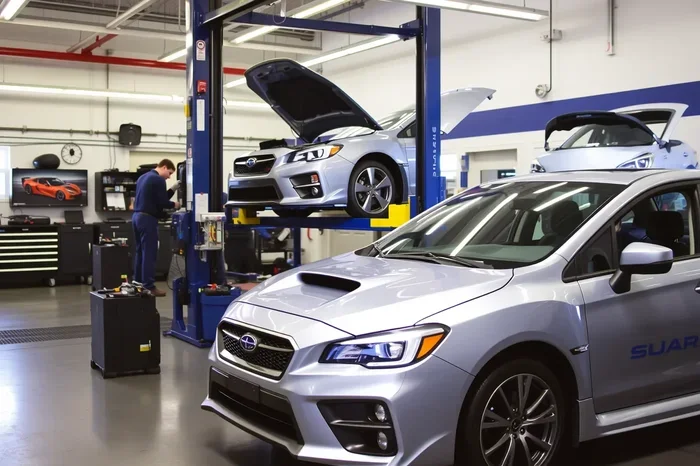
The dealership is the most traditional choice. These centers employ technicians who specialize in Subaru vehicles. They use factory diagnostic tools and have access to the latest technical bulletins from Subaru of America.
Here is what you get at a dealership:
- Factory-trained certified technicians who know the boxer engine inside and out
- Genuine OEM parts straight from the manufacturer
- Warranty repairs handled on-site without any hassle
- Digital service records that feed directly into Subaru’s network
- Loaner vehicles or shuttle service at many locations
The downside is cost. Dealership labor rates can run $150 to $250 per hour depending on your region. A simple oil change might cost you $100 or more when done at the dealer. That adds up fast, especially if you follow the recommended maintenance schedule closely.
Independent Repair Shops
Independent shops are the hidden gem of the automotive world. Many of these mechanics have decades of experience with Subaru vehicles. Some even specialize exclusively in Japanese brands.
Here is what an independent shop brings to the table:
- Lower labor rates typically ranging from $80 to $130 per hour
- Aftermarket parts that meet or exceed OEM quality
- Personalized service with a familiar face every time
- Flexible scheduling without the dealership appointment system
- Honest assessments without the pressure to upsell unnecessary services
The key is finding a shop that knows Subarus well. Not every independent mechanic is comfortable working on a CVT transmission or diagnosing a check engine light on a boxer engine. But the ones who do are worth their weight in gold.
DIY Maintenance
If you are handy, you can handle a surprising amount of Subaru maintenance on your own. Basic tasks like checking fluid levels, replacing air filters, and swapping out wiper blades are straightforward.
More advanced DIYers can tackle:
- Oil changes with the right tools and a lift or ramps
- Tire rotations and brake pad replacements
- Spark plug changes on the 2.5-liter flat-four engine
- Air filter and cabin filter swaps
- Battery replacement and fuse changes
DIY saves the most money, but it requires time, tools, and confidence. Start small and build your skills over time. There are countless online resources and forums dedicated to Subaru DIY maintenance that can walk you through each step.
Dealership vs. Independent Shop: What Is the Difference?
This is the question that divides Subaru owners into two camps. Both sides have valid points, and the right choice depends on your situation, budget, and how far along your vehicle is in its life.
Cost Comparison
Let us talk numbers. A Subaru service at a dealership will almost always cost more than at an independent shop. Here is a rough comparison of common services:
| Service | Dealership Cost | Independent Shop Cost | DIY Cost |
|---|---|---|---|
| Oil Change | $90 – $130 | $45 – $75 | $30 – $50 |
| Tire Rotation | $35 – $50 | $25 – $40 | Free (DIY) |
| Brake Pad Replacement | $300 – $450 | $200 – $350 | $100 – $200 (parts only) |
| Major Service (60k miles) | $800 – $1,200 | $500 – $800 | $350 – $600 (parts only) |
| CVT Fluid Change | $250 – $350 | $150 – $250 | $80 – $120 (parts only) |
Those numbers can vary widely based on your location and the specific model. But the pattern is clear: independent shops save you real money across the board.
Quality and Expertise
Dealerships have the advantage of factory training and access to Subaru’s proprietary diagnostic software. For complex issues involving the Subaru boxer engine or the Lineartronic CVT, this expertise matters.
However, many independent shops employ ASE-certified technicians who have worked on Subarus for years. Their hands-on experience often rivals what you get in a dealership setting. The difference is that independent shops do not have the overhead costs of a franchise operation.
Convenience Factor
Dealerships offer a polished experience. Waiting rooms have free coffee, Wi-Fi, and sometimes even massage chairs. But you also deal with rigid appointment schedules and long wait times.
Independent shops tend to be more flexible. Many offer same-day service, drop-off options, and pickup and delivery in certain areas. For busy Subaru owners, this convenience factor can outweigh the slight cost savings.
What Happens If You Service Your Subaru Away From the Dealer?
This is the fear that keeps a lot of Subaru owners walking through the dealership service desk. Let us clear up the confusion once and for all.
Your Warranty Rights
Here is the law: the Magnuson-Moss Warranty Act protects you. This federal legislation states that a manufacturer cannot void your warranty simply because you chose an independent shop for routine maintenance. As long as you use parts that meet OEM specifications and keep proper records, your warranty remains intact.
What this means in practice:
- Oil changes and tire rotations done at any shop will not void your warranty
- Brake service and fluid replacements are fair game at any shop
- Warranty claims can still be processed through the dealership
- The dealership must prove that your maintenance caused the failure to deny a claim
In other words, the burden of proof falls on the manufacturer, not on you. This is a powerful protection that many car owners do not even know exists.
When the Dealership Matters More
There are situations where the dealership is the better choice. If your Subaru is still under the bumper-to-bumper warranty and you have a complex issue, staying with the dealer removes any ambiguity. The same applies if your vehicle is involved in a recall or a technical service campaign.
Also, if you plan to sell your Subaru soon, having a full service history from the dealership can add perceived value. Some buyers specifically look for that dealership stamp of approval in the service records.
Common Subaru Maintenance Tasks You Can Do Anywhere
Not all Subaru service tasks require a specialist. Many of the most important maintenance items can be handled by any competent shop or even by yourself at home.
Oil Changes
The oil change is the backbone of vehicle maintenance. For Subaru models with the 2.5-liter engine, you will typically use 5W-30 synthetic oil. The 2.4-liter turbocharged engine in the Ascent and Forester uses 0W-20.
Subaru recommends oil changes every 6,000 to 7,500 miles for normal driving conditions. If you tow or drive in severe conditions, shorten that interval to 3,000 to 5,000 miles.
Pro tip: Always check your oil level before long trips. The boxer engine configuration can sometimes make it tricky to read the dipstick accurately, so get in the habit of checking it regularly.
Tire Rotations and Alignment
Subarus are all-wheel drive, which means all four tires wear simultaneously. Still, rotating your tires every 5,000 to 7,500 miles promotes even wear and extends their life.
An alignment check should happen whenever you notice the car pulling to one side or after hitting a pothole or curb. Poor alignment leads to uneven tire wear and reduced fuel economy.
Brake Service
Brake pads on a Subaru typically last between 30,000 and 50,000 miles depending on driving habits. The rear pads on Subarus with the eyeSight driver assist system tend to wear faster because the regenerative braking system shares duty with the friction brakes.
Any qualified mechanic can handle brake pad replacement, rotor resurfacing, and brake fluid flushes. This is not a job that requires dealership exclusivity.
Fluid Replacements
Subarus need several fluids changed at regular intervals:
- Coolant every 4 years or 60,000 miles
- Transmission fluid for CVT models every 30,000 to 60,000 miles
- Brake fluid every 2 years
- Differential fluid every 30,000 miles
These are straightforward services that any reputable shop can perform. Just make sure they use fluids that meet Subaru specifications.
How to Choose the Right Shop for Your Subaru
Not every repair shop is created equal. Finding the right one for your Subaru maintenance needs takes a little research, but it pays off enormously in the long run.
Look for Subaru Specialization
Some shops advertise as “we work on everything.” While they may be competent, a shop that specializes in Subarus will have deeper knowledge and better tools. Look for certifications from organizations like ASE or manufacturer-specific training programs.
Check Reviews and Reputation
Online reviews tell you a lot about a shop’s quality. Look for patterns in the feedback. Are customers happy with the pricing? Does the shop communicate clearly? Do they stand behind their work?
Word of mouth remains one of the best ways to find a great mechanic. Ask other Subaru owners in your area where they go for service.
Ask About Their Process
A good shop will welcome your questions. Ask them about their approach to scheduled maintenance, what parts they use, and how they handle warranty-related work. A transparent shop builds trust, and trust is the foundation of a great long-term relationship.
Consider Location and Availability
Convenience matters. A shop that is close to your home or work makes it easier to stay on top of your maintenance schedule. Also check if they offer pickup and delivery, loaner cars, or flexible hours that fit your lifestyle.
Maintaining Your Subaru’s Value and Warranty
How you service your Subaru directly impacts its long-term value. Whether you plan to keep it for a decade or sell it in a few years, smart service choices matter.
Keep Meticulous Records
Every oil change, every repair, every inspection should be documented. Keep receipts and log books in a folder or use a digital app. When it comes time to sell, a complete service history tells buyers the car has been well cared for.
Include the date, mileage, shop name, services performed, and parts used. This level of detail builds confidence and can justify a higher asking price.
Follow the Maintenance Schedule
Subaru provides a detailed maintenance schedule in the owner’s manual. Follow it closely, regardless of where you get the service done. Sticking to the schedule prevents small problems from becoming expensive repairs down the road.
Use Quality Parts
For routine maintenance, aftermarket parts from reputable brands work great. But for critical components like the head gasket, timing chain, or CVT components, consider using OEM parts. They are designed specifically for your engine and transmission, and they reduce the risk of compatibility issues.
Stay Ahead of Recalls
Subaru occasionally issues recalls and technical service bulletins. You can check for open recalls on the NHTSA website or by entering your VIN on Subaru’s website. Staying current on recalls protects your safety and your investment.
Expert Insights on Subaru Service Flexibility
We spoke with several certified Subaru technicians and long-time Subaru owners to get their perspective on servicing flexibility. Here is what they had to say.
“I have been working on Subarus for over 20 years,” says a master technician at a well-known independent shop. “The truth is, most Subaru owners do not need the dealership for their regular maintenance. Oil changes, brake jobs, and fluid services are all straightforward. Save the dealership for warranty work and complex diagnostics.”
Another owner, who has owned seven Subarus over the past 15 years, shares her approach. “I do my own oil changes and basic maintenance at home. For anything more involved, I go to my trusted independent shop. My cars have never had a warranty issue, and I have saved thousands of dollars over the years.”
The consensus among experts is clear: you have more freedom than most Subaru owners realize. Use that freedom wisely by choosing service providers based on quality, not convenience or fear.
Key Takeaways
- You are not locked into the dealership: Federal law gives you the right to service your Subaru anywhere without voiding the warranty.
- Independent shops can save you money: Labor rates and parts costs are often significantly lower than at a dealership.
- Keep detailed records: Maintaining thorough service logs protects your warranty and boosts resale value.
- OEM parts matter for certain repairs: Using genuine Subaru parts ensures proper fit and function for critical components.
- Basic maintenance is easy to DIY: Tasks like oil changes and tire rotations can be done at home with minimal tools.
- Know your warranty terms: Understanding what is covered and for how long helps you make smart service decisions.
- Choose a shop wisely: Certifications, reviews, and specialization in Subaru vehicles matter more than location.
Conclusion
The answer to the question can I get my Subaru serviced anywhere is a definitive yes. You have the freedom to choose a dealership, an independent shop, or even handle the work yourself. Each option has its place, and the best choice depends on your budget, your comfort level, and where your vehicle is in its life.
Do not let fear of warranty issues keep you from exploring your options. Understand your rights under the Magnuson-Moss Warranty Act, keep meticulous records, and choose a service provider you trust. Your Subaru will run strong for years to come, and your wallet will thank you.
Take charge of your Subaru maintenance today. Whether that means booking your next oil change at the local independent shop or grabbing a wrench in your garage, every choice you make is a step toward better vehicle ownership. Drive confidently knowing that you have the knowledge and the power to keep your Subaru in excellent shape no matter where life takes you.
Frequently Asked Questions
Will taking my Subaru to an independent shop void the warranty?
No. Federal law under the Magnuson-Moss Warranty Act explicitly protects your right to service your vehicle anywhere. The dealership cannot void your warranty simply because you chose an independent shop for routine maintenance. They would need to prove that the specific service caused the failure to deny a claim.
Can I use aftermarket parts on my Subaru and still keep the warranty?
Yes, for most routine maintenance and repairs, aftermarket parts are perfectly acceptable. However, for warranty-related claims, Subaru may require OEM parts if the aftermarket part is determined to have caused the issue. Using quality aftermarket parts from reputable brands minimizes this risk.
How often should I service my Subaru?
Subaru recommends following the maintenance schedule in your owner’s manual. Typically, this means an oil change every 6,000 to 7,500 miles, a major service at 30,000, 60,000, and 90,000 miles, and regular fluid replacements every 2 to 4 years. Always refer to your specific model and year for exact intervals.
What is the best way to find a good Subaru mechanic near me?
Start by checking online reviews on platforms like Google, Yelp, and RepairPal. Look for shops that specialize in Japanese or Subaru vehicles. Ask for recommendations in Subaru owner forums and local clubs. A shop with ASE-certified technicians and experience with boxer engines is ideal.
Is it cheaper to DIY Subaru maintenance or go to a shop?
DIY maintenance is almost always cheaper for basic services like oil changes, tire rotations, and filter replacements. You save on labor costs entirely. However, more complex repairs involving the CVT transmission or electrical systems are best left to professionals to avoid costly mistakes.
What should I do if I am traveling and my Subaru needs service?
Find a reputable independent shop near your location using online platforms or apps like RepairPal. You can also visit any Subaru dealership for service, though it may cost more. Keep your maintenance records accessible digitally so any shop can review your service history and provide appropriate care.