Do Car Insurance Companies Check Your Credit Score
Yes, most car insurance companies check your credit as part of their underwriting process. Your credit-based insurance score can significantly impact your car insurance rates in many states. Understanding this connection helps you shop smarter and potentially save hundreds of dollars each year.
Most people do not think about their credit score when they shop for auto coverage. But here is something that might surprise you. Do car insurance companies check your credit? The answer is yes, and it matters more than you might think. Your financial history plays a big role in the car insurance rates you pay every month. In this guide, we will walk you through everything you need to know about how insurers use your credit, which states restrict this practice, and what you can do to keep your premiums low.
Understanding the connection between credit and insurance can save you hundreds of dollars each year. Whether you are shopping for a new policy or trying to understand why your current rate went up, this article covers it all. We will break down the science behind credit-based insurance scoring, explore the factors insurers look at, and give you practical tips to improve your situation. By the end, you will feel confident navigating the world of insurance pricing with credit in mind.
Many drivers are shocked to learn that their financial health directly affects their insurance premium. It is not just about driving safely anymore. Insurers now look at your entire financial picture before offering you a policy. This might feel unfair, but there are reasons behind it. Let us dive into the details and help you make sense of it all.
Key Takeaways
- Credit affects insurance rates: Most insurers use a credit-based insurance score to help determine your premium.
- Not all states allow it: Several states have banned or restricted the use of credit in insurance pricing.
- Bad credit means higher costs: Drivers with poor credit can pay significantly more than those with good credit.
- You can improve your insurance score: Timely bill payments and low debt can help lower your rates over time.
- Not every insurer checks credit: Some companies use alternative factors instead of credit-based scoring.
- Shopping around matters: Comparing quotes from multiple providers can help you find fair rates regardless of credit.
📑 Table of Contents
How Car Insurance Companies Use Your Credit Score
When you apply for a policy, the insurer pulls your credit report to calculate what is known as a credit-based insurance score. This number is different from your regular FICO score, but it uses similar financial data. Insurers believe that people with higher credit scores are less likely to file claims. So they reward those drivers with lower car insurance premium amounts.
The insurance score is just one piece of the puzzle. It works alongside your driving record, age, location, and vehicle type. Together, these factors help the insurer assess your overall risk level. The better your combined profile, the lower your monthly payment will be.
What Is a Credit-Based Insurance Score?
A credit-based insurance score is a three-digit number that reflects your financial reliability. It is calculated using information from your credit report, such as payment history, outstanding debt, and length of credit history. Insurers use this score to predict the likelihood of a claim.
Here is how the scoring typically breaks down:
- Payment history: Late payments hurt your score significantly.
- Credit utilization: How much of your available credit you are using matters.
- Length of credit history: Longer credit history generally helps your score.
- Types of credit: A mix of credit accounts can boost your score.
- New credit inquiries: Too many recent applications can lower your score.
Keep in mind that this is not the same as a soft credit check for loans. Insurers use a special scoring model designed specifically for insurance risk assessment. They do not look at your income or employment status when calculating this number.
How Is It Different From Your Regular Credit Score?
Your regular credit score, like a FICO score, is used by lenders to decide whether to approve you for a loan. Your credit-based insurance score is used only by insurance companies. The two scores use the same underlying data but weigh it differently.
For example, a lender might care more about your total debt. An insurer cares more about your payment consistency. This means you could have a great regular credit score but a slightly different insurance score. Both matter in their own contexts.
Why Do Insurers Check Your Credit?
Insurance companies are in the business of managing risk. They want to predict who is likely to file a claim and who is not. Research has shown a correlation between credit behavior and claim frequency. This is why so many insurers include credit in their risk assessment process.
When you pay your bills on time and keep your debt low, it signals financial responsibility. Insurers interpret this as a sign that you are also likely to be a careful driver. Of course, this is not always true. But statistically, the data supports the trend.
The Link Between Credit and Claims
Studies have found that drivers with lower credit scores tend to file more insurance claims. This does not mean that poor credit causes accidents. It simply means there is a statistical pattern that insurers rely on for premium calculation.
For instance, a driver who consistently misses credit card payments might also be less disciplined about car maintenance or safe driving habits. Insurers use this data to set coverage rates that reflect the overall risk pool.
What Data Do They Actually Look At?
Insurers do not pull your full credit report the way a bank would. They receive a specialized insurance score based on select financial factors. Here is what they typically review:
- History of late payments
- Amount of outstanding debt
- Length of time you have had credit accounts
- Whether you have any accounts in collections
- The number of recent credit applications
They do not consider your race, gender, or marital status. The focus is purely on financial behavior that correlates with claim probability. This process is often called a soft credit check because it does not impact your regular credit score.
Which States Ban Credit-Based Insurance Scoring?
Not everyone agrees that using credit for insurance pricing is fair. As a result, several states have passed laws to limit or ban the practice. If you live in one of these states, your credit score cannot be used to set your car insurance rates.
States That Protect Consumers
The following states have enacted laws restricting or banning credit-based insurance scoring:
- California: Fully banned the use of credit in insurance pricing.
- Hawaii: Prohibits insurers from using credit scores to set rates.
- Massachusetts: Does not allow credit-based scoring for auto insurance.
- Michigan: Banned credit-based insurance scoring for auto policies.
- New Jersey: Restricts the use of credit in rate calculations.
- New York: Limits how insurers can use credit information.
- Puerto Rico: Also has restrictions on credit-based insurance scoring.
These laws were created to protect consumers from what some view as unfair pricing practices. If you live in one of these states, your insurance premium is based solely on driving-related factors.
What Happens If You Live in a Banned State?
If you live in a state where credit-based scoring is banned, you still need car insurance. Your rates will be determined by your driving record, vehicle type, location, and other standard factors. You will not get a discount for good credit, but you also will not be penalized for bad credit.
It is worth noting that some insurers may still ask for your credit information for other purposes, such as verifying identity. But they cannot use it to charge you more or less for your policy.
How Much Does Credit Affect Your Car Insurance Rate?
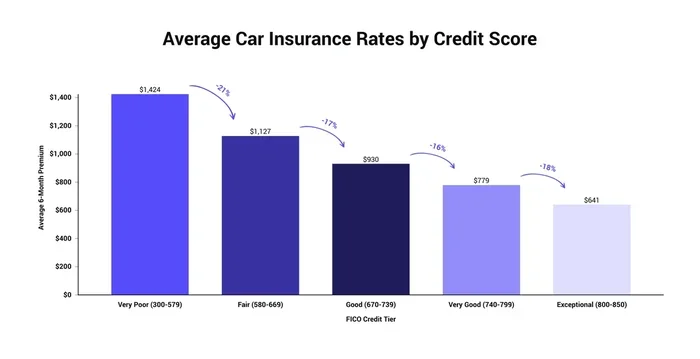
The impact of credit on your insurance rate can be significant. Studies show that drivers with poor credit pay substantially more than those with excellent credit. The exact difference depends on your state, insurer, and overall profile.
Comparing Rates With Good vs. Bad Credit
Let us look at a realistic example. A driver with excellent credit might pay $120 per month for full coverage. The same driver with poor credit could pay $200 or more. That is an extra $960 per year just because of credit.
If you have noticed that your rates keep climbing, you are not alone. Car insurance rates going up is a trend many drivers are experiencing, and credit is often a contributing factor. Even a small dip in your credit score can lead to a noticeable increase in your monthly bill.
| Credit Tier | Average Monthly Rate | Annual Cost |
|---|---|---|
| Excellent Credit | $120 | $1,440 |
| Good Credit | $150 | $1,800 |
| Fair Credit | $180 | $2,160 |
| Poor Credit | $220 | $2,640 |
These numbers are estimates and will vary based on location, age, and vehicle. But the trend is clear. Better credit means lower insurance rates in most cases.
Other Factors That Influence Your Premium
Credit is not the only factor that affects your rate. Insurers also consider:
- Driving record: Accidents and tickets raise your premium.
- Age and experience: Younger drivers typically pay more.
- Location: Urban areas often have higher rates.
- Vehicle type: Expensive cars cost more to insure.
- Coverage level: More coverage means higher payments.
- Deductible choice: A higher deductible lowers your monthly bill.
So even if your credit is not perfect, you can still find affordable coverage by focusing on these other factors. For young drivers, it is especially important to understand all the options. For example, if you are helping a teen driver, getting car insurance for a 17-year-old can be challenging, and credit may play a bigger role in the final rate.
Can You Get Car Insurance With Bad Credit?
The short answer is yes. You can get car insurance even with bad credit. But you will likely pay more than someone with good credit. The good news is that there are steps you can take to reduce the impact of poor credit on your premiums.
Tips to Lower Rates Even With Poor Credit
Do not give up if your credit is not great. There are practical strategies you can use to keep your costs down:
- Shop around: Different insurers weigh credit differently. One company might charge you less than another.
- Raise your deductible: A higher deductible reduces your monthly payment significantly.
- Maintain a clean driving record: Avoiding accidents and tickets can offset some of the credit penalty.
- Bundle your policies: Combining home and auto insurance often earns you a discount.
- Ask about discounts: Many insurers offer discounts for safe driving, low mileage, or defensive driving courses.
- Consider usage-based insurance: Some companies track your driving behavior and reward safe habits with lower rates.
If you need short-term coverage while you work on improving your credit, you might explore temporary car insurance options. These can provide quick coverage without a long-term commitment.
How to Improve Your Credit-Based Insurance Score
Improving your credit score takes time, but the results can lower your insurance costs. Here is what you can do:
- Pay all bills on time: Late payments are the biggest drag on your score.
- Reduce outstanding debt: Lowering your credit utilization helps both your credit and insurance scores.
- Avoid opening too many new accounts: Each application creates a hard inquiry that can lower your score.
- Keep old accounts open: Length of credit history matters for your score.
- Check your credit report regularly: Dispute any errors that might be hurting your score.
It is also worth noting that while improving your credit helps your insurance score, it does not guarantee a rate drop. Insurers review your entire profile, not just one factor. But over time, consistent financial responsibility will show results.
Do All Insurance Companies Check Credit?
Not all insurance companies check credit. Some insurers use alternative methods to assess risk. Understanding which companies check credit and which do not can help you find the best deal.
Major Insurers and Their Policies
Most major insurance companies in the United States do check credit as part of their underwriting process. Companies like State Farm, Geico, Progressive, and Allstate all use credit-based insurance scoring in most states. However, the weight they give to credit varies.
Some smaller or regional insurers may not use credit at all. These companies rely more heavily on your driving record, claims history, and other traditional factors. If you have poor credit, it is worth seeking out these providers.
What to Ask When Shopping for Coverage
When comparing quotes, ask each insurer whether they use credit in their rate calculation. This is a perfectly reasonable question, and most companies will answer it honestly. Here are some questions to keep in your back pocket:
- Do you use a credit-based insurance score to set rates?
- What other factors do you use besides credit?
- Can I get a discount for safe driving or bundling?
- How often do you re-evaluate my credit information?
Being upfront about your concerns can help you find an insurance provider that works for your situation. It also helps to get quotes from at least three different companies. Rates can vary widely, and the company with the lowest rate for someone else might not be the lowest for you.
It is also important to understand that while credit affects your premium, it does not affect whether insurance covers engine replacement or other specific types of damage. Coverage is determined by your policy type, not your credit score. So make sure you understand what your policy actually covers before you sign anything.
Key Takeaways
Your credit score plays a bigger role in car insurance than most people realize. From premium calculation to coverage rates, your financial history shapes what you pay every month. Here is a quick recap of what we covered:
- Most insurers check credit: It is a standard part of the underwriting process in most states.
- Credit-based insurance scoring is not the same as a regular credit check: Insurers use a specialized model focused on claim prediction.
- Several states ban the practice: California, Hawaii, Massachusetts, Michigan, and others have consumer protection laws in place.
- The impact can be costly: Poor credit can add hundreds of dollars to your annual insurance costs.
- You have options: Shopping around, raising deductibles, and improving your credit can all help lower your rates.
- Not all insurers use credit: Some companies rely on other factors, so always ask before applying.
Taking control of your financial health is one of the smartest things you can do for your wallet. Better credit leads to better insurance rates, which frees up money for the things that matter most to you. Start by reviewing your credit report, paying bills on time, and comparing quotes from multiple providers. Small changes today can lead to significant savings tomorrow.
Remember, your insurance premium is not set in stone. It changes based on your behavior, your credit, and the market. Stay proactive, stay informed, and never settle for a rate that does not work for you. The effort you put into understanding your car insurance rates will pay off every month on your premium statement.
Finally, if you are ever unsure about how your credit is affecting your coverage, reach out to your insurer directly. They can explain their specific scoring model and tell you what steps you can take to improve your standing. Knowledge is power, and in the world of insurance, it can also mean real savings.
Frequently Asked Questions
Does checking your credit for insurance affect your credit score?
No, it does not. Insurers perform a soft credit check, which does not impact your regular credit score. Unlike a hard inquiry from a lender, a soft check is invisible to other creditors and has no effect on your score.
Can you negotiate car insurance rates based on credit?
You cannot directly negotiate based on credit, but you can shop around for better rates. Different insurers weigh credit differently, so comparing quotes from multiple companies is the best way to find a fair price.
How often do insurance companies check your credit?
Most insurers check your credit when you first apply for a policy. Some companies also re-check credit annually or when you renew your policy. This can cause your rate to go up or down based on any changes in your credit profile.
Is a credit-based insurance score the same as a regular credit score?
No, they are not the same. While both use data from your credit report, the scoring models are different. A credit-based insurance score focuses on factors that predict claim likelihood, while a regular credit score focuses on loan repayment risk.
What can you do if you think your credit is unfairly affecting your insurance rate?
You can request a copy of your credit report from the insurer and dispute any errors. You can also shop around for providers who weigh credit less heavily. Improving your credit over time will naturally lead to better rates.
Does paying your insurance on time help your credit score?
Yes, it can. Many insurers now report payment history to credit bureaus. Consistent on-time payments can gradually improve your credit score, which in turn can lower your future insurance premiums.