Can You Get Kei Cars in the US Everything You Need to Know
Can you get kei cars in the US? Yes, but it requires navigating specific import regulations, EPA compliance, and DOT standards. Kei cars are tiny Japanese vehicles with small engines and compact dimensions that offer incredible fuel economy. While they are not officially sold new in the United States, enthusiasts can import them through the 25-year rule or with special exemptions.
Have you ever driven through a Japanese city and noticed how tiny the cars are? Those little machines are called kei cars, and they are everywhere in Japan. They zip through tight city streets, park in the smallest of spaces, and sip fuel like it is water. Many car enthusiasts in the United States have fallen in love with them.
But here is the big question. Can you get kei cars in the US? The short answer is yes. The longer answer involves import rules, federal regulations, and a bit of patience. If you are curious about bringing one of these adorable little vehicles to American soil, you have come to the right place. Let us walk through everything you need to know.
Kei cars are not just cute. They are engineered for maximum efficiency in a country where parking is scarce and fuel costs are high. In Japan, they make up a huge portion of new car sales every year. In the US, they remain a niche curiosity. But interest is growing fast. People who want a fuel-efficient commuter car, a fun project vehicle, or a compact runabout are looking at kei cars more than ever before.
Key Takeaways
- Kei cars are not sold new in the US: They must be imported through specific channels and meet federal regulations.
- The 25-year import rule is your best friend: Any vehicle older than 25 years can be imported without EPA or NHTSA restrictions.
- Kei cars offer amazing fuel economy: Their tiny engines deliver 50-70+ MPG in many models.
- Popular models include the Honda N-Box, Suzuki Hustler, and Daihatsu Tanto: Each offers unique features for urban driving.
- State regulations vary: Some states have additional requirements for registration and inspection.
- Importing costs can add up: Shipping, duties, and compliance modifications may increase the total price significantly.
- Kei trucks are gaining popularity: Models like the Suzuki Carry and Honda Acty are becoming sought after for their versatility.
📑 Table of Contents
- What Are Kei Cars?
- The 25-Year Import Rule
- How to Import a Kei Car to the US
- Popular Kei Car Models Available in the US
- Pros and Cons of Owning a Kei Car in the US
- Are Kei Cars Street Legal in the US?
- Tips for Successfully Owning a Kei Car in the US
- Future Outlook for Kei Cars in the US
- Key Takeaways
- Conclusion
What Are Kei Cars?
Kei cars are a class of micro cars and small vehicles that originated in Japan. They are regulated by the Japanese government through specific dimension and engine size limits. The idea behind them is simple. Create a tiny, efficient car that is affordable to buy and cheap to run.
Size and Engine Requirements
Kei cars must follow strict guidelines set by the Japanese Ministry of Land, Infrastructure, Transport and Tourism. These rules include:
- Engine displacement: No more than 660cc
- Length: No more than 3.4 meters (about 11.2 feet)
- Width: No more than 1.48 meters (about 4.9 feet)
- Height: No more than 2.0 meters (about 6.6 feet)
- Power output: Limited to 64 horsepower or less
Despite these tiny specifications, modern kei cars are surprisingly capable. They come with turbocharged engines, automatic transmissions, and modern tech features like touchscreen infotainment and safety systems. Companies like Honda, Suzuki, Daihatsu, and Mitsubishi build them. They are designed for daily commuting, grocery runs, and city driving.
Why Are Kei Cars So Popular in Japan?
Japan has a unique car culture. Roads are narrow, parking is expensive, and the Japanese domestic market rewards small, efficient vehicles. Kei cars benefit from lower taxes, reduced insurance costs, and easier parking. They are perfect for the dense urban environments found in Tokyo, Osaka, and other major cities. Over 30% of new cars sold in Japan are kei cars. That is a massive market share for such a small vehicle category.
The 25-Year Import Rule
If you want to know how to get a kei car in the United States, the 25-year import rule is the most important thing to understand. This rule is part of the NHTSA (National Highway Traffic Safety Administration) regulations and EPA (Environmental Protection Agency) guidelines.
What Is the 25-Year Rule?
The 25-year rule states that any vehicle that is at least 25 years old can be imported into the United States without needing to meet current federal safety and emissions standards. This means a kei car from 1999 or earlier can be imported and registered without going through the lengthy and expensive process of making it compliant with modern regulations.
This rule is a game-changer for kei car enthusiasts. It opens the door to importing models that were never officially sold in the US market. You can bring in right-hand drive vehicles, kei trucks, and rare models that would otherwise be impossible to own legally.
How Does Age Affect Importation?
The age of the vehicle determines which pathway you use to import it. Here is a quick breakdown:
- Under 25 years old: Must meet all NHTSA and EPA requirements. This involves getting a letter of compliance, passing safety inspections, and sometimes making modifications.
- 25 years or older: Exempt from NHTSA and EPA restrictions. You can import it with minimal paperwork.
- Classic vehicles (over 25 years): Still need basic customs paperwork and DOT compliance for safety equipment like seat belts and lighting.
The 25-year window means that as of 2024, kei cars from 1999 and earlier are eligible. Each year, more models become eligible. This is why the import market for kei cars is growing steadily.
How to Import a Kei Car to the US
Importing a kei car is not as simple as buying one online and having it shipped. There are several steps you need to follow to make the process smooth and legal.
Step 1: Find a Reliable Importer or Seller
Your first step is to find a Japanese domestic market vehicle exporter. Many companies specialize in exporting kei cars to the US. They handle the sourcing, inspection, and initial paperwork. Look for exporters with good reviews and experience with kei vehicles specifically.
You can also buy kei cars at auction in Japan through services like Japanese Car Auction platforms. These require a bit more knowledge and a local agent to bid on your behalf.
Step 2: Choose Your Shipping Method
Once you have secured a vehicle, you need to ship it to the United States. The two main options are:
- Roll-on/Roll-off (RoRo): The car drives onto a specialized ship. This is the most affordable option but may not be available for all vehicles.
- Container shipping: The car is loaded into a shipping container. This offers more protection and can ship other personal items alongside the car.
Shipping costs vary based on the port of origin, destination port, and time of year. Expect to pay between $1,500 and $4,000 for a single kei car.
Step 3: Clear Customs
When your kei car arrives at a US port, you need to go through customs. You will need a bill of lading, commercial invoice, and packing list. Customs duties on vehicles typically run around 2.5% of the vehicle’s value. You may also need to pay other fees depending on the port.
Step 4: EPA and NHTSA Compliance
If your kei car is less than 25 years old, you will need to go through the EPA and NHTSA compliance process. This can involve:
- Getting an EPA conformity letter
- Installing required safety equipment
- Passing a DOT inspection
- Modifying emissions equipment to meet US standards
This process can be expensive and time-consuming. It is why many enthusiasts wait for the 25-year mark. For newer kei cars, compliance can cost thousands of dollars in modifications and testing fees.
Step 5: Registration and Title
Once your kei car clears customs, you need to register it in your state. Each state has different requirements for vehicle registration of imported vehicles. Some states require a VIN inspection, others need a safety inspection, and a few have additional emissions testing. Check with your local Department of Motor Vehicles before importing.
Popular Kei Car Models Available in the US
Several kei car models have gained popularity among US enthusiasts. Here are some of the most sought-after options.
Honda N-Box and N-One
Honda is one of the biggest names in the kei car world. The Honda N-Box is a stylish kei car with a modern design and practical interior. It comes with a 660cc turbocharged engine and offers surprisingly good features for its size. The N-One is a slightly older variant that is also popular among importers.
Suzuki Hustler and Jimny
Suzuki makes some of the most popular kei cars in Japan. The Suzuki Hustler is a boxy, rugged-looking kei car that looks like a tiny SUV. It has all-wheel-drive options and a charming personality. The Suzuki Jimny is a small off-roader that has gained a cult following worldwide, though it is technically a kei car in its Japanese specification.
Daihatsu Tanto and Move
Daihatsu is a subsidiary of Toyota and builds some of the most practical kei cars available. The Daihatsu Tanto offers a tall, boxy design with excellent interior space. The Move is another popular model known for its versatility and affordability.
Kei Trucks and Vans
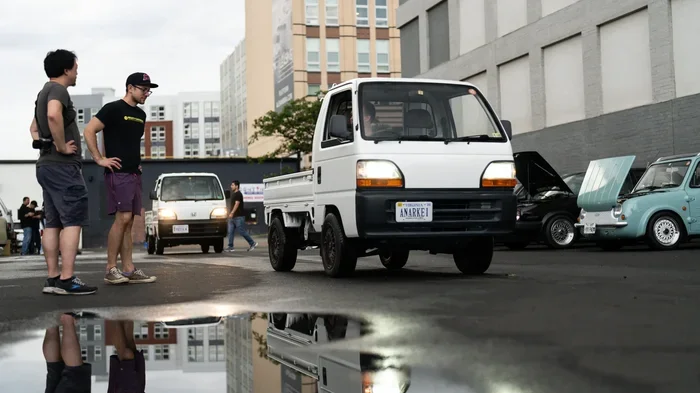
Kei trucks like the Suzuki Carry, Honda Acty, and Mitsubishi Minicab are also popular imports. These tiny work trucks are used for everything from farming to delivery services. They are incredibly fuel-efficient and easy to park. Many small businesses in rural areas of the US are starting to use imported kei trucks for local deliveries.
| Model | Engine | MPG (Est.) | Seating | Approx. Import Cost |
|---|---|---|---|---|
| Honda N-Box | 660cc Turbo | 55-65 MPG | 4 | $8,000-$14,000 |
| Suzuki Hustler | 660cc Turbo | 50-60 MPG | 4 | $7,000-$12,000 |
| Daihatsu Tanto | 660cc NA/Turbo | 50-65 MPG | 4 | $6,000-$11,000 |
| Suzuki Carry Truck | 660cc | 45-55 MPG | 2 | $5,000-$9,000 |
| Honda Acty Truck | 660cc | 40-50 MPG | 2 | $6,000-$10,000 |
Costs vary widely based on the model, condition, age, and shipping expenses. Always factor in import duties, shipping, and any compliance costs when budgeting for a kei car purchase.
Pros and Cons of Owning a Kei Car in the US
Before you dive into importing a kei car, it is important to understand both the advantages and the challenges.
The Pros
- Incredible fuel economy: Kei cars regularly achieve 45-70 MPG. That is far better than most compact cars sold in the US.
- Tiny footprint: They are perfect for city driving and tight parking spaces. You can park almost anywhere.
- Low purchase price: Many kei cars cost between $5,000 and $15,000 when imported. They are among the most affordable vehicles on the road.
- Fun to drive: Their small size and light weight make them nimble and enjoyable in urban environments.
- Low maintenance costs: Simple engines and compact parts mean repairs are often cheaper than for larger vehicles.
- Unique style: Kei cars stand out on American roads. They turn heads and start conversations everywhere you go.
The Cons
- Limited highway capability: Most kei cars struggle on highways due to low horsepower and small engines. They are best suited for city and suburban driving.
- Import complexity: Navigating EPA, NHTSA, and customs regulations can be confusing and expensive.
- Right-hand drive: Most kei cars are right-hand drive. This can feel unfamiliar for American drivers, especially on highways.
- Limited crash safety: Kei cars are small and lightweight. They may not offer the same level of crash protection as larger American vehicles.
- Parts availability: Finding replacement parts in the US can be difficult. You may need to order parts directly from Japan.
- Insurance challenges: Some insurance companies are unfamiliar with kei cars and may charge higher premiums or decline coverage altogether.
Are Kei Cars Street Legal in the US?
This is one of the most common questions people ask about kei cars in the United States. The answer depends on several factors including the vehicle’s age, its condition, and how it was imported.
If you import a kei car through the proper channels and meet all federal requirements, it is absolutely street legal. You can register it, insure it, and drive it on public roads. The key is ensuring you have the right paperwork and that the vehicle passes all required inspections.
Some states are more kei-car-friendly than others. States with large urban areas where parking is tight and fuel economy matters tend to be more receptive. California, for example, has specific emissions requirements that can make importing any vehicle challenging. Other states like Texas, Florida, and Arizona have more relaxed processes for registering imported vehicles.
One thing to keep in mind is that kei cars must still meet basic DOT safety requirements even after the 25-year exemption. This includes having proper lighting, seat belts, and a functioning odometer. You may need to make minor modifications to meet these requirements, even on older models.
Tips for Successfully Owning a Kei Car in the US
If you have decided that a kei car is right for you, here are some practical tips to make the experience smooth.
Do Your Research First
Before buying any kei car, research the specific model you want. Check its import eligibility, parts availability, and any known issues. Join online forums and communities dedicated to kei cars in the US. Other owners can share valuable advice and warn you about potential pitfalls.
Budget for Hidden Costs
The purchase price of a kei car is only the beginning. You also need to budget for shipping, customs duties, compliance modifications, registration fees, and insurance. These costs can add up quickly. A $7,000 kei car can easily become a $12,000+ project once all expenses are factored in.
Choose a Reliable Exporter
Not all exporters are created equal. Work with reputable companies that have experience shipping to the US. Ask for references, check reviews, and make sure they understand the specific requirements for kei car imports. A good exporter will guide you through the process and help you avoid costly mistakes.
Consider Your Driving Needs
Be honest about how and where you will drive your kei car. If you commute on busy highways daily, a kei car may not be the best choice. But if you use it for short city trips, grocery runs, or weekend cruising, it can be a fantastic option. Matching the vehicle to your driving habits is essential for a positive ownership experience.
Future Outlook for Kei Cars in the US
The future looks bright for kei cars in the American market. As fuel prices rise and urban areas become more crowded, demand for small, efficient vehicles continues to grow. Electric kei cars are also emerging from Japan, which could open up new possibilities for US imports.
Companies like Suzuki and Honda are already developing electric kei car models for the Japanese market. If these vehicles become available for import, they could attract a whole new wave of US buyers interested in electric micro vehicles. The combination of tiny size, electric powertrains, and incredible efficiency makes these vehicles ideal for urban commuting.
Additionally, the rise of remote work and reduced commuting needs has changed how people think about their vehicles. Many Americans now want a second car that is small, efficient, and perfect for short trips around town. Kei cars fit this role perfectly. They are affordable to buy, cheap to run, and fun to drive.
Regulations may also shift over time. The 25-year import rule is well established, but there is always the possibility of changes to EPA and NHTSA policies. Staying informed about regulatory developments will help you make smart decisions about importing a kei car.
Key Takeaways
- Kei cars are not sold new in the US: They must be imported through specific channels and meet federal regulations.
- The 25-year import rule is your best friend: Any vehicle older than 25 years can be imported without EPA or NHTSA restrictions.
- Kei cars offer amazing fuel economy: Their tiny engines deliver 50-70+ MPG in many models.
- Popular models include the Honda N-Box, Suzuki Hustler, and Daihatsu Tanto: Each offers unique features for urban driving.
- State regulations vary: Some states have additional requirements for registration and inspection.
- Importing costs can add up: Shipping, duties, and compliance modifications may increase the total price significantly.
- Kei trucks are gaining popularity: Models like the Suzuki Carry and Honda Acty are becoming sought after for their versatility.
Conclusion
Can you get kei cars in the US? Absolutely. While the process requires some effort and patience, the reward of owning one of these charming little Japanese vehicles is well worth it. Whether you are drawn to their incredible fuel economy, their compact size, or their unique character, kei cars offer something that few other vehicles can match.
The key is understanding the import process, choosing the right model, and preparing for the costs involved. Work with reputable exporters, budget for all expenses, and make sure you follow federal and state regulations. With the right approach, you can join the growing community of kei car enthusiasts in America.
Kei cars are more than just tiny vehicles. They represent a philosophy of efficient, practical, and enjoyable transportation. In a world where bigger is not always better, these little cars remind us that sometimes the smallest vehicles make the biggest impact. If you have ever dreamed of owning a piece of Japanese automotive culture, now is a great time to explore what is possible.
Start your research today. Join online communities, connect with importers, and find the kei car that speaks to you. The road to owning your first kei car is an adventure, and it is one that is well worth the journey.
Frequently Asked Questions
What is a kei car?
A kei car is a class of small Japanese vehicles regulated by the Japanese government. They have engines no larger than 660cc and must meet specific size and dimension limits. Kei cars are designed to be affordable, fuel-efficient, and perfect for navigating tight urban streets in Japan.
Are kei cars legal in the United States?
Yes, kei cars can be legally imported and driven in the US. Vehicles over 25 years old can be imported without EPA or NHTSA restrictions. Newer models must meet federal safety and emissions standards, which can involve a more complex and costly compliance process.
How much does it cost to import a kei car to the US?
Import costs vary widely depending on the model, shipping method, and compliance requirements. You should budget between $5,000 and $15,000 for the vehicle itself, plus $1,500 to $4,000 for shipping, plus customs duties and any compliance modifications. Total costs can range from $8,000 to $20,000 or more.
Can you drive a kei car on US highways?
Yes, you can drive a properly imported and registered kei car on US highways. However, most kei cars have limited horsepower and are best suited for city and suburban driving. They may struggle on steep inclines or high-speed highway stretches due to their small engines.
Do kei cars need special insurance in the US?
Kei cars do not need a special insurance policy, but some insurance companies may classify them differently due to their unusual nature. It is a good idea to get quotes from multiple insurers and make sure the company is familiar with imported micro vehicles before purchasing a policy.
What are the most popular kei car models imported to the US?
The most popular models include the Honda N-Box, Suzuki Hustler, Daihatsu Tanto, Suzuki Carry truck, and Honda Acty truck. These models are sought after for their reliability, fuel efficiency, and unique Japanese styling. Each offers a different blend of practicality and personality.