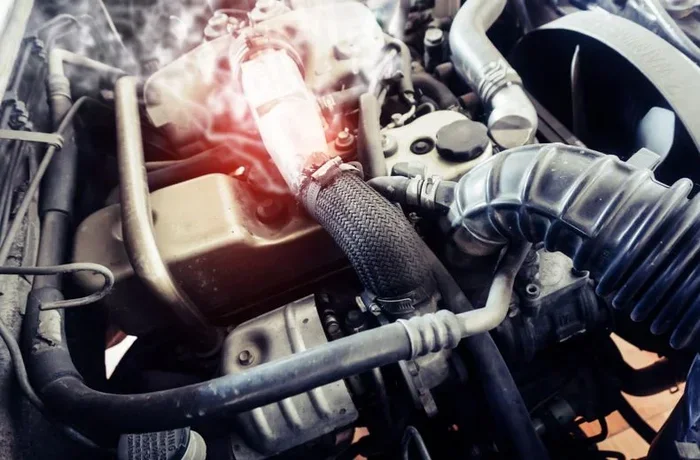
Can Old Coolant Cause Engine Overheating And Failure
Can old coolant cause engine overheating? Yes, degraded coolant loses its ability to regulate engine temperature, leading to overheating engine symptoms and potentially permanent engine failure. Regular cooling system maintenance and timely coolant flush services can prevent expensive engine overheating repair cost and keep your vehicle running safely.
Have you ever popped the hood and noticed your engine running hotter than normal? Maybe you saw steam drifting from under the hood, or your temperature gauge crept into the red zone. If this sounds familiar, you might be asking a very important question: can old coolant cause engine overheating? The short answer is yes. But the full story is more important, because understanding old coolant effects could save you from a massive repair bill or even a totaled engine.
Can old coolant cause engine overheating and failure? Absolutely. When coolant degradation sets in, your engine loses its primary line of defense against heat. The radiator fluid that once flowed freely and cooled every component now becomes acidic, contaminated, and ineffective. What follows can be a chain reaction of damage that starts small but ends catastrophically.
In this article, we will walk through exactly how old coolant causes engine overheating, what warning signs to watch for, and what you can do right now to protect your vehicle. Whether you are a seasoned DIY mechanic or someone who just wants to understand their car better, this guide covers everything you need to know about cooling system maintenance and avoiding overheating engine damage.
Key Takeaways
- Old coolant loses its heat-transfer properties: Degraded radiator fluid cannot effectively cool your engine, leading to dangerous temperature spikes.
- Corrosion and blockages build up over time: Antifreeze breakdown causes corrosion in cooling system components that restrict flow and cause overheating engine damage.
- Warning signs are easy to spot: Rising temperature gauges, steam from the hood, and sweet-smelling leaks all point to old coolant problems.
- Flushing your system regularly prevents major repairs: A proper cooling system flush every 30,000 to 50,000 miles saves thousands in engine overheating repair cost.
- Neglecting coolant changes risks permanent engine failure: Head gasket damage, warped cylinder heads, and cracked engine blocks are all possible outcomes.
- DIY coolant flush is possible but professional service is recommended: Knowing when to handle it yourself versus visiting a mechanic saves time and money.
- Prevention is always cheaper than repair: Simple cooling system maintenance keeps your engine healthy and your wallet intact.
📑 Table of Contents
- What Happens When Coolant Gets Old?
- Signs Your Old Coolant Is Causing Engine Problems
- How Old Coolant Leads to Engine Overheating
- The Damage Old Coolant Can Do to Your Engine
- How Often Should You Change Your Coolant?
- How to Flush Old Coolant From Your System
- Can Old Coolant Cause Permanent Engine Failure?
- Conclusion
What Happens When Coolant Gets Old?
Coolant is not just colorful liquid sitting in your engine block. It is a carefully engineered mixture of water, ethylene glycol, and additives designed to perform multiple jobs at once. It absorbs heat, prevents freezing, stops corrosion, and lubricates the water pump. But over time, all of those additives break down. The question then becomes: what exactly is happening inside that coolant reservoir as the fluid ages?
The Chemistry of Degrading Coolant
When fresh coolant enters your system, it has a balanced pH level and a healthy concentration of protective chemicals. These additives form a thin barrier inside your radiator, hoses, and engine passages. That barrier prevents metal surfaces from corroding and keeps deposits from building up.
As months and miles add up, the antifreeze breakdown process begins. The ethylene glycol starts to oxidize. The pH level shifts, becoming more acidic. Additives that prevent scale and deposits get used up. The once-protective fluid turns into something that actively harms your cooling system.
Here is what degrading radiator fluid does over time:
- The pH drops, making the fluid acidic and corrosive.
- Additives that prevent scale wear away completely.
- Metal particles from corroded components mix into the fluid.
- The fluid becomes thicker and less efficient at transferring heat.
- Rubber hoses and seals deteriorate faster from chemical breakdown.
All of these changes reduce the fluid’s ability to carry heat away from the engine. And that is exactly where can old coolant cause engine overheating becomes a real, measurable problem.
How Long Does Coolant Actually Last?
Many car owners assume coolant is a “fill it and forget it” fluid. That is a dangerous mistake. Traditional green coolant typically lasts about 24,000 miles or two years. Extended-life coolants, which are often orange or purple, can last up to 60,000 miles or five years. But these numbers are guidelines, not guarantees.
Driving conditions play a huge role. If you frequently drive in stop-and-go traffic, tow heavy loads, or operate in extreme heat, your coolant degrades faster. Short trips are especially hard on coolant because the engine never reaches full operating temperature long enough to boil off accumulated moisture and contaminants.
The best way to know the condition of your radiator fluid is to test it. A simple coolant tester from any auto parts store measures the freezing point, boiling point, and pH level. If the numbers are off, it is time for a cooling system flush.
Signs Your Old Coolant Is Causing Engine Problems
One of the trickiest things about old coolant is that it does not always announce itself with a dramatic breakdown. Often, the problems build slowly over weeks or months. Catching the early overheating engine symptoms can mean the difference between a simple coolant flush and a very expensive repair.
Temperature Gauge Readings to Watch For
Your temperature gauge is the most direct signal your car gives you about cooling system health. A normal engine runs between 195 and 220 degrees Fahrenheit. If you notice the needle creeping higher than usual, especially on hot days or during heavy driving, do not ignore it.
Some drivers notice the gauge runs fine at highway speeds but climbs into the red during city driving or idle. This pattern often points to a cooling system that is struggling to dissipate heat, which is a classic sign of degraded coolant. The fluid has lost its thermal efficiency, and the system simply cannot move heat away from the engine fast enough.
Visual Clues Under the Hood
You do not need a mechanic’s expertise to spot some old coolant warning signs. Open the hood and look for these clues:
- Discolored coolant: Fresh coolant is bright green, orange, or pink. Old coolant turns brown, rusty, or muddy.
- Rust or scale buildup: Visible deposits around the radiator cap or on coolant hoses signal internal corrosion.
- Sweet smell: A sweet, syrupy odor near the engine often means a coolant leak from degraded seals or hoses.
- Steam or vapor: Any white steam from under the hood is a serious sign that coolant is boiling or leaking onto hot engine parts.
- Low coolant level: Frequent top-offs without an obvious external leak suggest internal consumption or evaporation from overheating.
If you notice any of these signs, address them quickly. The longer degraded radiator fluid stays in the system, the more damage it can cause.
How Old Coolant Leads to Engine Overheating
Now let us get to the core question: can old coolant cause engine overheating, and exactly how does it happen? The answer involves several interconnected mechanisms, all of which trace back to the breakdown of the coolant itself and the damage it causes to cooling system components.
Reduced Heat Transfer Efficiency
The primary job of coolant is to absorb heat from the engine and carry it to the radiator, where it gets released into the air. Fresh coolant does this job remarkably well. It has excellent thermal conductivity and flows smoothly through narrow passages.
Old coolant, on the other hand, has lost much of its heat-transfer ability. The chemical breakdown products are less efficient at absorbing and releasing heat. The fluid may also contain suspended particles that act as insulators rather than conductors. The result is that the engine runs hotter than it should, even when the radiator fan and thermostat are working correctly.
Think of it like trying to cool a hot pan with dirty, lukewarm water versus fresh cold water. The dirty water simply cannot pull the heat away as effectively. Your engine faces the same problem with degraded radiator fluid.
Corrosion and Blockages in the Cooling System
This is where old coolant causes the most insidious damage. As the fluid becomes acidic, it starts eating away at metal surfaces inside the cooling system. The radiator, water pump, heater core, and engine coolant passages all suffer from this corrosion.
The corrosion produces rust particles and scale that circulate through the system. Over time, these particles accumulate in narrow passages, clog the radiator fins, and restrict flow through the coolant reservoir and hoses. A partially blocked cooling system cannot move enough fluid to keep the engine cool, even if the water pump is working perfectly.
Blocked radiator hoses are another common problem. Old coolant degrades the rubber from the inside out, causing the hoses to become brittle, swollen, or partially collapsed. A collapsed hose restricts flow and creates hotspots in the engine.
Thermostat Failure and Cooling Fan Issues
Degraded coolant also affects the thermostat, which is the valve that controls coolant flow based on engine temperature. Corrosion and scale can cause the thermostat to stick open or closed. A stuck-closed thermostat prevents coolant from reaching the radiator at all, causing rapid overheating. A stuck-open thermostat keeps the engine running too cool, reducing fuel efficiency and causing excessive wear.
Similarly, the cooling fans rely on proper coolant flow and temperature signals to activate. When old coolant causes erratic temperature readings, the fans may not kick on when needed. This cooling fan malfunction compounds the overheating problem, especially at low speeds or when idling.
The Damage Old Coolant Can Do to Your Engine
So far we have talked about how old coolant leads to overheating. But what happens when overheating is left unchecked? The damage can progress rapidly and become extremely expensive. Understanding the potential consequences makes the case for regular cooling system maintenance even stronger.
Head Gasket Failure
The head gasket sits between the engine block and the cylinder head, sealing combustion chambers and keeping coolant and oil in their proper channels. When the engine overheats repeatedly, the metal expands beyond normal tolerances. This can warp the mating surfaces and blow the head gasket.
A blown head gasket is one of the most serious engine overheating repair cost scenarios. Symptoms include white smoke from the exhaust, coolant mixing with oil, bubbles in the coolant reservoir, and loss of engine power. Repairing a head gasket often requires removing the cylinder head, machining it flat, and replacing multiple gaskets and seals.
In many cases, head gasket damage from overheating is entirely preventable with proper cooling system flush intervals and fresh radiator fluid.
Warped Cylinder Heads and Cracked Engine Blocks
When overheating becomes severe or repeated, the cylinder head can warp. Aluminum heads are especially vulnerable because aluminum expands and contracts more than cast iron. A warped head loses its seal, leading to compression loss, oil leaks, and coolant intrusion into combustion chambers.
In the worst cases, the engine block itself can crack. Cracks in the block allow coolant to leak into oil passages, cylinders, or the outside of the engine. A cracked engine block often means the engine needs to be replaced entirely, or at minimum, rebuilt at a cost that can exceed the vehicle’s value.
This is the terrifying end result of ignoring the question: can old coolant cause engine overheating and failure? Yes, and the failure can be total.
Water Pump and Radiator Damage
The water pump circulates coolant through the engine and radiator. Its internal seals and impeller depend on clean, non-corrosive fluid to function properly. Acidic, degraded coolant corrodes the pump impeller and housing, leading to water pump failure. A failed water pump means zero coolant circulation, which means immediate and severe overheating.
The radiator itself suffers from internal corrosion when old coolant circulates through it. Scale buildup on the radiator tubes reduces heat exchange efficiency. External debris and road salt compound the problem. A damaged radiator cannot cool the fluid adequately, creating a vicious cycle of rising temperatures and further degradation.
How Often Should You Change Your Coolant?
Prevention is always better than cure, and this is especially true when it comes to cooling system maintenance. The question of how often to change coolant depends on several factors, but the general rule is simple: do not wait for problems to appear.
Manufacturer Recommendations vs. Real-World Conditions
Your vehicle owner’s manual provides the baseline recommendation. For most cars, this falls between 30,000 and 60,000 miles for conventional coolant, and up to 100,000 miles for extended-life formulations. However, these numbers assume ideal driving conditions.
Real-world driving often falls short of those ideal conditions. If any of the following apply to you, consider changing your coolant more frequently:
- You drive mostly in stop-and-go city traffic.
- You live in a hot climate or frequently drive in extreme heat.
- You tow trailers, carry heavy loads, or haul equipment.
- You frequently take short trips under five miles.
- Your vehicle has high mileage with unknown coolant service history.
- You notice any overheating engine symptoms or coolant leak signs.
A good rule of thumb is to have the coolant tested every 12 months or 15,000 miles. A coolant tester takes seconds to use and gives you an accurate picture of the fluid’s condition. If the pH is low, the freeze point is off, or the color has darkened, schedule a cooling system flush.
How to Flush Old Coolant From Your System
Once you have determined that your radiator fluid needs replacing, the next step is removing the old fluid completely. A simple drain and refill is not enough. A proper cooling system flush removes all traces of degraded fluid, rust, and scale from every passage in the system.
DIY Coolant Flush Steps
If you are comfortable working on your vehicle, you can perform a coolant flush at home. Here is a step-by-step approach:
- Let the engine cool completely. Never work on a hot cooling system.
- Locate the drain plug on the radiator and place a catch pan underneath.
- Open the drain plug and allow the old coolant to flow out completely.
- Close the drain plug and fill the system with distilled water.
- Start the engine and let it run for 10 to 15 minutes with the heater on full.
- Turn off the engine, let it cool, and drain the water again.
- Repeat the water flush until the water runs clear.
- Close the drain plug and refill with the correct coolant mixture (typically 50/50 coolant to distilled water).
- Bleed the system to remove air pockets, following your vehicle’s specific procedure.
- Check the coolant reservoir level after the engine reaches operating temperature.
Always dispose of old coolant properly. Radiator fluid is toxic to animals and harmful to the environment. Take it to a recycling center or auto parts store that accepts used fluids.
When to See a Professional Mechanic
While a DIY flush works for many vehicles, some situations call for professional help. If your system has significant rust buildup, if the radiator is suspected to be clogged, or if you have already experienced overheating damage, a professional mechanic has the tools and expertise to handle complex flushes. They can also pressure-test the system for hidden coolant leaks and inspect components like the water pump and thermostat for wear.
The engine overheating repair cost for a professional flush is typically much lower than the cost of repairing damage caused by neglected coolant. A flush might cost $100 to $200, while a head gasket repair can run $1,000 to $2,000 or more.
Can Old Coolant Cause Permanent Engine Failure?
This is the question that keeps car owners up at night, and the honest answer is yes, it can. But it does not happen overnight. Overheating engine damage builds up over time, and the progression from degraded coolant to permanent engine failure follows a predictable path.
First, old coolant loses its protective additives. Then corrosion begins inside the cooling system. Scale and rust restrict coolant flow. The engine runs hotter than designed. The thermostat and water pump struggle to compensate. Temperatures climb. Seals fail. Gaskets blow. Metal warps. And finally, the engine suffers catastrophic failure.
The key takeaway is that this progression is entirely preventable. Regular cooling system flush intervals and consistent cooling system maintenance stop the chain reaction before it reaches the point of no return. You do not have to wait for overheating engine symptoms to become severe. By the time you notice steam or a rising temperature gauge, damage may already be underway.
Take a proactive approach. Check your coolant level monthly. Test the fluid quality every year. Follow the flush schedule in your owner’s manual, or more often if your driving conditions are harsh. These simple habits are the best defense against the devastating question of whether can old coolant cause engine overheating and failure.
The bottom line is straightforward: fresh coolant is cheap insurance. Degraded coolant is a ticking time bomb. Your engine depends on that radiator fluid to survive. Treat it with the respect it deserves, and your engine will reward you with years of reliable, cool running.
Conclusion
The answer to can old coolant cause engine overheating and failure is a definitive yes. Degraded coolant loses its ability to transfer heat, becomes corrosive, and triggers a cascade of damage that can end in complete engine overheating failure. From reduced heat transfer efficiency to head gasket damage and cracked engine blocks, the consequences of neglecting your cooling system maintenance are severe and expensive.
But here is the good news: this is one of the most preventable problems in automotive care. A regular cooling system flush, periodic coolant testing, and attention to early overheating engine symptoms can keep your engine running cool and healthy for hundreds of thousands of miles. The small effort and modest cost of changing your radiator fluid on schedule pays for itself many times over by avoiding the engine overheating repair cost of a catastrophic failure.
Do not wait for your engine to tell you it is in trouble. Check your coolant, watch for warning signs, and stay ahead of antifreeze breakdown. Your engine will thank you.
Frequently Asked Questions
How do I know if my coolant is old and needs replacing?
Check the color and condition of your coolant. Fresh coolant is bright green, orange, or pink. If it has turned brown, rusty, or muddy, it is degraded. You can also use a coolant tester to measure the pH level, freezing point, and boiling point. If any of these readings are outside the manufacturer’s range, it is time for a cooling system flush.
What happens if I drive with old coolant for too long?
Driving with old coolant allows corrosion, scale, and acidic byproducts to damage your cooling system from the inside. Over time, this leads to restricted coolant flow, water pump failure, thermostat failure, and eventually engine overheating. The longer you wait, the higher the risk of permanent overheating engine damage like a blown head gasket or cracked engine block.
Can I just top off old coolant with fresh coolant?
Topping off is a temporary fix, not a solution. Mixing old, degraded radiator fluid with fresh coolant dilutes the protective additives but does not remove the corrosion, scale, and contaminants already in the system. Eventually, you need a complete cooling system flush to fully replace the old fluid and protect your engine.
How much does it cost to fix engine overheating caused by old coolant?
The engine overheating repair cost varies widely depending on the damage. A coolant flush costs $100 to $200. A new thermostat runs $150 to $300. A water pump replacement can be $300 to $750. A head gasket repair typically costs $1,000 to $2,000 or more. A cracked engine block or seized engine can mean replacement costs of $3,000 to $5,000 or more. Regular cooling system maintenance is far cheaper than any of these repairs.
Is it safe to drive if my temperature gauge is rising?
No. A rising temperature gauge is a serious warning sign. Pull over safely, turn off the engine, and let it cool. Continuing to drive with an overheating engine can cause head gasket damage, warped cylinder heads, and cracked blocks within minutes. Have your vehicle towed to a mechanic if needed. Ignoring this sign is how old coolant leads to complete engine failure.
What type of coolant should I use for my vehicle?
Always use the coolant type specified in your vehicle owner’s manual. Modern vehicles often require OAT (Organic Acid Technology) or HOAT (Hybrid Organic Acid Technology) coolants. Using the wrong type can cause corrosion in cooling system components and reduce the effectiveness of your radiator fluid. When in doubt, consult your dealer or a trusted mechanic.