California Window Tint Law Your Ultimate Guide Revealed
California window tint law sets specific limits on how dark or reflective your car windows can be. Understanding these rules helps you avoid costly fines and keeps your vehicle street legal. This guide covers every window, medical exemptions, and tips for choosing compliant tint.
Driving a car with tinted windows feels great. It looks sleek, keeps the interior cool, and adds privacy. But in California, window tinting is not just a style choice. It is a legal matter. The California Window Tint Law sets clear rules on how dark or reflective your windows can be. If you break those rules, you could face fines, failed inspections, or even get pulled over.
This guide breaks down everything you need to know. We will cover legal tint limits for each window, medical exemptions, penalties, and practical tips. Whether you are tinting a new car or checking your current setup, this article has you covered. Let us dive in.
Key Takeaways
- Front windshield tint: Only a non-reflective strip at the top is allowed.
- Front side windows: Must allow more than 70% of light in (VLT).
- Rear windows: Can be darker, but dual side mirrors are required.
- Medical exemption: Available with a doctor’s prescription and permit.
- Penalties: Fines start around $25 and can increase for repeat violations.
- Tint type matters: Reflective and metallic tints face extra restrictions.
- Certified installers: Help ensure your tint meets all legal standards.
📑 Table of Contents
What Is the California Window Tint Law?
The California Window Tint Law is part of the California Vehicle Code. It regulates the darkness and reflectiveness of window film on passenger vehicles. The law uses a measurement called Visible Light Transmission, or VLT. VLT tells you how much light passes through your window tint. A higher VLT means more light gets in. A lower VLT means the tint is darker.
California is stricter than many other states when it comes to tint darkness. The rules differ depending on which window you are tinting. The front windshield and front side windows have the tightest limits. The rear windows have more flexibility, but only if your car has dual side mirrors.
Understanding these rules is the first step. Ignorance of the law is not a valid excuse at a traffic stop. Knowing what is legal keeps you safe and saves you money.
Why Tint Regulations Exist
You might wonder why the government cares so much about window tint. There are good reasons. Dark tints can reduce a driver’s visibility, especially at night. They can also make it harder for law enforcement to see inside your vehicle during a traffic stop. Reflective tints can blind other drivers in bright sunlight. These safety concerns are exactly why the California Window Tint Law exists.
Legal Tint Limits by Window
Here is where it gets specific. Each window on your car has its own legal limit. Let us break it down window by window.
Front Windshield Rules
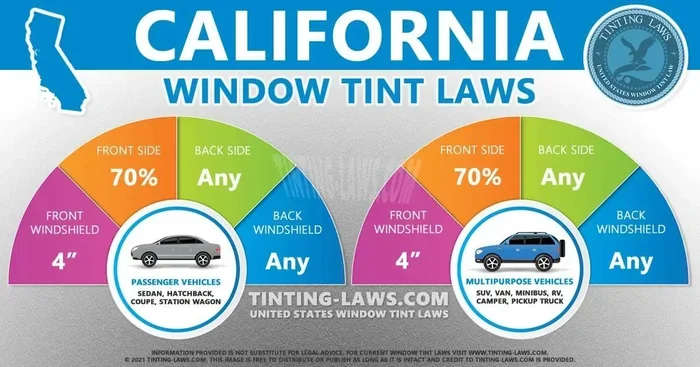
The front windshield has the most restrictions. You cannot tint the entire windshield. The law only allows a non-reflective tint strip at the top. This strip must be above the manufacturer’s AS-1 line or the top four inches of the windshield, whichever comes first. The tint on this strip must not be more than 70% reflective. This means it should look mostly clear.
Any tint below the AS-1 line on the front windshield is illegal. This is one of the most common violations. Many people do not realize the front windshield has such strict limits.
Front Side Window Limits
The front side windows must allow at least 70% of visible light to pass through. In VLT terms, this means your tint must have a VLT of 70% or higher. Most factory tints already meet this requirement. However, if you add aftermarket tint film, you need to be careful. Even a light tint can drop your VLT below 70% and put you over the legal limit.
This is why many California drivers choose very light tint films or skip tinting the front sides altogether. The safest approach is to measure your tint’s VLT before installation.
Rear Side and Rear Window Rules
Good news for rear windows. The California Window Tint Law allows darker tints on the rear side windows and rear windshield. There is no minimum VLT requirement for these windows. You can go as dark as you want. However, there is one catch. If your rear windows are tinted, your car must have dual side mirrors. This ensures the driver can still see behind the vehicle.
This rule applies to all passenger vehicles registered in California. It does not matter if you drive a sedan, SUV, or truck. The dual mirror requirement stays the same.
Medical Exemptions and Special Permits
Not everyone can tolerate regular levels of sunlight. Some people have medical conditions that make them very sensitive to UV light or bright sun. For these individuals, California offers a tint exemption. This is an important part of the California Window Tint Law that many people do not know about.
Who Qualifies for a Tint Exemption?
You may qualify for a medical exemption if you have a condition that requires limited sun exposure. Common qualifying conditions include:
- Lupus and other autoimmune disorders
- Severe photosensitivity
- Skin cancer or a history of skin cancer
- Retinal diseases that increase light sensitivity
- Certain medications that cause sun sensitivity
A licensed physician must provide documentation. This is not something you can claim on your own. The doctor must write a detailed statement explaining your condition and why darker tint is medically necessary.
How to Apply for a Medical Exemption
Getting a medical exemption involves a few steps. First, visit your doctor and get a written prescription. Second, submit the documentation to the California Department of Motor Vehicles. The DMV will review your application and issue a special permit if approved. This permit must be kept in the vehicle at all times. During a traffic stop, you should present this permit along with your registration.
Keep in mind that even with an exemption, there are limits. The exemption allows for darker tint than the standard law, but it does not permit completely opaque windows. The tint must still allow enough light for safe driving.
Expert Insight: “Many drivers with medical conditions do not know an exemption exists,” says automotive safety expert Mark Daniels. “Always check with your doctor first. Then contact the DMV for the proper application. It is a straightforward process that can make a big difference for your comfort and health.”
Types of Window Tint Films
Not all window tint films are the same. Different materials offer different levels of darkness, heat rejection, and glare reduction. Understanding your options helps you choose a tint that is both legal and effective.
Ceramic vs. Dyed vs. Metallic Tint
There are three main types of car window film on the market. Each has pros and cons.
- Ceramic tint: This is the premium option. It blocks heat and UV rays without interfering with electronic signals. Ceramic tint is non-metallic, so it does not cause glare for other drivers. It is also very durable and does not fade over time.
- Dyed tint: This is the most affordable option. It uses dye layers to absorb heat and darken the window. However, dyed tint fades over time and offers less heat rejection than ceramic.
- Metallic tint: This film contains tiny metal particles that reflect heat and light. It looks shiny and offers good heat rejection. But it can interfere with GPS, cell phone signals, and toll transponders. Metallic tint also has stricter legal limits in California.
What Tint Do Professionals Recommend?
Most professional tint installers in California recommend ceramic or high-quality dyed films. These options offer excellent performance while staying within legal limits. Ceramic tint is especially popular because it provides strong heat rejection without going dark enough to violate the law.
When choosing a tint, always ask your installer about the VLT rating. They should be able to tell you exactly how dark the film is. This helps you stay compliant with the California Window Tint Law from day one.
| Tint Type | Heat Rejection | Signal Interference | Durability | Cost Level |
|---|---|---|---|---|
| Ceramic | Excellent | None | High | High |
| Dyed | Moderate | None | Low to Medium | Low |
| Metallic | Good | Moderate | Medium | Medium |
Penalties for Illegal Tint in California
Getting caught with illegal tint in California is not a minor issue. The penalties can add up quickly. Here is what you need to know.
First-Time Offense vs. Repeat Violations
A first-time offense for illegal window tint typically results in a fine. The base fine is around $25, but with penalties and fees, the total cost can be higher. Some drivers report paying between $100 and $200 for a single tint ticket. This depends on the county and the severity of the violation.
Repeat violations carry heavier penalties. If you have been cited before for the same issue, the fine increases. In some cases, officers may also require you to remove the illegal tint before your vehicle can pass inspection. This means additional costs for tint removal and re-tinting with compliant film.
How to Fix an Illegal Tint Ticket
If you receive a tint ticket, you have options. You can pay the fine and move on. Or, you can remove the illegal tint and get your windows re-tinted to meet legal standards. Many drivers choose the second option. It avoids future tickets and keeps your vehicle compliant.
Some counties offer a tint refund if you can prove you have corrected the violation. Check with your local court or DMV for the specific process in your area.
Common Mistakes: Many drivers assume that because the tint looks fine during the day, it is legal. But tint darkness is measured by VLT, not by how it looks to the eye. Always verify your tint’s VLT rating with a professional measurement tool.
Tips for Choosing Compliant Window Tint
Tinting your windows does not have to be stressful. With the right approach, you can enjoy the benefits of tint while staying fully legal. Here are some practical tips.
Working with a Licensed Tint Installer
Always choose a reputable tint installer who understands California regulations. A licensed professional will know the legal VLT limits for each window. They can recommend films that meet your style preferences and stay within the law.
Before you commit, ask the installer these questions:
- What is the VLT rating of this film?
- Is this film compliant with California law?
- Do you provide a certificate of compliance?
- Can you show me the tint’s light transmission specs?
A good installer will answer these questions confidently. If they seem unsure, that is a red flag.
Quick Tips for Staying Compliant
- Measure before you tint. Know your current VLT before adding any film.
- Keep receipts and documentation. Save your tint purchase receipt and any compliance certificates.
- Check local enforcement. Some California counties enforce tint laws more strictly than others.
- Do not assume factory tint is compliant. Even factory tint can sometimes fall below legal limits on certain vehicles.
- Inspect your tint regularly. Tint can fade or bubble over time, changing its VLT rating.
Pro Tip: “The safest approach is to tint your rear windows darker and keep your front windows at 70% VLT or higher,” advises licensed installer Sarah Chen. “This gives you the look you want without risking a ticket. It is the sweet spot between style and compliance.”
Common Myths About California Window Tint
There are many misconceptions about window tinting in California. Let us clear up a few of the most common ones.
- Myth: You can tint the entire windshield. False. Only the top strip above the AS-1 line is allowed.
- Myth: Dark tint is fine if you have dual mirrors. The dual mirror rule only applies to rear windows. Front side windows still must be above 70% VLT.
- Myth: Tint tickets are just warnings. They are actual citations with fines. Repeated violations can lead to bigger penalties.
- Myth: All tint shops know the law. Some do not. Always verify the VLT rating yourself before installation.
- Myth: Medical exemptions let you tint any window any darkness. Exemptions have limits. They do not permit completely opaque windows.
Knowing the truth about these myths helps you make informed decisions. It also protects you from costly mistakes.
Conclusion
The California Window Tint Law may seem complex at first glance. But once you understand the basics, it is easy to follow. The front windshield gets a small non-reflective strip. The front side windows must stay above 70% VLT. The rear windows can be as dark as you want, provided you have dual side mirrors. Medical exemptions offer a lifeline for those with genuine health needs.
Choosing the right window tint film and working with a licensed tint installer makes all the difference. Stay informed, keep your documentation handy, and always verify your tint’s VLT rating. Compliance is not just about avoiding fines. It is about safety on the road for you and everyone around you.
Take the time to understand the rules. Your wallet and your peace of mind will thank you. Enjoy your tinted windows the right way, and drive with confidence knowing you are following the law.
Frequently Asked Questions
What is the legal tint percentage for front side windows in California?
Front side windows must allow at least 70% of visible light to pass through. This means your tint must have a VLT of 70% or higher. Any tint darker than this on the front side windows is considered illegal and can result in a fine.
Can I get a ticket for illegal window tint in California?
Yes, you can. Law enforcement officers can pull you over if they observe illegal tint. Fines typically start around $25 for the base fine but can increase with additional fees. Repeat violations may lead to higher fines and mandatory tint removal.
How do I get a medical exemption for window tint in California?
You need a written prescription from a licensed physician explaining your medical condition. Submit this documentation to the California DMV for review. If approved, you will receive a special permit that must be kept in your vehicle at all times.
Is reflective tint allowed on any windows in California?
Reflective tint is allowed on the top strip of the front windshield only, and it must not exceed 70% reflectivity. Reflective tint on other windows is generally not permitted and can result in a citation. Always check the specific regulations before applying reflective film.
Do rear windows need dual mirrors if they are tinted?
Yes. If your rear side windows or rear windshield are tinted, your vehicle must have dual side mirrors. This ensures the driver has adequate visibility behind the vehicle. Without dual mirrors, even legal tint on the rear windows can result in a violation.
What happens if I fail a smog or inspection due to illegal tint?
Illegal tint can cause your vehicle to fail a smog or safety inspection. You will need to remove the non-compliant tint and re-tint your windows to meet legal standards. Once corrected, you can re-submit for inspection. Some counties may also require a follow-up verification.