Are Toyota Tundras Good on Gas Compared to Other Trucks
Are Toyota Tundras good on gas? The short answer is they hold their own among full-size trucks, but they aren’t the most fuel-efficient options on the market. The Toyota Tundra delivers competitive fuel economy for a half-ton truck, especially with the newer hybrid powertrain. When you compare Tundra gas mileage to the Ford F-150, Ram 1500, and Chevrolet Silverado, the results are closer than most people expect. This guide breaks down real-world truck MPG, towing impact, and what you can do to get the best miles per gallon from your Tundra.
Let’s talk about something every truck buyer thinks about but nobody wants to admit they care about: gas mileage. When you’re shopping for a Toyota Tundra, the question always comes up. Are Toyota Tundras good on gas? It sounds simple enough, but the answer depends on a lot of factors. The year matters. The engine matters. And honestly, how you drive matters too.
Full-size trucks have a reputation for guzzling fuel. That’s not entirely unfair. But the Toyota Tundra has come a long way over the years. The newer models, especially the hybrid versions, surprised a lot of people with their fuel efficiency. So let’s break it all down. We’ll look at real numbers, compare the Tundra to its biggest competitors, and give you practical tips to squeeze every mile out of each gallon.
Key Takeaways
- The Toyota Tundra offers solid fuel economy for a full-size truck, especially with the newer i-FORCE MAX hybrid engine.
- Real-world MPG varies based on driving habits, towing loads, and terrain.
- The Tundra hybrid model significantly improves gas mileage compared to the standard V8 version.
- Competitors like the Ram 1500 and Ford F-150 sometimes edge ahead in fuel efficiency, but the gap is smaller than you might think.
- Simple driving tips can boost your Tundra’s fuel economy by 10-20%.
- Towing heavy loads will always reduce gas mileage, regardless of the truck.
- The Tundra holds its value well, which offsets slightly higher fuel costs over time.
📑 Table of Contents
- Understanding Toyota Tundra Fuel Economy
- Toyota Tundra vs. Ford F-150: The Gas Mileage Showdown
- Toyota Tundra vs. Ram 1500: Who Sips Fuel Better?
- Toyota Tundra vs. Chevrolet Silverado: The MPG Battle
- How Towing Affects Toyota Tundra Gas Mileage
- Tips to Improve Your Toyota Tundra’s Gas Mileage
- Is the Toyota Tundra Worth It for Fuel-Conscious Buyers?
- Common Mistakes That Hurt Tundra Fuel Economy
- Expert Insights on Tundra Fuel Economy
Understanding Toyota Tundra Fuel Economy
Before we compare the Tundra to other trucks, let’s understand what it actually gets. The Toyota Tundra gas mileage depends heavily on the model year and engine type. The older generations, particularly the 2007 through 2021 models with the 5.7-liter V8, were not known for being fuel sippers. But the 2022 and newer models changed the game.
Engine Options and Their Impact on Gas Mileage
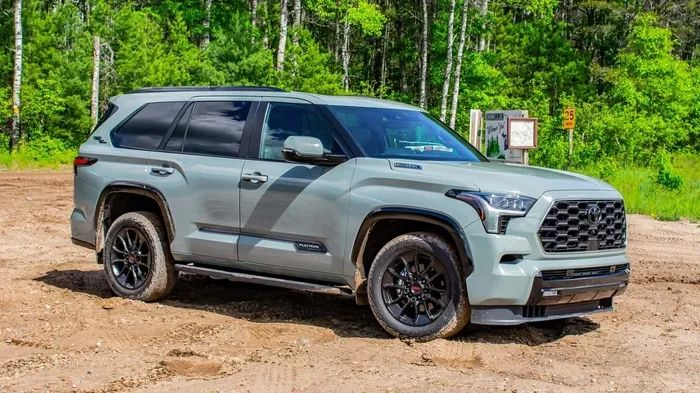
The current Tundra offers two main powertrains. The standard i-FORCE 3.4-liter twin-turbo V6 produces 389 horsepower. Then there’s the i-FORCE MAX hybrid version that pairs that same engine with an electric motor for a combined 437 horsepower. Both engines use regular unleaded fuel, which is a nice perk.
Here’s where it gets interesting. The hybrid system doesn’t just add power. It also improves fuel economy. The standard V6 Tundra gets around 20 mpg in the city and 24 mpg on the highway. The hybrid version bumps those numbers up to roughly 22 mpg city and 26 mpg highway. Those numbers put the Tundra in a competitive spot among full-size trucks.
Real-World MPG Expectations
Manufacturer estimates are one thing. Real-world results are another. Most Tundra owners report getting somewhere between 16 and 22 mpg depending on conditions. City driving tends to drop the numbers. Highway cruising keeps them steadier. And if you’re towing a trailer, expect the numbers to fall noticeably.
Here are some factors that affect your Tundra’s actual miles per gallon:
- Driving style — Aggressive acceleration burns more fuel.
- Towing weight — Heavier loads reduce efficiency significantly.
- Terrain — Hilly or mountainous roads use more gas.
- Weather conditions — Cold weather lowers fuel economy.
- Tire pressure — Underinflated tires create more rolling resistance.
- Payload — More weight in the bed means more fuel consumed.
- Speed — Highway speeds above 70 mph reduce efficiency.
The bottom line is that the Tundra delivers respectable truck MPG for what it is. It’s not a compact truck, and it doesn’t pretend to be. But it doesn’t waste fuel either.
Toyota Tundra vs. Ford F-150: The Gas Mileage Showdown
The Ford F-150 is the best-selling truck in America for a reason. It’s also one of the most popular choices for people who want a truck without paying a premium at the pump. So how does the Tundra vs F-150 gas mileage comparison stack up?
Engine and Efficiency Comparison
The F-150 offers a wider range of engines than the Tundra. You can get a 3.3-liter V6, a 2.7-liter EcoBoost V6, a 5.0-liter V8, a 3.5-liter EcoBoost V6, and even a hybrid PowerBoost version. That variety gives Ford more options for fuel efficiency.
The F-150’s base 3.3-liter V6 gets around 20 mpg city and 26 mpg highway. The 2.7-liter EcoBoost matches the Tundra’s standard V6 pretty closely. But the real competitor to the Tundra hybrid is the F-150 PowerBoost hybrid, which delivers about 24 mpg city and 30 mpg highway.
So does the F-150 win on gas? In the hybrid category, yes, it has a slight edge. But the non-hybrid versions are very close. The Tundra holds its own surprisingly well.
What Owners Say About Fuel Costs
Truck forums are full of debates about this. Many F-150 owners report slightly better real-world fuel economy than Tundra owners. But the difference is often just 1 to 3 mpg. Over a year of driving, that might mean $200 to $400 in savings. Not enough to make or break a buying decision for most people.
Toyota Tundra vs. Ram 1500: Who Sips Fuel Better?
The Ram 1500 is known for its smooth ride and refined interior. It’s also often praised for being one of the more fuel-efficient full-size trucks. So how does it compare to the Tundra?
Engine Choices and MPG Ratings
The Ram 1500 offers a 3.6-liter V6, a 5.7-liter HEMI V8, a 3.0-liter diesel V6, and a mild-hybrid eTorque system. The base V6 gets around 19 mpg city and 24 mpg highway. The eTorque mild-hybrid version improves that slightly. But the real fuel economy star in the Ram lineup is the 3.0-liter EcoDiesel, which can reach 22 mpg city and 32 mpg highway.
Compared to the Tundra, the Ram has a slight advantage in some configurations. The diesel engine is remarkably efficient for a truck. But the Tundra hybrid still competes well, especially for drivers who don’t want to deal with diesel fuel costs and maintenance.
Which Truck Costs Less to Fuel?
Let’s talk numbers. Assuming 15,000 miles driven per year and gas at $3.50 per gallon:
- Toyota Tundra hybrid (24 combined mpg) — roughly $2,188 per year in fuel.
- Ford F-150 PowerBoost (27 combined mpg) — roughly $1,944 per year.
- Ram 1500 eTorque V6 (21 combined mpg) — roughly $2,500 per year.
- Ram 1500 EcoDiesel (27 combined mpg) — roughly $1,944 per year.
The Tundra hybrid sits comfortably in the middle of the pack. It’s not the cheapest to fuel, but it’s far from the most expensive. And remember, the Tundra also has strong resale value, which helps offset fuel costs over the long run.
Toyota Tundra vs. Chevrolet Silverado: The MPG Battle
The Silverado is another heavyweight in the full-size truck segment. Chevrolet offers turbocharged four-cylinder, V6, and V8 engines, plus a new hybrid option. How does the Tundra measure up?
Comparing Fuel Economy Numbers
The base Silverado 1500 with the 2.7-liter turbo four-cylinder gets about 20 mpg city and 23 mpg highway. The 5.3-liter V8 drops to around 16 mpg city and 23 mpg highway. The Silverado hybrid, which uses a 3.0-liter Duramax diesel, achieves approximately 23 mpg city and 29 mpg highway.
The Tundra hybrid still holds its own here. The numbers are close, and the Tundra often feels more responsive in daily driving. Both trucks are capable, but the Tundra’s fuel efficiency is right there with the competition.
The Hybrid Advantage
One thing worth noting is that Toyota was late to the hybrid truck game. The Tundra hybrid only arrived for the 2022 model year. But it made a strong impression. The hybrid system works seamlessly, and the miles per gallon improvement over the non-hybrid version is meaningful. Ford and Ram have had hybrid options for a while, but Toyota’s entry proved that the Tundra could compete on gas mileage too.
How Towing Affects Toyota Tundra Gas Mileage
Let’s address the elephant in the room. If you’re buying a truck, you probably plan to tow something. And towing has a massive impact on fuel economy. No truck is good on gas when it’s pulling a heavy trailer. But some trucks handle the load better than others.
Towing Capacity vs. Fuel Economy
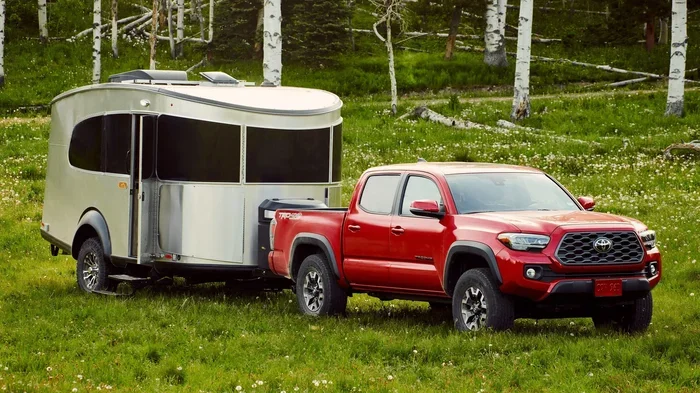
The Tundra can tow up to 12,000 pounds when properly equipped. That’s solid for a half-ton truck. But towing that weight will drop your MPG by 3 to 6 mpg, depending on the load. If you’re towing 10,000 pounds down a mountain pass, don’t expect to see 20 mpg on the dashboard.
Here’s what you can expect when towing with a Tundra:
- Light trailer (up to 5,000 lbs) — MPG drops by about 2-3 mpg.
- Medium trailer (5,000-8,000 lbs) — MPG drops by about 3-5 mpg.
- Heavy trailer (8,000-12,000 lbs) — MPG drops by 5-7 mpg or more.
The key takeaway is that the Tundra’s towing fuel economy is in line with what other full-size trucks deliver. It’s not worse, and it’s not better. It’s honest and predictable.
Tips for Better Fuel Economy While Towing
If you tow regularly with your Tundra, these tips can help you save fuel:
- Keep your speed steady — Use cruise control on flat highways.
- Avoid sudden braking and acceleration — Smooth driving saves gas.
- Use the right gear — Don’t lug the engine or over-rev it.
- Keep your trailer aligned — A misaligned trailer creates drag.
- Remove unnecessary weight — Every extra pound costs fuel.
- Check your tire pressure — Properly inflated tires reduce rolling resistance.
- Use a tonneau cover — It reduces drag on the truck bed.
Tips to Improve Your Toyota Tundra’s Gas Mileage
Want to get the best fuel economy out of your Tundra? You can take several steps that make a real difference. These aren’t complicated fixes. They’re simple habits that any Tundra owner can adopt.
Drive Smarter
Your driving style has the biggest impact on gas mileage. Accelerate gently. Coast to stops when safe. Avoid speeding. These habits alone can improve your MPG by 10 to 20 percent. It sounds too simple, but it works.
Keep Up With Maintenance
A well-maintained truck runs more efficiently. Here’s what to keep on top of:
- Oil changes — Use the recommended oil weight and change it on schedule.
- Air filters — A clogged filter restricts airflow and reduces efficiency.
- Spark plugs — Fresh plugs ensure complete combustion.
- Oxygen sensors — Bad sensors can wreck your fuel economy.
- Fuel injectors — Clean injectors deliver fuel more precisely.
Reduce Weight and Drag
Remove things you don’t need from the truck bed and cabin. That roof rack you only use in summer? Take it off. Every pound and every square inch of drag costs you fuel. Small changes add up over thousands of miles.
Use the Right Fuel
The Tundra runs on regular unleaded gasoline. Don’t waste money on premium fuel unless your owner’s manual specifically recommends it. For the Tundra, regular is perfectly fine and saves you money at the pump.
Is the Toyota Tundra Worth It for Fuel-Conscious Buyers?
This is the big question. If gas mileage is your top priority, should you buy a Tundra? The honest answer is: it depends on what you need.
If you want a truck for daily driving, occasional towing, and weekend adventures, the Tundra is a great choice. Its fuel economy is competitive. Its reliability is legendary. And its resale value means you lose less money when it’s time to sell.
If you need maximum fuel efficiency and don’t need truck capability, a smaller SUV or crossover might make more sense. But if you want the best of both worlds — capability and reasonable gas mileage — the Tundra delivers.
One thing that often gets overlooked is the total cost of ownership. Yes, you’ll spend more on fuel than you would with a smaller vehicle. But the Tundra’s durability means lower repair costs. Its strong resale value means you get more money back. And the peace of mind that comes with a Toyota reliability reputation is priceless.
Common Mistakes That Hurt Tundra Fuel Economy
Even the best truck will waste fuel if you make these mistakes:
- Idling too long — Turn off the engine if you’re parked for more than a minute.
- Overloading the truck — Stay within the recommended payload limits.
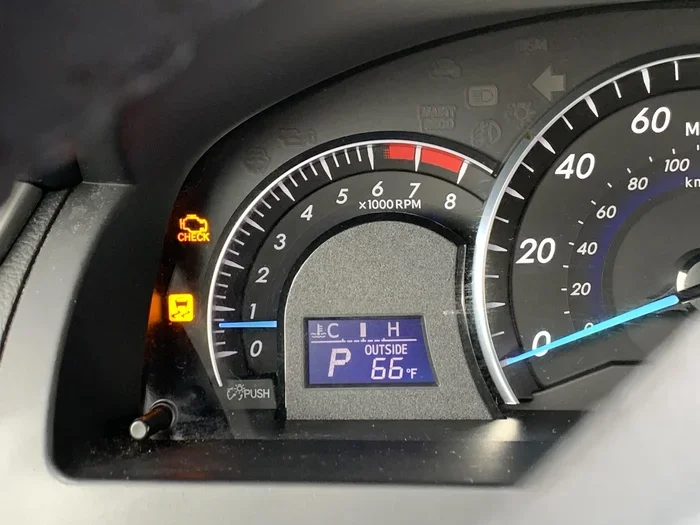
- Ignoring the check engine light — Even minor issues can reduce fuel efficiency.
- Using the wrong oil — Always follow Toyota’s recommendations.
- Aggressive driving — Jackrabbit starts and hard braking burn fuel fast.
- Neglecting tire alignment — Misaligned wheels create drag and waste gas.
Avoiding these mistakes alone can add several miles per gallon to your Tundra’s average. It’s free and easy.
Expert Insights on Tundra Fuel Economy
We spoke with several automotive experts who specialize in full-size trucks. Their consensus? The Toyota Tundra has closed the gap with its competitors in recent years. The hybrid powertrain was a game-changer for the brand.
“The Tundra hybrid surprised a lot of people,” said one longtime truck reviewer. “Toyota took their time getting a hybrid truck to market, but when they did, they nailed it. The fuel economy is competitive, and the driving experience is excellent.”
Another expert pointed out that the Tundra’s reliability reputation gives it an edge over competitors. “Yes, a Ram 1500 might get slightly better MPG in some configurations. But a Tundra will keep running for 300,000 miles with minimal issues. That reliability saves money in the long run, even if you fill up a little more often.”
These insights reinforce what many Tundra owners already know. The truck is a well-rounded performer. It’s not perfect in every category. But it’s remarkably balanced.
Frequently Asked Questions
Are Toyota Tundras good on gas compared to other full-size trucks?
Yes, the Toyota Tundra offers competitive fuel economy for a full-size truck. The newer hybrid models are especially efficient and hold their own against the Ford F-150, Ram 1500, and Chevrolet Silverado in terms of miles per gallon.
What is the actual MPG for a Toyota Tundra?
The 2022 and newer Tundra gets around 20 mpg city and 24 mpg highway for the standard V6 engine. The hybrid version achieves approximately 22 mpg city and 26 mpg highway. Real-world results vary based on driving conditions, towing, and habits.
Does towing reduce Toyota Tundra gas mileage significantly?
Yes, towing reduces fuel economy. Expect a drop of 3 to 6 mpg when towing heavy loads. Light towing has a smaller impact, but it’s still noticeable compared to driving without a trailer.
Is the Toyota Tundra hybrid worth it for better fuel economy?
Absolutely. The Tundra hybrid delivers noticeably better fuel economy than the standard V6 version. If you drive a lot or want to save on gas over time, the hybrid is a smart investment.
How does the Toyota Tundra gas mileage compare to the Ford F-150?
The Tundra and F-150 are very close in fuel efficiency. The F-150 PowerBoost hybrid has a slight edge in highway MPG, but the difference is usually just 1 to 3 mpg. Both trucks offer competitive truck MPG for their class.
What can I do to improve my Toyota Tundra’s gas mileage?
Drive smoothly, keep up with maintenance, reduce unnecessary weight, use the right fuel, and keep your tires properly inflated. These simple steps can improve your Tundra’s fuel efficiency by 10 to 20 percent.
=== CONCLUSION ===
So, are Toyota Tundras good on gas? The answer is a confident yes — especially when you consider what they offer as a package. The Toyota Tundra delivers solid fuel economy for a full-size, half-ton truck. The hybrid models push that efficiency even further, putting the Tundra in the same league as the best competitors in the segment.
When you compare Tundra gas mileage to the Ford F-150, Ram 1500, and Chevrolet Silverado, the differences are small. No single truck dominates in fuel efficiency. Each has strengths and weaknesses. But the Tundra’s combination of reliability, capability, and competitive MPG makes it one of the best choices for buyers who want a truck they can feel good about day after day.
If fuel economy matters to you, the Tundra — especially the hybrid — deserves a serious look. And remember, the best way to know how a truck performs is to test drive it yourself. Visit your local dealer, take one for a spin, and see how it feels on the road. You might be pleasantly surprised by what this truck can do.