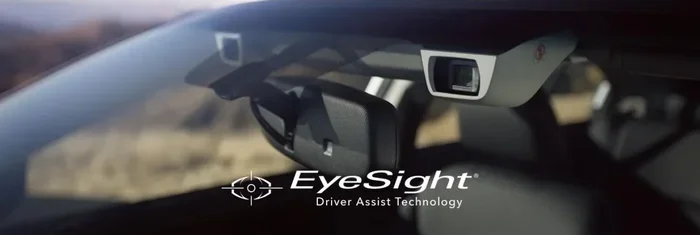
Does Subaru EyeSight Record Video While You Drive
Subaru EyeSight does not continuously record video like a dash cam. The system uses forward-facing and driver-monitoring cameras to assist with safety features, but it does not store or save driving footage. EyeSight focuses on real-time data for pre-collision braking, adaptive cruise control, and driver attention monitoring rather than recording your trips.
Subaru EyeSight is one of the most popular driver-assist systems on the road today. It comes standard on most new Subaru models and has earned a strong reputation for improving road safety. But here is a question many Subaru owners ask: does Subaru EyeSight record video while you drive?
The short answer is no. EyeSight does not function as a video recorder or dash cam. Instead, it uses camera technology to monitor your surroundings and your driving behavior in real time. The system processes visual data instantly to help you avoid collisions and stay safe on the road.
In this article, we will break down exactly how EyeSight works, what the cameras do, whether any footage is saved, and how it differs from a traditional dash cam. Whether you own a Subaru Outback, a Subaru Forester, or are shopping for a new ride, this guide will give you clear answers. Let us dive in.
Key Takeaways
- EyeSight does not record video: The system captures real-time data for safety assistance, not continuous video recording.
- Two camera types work together: A forward-facing camera and a driver-monitoring camera help enable EyeSight features.
- No stored footage: EyeSight data is processed in real time and not saved to any storage device.
- Privacy is protected: Subaru does not share or store your driving video data externally.
- Dash cams are separate: If you want video recording, you need a dedicated dash cam, not EyeSight.
- EyeSight enhances safety: The system helps with pre-collision braking, lane keep assist, and adaptive cruise control.
📑 Table of Contents
- What Is Subaru EyeSight and How Does It Work?
- Does Subaru EyeSight Record Video While You Drive?
- What Does Subaru EyeSight Actually Record?
- EyeSight Recording vs. Dash Cam Recording
- Can You Access EyeSight Video Footage?
- EyeSight Recording and Your Privacy
- Common EyeSight Recording Questions
- How to Get Video Recording for Your Subaru
- EyeSight Maintenance and Camera Care
- Final Thoughts
What Is Subaru EyeSight and How Does It Work?
Subaru EyeSight is a driver-assist technology that uses two cameras mounted on the windshield. These cameras work together to create a 3D view of the road ahead and monitor the driver’s behavior. The system was first introduced in 2008 and has evolved significantly over the years.
EyeSight relies on stereoscopic vision, which means it uses two slightly offset cameras to judge depth and distance. This is similar to how human eyes work. The system processes information in real time to assist with several safety functions.
EyeSight works alongside Subaru’s Symmetrical All-Wheel Drive system to provide balanced handling and stability. If you are curious about whether your AWD system needs regular service, you can check out our guide on does AWD need service for more details.
Key EyeSight Features
- Pre-Collision Braking: Detects potential frontal collisions and applies the brakes if the driver does not react.
- Adaptive Cruise Control: Maintains a safe following distance from the vehicle ahead.
- Lane Keep Assist: Helps keep the car centered in its lane.
- Driver Attention Monitor: Detects inattentive driving and alerts the driver.
- Throttle Management: Reduces engine power if unintended acceleration is detected.
All of these features depend on the cameras constantly scanning the road. But scanning and recording are two very different things. EyeSight scans, analyzes, and acts. It does not store or save video.
Does Subaru EyeSight Record Video While You Drive?
Here is the most important part: Subaru EyeSight does not record video while you drive. The cameras in the EyeSight system are not designed to capture or store footage. They feed visual data to the car’s computer, which processes it instantly to enable safety features.
Think of it this way. EyeSight is like a smart assistant that watches the road and reacts. A dash cam is like a security camera that records everything. They serve completely different purposes.
Some people confuse EyeSight with a recording system because the cameras are always active when the car is running. But being active does not mean recording. The system simply reads the road in real time and discards the visual data after processing it.
How the EyeSight Camera System Captures Data
The EyeSight system uses two cameras mounted at the top of the windshield, behind the rearview mirror. These cameras capture images of the road ahead and the driver’s face. The images are processed by the car’s central computer in milliseconds.
The forward-facing camera looks for lane markings, vehicles, pedestrians, and obstacles. The driver-monitoring camera watches the driver’s face and eye movement to detect distraction or drowsiness. Both cameras work together, but neither one saves or records any footage.
Once the system processes the data, it either takes action (like applying the brakes) or does nothing. The visual information is not stored anywhere in the vehicle. This means there is no video file to retrieve after a drive.
Is EyeSight Footage Saved or Deleted?
No footage is ever saved. EyeSight does not have a storage mechanism. There is no hard drive, no memory card, and no cloud upload. The system operates on a real-time processing model, meaning it analyzes data as it comes in and then moves on.
Even in the event of a collision, EyeSight does not record the moments leading up to the accident. The system may log certain data points, such as whether pre-collision braking was activated, but it does not capture video of the event.
If you are looking for a way to record your drives, you will need a separate dash cam device. EyeSight simply was not designed for that purpose.
What Does Subaru EyeSight Actually Record?
While EyeSight does not record video, it does capture and process certain types of data. Understanding what the system “records” can help clarify its purpose and limitations.
Forward-Facing Camera Functions
The forward-facing camera is the primary sensor in the EyeSight system. It continuously scans the road ahead for:
- Vehicle speed and distance to the car in front
- Lane markings and road edges
- Pedestrians and cyclists
- Traffic signals and signs
- Potential collision risks
This camera processes all of this information in real time. It does not save any of it as video or images. The data is used only to trigger safety features when needed.
Driver Monitoring Camera Features
The driver-monitoring camera focuses on the driver rather than the road. It tracks:
- Eye movement and blink rate
- Head position and direction
- Face orientation
- Signs of drowsiness or distraction
Like the forward-facing camera, the driver-monitoring camera does not record or store any images. It simply analyzes the driver’s attention level and alerts them if it detects a problem.
EyeSight Recording vs. Dash Cam Recording
It is important to understand the difference between Subaru EyeSight and a traditional dash cam. They are not the same thing, even though both use cameras.
| Feature | Subaru EyeSight | Dash Cam |
|---|---|---|
| Records Video | No | Yes |
| Stores Footage | No | Yes |
| Real-Time Processing | Yes | No |
| Safety Features | Yes | No |
| Post-Event Footage | No | Yes |
| Requires External Storage | No | Yes (SD card) |
| Privacy Concerns | Minimal | Moderate |
A dash cam is a standalone device that records continuous video while you drive. It stores footage on an SD card, which you can review later. EyeSight, on the other hand, processes visual data instantly and does not retain any recordings.
If you want the safety benefits of EyeSight and the recording capability of a dash cam, you can use both together. EyeSight comes standard in most Subaru models, and a dash cam is an affordable add-on.
Some Subaru owners wonder if EyeSight data can be used in insurance claims or legal proceedings. Since the system does not record video, it cannot provide visual evidence of an accident. However, EyeSight may log whether certain safety features were activated, which can be useful in some situations.
Can You Access EyeSight Video Footage?
Since EyeSight does not record or store video, there is no footage to access. You cannot retrieve any video from the system after a drive, an accident, or any other event.
If you are involved in a collision and need video evidence, a dash cam or a smartphone mounted on your windshield would be your best option. EyeSight data logs may be available through a Subaru dealer, but these logs contain system activation records, not video files.
Some people ask whether a Subaru dealer can extract EyeSight footage after a service visit. The answer is no. There is no footage to extract because the system does not save it.
If you need service for your Subaru EyeSight system, you might wonder whether you can get your Subaru serviced anywhere. The answer is yes, EyeSight calibration and maintenance can be performed at qualified independent shops, not just dealerships.
EyeSight Recording and Your Privacy
Privacy is a big concern for many drivers when it comes to camera-based safety systems. The good news is that Subaru EyeSight is designed with privacy in mind.
Because EyeSight does not record or store video, there is very little risk of your driving footage being shared or accessed by third parties. The system does not upload data to the cloud, and Subaru does not collect video from your drives.
The driver-monitoring camera is particularly sensitive, as it watches your face and eyes. Subaru has confirmed that this data is processed locally and never transmitted externally. Your privacy is protected by design.
That said, always review your vehicle’s privacy policy and settings. If you have concerns about data collection, you can contact your local Subaru dealer for detailed information.
Common EyeSight Recording Questions
Many Subaru owners have questions about what EyeSight does and does not do when it comes to video. Here are some of the most common queries.
Does EyeSight record when the pre-collision system activates? No. Even during emergency braking events, EyeSight does not record video. It simply applies the brakes and logs the system activation internally.
Can I turn off EyeSight cameras? You can turn off certain EyeSight features, such as adaptive cruise control and lane keep assist, through the steering wheel controls. However, the cameras themselves remain active whenever the engine is running.
Do EyeSight cameras work at night? Yes. The EyeSight system uses the camera feed to detect lane markings and vehicles even in low-light conditions. However, heavy rain or snow can reduce camera effectiveness.
Is EyeSight the same as Subaru’s DriverFocus system? Not exactly. DriverFocus is a newer system that builds on EyeSight technology with enhanced driver monitoring. Neither system records video, though.
Can EyeSight footage be used in court? Since EyeSight does not record video, it cannot provide visual evidence. However, system activation logs may be relevant in certain legal situations.
How to Get Video Recording for Your Subaru
If you want video recording capabilities for your Subaru, you have several options. EyeSight will not provide this, but other solutions can fill the gap.
A dedicated dash cam is the most popular choice. Dash cams range from basic single-camera models to advanced dual-camera systems that record both the front and rear of the vehicle. Popular brands include Nextbase, BlackVue, and Garmin.
Some Subaru owners also use their smartphones as dash cams with mounting brackets and apps. This is a budget-friendly option, though it is not as reliable as a dedicated device.
If you own a Subaru Forester and are planning trips that involve towing, you might also want to check out our guide on whether a Subaru Forester can tow for useful towing tips and safety information.
When choosing a dash cam, look for features like loop recording, G-sensor activation, and night vision. These will give you the best coverage and peace of mind on the road.
EyeSight Maintenance and Camera Care
To keep your EyeSight system working properly, you need to take care of the cameras. Since the cameras are mounted on the windshield, they can be affected by dirt, cracks, and glare.
Keep the windshield clean around the camera areas. If you have a cracked windshield near the camera mount, get it repaired promptly. A damaged windshield can interfere with EyeSight accuracy.
During routine Subaru maintenance, the dealer can check EyeSight camera alignment. If the cameras become misaligned, the system may not work correctly. This is especially important after windshield repairs or replacements.
Regular cleaning of the camera lenses with a soft cloth will help maintain clear image quality. Avoid using harsh chemicals that could damage the lens coating.
Final Thoughts
Subaru EyeSight does not record video while you drive. The system uses cameras for real-time safety assistance, not for recording or storing footage. EyeSight processes visual data instantly and discards it after use. There is no video file, no storage, and no cloud upload.
This design is intentional. EyeSight is built to keep you safe, not to monitor or record your driving habits. The system focuses on collision prevention, driver attention monitoring, and adaptive driving assistance.
If you want video recording for your Subaru, a separate dash cam is the way to go. EyeSight and a dash cam work perfectly together to give you both safety and peace of mind.
Understanding what EyeSight does and does not do helps you get the most out of your Subaru. The system is a powerful safety tool that works silently in the background, watching the road and helping you avoid accidents. Just remember, it is not a video recorder, and it never will be.
Take care of your EyeSight cameras, keep your windshield clean, and enjoy the confidence that comes with one of the best driver-assist systems on the market.
Frequently Asked Questions
Does Subaru EyeSight record video of my drives?
No, Subaru EyeSight does not record video. The system uses cameras to process real-time road data for safety features like pre-collision braking and adaptive cruise control. No footage is saved or stored.
Can I retrieve EyeSight footage after an accident?
There is no footage to retrieve because EyeSight does not record video. The system may log whether safety features were activated, but it does not capture or store any visual recordings of your drive.
Is EyeSight the same as a dash cam?
No, EyeSight and a dash cam are very different. EyeSight processes visual data in real time for safety assistance, while a dash cam records and stores continuous video footage. You can use both systems together in a Subaru.
Does Subaru store EyeSight camera data?
Subaru does not store EyeSight camera data. The system processes images locally and in real time, then discards them. There is no cloud upload, no external storage, and no data sharing with third parties.
Can EyeSight cameras be used as a security camera?
No, EyeSight cameras cannot be used for security purposes. They are designed exclusively for driver-assist functions and do not record or store any video footage that could be reviewed later.
How do I know if my EyeSight cameras are working properly?
You can check EyeSight status through the dashboard indicator on your Subaru. If the EyeSight warning light comes on, the cameras may be blocked by dirt or snow. Keeping the windshield clean around the camera areas helps ensure proper operation.
=== CONCLUSION ===
Subaru EyeSight is a remarkable safety system that enhances driving confidence and helps prevent accidents. However, it does not record video while you drive. The cameras are designed for real-time processing, not for capturing or storing footage.
If video recording is important to you, a dedicated dash cam is the best solution. Pairing EyeSight with a dash cam gives you the best of both worlds: advanced safety assistance and reliable video coverage.
Take care of your EyeSight cameras, stay informed about how the system works, and enjoy the peace of mind that comes with driving a Subaru equipped with this trusted technology.