Cruise Control vs Adaptive Cruise Control Explained
Cruise control maintains a fixed speed on long drives, while adaptive cruise control uses sensors to adjust your speed based on traffic ahead. Both systems reduce driver fatigue, but adaptive cruise control adds a layer of smart safety that traditional cruise control simply cannot match. Understanding the difference helps you choose the right technology for your driving style.
You have probably seen those buttons on your steering wheel or dashboard that say “CRUISE” or “ACC.” Maybe you have used them before, or maybe they just sit there looking mysterious. Either way, these buttons control two very different systems that change how you drive on long trips and busy highways. Understanding the difference between cruise control vs adaptive cruise control can make your drives safer, more comfortable, and even save fuel.
Traditional cruise control has been around for decades. It is a simple system that locks your car into a set speed so your foot can rest. Adaptive cruise control is newer and smarter. It uses sensors and cameras to watch the road and adjust your speed automatically. Let us break down exactly how each system works, what they are good at, and which one you should care about.
Key Takeaways
- Traditional cruise control keeps your car at a constant speed you set manually.
- Adaptive cruise control uses radar and cameras to slow down and speed up automatically based on traffic.
- Adaptive systems handle stop-and-go traffic much better than traditional cruise control.
- Fuel efficiency can improve with both systems on long highway drives.
- Neither system replaces active driver attention — they are driver assistance tools, not autopilot.
- Adaptive cruise control typically costs more but adds significant convenience and safety value.
- Knowing when to use each system helps you drive smarter and safer on every trip.
📑 Table of Contents
What Is Cruise Control?
Cruise control is a driver assistance feature that keeps your car moving at a constant speed. You set the speed you want, and the system manages the throttle for you. Your foot stays off the accelerator pedal, which feels great on long road trips. This feature became popular in the 1970s and has been a staple in American cars ever since.
The basic idea is simple. You hit the set button, pick your speed, and the car holds it. If the road goes uphill, the system tries to maintain the speed by increasing engine power. On downhill slopes, it may ease off the throttle. But here is the catch — cruise control does not brake. It does not know if traffic slows down ahead. You still need to pay attention and hit the brakes yourself when needed.
How Traditional Cruise Control Works
When you activate cruise control, the system communicates with your car’s engine control unit. It adjusts the throttle position to maintain the speed you selected. The system uses a cable or electronic actuator connected to the throttle body. This is a purely mechanical or electronic process that does not involve any sensors looking ahead at traffic.
Most systems let you adjust speed using the steering wheel controls. You can increase or decrease the set speed by one mile per hour or by larger increments. Some older cars use a lever on the steering column instead of buttons. The controls are straightforward and easy to learn.
When Cruise Control Shines
Traditional cruise control works best on open highways with steady traffic flow. If you are driving on a long stretch of interstate with no slowdowns, cruise control is a wonderful tool. It reduces foot fatigue and keeps your speed consistent. This consistency also helps with fuel efficiency because you avoid unnecessary acceleration and braking.
Long road trips are where cruise control really earns its keep. Driving for hours at a steady pace is less tiring than constantly managing the throttle. Many drivers report feeling less fatigued after using cruise control on multi-hour highway drives. The system does not get tired, distracted, or bored — it just keeps the speed steady.
Limitations of Standard Cruise Control
Standard cruise control has clear limitations. It does not respond to changing traffic conditions. If the car in front of you slows down, cruise control does not notice. You must watch the road and apply the brakes yourself. This means you still carry the full responsibility of monitoring traffic at all times.
Another limitation is that cruise control is not ideal in heavy traffic. Stop-and-go traffic is where the system falls short completely. You cannot use cruise control when traffic is constantly slowing and stopping. The system also struggles on winding roads or steep hills where constant speed adjustments are needed beyond what the throttle can handle.
What Is Adaptive Cruise Control?
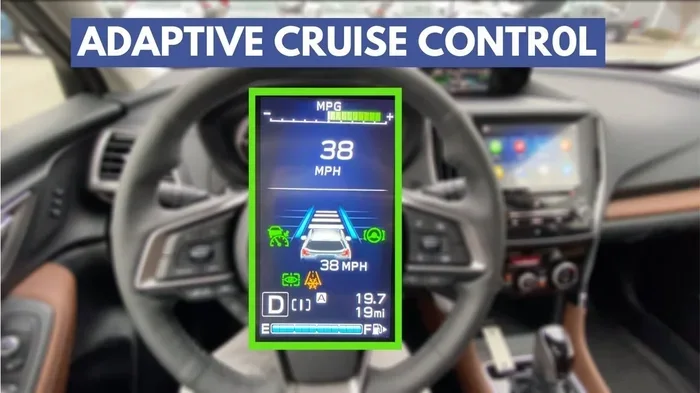
Adaptive cruise control, often called ACC, takes everything traditional cruise control does and adds intelligence. Instead of just holding a set speed, adaptive cruise control uses sensors to detect vehicles ahead of you. It automatically adjusts your speed to maintain a safe following distance. If the car in front slows down, your car slows down too. When the road clears, it accelerates back to your set speed.
This system is a game-changer for highway driving and daily commutes. It feels almost like a peek into the future of driving. The technology has advanced rapidly in recent years, and many new cars now come with adaptive cruise control as standard equipment or an affordable option.
How Adaptive Cruise Control Works
Adaptive cruise control relies on a combination of sensors to “see” the road ahead. Most systems use a radar sensor mounted behind the front grille. Some newer systems also use a forward-facing camera mounted near the rearview mirror. These sensors work together to detect vehicles and measure the distance between you and the car ahead.
The radar sensor sends out radio waves that bounce off objects ahead. By measuring the time it takes for those waves to return, the system calculates distance and relative speed. The forward-facing camera helps identify lane markings and can distinguish between vehicles and other objects. Together, these sensors feed data to the car’s computer, which decides when to adjust speed.
When the system detects a slower vehicle ahead, it gently eases off the throttle and may apply light braking. It does this smoothly so you do not feel a sudden jolt. Once the road ahead clears, the system gradually accelerates back to your preset speed. All of this happens automatically without any input from you.
Stop-and-Go Traffic Capability
One of the biggest advantages of adaptive cruise control is its ability to handle stop-and-go traffic. Many modern systems can bring your car to a complete stop and then resume driving when traffic starts moving again. This is incredibly useful in daily commutes where traffic constantly slows and speeds up.
Some systems require you to tap the resume button after a full stop, while others restart automatically after a few seconds. The specific behavior depends on the automaker and the model year. Either way, the ability to handle stop-and-go traffic makes adaptive cruise control far more practical than traditional cruise control for everyday driving.
Benefits Beyond Comfort
Adaptive cruise control does more than just make driving more comfortable. It also enhances safety. The system constantly monitors your following distance, which reduces the risk of rear-end collisions. Many adaptive cruise control systems integrate with collision warning features that alert you if the gap closes too quickly. Some even add automatic braking if a crash seems imminent.
The system also helps reduce driver fatigue during long drives. You still need to steer and stay alert, but the throttle and speed management are handled for you. On a long highway stretch, this can make a real difference in how fresh you feel when you arrive at your destination.
Key Differences Between the Two Systems
Now that you understand how each system works, let us compare them side by side. The differences go beyond just “one is smart and one is not.” There are real, practical distinctions that affect how and when you use each system.
Speed Management
Traditional cruise control locks you into one speed. You set it, and the system tries to maintain that speed no matter what. Adaptive cruise control lets you set a maximum speed, but the system will go slower if traffic demands it. This is the most fundamental difference between the two.
Driver Responsibility
With traditional cruise control, you are responsible for monitoring traffic, braking, and steering at all times. Adaptive cruise control handles speed adjustments for you, but you still must steer and remain ready to take full control. Neither system replaces an attentive driver. Both are driver assistance features, not autonomous driving systems.
Driving Scenarios
Traditional cruise control works best on open highways with light traffic. Adaptive cruise control is more versatile and works in a wider range of conditions, including moderate traffic and highway merging situations. If you drive mostly on rural interstates, traditional cruise control may be all you need. If you commute on busy highways, adaptive cruise control adds real value.
Cost and Availability
Traditional cruise control is simple and inexpensive. It comes standard on many base-model cars. Adaptive cruise control uses more advanced technology and typically costs more. It is often found on higher trim levels or as an optional package. However, prices have dropped significantly in recent years, and many mid-range vehicles now offer it as well.
System Limitations
Both systems have limits. Traditional cruise control does not work in heavy traffic or when you need frequent speed changes. Adaptive cruise control can struggle in heavy rain or snow when sensors get obscured. The system may also deactivate temporarily if road markings are unclear or if sensors detect too many obstacles. Understanding these limitations helps you use each system safely and effectively.
Comparison Table
Here is a quick comparison of the two systems to help you see the differences clearly.
- Speed Control: Fixed speed vs. automatic adjustment based on traffic
- Sensors Used: None vs. radar and camera systems
- Traffic Handling: Not suitable for stop-and-go vs. handles stop-and-go traffic
- Following Distance: Not monitored vs. automatically maintained
- Driver Effort: Manual braking required vs. partial speed automation
- Best Use Case: Open highways vs. highways and moderate traffic
- Cost: Low vs. moderate to high
- Availability: Standard on most cars vs. higher trims or optional
Which System Is Right for You?
Choosing between cruise control vs adaptive cruise control depends on your driving habits, budget, and needs. There is no one-size-fits-all answer. Let us look at a few scenarios to help you decide.
If you mostly drive on open highways with light traffic, traditional cruise control is a great choice. It is simple, reliable, and costs nothing extra. You get the comfort of a set speed without the complexity of sensors and cameras. For long road trips through rural areas, this system works perfectly.
If your daily commute involves highway driving with moderate traffic, adaptive cruise control is worth the investment. The ability to automatically adjust speed and maintain a safe following distance reduces stress and fatigue. You will appreciate it during rush hour when traffic constantly changes pace.
For city driving with heavy stop-and-go traffic, adaptive cruise control with full stop-and-go capability is the clear winner. Traditional cruise control is essentially useless in these conditions. The adaptive system handles the constant speed changes so your foot does not have to work as hard.
Budget also plays a role. If you are buying a new car, check which systems come standard. Many manufacturers now include adaptive cruise control on mid-level trims. If you are shopping used, adaptive cruise control is more common in vehicles from the last five years or so.
Quick Tips for Using Cruise Control Safely
- Always keep your eyes on the road, even when cruise control is active.
- Do not use cruise control in heavy rain, snow, or icy conditions.
- Set your speed at or below the posted speed limit.
- Be ready to take over immediately if traffic changes suddenly.
- Use cruise control on long, straight highway stretches where traffic is predictable.
- Do not use cruise control on winding or hilly roads where constant speed changes are needed.
- Stay alert and avoid relying on the system too much — it is a helper, not a replacement for attention.
Common Mistakes Drivers Make
One common mistake is assuming cruise control will brake for you. Traditional cruise control only controls the throttle. It will not slow your car down if traffic ahead is moving slower. Another mistake is using cruise control in conditions where it is not suitable, such as wet roads or heavy traffic. Some drivers also forget to cancel cruise control when road conditions change, which can lead to sudden surprises.
With adaptive cruise control, a common mistake is trusting the system too much. The sensors can be affected by dirt, snow, or heavy rain. Always keep the sensors clean and be aware that the system may deactivate in poor conditions. Never take your hands off the wheel just because adaptive cruise control is active.
Expert Insights on Cruise Control Technology
Automotive engineers agree that both systems serve important purposes. Traditional cruise control remains a reliable and straightforward tool for steady highway driving. It has proven itself over decades of use and works in virtually any car on the road today.
Adaptive cruise control represents the next step in driver assistance technology. Engineers see it as a bridge between basic cruise control and full autonomous driving features. The sensors and algorithms used in adaptive systems are the same building blocks that power more advanced driver assistance features like lane centering and traffic sign recognition.
Experts also emphasize that no cruise control system — no matter how advanced — replaces the human driver. The best system in the world cannot read your intentions, anticipate sudden hazards, or make judgment calls in complex situations. The driver always remains the most important safety component in any vehicle.
The Future of Cruise Control
The future points toward even smarter systems. Many automakers are working on systems that combine adaptive cruise control with lane-keeping assist to create a more comprehensive driver assistance package. Some luxury brands already offer hands-free driving on certain highways, but these systems still require driver supervision at all times.
As sensor technology improves and costs come down, adaptive cruise control will likely become standard on more vehicles. The gap between traditional cruise control and adaptive cruise control will continue to narrow as the industry moves toward more automated driving features. Understanding the difference today helps you make informed decisions about the cars you drive and buy.
Conclusion
The difference between cruise control vs adaptive cruise control comes down to intelligence and capability. Traditional cruise control is a simple, reliable system that holds a set speed on open roads. Adaptive cruise control uses sensors and cameras to adjust your speed based on traffic, making it more versatile and safer for a wider range of driving conditions.
Both systems reduce driver fatigue and can improve fuel efficiency on long trips. The right choice depends on your driving habits, the roads you travel, and your budget. If you drive mostly on open highways, traditional cruise control may be all you need. If you face regular traffic or commute on busy roads, adaptive cruise control adds meaningful value and convenience.
Whichever system you use, remember that it is a tool to assist you — not replace you. Stay alert, keep your hands on the wheel, and always be ready to take control. Understanding these systems empowers you to drive smarter, safer, and more confidently on every trip.
Frequently Asked Questions
Can you use cruise control in the rain?
It is best to avoid using cruise control in wet conditions. The system maintains a constant speed, which can be dangerous if the road is slippery. If you hydroplane while cruise control is active, the system may try to maintain speed, making the situation worse. Always turn off cruise control when roads are wet, icy, or otherwise hazardous.
Does adaptive cruise control save fuel?
Yes, adaptive cruise control can help improve fuel efficiency on highways. By maintaining a steady speed and avoiding unnecessary acceleration and braking, the system reduces fuel consumption. However, the savings are most noticeable on long, open highway drives with steady traffic flow. In heavy stop-and-go traffic, the benefits are minimal.
Can adaptive cruise control bring the car to a complete stop?
Many modern adaptive cruise control systems can bring the car to a full stop and resume driving when traffic moves again. This feature is sometimes called “stop-and-go” cruise control. However, not all systems have this capability. Some systems require you to tap the resume button after a full stop, while others restart automatically after a brief pause.
Is cruise control the same as autonomous driving?
No, cruise control is not autonomous driving. Both traditional and adaptive cruise control are driver assistance features. They handle speed management, but the driver must always steer, monitor the road, and be ready to take full control. Autonomous driving requires much more advanced technology that is not yet available in most production vehicles.
Why does my cruise control turn off on its own?
Cruise control typically deactivates when you press the brake pedal, clutch pedal, or cancel button. It may also turn off automatically if the system detects a fault or if sensors become obstructed. In adaptive cruise control, heavy rain, snow, or dirt on the sensors can cause the system to disable itself temporarily. Always check that sensors are clean if your adaptive cruise control keeps turning off unexpectedly.
Can you install cruise control on an older car?
Yes, it is possible to add cruise control to many older vehicles. Aftermarket cruise control kits are available and can be installed by a professional or a handy DIYer. However, adding adaptive cruise control to an older car is much more complex and expensive. It requires sensors, cameras, and a compatible computer system that most older vehicles do not have. For most older cars, traditional cruise control is the practical and affordable option.