Where Do You Put the Jack on a Front Wheel Properly
Knowing where do you put the jack on a front wheel is essential for safe tire changes and vehicle maintenance. The correct front wheel jack point protects your car from damage and keeps you safe. This guide walks you through every step, from finding the right spot to avoiding common errors. Whether you drive a sedan, SUV, or truck, these tips apply to almost any vehicle. Read on to master car jack placement like a pro.
Changing a tire or working under your car can feel stressful. One of the biggest worries is placing the jack correctly. If you put it in the wrong spot, you risk damaging your vehicle or worse, injuring yourself. So where do you put the jack on a front wheel? The answer is simpler than you think, but it matters a lot.
This guide covers everything you need to know about front wheel jack placement. We will look at the exact spots on your car, the tools you need, and the steps to follow. By the end, you will feel confident every time you need to lift your vehicle. Let us get into it.
Key Takeaways
- Find the right spot: Always place the jack on the reinforced frame or designated lift point near the front wheel.
- Check your owner manual: Every vehicle has specific jack points listed in the manual for a reason.
- Use jack stands: Never rely solely on a jack. Jack stands add critical stability.
- Avoid plastic and body panels: Placing the jack on the wrong area can cause expensive damage.
- Chock the wheels: Simple wheel wedges prevent rolling and keep you safe.
- Work on flat ground: A level surface is non-negotiable for safe jacking.
📑 Table of Contents
- Understanding the Front Wheel Jack Point
- Where Exactly Do You Put the Jack on a Front Wheel
- Step-by-Step Guide to Jacking Up the Front Wheel
- Common Mistakes People Make When Jacking Up the Front Wheel
- Tools You Need for Safe Front Wheel Jacking
- Tips from the Pros for Perfect Jack Placement
- How to Find Your Specific Vehicle Jack Points
- Frequently Asked Questions
- Conclusion
Understanding the Front Wheel Jack Point
Every car has a designated spot where the jack should go. This spot is called the jack point or lift point. Manufacturers design these points to handle the weight of the vehicle. They are built into the frame or subframe for maximum strength.
But here is the thing. Not all cars are the same. The jack placement for a front-wheel-drive car differs from a rear-wheel-drive vehicle. Even SUVs and trucks have unique points. That is why knowing your specific car matters so much.
What Is a Jack Point?
A jack point is a reinforced area on your car designed to handle the pressure of lifting. These spots are usually marked with a small arrow or triangle on the frame. They sit near the wheels, often along the pinch weld or on the subframe.
When you place the jack on a jacking pad at the correct point, the weight spreads evenly. This prevents damage to the body panels, suspension, and other components. It also keeps the car stable while you work.
Why Does Jack Placement Matter?
Putting the jack in the wrong spot can cause serious problems. The car might slip off the jack. You could scratch or dent the undercarriage. In worst cases, the vehicle could collapse while you are underneath it.
Here are a few reasons why correct placement is critical:
- Prevents body damage: Lifting on plastic trim or body panels will crack them.
- Ensures stability: Correct points keep the vehicle balanced and level.
- Protects the suspension: Wrong placement can bend or break suspension parts.
- Keeps you safe: A stable jack means a safer working environment.
Where Exactly Do You Put the Jack on a Front Wheel
Now let us get to the heart of the matter. Where do you put the jack on a front wheel? The answer depends on your vehicle type, but most cars follow a similar pattern.
Front-Wheel-Drive Vehicles
For most front-wheel-drive cars, the jack point is on the front frame rail. This is a thick metal section located just behind the front wheel. Look for a raised seam or a reinforced pinch weld along the bottom of the car.
Some vehicles have a plastic cover over this area. You may need to remove a small splash guard or panel to access the jack point. The key is to find the solid metal frame, not the plastic body panels.
Front-Wheel-Drive SUVs and Crossovers
SUVs and crossovers often have a different setup. Many use a subframe or crossmember as the jack point. This is a heavy-duty steel bar that runs under the engine. Look for a flat, wide section near the front wheels.
On some models, the jack point is marked with a small notch or arrow on the undercarriage. If you cannot find it, check the owner manual. It will have a diagram showing the exact location.
Rear-Wheel-Drive Front Axle Jack Points
Even if your car is rear-wheel-drive, you still need to know the front jack point. On these vehicles, the jack often goes on the front axle housing or the frame rail near the transmission. These areas are built to bear the vehicle weight.
Always look for the strongest, most solid metal section. Avoid any area that looks thin, bent, or corroded. If the metal feels flimsy, find another point.
Step-by-Step Guide to Jacking Up the Front Wheel
Knowing the right spot is only half the battle. You also need to follow the correct steps. Here is a simple walkthrough for safely lifting your front wheel.
Step 1: Park on a Flat Surface
Never jack up your car on a slope or soft ground. Find a flat, hard surface like a driveway or garage floor. This prevents the car from rolling or the jack from sinking in.
Step 2: Turn Off the Engine and Engage the Parking Brake
Turn the ignition off and pull the parking brake. This locks the rear wheels in place and adds an extra layer of safety. You do not want the car rolling while you are under it.
Step 3: Place Wheel Chocks
Use wheel wedges or bricks behind the rear tires. This stops the car from rolling even if the parking brake fails. Simple wheel chocks are inexpensive and can save your life.
Step 4: Locate the Jack Point
Get under the front of the car and find the reinforced frame area near the front wheel. Look for the pinch weld, subframe, or a marked arrow. This is where the jack goes.
Step 5: Position the Jack
Place the jack head squarely on the jack point. Make sure it sits flat and stable. The jack should be centered on the reinforced area. Do not let it hang off the edge or sit on an angle.
Step 6: Lift Slowly and Check Stability
Pump the jack up slowly. Stop frequently to check that the car is stable. Listen for any unusual sounds. If the car shifts or the jack tilts, lower it and reposition.
Step 7: Use Jack Stands for Extra Safety
Never work under a car supported only by a jack. Place jack stands on the frame near the jack point. Lower the car onto the stands. Then give it a gentle push to test stability. This is the safest way to work under any vehicle.
Common Mistakes People Make When Jacking Up the Front Wheel
Even experienced drivers make mistakes. Knowing what goes wrong can help you avoid the same errors. Here are the most common jack placement blunders.
Placing the Jack on the Plastic Body Panel
This is the number one mistake. Many cars have plastic underbody panels that look like solid metal. They are not. Placing the jack on these panels will crack or break them. Always look for the exposed metal frame underneath.
Using the Wrong Jack Type
Not every jack works for every car. A small hydraulic jack may not lift your SUV high enough. A bottle jack can slip off the jack point if it is too narrow. Match your jack to your vehicle’s weight and design.
Jacking on an Uneven Surface
Even a slight slope can cause the jack to shift. The car may lean to one side and become unstable. Always check that the ground is level before you start lifting.
Skipping the Wheel Chocks
Some people forget to wedge the rear wheels. This is a dangerous oversight. A car can roll off the jack in seconds, even on a flat surface. Always use chocks.
Lifting Too High
You only need to lift the wheel a few inches off the ground. Lifting too high raises the center of gravity and makes the car less stable. Keep the lift height as low as possible.
| Mistake | Risk | How to Avoid |
|---|---|---|
| Jack on plastic panel | Cracked underbody | Find the metal frame |
| Wrong jack type | Slipping or insufficient lift | Check jack weight rating |
| Uneven surface | Car shifts or tilts | Use a flat, hard surface |
| No wheel chocks | Car rolls off jack | Always use wheel wedges |
| Lifting too high | Reduced stability | Lift only as needed |
Tools You Need for Safe Front Wheel Jacking
Having the right tools makes the job easier and safer. Here is what you should keep in your car or garage.
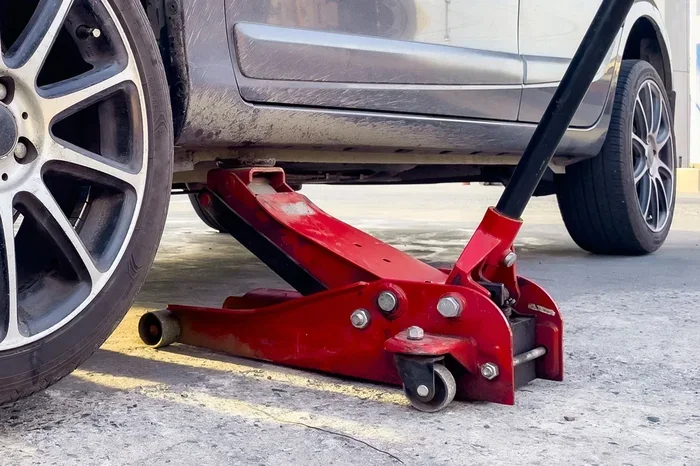
- Floor jack: A hydraulic floor jack provides smooth, stable lifting. Choose one rated for your vehicle weight.
- Jack stands: These hold the car in place once lifted. Never skip this step.
- Wheel chocks: Simple rubber or wooden wedges for the rear tires.
- Lug wrench: For loosening and tightening the lug nuts.
- Owner manual: Your best resource for finding the exact jack points on your car.
Tips from the Pros for Perfect Jack Placement
Professional mechanics have been lifting cars for decades. Here are their best tips for getting it right every time.
Know Your Vehicle
Spend five minutes reading your owner manual. It will show you every jack point on your car. Some vehicles have multiple points for different tasks. Knowing them ahead of time saves stress in an emergency.
Clean the Jack Point
Before placing the jack, wipe off any dirt or debris from the jack point. A clean surface ensures the jack sits flat and does not slip. This small step makes a big difference in safety.
Lift on the Jack Pad, Not the Edge
Place the jack head flat on the reinforced pad. Do not let the jack rest on a sharp edge or narrow rail. The wider the contact area, the more stable the lift.
Check the Jack Regularly
Inspect your jack before every use. Look for leaks, cracks, or worn seals. A damaged jack is a safety hazard. Replace it if anything looks off.
Practice Before You Need To
Do not wait for a flat tire to figure out your jack points. Practice at home in your driveway. Lift the car, place the jack stands, and lower it back down. This builds confidence and muscle memory for real emergencies.
How to Find Your Specific Vehicle Jack Points
Every car is different, and the manufacturer knows best. Here is how to find the exact jack points for your specific vehicle.
Check the Owner Manual
Your owner manual is the most reliable source. Flip to the maintenance or roadside assistance section. There will be diagrams showing the front and rear jack points. Some manuals even include photos of the undercarriage with arrows pointing to the exact spots.
Look for Markings on the Frame
Many manufacturers stamp or paint arrows on the undercarriage to mark jack points. These are usually found along the front frame rails, near the front wheels. Look for a small triangle, arrow, or the word “jack” stamped into the metal.
Search Online for Your Vehicle Model
Can not find the manual? Search online for your vehicle year, make, and model plus “jack points.” Many car forums and YouTube channels have videos showing the exact spots. This is a great backup resource.
Ask a Mechanic
If you are still unsure, visit a local garage or auto parts store. Most mechanics will happily point out the jack points on your car. Some stores even offer this service for free.
Frequently Asked Questions
Can I put the jack anywhere under the front of my car?
No. You must always place the jack on a reinforced frame or designated jack point. Putting it on the plastic body, exhaust, or suspension can cause damage or failure. Check your owner manual for the exact location.
What happens if I jack up the car on the wrong spot?
Jacking on the wrong spot can crack the underbody, damage sensors or wiring, and cause the car to slip off the jack. In serious cases, the vehicle could collapse while you are underneath. Always find the correct front wheel jack point before lifting.
Do I need jack stands if I only change a tire?
Yes. Even for a quick tire change, jack stands add critical safety. A jack alone can slip or fail. If you must work under the car for any reason, jack stands are non-negotiable.
Where is the jack point on a front-wheel-drive car?
On most front-wheel-drive cars, the jack point is on the front frame rail, just behind the front wheel. Look for a thick metal section or pinch weld along the bottom of the car. The owner manual will show the exact location with a diagram.
Can I use the factory scissor jack that came with my car?
Yes, factory scissor jacks are designed for your specific vehicle. However, they are meant for short-term use like tire changes. For longer under-car work, use a hydraulic floor jack and jack stands for better stability and safety.
How do I know if my jack is strong enough for my car?
Check the jack weight rating on its label or in the product manual. The rating should exceed your vehicle weight. Most passenger cars weigh between 3,000 and 5,000 pounds, so a 3-ton or 6-ton jack is usually sufficient.
Conclusion
Knowing where do you put the jack on a front wheel is one of the most important skills every driver should have. It keeps your car safe, protects you from injury, and makes maintenance tasks simple. The right front wheel jack point is always on a reinforced frame area, never on plastic or body panels.
Follow the steps in this guide, use the proper tools, and never skip the jack stands. Practice at home so you are ready when you need it most. With the right knowledge and a little preparation, you can handle any tire change or undercarriage job with confidence. Stay safe, and happy wrenching.