Is Porsche German And How Its Heritage Shapes The Brand
Porsche is a German luxury sports car manufacturer founded in Stuttgart, Germany. The brand’s German roots run deep, influencing everything from engineering philosophy to design precision. Understanding Porsche’s heritage helps owners appreciate why these cars feel so exceptional and why German craftsmanship remains at the core of every model.
Have you ever wondered, is Porsche German? The answer is a resounding yes. Porsche is one of the most iconic luxury sports car brands in the world, and its German roots run incredibly deep. From the streets of Stuttgart to racetracks around the globe, the Porsche name represents precision, performance, and a rich automotive heritage that few brands can match.
Understanding where Porsche comes from matters. It helps you appreciate why these cars feel the way they do, why they cost what they do, and why owners around the world trust the brand with something as personal as their daily driver or weekend toy. Is Porsche German in more ways than one? Absolutely. And that German identity shapes every bolt, every curve, and every driving experience.
In this article, we will explore the full story of Porsche’s German heritage. You will learn about its founding, its headquarters, the engineering philosophy that makes German cars special, and how all of this comes together to create the Porsche experience you know and love. Whether you own a Porsche or are just curious, this guide covers it all.
Key Takeaways
- Porsche is German: The company was founded in Stuttgart, Germany, and its headquarters remain there today.
- German engineering drives every model: Precision, performance, and durability are core to Porsche’s identity.
- The Porsche family legacy matters: Ferdinand Porsche and his family shaped the brand’s DNA from the very beginning.
- Heritage affects ownership: Knowing Porsche’s German roots helps owners understand maintenance needs and driving feel.
- Global brand with German soul: Porsche sells worldwide but keeps its German manufacturing and design philosophy intact.
- Regular maintenance honors the heritage: Following German-standard care keeps your Porsche performing at its best.
📑 Table of Contents
- The Origins of Porsche: A German Story
- Headquarters and Manufacturing Location
- German Engineering Philosophy Behind Every Model
- How German Heritage Shapes the Brand Today
- Porsche vs. Other German Sports Car Brands
- Maintaining a Porsche: German Precision in Practice
- The Future of Porsche: German Innovation Continues
- Conclusion
The Origins of Porsche: A German Story
The Porsche story begins in Germany, and it is a fascinating one. The brand was not born in a Silicon Valley garage or a Japanese factory. It was born in Stuttgart, a city in southern Germany known for its innovation and engineering excellence.
Stuttgart and the Founding of Porsche
Ferdinand Porsche, the man behind the brand, was born in Maffersdorf, Bohemia, in 1875. But his career took root in Germany. He worked for several German automotive companies before founding his own design and consulting firm in Stuttgart in 1931. That firm, Dr. Ing. h.c. F. Porsche GmbH, became the foundation of what we know today as Porsche AG.
Stuttgart was the perfect home for Ferdinand Porsche’s vision. The city was already a hub for the German automobile industry. Companies like Mercedes-Benz and Bosch were already there. The region had a long tradition of precision manufacturing, skilled craftsmen, and a culture that valued engineering excellence above all else.
One of the most important early projects out of Porsche’s Stuttgart office was the design of the Volkswagen Beetle. Ferdinand Porsche was commissioned by the German government to design an affordable car for the masses. That project, the KdF-Wagen (later the VW Beetle), showcased the German engineering principles that would define Porsche for decades to come: simplicity, reliability, and intelligent design.
The Porsche Family Legacy
The Porsche family played a huge role in shaping the brand’s German identity. Ferdinand Porsche’s son, Ferry Porsche, took the reins and created the first car to carry the Porsche name: the Porsche 356. Built in a small sawmill in Gmünd, Austria, the 356 was unmistakably a German-engineered sports car.
Ferry Porsche wanted a car that was lightweight, fast, and fun to drive. He took the air-cooled engine concept from the VW Beetle and turned it into something extraordinary. The 356 became a hit in the racing world, and it set the tone for every Porsche that followed.
Later, Ferdinand Porsche’s grandson, Ferdinand Piëch, and his great-grandson, Ferdinand Piëch, continued to push the brand forward. The Piëch and Porsche families have maintained a strong connection to the company, ensuring that the German roots and family values remain at the heart of the brand. This family-driven approach is something you will not find in many car companies today.
Headquarters and Manufacturing Location
One of the clearest signs that Porsche is German is where the company is headquartered and where its cars are built. Porsche AG is still based in Stuttgart-Zuffenhausen, Germany. The main factory where Porsche builds its cars sits right in this district of Stuttgart.
Where Are Porsche Cars Built?
The Porsche factory in Zuffenhausen is a massive operation. It covers over 280 hectares and employs thousands of workers. Every Porsche sports car, from the legendary 911 to the Panamera, rolls off the assembly line in Stuttgart. The factory is a symbol of German manufacturing at its finest.
But Porsche also has another important plant in Leipzig, Germany. The Leipzig factory handles production of the Cayenne, Macan, and Panamera models. Both facilities are in Germany, which means every Porsche vehicle starts its life on German soil.
Porsche also has plants in other countries, including a facility in Finland for engine assembly and operations in China and the United States. However, the core engineering, design, and final assembly of the sports cars remain in Germany. This is a key point for anyone asking, is Porsche German in its manufacturing process. The answer is yes, at least for the heart of the operation.
Porsche’s Global Presence
While Porsche is German, it has a strong global presence. The company sells cars in over 120 countries. Porsche centers and dealerships can be found on every continent. But no matter where a Porsche is sold, the engineering and design come from Stuttgart.
This global reach does not dilute the German identity. Instead, it spreads the German engineering philosophy worldwide. When you buy a Porsche, you are buying a piece of German automotive history, no matter where you live.
German Engineering Philosophy Behind Every Model
What makes German engineering so special? And how does this philosophy show up in every Porsche model? These are great questions, and the answers reveal why Porsche German heritage matters so much.
Precision and Performance
German engineering is all about precision. In Germany, engineers do not settle for “good enough.” They chase perfection. This mindset shows up in every Porsche model, from the entry-level Cayman to the flagship 911 GT3 RS.
Take the Porsche 911, for example. It has been refined over six decades, and each generation pushes the boundaries of what a sports car can do. The engineers focus on weight distribution, aerodynamics, and power delivery with an attention to detail that is unmistakably German. The result is a car that feels balanced, responsive, and incredibly capable.
The rear-engine layout of the 911 is a perfect example of this philosophy. It is a design choice that sets the 911 apart from almost every other sports car. Porsche engineers have spent decades perfecting this layout, making it work brilliantly despite the unconventional weight distribution. That kind of dedication to a design vision is a hallmark of German engineering.
Design Principles Rooted in German Tradition
Porsche design follows German principles of function over form. Every curve on a Porsche body serves a purpose. Every vent, every air intake, every seam is placed with intention. There is no unnecessary decoration. The design is clean, purposeful, and elegant.
This philosophy comes from the broader German design tradition, which values Bauhaus principles: form follows function. Porsche takes this idea and applies it to sports cars, creating vehicles that are as beautiful as they are functional.
The interior of a Porsche cockpit is another example. The layout is driver-focused. Controls are within easy reach. Materials are chosen for quality and durability. You will not find flashy gimmicks in a Porsche cabin. Instead, you will find a workspace designed for the driver, with every detail engineered for a purpose.
How German Heritage Shapes the Brand Today
Porsche’s German heritage is not just history. It is alive in the brand today. From marketing to customer experience, the German identity shapes how Porsche operates and how owners feel about their cars.
Brand Identity and Marketing
Porsche leans heavily into its German roots in its branding. The company’s logo features the Stuttgart coat of arms, with a black horse on a yellow background. This logo is a direct reference to the city of Stuttgart and its history as a center of horse breeding and agriculture.
The brand’s taglines and marketing campaigns often highlight German engineering, German precision, and German craftsmanship. When you see a Porsche commercial, you will notice the emphasis on the German origin. This is not accidental. It is a deliberate strategy to reinforce the brand’s identity as a German luxury sports car maker.
Porsche also sponsors events and partnerships that align with its German heritage. The company supports motorsport events, engineering schools, and cultural institutions in Germany. These efforts keep the brand connected to its roots and reinforce its reputation as a German institution.
The Porsche Experience
Owning a Porsche is an experience shaped by German standards. From the dealership visit to the ownership experience, everything reflects the German attention to detail. Porsche dealerships, known as Porsche Centers, are designed to provide a premium, professional experience.
Porsche owners often talk about the “Porsche feel.” This is the combination of the engine sound, the steering response, the g-force in corners, and the overall sense of quality that comes from German manufacturing. It is something you cannot fully explain in words. You have to feel it. And it comes directly from the brand’s German heritage.
Even the way Porsche approaches customer service reflects German values. The company emphasizes long-term reliability, thorough service, and a commitment to quality. Porsche owners are encouraged to follow strict maintenance schedules, and the company provides detailed service manuals that reflect the precision of German engineering standards.
Porsche vs. Other German Sports Car Brands
To truly understand Porsche’s German identity, it helps to look at how it compares to other German sports car brands. Germany has a rich tradition of producing world-class sports cars, and Porsche sits at the top of that tradition.
Comparing German Luxury Sports Cars
Other famous German sports car brands include BMW, Mercedes-AMG, and Audi. Each of these brands shares some DNA with Porsche, but each has its own distinct identity.
BMW focuses on the driver experience with its “Ultimate Driving Machine” philosophy. Mercedes-AMG emphasizes raw power and luxury. Audi leans into all-wheel-drive technology and refined elegance. Porsche, on the other hand, focuses on a pure sports car experience that combines all of these elements into one package.
When you compare a Porsche 911 to a BMW M3 or a Mercedes-AMG GT, you can feel the difference. The Porsche feels more focused, more connected to the road, and more refined in its engineering. That is the German engineering difference at work.
Performance is another area where Porsche shines. The Porsche 911 GT2 RS has lapped the Nürburgring in under 7 minutes, a feat that few cars can match. While the Dodge Charger GT is a powerful American muscle car, it operates in a completely different philosophy. American cars focus on straight-line speed, while German cars like Porsche focus on holistic performance, including handling, braking, and driver engagement.
Why German Heritage Sets Porsche Apart
Porsche’s German heritage gives it a unique advantage. The brand can trace its roots back over 90 years of continuous automotive innovation. That kind of history builds trust and credibility. When you buy a Porsche, you are buying into nearly a century of German engineering excellence.
The brand has also maintained its independence. Unlike some German brands that were acquired by larger conglomerates, Porsche remains a publicly traded company with the Porsche and Piëch families holding significant influence. This independence allows Porsche to stay true to its German roots and its commitment to building the best sports cars in the world.
Maintaining a Porsche: German Precision in Practice
Owning a Porsche comes with responsibilities. These cars are engineered to the highest German standards, and they require care that matches that level of precision. Understanding your Porsche’s German heritage can help you make better maintenance decisions.
Routine Maintenance Tips
Keeping your Porsche in top shape starts with following the manufacturer’s maintenance schedule. Porsche recommends regular oil changes, fluid checks, and inspections at specific intervals. These recommendations are based on decades of German engineering research and testing.
One important aspect of Porsche maintenance is monitoring your fluid levels. Just like any car, you need to check your oil regularly. If you are wondering how to tell if your car is running low on oil, there are simple signs to watch for, including dashboard warnings and unusual engine sounds. For more details, check out this guide on how to tell if your car is low on oil.
Transmission fluid is another critical area. Porsche vehicles with the PDK (Porsche Doppelkupplung) transmission are engineering marvels, but they need proper care. If you are curious about whether you can add transmission fluid while the engine is running, the answer depends on your specific model. Learn more about this topic in our article on adding transmission fluid safely.
Understanding Porsche-Specific Needs
Porsche cars have specific needs that set them apart from other vehicles. The air-cooled engines found in older models like the classic 911 require different care than the water-cooled engines in modern cars. The all-wheel-drive systems in models like the Cayenne and Panamera have their own maintenance requirements.
It is also worth noting that Porsche vehicles are built with high-performance components that wear faster than standard parts. Brake pads, tires, and suspension components may need replacement more frequently than in a regular daily driver. This is the trade-off for the incredible performance that makes Porsche so special.
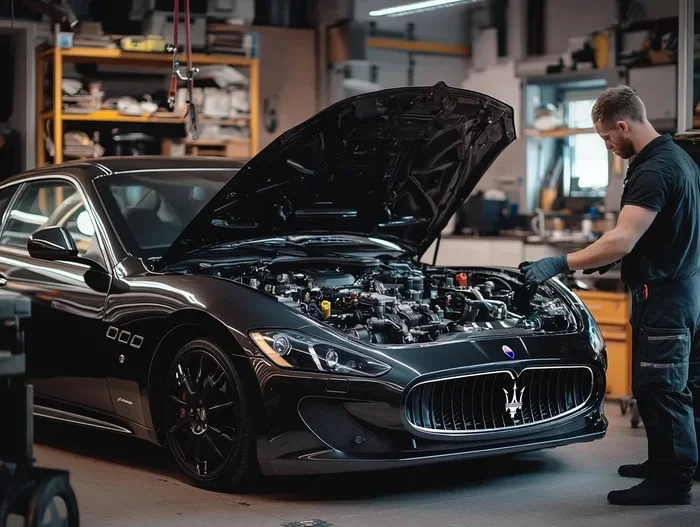
Finding a qualified mechanic who understands German engineering is essential. Not every shop can work on a Porsche properly. Look for technicians who are Porsche-certified or have specific experience with German sports cars. This ensures your car receives the care it deserves.
The Future of Porsche: German Innovation Continues
Porsche is not resting on its heritage. The company continues to innovate while staying true to its German roots. The shift toward electric vehicles is a prime example. The Porsche Taycan is an all-electric sports car that combines German engineering with cutting-edge technology.
The Taycan proves that Porsche’s German identity is not stuck in the past. It is forward-thinking while honoring the principles that made the brand great: precision, performance, and innovation. The Taycan has received rave reviews for its driving dynamics, build quality, and technology, showing that German engineering excellence translates perfectly to the electric era.
Looking ahead, Porsche continues to invest in sustainable manufacturing, advanced materials, and new technologies. The company’s commitment to German standards ensures that whatever comes next will be built with the same care and precision that has defined Porsche for nearly a century.
Conclusion
So, is Porsche German? The answer is a definitive yes. Porsche was founded in Stuttgart, Germany, and its headquarters, main factories, and core engineering team remain in Germany today. The brand’s German heritage is not just a marketing story. It is the foundation of everything Porsche represents: precision engineering, performance excellence, and timeless design.
From the classic air-cooled 911 to the modern electric Taycan, Porsche continues to embody the best of German automotive tradition. Understanding this heritage gives owners and enthusiasts a deeper appreciation for what makes these cars so special. Whether you are maintaining your Porsche, comparing it to other brands, or simply admiring it from afar, the German roots are always there, shaping every aspect of the experience.
The next time you see a Porsche on the road, remember: you are looking at a piece of German engineering history. And that is something worth celebrating.
Frequently Asked Questions
Is Porsche a German company?
Yes, Porsche is a German company. It was founded in Stuttgart, Germany, in 1931 by Ferdinand Porsche. The company’s headquarters and main manufacturing facilities are still located in Germany today.
Where is the Porsche headquarters located?
Porsche AG is headquartered in Stuttgart-Zuffenhausen, Germany. This is where the company’s main factory and executive offices are located, and it has been the brand’s home since its founding.
Are all Porsche cars built in Germany?
The core Porsche sports cars, including the 911, Cayman, and Boxster, are built at the factory in Stuttgart-Zuffenhausen, Germany. Other models like the Cayenne and Panamera are produced at the Leipzig plant, also in Germany.
What makes Porsche engineering German?
Porsche engineering reflects German principles of precision, reliability, and performance. The company focuses on intelligent design, lightweight construction, and driver-focused cabins. These values are deeply rooted in the broader German automotive tradition.
How does Porsche’s German heritage affect its cars?
Porsche’s German heritage influences every aspect of its cars, from the engineering philosophy to the materials used. The result is a driving experience that emphasizes precision, quality, and a deep connection between the driver and the machine.
Can I maintain my Porsche at any mechanic shop?
While any licensed mechanic can perform basic maintenance, Porsche-specific work is best handled by Porsche-certified technicians or shops with experience in German sports cars. This ensures your car receives care that matches German engineering standards.