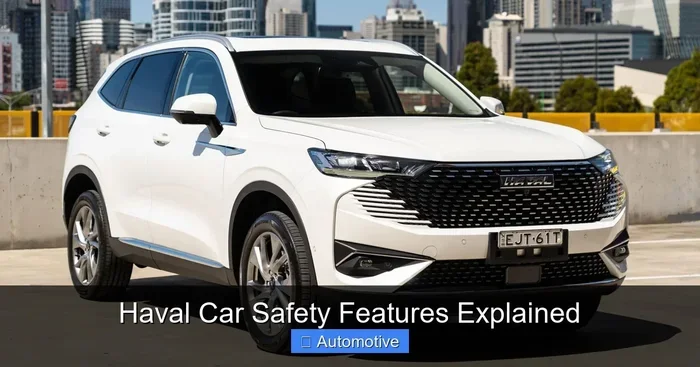
Haval Car Safety Features Explained How They Protect You
Haval car safety features combine advanced driver assistance systems with strong passive protection to keep you and your passengers safe. These vehicles come packed with collision prevention technology, airbag systems, and smart sensors designed to reduce accident risks. Understanding these features helps you make informed choices about your family’s safety on every drive.
Key Takeaways
- Haval vehicles offer a wide range of active safety features that help prevent accidents before they happen.
- Passive safety systems like airbags and safety cage structures work to protect occupants during a collision.
- Advanced driver assistance systems include automatic emergency braking, lane departure warning, and blind spot monitoring.
- Regular maintenance of safety components ensures all systems function at peak performance.
- Haval safety ratings reflect strong crash test performance and occupant protection standards.
- Smart technology like 360 degree cameras and adaptive cruise control make driving easier and safer.
📑 Table of Contents
- Haval Car Safety Features Explained How They Protect You
- Understanding Active Safety Features in Haval Vehicles
- Passive Safety Features That Protect You During a Collision
- Advanced Driver Assistance Systems in Haval Cars
- How Haval Safety Features Work Together
- Haval Safety Ratings and Crash Test Performance
- Quick Tips for Maximizing Haval Safety
- Common Mistakes That Reduce Safety Effectiveness
- Expert Insights on Haval Safety Technology
- Conclusion
Haval Car Safety Features Explained How They Protect You
When you buy a car, safety should be at the top of your list. Haval car safety features are designed to do one thing really well keep you and your loved ones safe on the road. Whether you are driving through busy city streets or cruising on the highway, these systems work quietly in the background to prevent accidents and reduce harm when collisions are unavoidable.
Modern vehicles like those from Haval come loaded with technology that was once only found in luxury cars. From smart sensors that detect danger before you even see it, to strong body structures that absorb impact, Haval has built safety into every layer of their vehicles. In this article, we will break down every major safety feature and explain exactly how it works to protect you.
Knowing what your car can do is the first step toward using it safely. So let us dive into the world of Haval safety technology and explore the features that set these vehicles apart.
Understanding Active Safety Features in Haval Vehicles
Active safety features are all about preventing accidents before they happen. These systems monitor your surroundings and alert you to potential dangers. Some even take control of the vehicle to avoid a collision. Haval vehicles come equipped with a impressive lineup of active safety tools.
Automatic Emergency Braking
Automatic emergency braking is one of the most important safety features in any modern car. This system uses sensors and cameras to detect when a collision is about to happen. If you do not react in time, the system applies the brakes on its own.
Here is how it works in real life. You are driving on a highway and the car ahead of you suddenly stops. Your attention might be split for a moment. The automatic emergency braking system detects the sudden slowdown and starts applying the brakes before you even touch the pedal. This can reduce the severity of a crash or prevent it entirely.
Haval vehicles use a combination of radar and camera technology to make these split second decisions. The system works at low speeds in city traffic and at higher speeds on open roads.
Lane Departure Warning and Lane Keeping Assist
Lane departure warning alerts you when your vehicle starts to drift out of its lane without using a turn signal. This is especially helpful on long highway drives when fatigue can set in.
Lane keeping assist goes a step further. It gently steers the car back into the correct lane if you start to drift. Together, these two systems form a powerful driver alert system that keeps you on track.
Think about a typical road trip. After a few hours of driving, your focus might wander. The lane departure system gives you a gentle warning through a sound or a vibration in the steering wheel. If you do not respond, the lane keeping assist nudges the steering to guide you back. It is like having a co pilot who never gets tired.
Blind Spot Monitoring
Every car has areas that the driver cannot see directly. These are called blind spots. Blind spot monitoring uses sensors on the side mirrors to detect vehicles in your blind spots. When a car is detected, a warning light appears on the side mirror or dashboard.
This feature is incredibly useful when changing lanes on busy roads. It gives you confidence that the lane is clear before you move over. Haval integrates this system seamlessly so it does not feel intrusive or distracting.
Rear Cross Traffic Alert
Rear cross traffic alert helps when you are backing out of parking spaces. It detects vehicles or pedestrians approaching from the sides. This is especially helpful in crowded parking lots where visibility is limited.
The system uses sensors mounted in the rear bumper to scan the area behind your car. If it detects moving objects, it sounds an alert and may even apply the brakes to prevent a backup collision.
Passive Safety Features That Protect You During a Collision
While active safety features try to prevent accidents, passive safety features are designed to protect you when a collision happens. Haval vehicles are built with multiple layers of passive protection.
Airbag System
The airbag system is one of the most critical passive safety features in any vehicle. Haval cars come with multiple airbags positioned throughout the cabin. These include front airbags, side curtain airbags, and knee airbags for the driver.
When a collision is detected, airbags deploy in milliseconds. They create a cushion between the occupants and the hard interior surfaces of the car. This spreads the force of the impact over a larger area of the body, reducing the risk of serious injury.
Haval engineers carefully position each airbag for maximum coverage. The goal is to protect every occupant no matter where they are seated in the vehicle.
Safety Cage Structure
Haval vehicles use a safety cage structure that is designed to absorb and distribute crash forces. The passenger cabin is built with high strength steel that maintains its shape during a collision. This keeps the survival space intact for everyone inside.
The crumple zones at the front and rear of the car are engineered to absorb energy during a crash. This means less force reaches the passenger compartment. Think of it like a shock absorber for your entire vehicle.
Anti Lock Braking System
The anti lock braking system or ABS prevents your wheels from locking up during hard braking. This allows you to maintain steering control while stopping in an emergency.
Without ABS, slamming the brakes on a wet road could cause the car to skid uncontrollably. With ABS, the system rapidly pulses the brakes to keep the tires gripping the road surface. This gives you the ability to steer around obstacles even while braking hard.
Electronic Stability Control
Electronic stability control helps you maintain control of the vehicle during sharp turns or sudden maneuvers. The system monitors your steering input and the actual direction the car is traveling. If it detects a loss of control, it applies the brakes to individual wheels to help you stay on course.
This feature is especially valuable on slippery roads or during evasive maneuvers. It works behind the scenes to keep your vehicle stable and predictable.
Advanced Driver Assistance Systems in Haval Cars
Haval has embraced cutting edge vehicle safety technology to make driving safer and more comfortable. These advanced systems use cameras, radar, and sensors to create a comprehensive picture of your surroundings.
Adaptive Cruise Control
Adaptive cruise control is a game changer for long drives. Unlike traditional cruise control, this system adjusts your speed based on the traffic ahead of you. It maintains a safe following distance automatically.
You set your desired speed and the car does the rest. If the vehicle ahead slows down, your Haval slows down too. When the road clears, it accelerates back to your set speed. This reduces driver fatigue and helps prevent rear end collisions.
360 Degree Camera System
The 360 degree camera system gives you a bird s eye view of your vehicle at all times. This is incredibly helpful when parking in tight spaces or navigating narrow streets.
Multiple cameras mounted around the car stitch together to create a complete view. You can see obstacles, pedestrians, and other vehicles that might be hidden from your direct line of sight. This technology greatly reduces the risk of low speed collisions and parking dings.
Tire Pressure Monitoring System
Tire pressure monitoring system keeps an eye on the air pressure in all four tires. Proper tire pressure is essential for safe driving. Under inflated tires can reduce grip and increase stopping distances. Over inflated tires can blow out at high speeds.
The system alerts you when tire pressure drops below a safe level. This simple warning can prevent blowouts and improve fuel efficiency at the same time.
Brake Assist Technology
Brake assist detects when you are applying the brakes in an emergency. It senses the speed and force of your pedal press and boosts the braking power if needed. This ensures you get maximum stopping force even if you do not push the pedal hard enough.
In a panic situation, many drivers do not apply full braking force. Brake assist fills that gap and helps you stop faster. It is a subtle but powerful safety feature that can make a real difference in an emergency.
How Haval Safety Features Work Together
What makes Haval Haval SUV safety stand out is how all these systems work together. No single feature operates in isolation. The sensors, cameras, and control modules communicate with each other in real time to create a comprehensive safety net.
For example, if the adaptive cruise control detects a sudden obstacle ahead, it can work with the automatic emergency braking system to bring the car to a stop. The electronic stability control can adjust the braking force on individual wheels to keep the car stable during this process. Meanwhile, the airbag system stands ready to deploy if a collision becomes unavoidable.
This integrated approach means your Haval is constantly thinking ahead. It is always scanning, always calculating, and always ready to act. The result is a vehicle that actively works to keep you safe in a wide variety of driving situations.
Maintaining Your Safety Systems
Even the best safety technology needs regular care to function properly. Here are some tips to keep your Haval safety features in top shape.
- Keep your sensors clean. Cameras and radar sensors can be blocked by dirt, snow, or debris. Wipe them down regularly, especially after driving in bad weather.
- Check your tire pressure often. The tire pressure monitoring system is only as accurate as the tires themselves. Maintain proper pressure for the best results.
- Replace worn brake pads promptly. Your braking system is the foundation of all safety features. Worn pads reduce the effectiveness of brake assist and ABS.
- Update your software. Many advanced safety features rely on software that can be updated. Check with your dealer for the latest updates.
- Inspect your glass and mirrors. Your car glass repair guide can help you understand when windshield damage might affect camera or sensor performance. Also, keeping your side mirrors in good condition ensures blind spot monitoring works correctly.
Taking care of these components ensures your safety systems are always ready to protect you. A well maintained vehicle is a safer vehicle.
Haval Safety Ratings and Crash Test Performance
Crash test performance is one of the best ways to measure how well a vehicle protects its occupants. Haval vehicles have consistently performed well in safety evaluations conducted by independent testing organizations.
These tests simulate real world collision scenarios and measure how much force reaches the passenger compartment. Haval vehicles have earned strong ratings thanks to their robust safety cage structure and comprehensive airbag coverage.
When choosing a family vehicle, safety ratings should be a top consideration. Haval has invested heavily in occupant protection engineering to ensure their vehicles meet and exceed global safety standards. This commitment to safety is one of the reasons Haval has become a trusted name in the SUV market.
Quick Tips for Maximizing Haval Safety
Here are some practical tips to get the most out of your Haval car safety features:
- Always wear your seatbelt. It is the simplest and most effective safety device in any car. Make sure all passengers buckle up before you start driving.
- Keep your eyes on the road. Safety features assist you but they do not replace attentive driving. Stay focused and avoid distractions.
- Adjust your mirrors correctly. Properly positioned mirrors reduce blind spots and help your blind spot monitoring system work at its best.
- Understand your warning lights. Take time to read your owner manual and learn what each warning light means. This knowledge can help you respond quickly to potential issues.
- Drive according to conditions. Even the most advanced safety features have limits. Reduce your speed in rain, snow, or fog to give the systems more time to react.
- Schedule regular maintenance. Keep up with your service schedule to ensure all safety components are functioning properly.
Common Mistakes That Reduce Safety Effectiveness
Even the best safety technology can be undermined by simple mistakes. Here are some common errors to avoid:
- Ignoring warning lights. If a safety system warning light comes on, do not ignore it. Have your vehicle checked by a qualified technician as soon as possible.
- Modifying safety components. Aftermarket modifications can interfere with sensors and cameras. Always consult a professional before making changes to safety related parts.
- Overloading your vehicle. Exceeding the weight capacity can affect handling and braking performance. Check your owner manual for the recommended load limits.
- Neglecting windshield maintenance. A cracked or damaged windshield can interfere with camera systems. If you notice any damage, refer to your car side mirror glass replacement guide for related care tips and seek professional glass repair promptly.
Avoiding these mistakes helps ensure your safety systems work exactly as designed. A little attention goes a long way toward keeping you safe on the road.
Expert Insights on Haval Safety Technology
Automotive safety experts consistently praise Haval for its comprehensive approach to collision protection. The brand has invested in research and development to create a safety ecosystem that covers every aspect of driving.
What sets Haval apart is the integration of vehicle safety technology across their entire lineup. Whether you drive a compact SUV or a larger model, you benefit from the same commitment to occupant protection. This consistency means you can trust your Haval regardless of which model you choose.
Safety engineers at Haval focus on real world driving scenarios. They study accident data and design features that address the most common causes of collisions. This practical approach to safety engineering results in features that actually make a difference on the road every day.
Conclusion
Haval car safety features represent a comprehensive approach to protecting you and your passengers on every journey. From the advanced driver assistance systems that help prevent accidents, to the robust passive safety structures that protect during a collision, Haval has built safety into every aspect of their vehicles.
The combination of automatic emergency braking, lane keeping assist, blind spot monitoring, and electronic stability control creates a strong safety net that works around the clock. Add in the structural integrity of the safety cage and the coverage of the multi airbag system, and you have a vehicle that is truly designed with your well being in mind.
Taking care of your safety systems through regular maintenance ensures they are always ready to protect you. Understanding what each feature does helps you use them effectively and with confidence. When you drive a Haval, you are not just driving a car. You are driving a vehicle that has your safety at its core.
Make the most of these features, stay alert behind the wheel, and enjoy the peace of mind that comes from knowing your Haval is working hard to keep you safe.
Frequently Asked Questions
What are the main Haval car safety features?
Haval vehicles come equipped with automatic emergency braking, lane departure warning, blind spot monitoring, rear cross traffic alert, adaptive cruise control, and a comprehensive airbag system. These features work together to provide both active accident prevention and passive collision protection for all occupants.
How does automatic emergency braking work in Haval cars?
The system uses radar and camera sensors to detect potential collisions with vehicles, pedestrians, or obstacles ahead. If the driver does not respond to warnings, the system automatically applies the brakes to reduce the severity of the impact or avoid the collision entirely.
Are Haval SUVs safe for families?
Yes, Haval SUVs are designed with family safety in mind. They feature strong safety cage structures, multiple airbags, and advanced driver assistance systems that help protect both drivers and passengers. Their crash test performance has earned strong safety ratings from independent testing organizations.
How often should I maintain my Haval safety systems?
You should have your safety systems checked during every regular service appointment. Keep sensors and cameras clean, replace worn brake pads promptly, and ensure your tires maintain proper pressure. Following the recommended maintenance schedule in your owner manual is the best way to keep all safety features functioning properly.
Can I disable Haval safety features if I want to?
Some features like lane keeping assist and adaptive cruise control can be turned off manually. However, core safety systems like automatic emergency braking and electronic stability control are designed to remain active for your protection. Always consult your owner manual before making any changes to safety settings.
What should I do if a safety warning light comes on?
Do not ignore any safety warning light. Pull over safely and check your owner manual to identify what the light means. Some warnings may indicate a simple issue like low tire pressure, while others may require professional diagnosis. Contact your Haval dealer or a qualified technician as soon as possible.