A Car Travelling South Covers a Distance of 8 Meters
When a car travelling south covers a distance of 8 meters, it tells us a lot about motion, displacement, and direction. This simple scenario introduces key concepts in automotive physics that every driver and student should understand. Understanding how distance, displacement, and velocity work together helps you make smarter decisions on the road and in physics class.
Imagine a car travelling south covers a distance of 8 meters. That sounds simple enough, right? But behind those eight short meters lies a world of physics concepts that matter to drivers, students, and anyone curious about how motion works. When a vehicle moves in a specific direction, every meter counts. The direction “south” adds a layer of meaning that pure numbers alone cannot capture.
In this guide, we will break down exactly what happens when a car moves southward over a set distance. We will look at the difference between distance and displacement. We will explore speed, velocity, and acceleration. And we will connect these ideas to real driving situations you face every day. Whether you are studying physics or just curious about how your car moves, this article has you covered.
The concept of a car travelling south covers a distance of 8 meters might feel like a textbook problem. But it is actually deeply relevant to everyday driving. Parking lots, intersections, and school zones all involve short-distance movements in specific directions. Understanding the basics makes you a more informed driver and a stronger problem solver.
Key Takeaways
- Distance vs Displacement: A car travelling south covers a distance of 8 meters, but displacement depends on the starting and ending points.
- Direction Matters: Southbound motion adds a vector component to what seems like a simple measurement.
- Speed and Velocity Differ: Speed tells you how fast; velocity adds the southward direction.
- Real-World Relevance: Short distances like 8 meters matter in parking, braking, and urban driving.
- Kinematic Equations Help: Simple formulas let you calculate time, speed, and acceleration for southbound motion.
- Common Mistakes Exist: Confusing distance with displacement is the #1 error students and drivers make.
- Practical Tips Apply: Knowing these basics improves your driving awareness and physics understanding.
📑 Table of Contents
- What Does It Mean When a Car Travels South 8 Meters?
- Distance vs Displacement: The Key Difference
- The Physics Behind a Car Moving South
- Common Scenarios Where This Applies
- How to Calculate Motion Parameters for Southbound Travel
- Real-World Tips for Understanding Short-Distance Car Motion
- Common Mistakes People Make with Directional Distance Problems
- Conclusion
What Does It Mean When a Car Travels South 8 Meters?
Let us start with the basics. When we say a car travelling south covers a distance of 8 meters, we are describing a specific type of motion. The car moves in a southward direction. It travels exactly 8 meters along that path. This is a one-dimensional motion problem, which means it happens along a single straight line.
In physics, motion is all about change in position. The car starts at one point and ends at another. The path it takes goes south. The length of that path is 8 meters. This is what we call distance. Distance is a scalar quantity, which means it only has magnitude. It does not care about direction on its own.
But here is where it gets interesting. The word “south” tells us the direction. This turns the problem into a vector problem. A vector quantity has both magnitude and direction. So the car’s motion involves both how far it went and which way it went. This distinction is crucial for understanding kinematics.
Why Direction Changes Everything
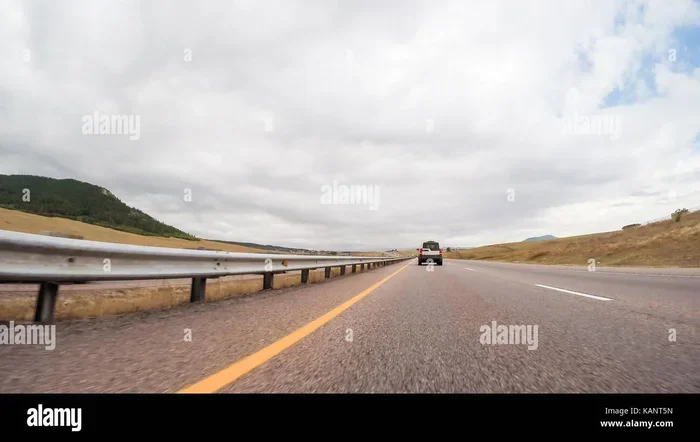
Think about driving down a straight road heading south. You cover 8 meters. Now imagine you drive 8 meters north instead. The distance is the same. But the outcome is completely different. Your position relative to where you started has changed in opposite ways.
Direction gives meaning to motion. Without it, we only know the car moved. We do not know where it ended up. This is why physicists use displacement alongside distance. Displacement is the straight-line change in position from start to finish. It includes direction. So when a car travels south 8 meters, the displacement is also 8 meters south.
In real driving, direction affects everything. Navigation systems rely on it. Traffic laws depend on it. Even your parking maneuver works because you know which way to turn. The simple idea of southbound motion ties into larger concepts of how vehicles move through space.
Distance vs Displacement: The Key Difference
One of the most common confusions in physics is the difference between distance and displacement. When a car travelling south covers a distance of 8 meters, the distance is straightforward. It is 8 meters. Full stop. But displacement asks a different question. It asks, “Where did the car end up relative to where it started?”
Let us look at this with a simple example. Suppose your car starts at a marked point on a straight road. You drive south for 8 meters and stop. Your distance traveled is 8 meters. Your displacement is 8 meters south. Both values are the same in this case because the car moved in a straight line without changing direction.
Now imagine a different scenario. You drive south for 8 meters, then turn around and drive north for 3 meters. Your total distance is now 11 meters. But your displacement is only 5 meters south. The difference is huge. Distance adds up everything. Displacement only cares about the net change in position.
Scalar vs Vector Quantities
Distance is a scalar quantity. It has size but no direction. Displacement is a vector quantity. It has both size and direction. This is a foundational concept in kinematics and motion analysis.
Other scalar quantities include speed and time. Vector quantities include velocity and acceleration. When you read that a car travelling south covers a distance of 8 meters, the word “south” signals that direction is part of the picture. Ignoring it would give you an incomplete understanding of the motion.
Here is a quick comparison:
- Distance: Total path traveled. Always positive. No direction needed.
- Displacement: Shortest change in position. Can be positive or negative. Direction is essential.
- Speed: How fast the car moves. Scalar quantity.
- Velocity: How fast and in which direction. Vector quantity.
Understanding these differences helps you solve problems faster. It also makes you more aware of how your car actually moves on the road. When you think about southbound driving, you naturally consider where you are going. That is displacement in action.
The Physics Behind a Car Moving South
Now let us dig into the physics. A car travelling south covers a distance of 8 meters. How do we describe this motion mathematically? The answer lies in kinematic equations. These equations connect distance, time, speed, velocity, and acceleration.
The most basic equation for constant speed is:
Distance = Speed × Time
If the car moves at a steady speed and covers 8 meters south, you can find how long it took if you know the speed. Or you can find the speed if you know the time. This simple relationship powers a lot of automotive analysis.
Speed and Velocity in Southbound Motion
Speed tells you how fast the car is moving. Velocity tells you how fast and in which direction. If the car covers 8 meters south in 4 seconds, the average speed is 2 meters per second. The average velocity is 2 meters per second south.
Notice the difference? The speed is the same number. But velocity adds the directional component. In automotive terms, this is like the difference between your dashboard speedometer and your GPS navigation. The speedometer shows your speed. The GPS shows your speed and your direction of travel.
When you are driving south through a neighborhood, your velocity changes if you slow down, speed up, or turn. Even a small change matters. At low speeds, these changes are easy to manage. But they are still real physics at work every time you get behind the wheel.
Acceleration and Deceleration
Acceleration is the rate of change of velocity. When a car starts from rest and moves south, it accelerates. When it slows down to stop, it decelerates. Both are forms of acceleration in physics terms.
If the car travelling south covers a distance of 8 meters while speeding up, the motion is more complex. You need to use the kinematic equations that include acceleration. The key equation is:
Distance = Initial Velocity × Time + ½ × Acceleration × Time²
This equation lets you calculate how long it takes, how fast the car was going at the start, or how much it accelerated. Each variable gives you a different piece of the puzzle. Plugging in the right values helps you solve real problems.
In everyday driving, acceleration and deceleration happen constantly. You accelerate when the light turns green. You decelerate when you approach a stop sign. Even at low speeds over short distances like 8 meters, these forces are at work. Your passengers feel them. Your tires feel them. The car’s engine and brakes handle them.
Common Scenarios Where This Applies
The idea of a car travelling south covers a distance of 8 meters is not just a textbook exercise. It shows up in many real driving situations. Let us look at some common scenarios where this type of short-distance southbound motion occurs.
Parking Maneuvers
Parking is one of the most common situations involving short-distance directional movement. When you pull into a southbound parking space, you might cover exactly 8 meters from the driving lane to the center of the spot. That short distance requires precision. You need to control your speed and direction carefully.
Think about parallel parking on a southbound street. You pull up alongside the car in front of the space. Then you reverse southward into the spot. The total distance your car covers might be around 8 meters. Understanding this motion helps you judge the space better and avoid hitting the curb or the car behind you.
School Zones and Intersections
School zones often require drivers to cover very short distances at low speeds. When you drive south through a school zone, you might travel 8 meters between the crosswalk and the stop line. This short stretch demands full attention. Children might be crossing. Other cars might be stopped.
At intersections, the distance from the stop line to the center of the intersection can be around 8 meters in urban areas. When the light turns green, you accelerate through this southbound stretch. Knowing the distance helps you judge when to go and when to wait.
Braking and Stopping Distance
Braking distance is a critical safety concept. When you hit the brakes, your car covers a certain distance before it stops. At low speeds, 8 meters is a very realistic braking distance. At higher speeds, it grows quickly.
Understanding braking distance helps you maintain safe following distances. If the car ahead of you stops suddenly, you need enough room to brake safely. The direction you are travelling south does not change the physics of braking. But it does affect how you perceive the stopping scenario on the road.
How to Calculate Motion Parameters for Southbound Travel
Let us get practical. How do you actually calculate the motion parameters when a car travels south 8 meters? Here are the key values you might want to find and the equations you use.
Finding Time
If you know the speed and the distance, finding time is easy. Use this formula:
Time = Distance ÷ Speed
Example: A car travels south at 2 meters per second. To cover 8 meters, it takes 4 seconds. Simple as that.
Finding Speed
If you know the distance and the time, you can find the average speed:
Speed = Distance ÷ Time
Example: A car covers 8 meters south in 2 seconds. Its average speed is 4 meters per second.
Finding Acceleration
If the car starts from rest and reaches a certain speed over 8 meters, you can find the acceleration. Use this equation:
Final Velocity² = Initial Velocity² + 2 × Acceleration × Distance
If the car starts from rest, the initial velocity is zero. You plug in the final velocity and the distance to solve for acceleration. This is very useful for analyzing how quickly a car can speed up from a stop sign.
A Quick Reference Table
- Distance: 8 meters south
- Time: Depends on speed or acceleration
- Average Speed: Distance divided by time
- Average Velocity: Displacement divided by time, with southward direction
- Acceleration: Change in velocity divided by time
These calculations form the backbone of motion analysis. They apply to every vehicle on the road. Whether you are driving a compact car or a large SUV, the physics remains the same. The direction south simply tells you where the motion is headed.
Real-World Tips for Understanding Short-Distance Car Motion
You do not need to be a physicist to benefit from understanding how a car moves over short distances. Here are some practical tips that connect the physics of southbound 8-meter travel to your everyday driving experience.
Use Landmarks to Judge Distance
When driving, use fixed landmarks to estimate distances. A parking space, a crosswalk, or a street sign can help you gauge how far you have travelled. If you know a typical parking space is about 8 meters long, you can use it as a mental reference for southbound distance.
Practice Smooth Acceleration
Smooth acceleration over short distances keeps your ride comfortable and your fuel economy better. When you move south through a tight space, ease onto the gas pedal. Avoid sudden bursts of speed. Your passengers will thank you, and your tires will last longer.
Always Check Your Blind Spots
When moving south even a short distance, blind spots matter. Pedestrians, cyclists, and other cars might be in your path. A quick mirror check before you move can prevent accidents. This is especially important in parking lots and busy intersections where short-distance travel is common.
Understand Your Braking Response
Know how your car responds when you brake at low speeds. Over 8 meters, a car travelling at walking pace can stop comfortably. But if you are going faster, that same distance might not be enough. Practice braking in safe, empty areas to learn your car’s stopping behavior.
Connect Physics to Driving Confidence
Understanding the basic physics of motion makes you a more confident driver. When you know how distance, speed, and direction work together, you can predict what your car will do. You can judge gaps in traffic more accurately. You can navigate tight spaces with greater ease. The concept of a car travelling south covers a distance of 8 meters is a building block for that confidence.
Common Mistakes People Make with Directional Distance Problems
Even though the idea of a car travelling south covers a distance of 8 meters is simple, people still make mistakes. Let us highlight the most common errors so you can avoid them.
Confusing Distance with Displacement
The biggest mistake is treating distance and displacement as the same thing. They are not. Distance is the total path length. Displacement is the straight-line change in position with direction. If the car goes south 8 meters and then north 8 meters, the distance is 16 meters but the displacement is zero.
Ignoring the Direction Component
Another common error is dropping the direction from the answer. If you say the car moved 8 meters, you have only given the distance. The full description includes the direction: 8 meters south. Without it, the answer is incomplete.
Using the Wrong Units
Always check your units. Distance in meters, time in seconds, speed in meters per second. Mixing units leads to wrong answers. A car covering 8 meters in 10 minutes has a very different speed than one covering 8 meters in 10 seconds.
Assuming Constant Speed
Not all motion happens at a steady pace. Many drivers accelerate and decelerate over short distances. Assuming constant speed when the car is actually speeding up or slowing down leads to incorrect calculations. Always consider whether the motion is uniform or changing.
Conclusion
A car travelling south covers a distance of 8 meters is more than just a simple statement about motion. It is a gateway to understanding how vehicles move, how direction shapes our perception of travel, and how basic physics applies to everyday driving. From parking lots to school zones, short-distance southbound motion is everywhere in our daily lives.
We explored the difference between distance and displacement. We looked at speed, velocity, and acceleration. We connected the physics to real driving scenarios. And we highlighted common mistakes to avoid. Each of these ideas builds on the core concept: a car moving south over 8 meters of road.
The beauty of this simple scenario is its universality. The same principles apply whether you are driving a small sedan or a large truck. Whether you are going 2 meters per second or 20. The direction south and the distance of 8 meters give you a clear framework for understanding motion. Use this framework to become a more aware driver and a more confident problem solver. The road ahead is short, but the knowledge you gain from understanding it will take you far.
Frequently Asked Questions
What is the difference between distance and displacement when a car travels south 8 meters?
Distance is the total path the car covers, which is 8 meters. Displacement is the straight-line change in position from start to finish, which is 8 meters south. If the car changes direction during the trip, the two values will differ.
How long does it take a car to travel 8 meters south at a slow speed?
It depends on the speed. At 1 meter per second, it takes 8 seconds. At 2 meters per second, it takes 4 seconds. At walking pace, 8 meters south takes only a few seconds. Use the formula Time = Distance ÷ Speed to calculate it for any speed.
Is southbound motion different from northbound motion in physics?
The physics is the same. The equations work identically. The only difference is the direction. South and north are opposite directions, so displacement values will have opposite signs. The distance covered remains positive regardless of direction.
Can a car cover 8 meters while accelerating?
Yes, absolutely. When a car accelerates from a stop, it covers distance as it gains speed. Over 8 meters, a car can go from rest to a moderate speed. The kinematic equations that include acceleration help you calculate exactly what happens during that southbound stretch.
Why does direction matter when a car travels south?
Direction matters because it defines the vector nature of motion. Without direction, you only know how far the car went. With direction, you know where it ended up relative to where it started. This is essential for navigation, traffic flow, and physics calculations.
How is this concept useful for everyday driving?
Short-distance directional travel happens every time you park, navigate an intersection, or move through a tight space. Understanding distance, displacement, speed, and direction helps you judge gaps, control your speed, and drive more safely and confidently in all situations.
=== CONCLUSION ===
The concept of a car travelling south covers a distance of 8 meters opens the door to understanding motion in a clear and practical way. From the difference between distance and displacement to the role of direction in velocity, these basics form the foundation of automotive physics. You do not need advanced math to grasp them. You just need curiosity and a willingness to think about how your car moves through space.
Apply what you have learned here to your next drive. Notice the short distances you cover in parking lots and intersections. Think about your speed and direction. Consider how your car accelerates and brakes over those few meters. This awareness will make you a sharper, safer, and more confident driver. The road may be short, but the understanding you gain is long-lasting.