Why Is My Car Saying Traction Control Off And What To Do
Your car says traction control off because the system has been manually switched off, a sensor is failing, or the traction control module needs attention. This warning means your vehicle has lost its ability to prevent wheel slip during acceleration, which can be dangerous on wet or icy roads. Understanding the root cause helps you fix the problem quickly and stay safe behind the wheel. In this guide, we walk you through every reason this message appears and the best steps to resolve it.
You are driving down the road, and suddenly a message pops up on your dashboard that reads traction control off. It can feel alarming, especially if you are not sure what it means or whether your car is safe to drive. This message is more common than most drivers think, and it can appear for a variety of reasons. Some causes are simple and easy to fix. Others may point to a deeper issue that needs professional attention. Either way, understanding what is happening with your traction control system is the first step toward solving the problem.
This guide breaks down every possible reason your car is displaying this warning. We will also walk you through practical fixes, safety tips, and ways to prevent the issue from coming back. Whether you are a new driver or have been on the road for years, this article will give you the confidence to handle the traction control off message with ease.
Key Takeaways
- Accidental switch activation: The traction control button on your dashboard or steering wheel may have been pressed by mistake, turning the system off.
- Faulty wheel speed sensors: A damaged or dirty ABS sensor can send wrong signals and trigger the traction control off warning.
- Module or wiring issues: Problems with the traction control module or its electrical connections can disable the entire system.
- Driving safely matters: When traction control is off, you need extra caution on slippery roads to avoid accidents.
- Simple resets work sometimes: Turning the car off and back on or disconnecting the battery can clear temporary errors.
- Professional help is sometimes needed: Persistent warnings often require a mechanic with diagnostic tools to read error codes.
- Prevention keeps you safe: Regular maintenance of sensors and modules prevents future traction control issues.
📑 Table of Contents
- Understanding Your Traction Control System
- Common Reasons Why Your Car Says Traction Control Off
- Warning Signs Your Traction Control System Needs Attention
- How to Fix the Traction Control Off Message
- Driving Safely When Traction Control Is Off
- Preventing Traction Control Problems in the Future
- Final Thoughts
Understanding Your Traction Control System
What Does Traction Control Do?
Your car’s traction control system is a safety feature designed to stop your wheels from spinning out of control. When you accelerate on a wet, icy, or uneven surface, your drive wheels can lose road grip and start sliding. The traction control system detects this loss of traction and automatically applies the brakes to individual wheels. It may also reduce engine power to help you maintain control.
Think of it as a guardian that works behind the scenes every time you press the gas pedal. It is closely linked to your anti-lock braking system, or ABS, and your electronic stability control system. Together, these features help keep your vehicle stable and safe during tricky driving conditions. When the system is active, you may rarely notice it. But when it goes off, you will definitely know something is wrong.
How the System Works in Real Time
Here is how the system works in simple terms. Your car has wheel speed sensors on each wheel. These sensors constantly monitor how fast each wheel is spinning. If one wheel starts spinning faster than the others, the system knows that wheel has lost grip. It then sends a signal to the traction control module to intervene. The module applies the brake to the spinning wheel or reduces engine power. This whole process happens in fractions of a second.
When everything is working correctly, you will never notice the system kicking in. It operates silently and keeps you safe. But when a sensor fails or the module malfunctions, your dashboard will display the traction control warning light or a message saying traction control off. This is your car telling you that the safety net is no longer active.
Common Reasons Why Your Car Says Traction Control Off
The Traction Control Switch Was Accidentally Turned Off
This is the most common and least serious reason. Many vehicles have a physical button or switch that lets you turn the traction control system on or off. You might have bumped it while driving or cleaned the dashboard area without realizing. Some drivers also turn it off intentionally when their car is stuck in snow or mud, because disabling traction control allows the wheels to spin faster and gain momentum.
If this is the case, the fix is simple. Look for the traction control button on your dashboard, steering column, or center console. Press it once to turn the system back on. The warning message should disappear within a few seconds. If it does not, there may be another issue at play, and you should continue reading to explore other causes.
A Faulty Wheel Speed Sensor
Your car relies on wheel speed sensors to track how fast each wheel is rotating. These small devices sit near the wheels and read the speed of the drive wheel and non-drive wheels. Over time, they can become dirty, damaged, or worn out. When a sensor fails, it sends incorrect data to the traction control module. The module then cannot determine if a wheel is slipping, and it disables the system as a safety precaution.
A faulty sensor is one of the top reasons for the traction control off message. It often triggers other warning lights too, such as the ABS light or the check engine light. If you notice multiple lights on your dashboard at once, a bad wheel speed sensor is very likely the culprit. Replacing a sensor is usually affordable and straightforward for a mechanic.
ABS Sensor Problems
The ABS sensor and the traction control sensor are often the same component or share the same wiring. When your ABS sensor fails, it directly affects the traction control system. The anti-lock braking system prevents your wheels from locking up during hard braking. If the ABS sensor is not working, your car cannot monitor wheel speed accurately, and the traction control system will shut down.
You might notice the ABS light coming on alongside the traction control warning. This is a strong signal that the sensor or its wiring is the problem. Rust, dirt, and road debris can all damage the sensor tip over time. Driving through deep water or muddy conditions can also cause temporary sensor failures that clear up once the area dries out.
Issues with the Traction Control Module
The traction control module is the brain of the system. It receives data from all the sensors and decides when to intervene. Like any electronic component, it can fail over time. Electrical problems, water damage, or a power surge can all cause the module to stop working. When this happens, your car will display the traction control off message, and the system will not turn back on even if you press the button.
A failing module can also cause erratic behavior. You might notice the traction control light flickering on and off randomly. In some cases, the entire stability control system may be affected too. Repairing or replacing the traction control module can be expensive, often ranging from $200 to $600 depending on your vehicle model and labor costs. This is why early diagnosis is so important.
Wiring and Electrical Connection Problems
Sometimes the problem is not a broken part but a loose or corroded wire. Your car has a complex network of electrical connectors that link the sensors to the control module. Vibration from driving over rough roads can loosen these connections over time. Moisture can also seep into connectors and cause corrosion, which interrupts the signal between components.
A corroded connector might cause intermittent issues. The traction control off message might appear and disappear randomly. This can be frustrating to diagnose, but a mechanic can use a diagnostic scanner to trace the problem. Regular inspections of your vehicle’s electrical connections can help prevent these issues from developing into bigger problems.
Warning Signs Your Traction Control System Needs Attention
Dashboard Lights You Should Never Ignore
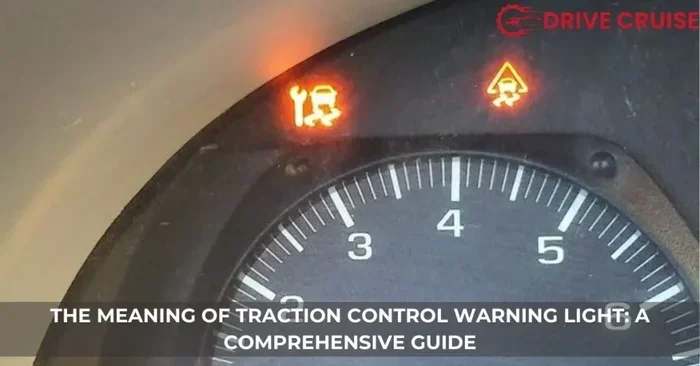
Your dashboard is full of small icons and messages that communicate the health of your vehicle. The traction control warning light usually looks like a car with squiggly lines behind it. When this light stays on, it means the system is either turned off or has detected a fault. Some vehicles also display a text message that reads traction control off or check traction control system.
Do not ignore these warnings. Even if your car seems to drive normally, the traction control system is an important safety feature. If you notice the light stays on after starting the car, it is worth investigating. A quick traction control reset might fix a temporary glitch, but a persistent light usually means something needs repair.
Handling Changes on Slippery Roads
One of the clearest signs that your traction control system is not working is a change in how your car handles on slippery surfaces. You might notice your wheels spinning more than usual when you accelerate on wet pavement or a gravel road. The car might feel less stable during turns or when braking suddenly on a loose surface.
If you have driven in rain or snow before and your car felt steady, but now it feels like the wheels are slipping more easily, the traction control system may be offline. This is a safety concern, especially during winter driving or when roads are wet. Trust your instincts. If something feels off about your vehicle’s handling, get the system checked.
How to Fix the Traction Control Off Message
Quick Reset Steps You Can Try at Home
Before you visit a mechanic, there are a few simple steps you can try at home. These steps often resolve temporary glitches that cause the traction control off message to appear.
- Turn the traction control switch back on. Locate the button and press it to reactivate the system.
- Turn your car off and back on. A full restart can clear temporary error codes and reset the system.
- Check the fuse. A blown fuse related to the traction control or ABS system can disable the warning. Check your owner’s manual for fuse box locations.
- Disconnect the battery for a few minutes. This resets the car’s computer and can clear minor electrical faults. Reconnect it and start the car to see if the message is gone.
If none of these steps work, the problem is likely hardware-related. A sensor, module, or wiring issue will need professional diagnosis.
When to See a Mechanic
If the traction control off message persists after trying the steps above, it is time to see a professional mechanic. They have specialized diagnostic tools that can read error codes from your car’s computer. These codes pinpoint exactly which sensor or component is failing.
A mechanic can also inspect the wiring, check the condition of the sensors, and test the traction control module. Trying to diagnose electrical issues without the right tools can waste time and money. A professional inspection typically costs between $100 and $200 for the diagnosis alone. From there, you will know exactly what repair is needed and how much it will cost.
Understanding the Traction Control Repair Cost
The cost to fix a traction control issue varies widely depending on the cause. Replacing a wheel speed sensor usually costs between $100 and $300. Fixing a wiring issue might be much less expensive if it is a simple connector repair. However, replacing the traction control module can cost anywhere from $200 to $600 or more, including labor.
Keep in mind that driving without traction control increases your risk of accidents, especially in poor weather. The traction control repair cost is a small price to pay compared to the potential cost of a crash. Always prioritize safety over savings when it comes to your vehicle’s safety systems.
Driving Safely When Traction Control Is Off
Tips for Slippery Road Conditions
If your traction control system is off and you need to drive, take extra precautions. Slow down on wet, icy, or gravel roads. Accelerate gently to avoid spinning your wheels. Increase your following distance so you have more time to brake safely. Avoid sharp turns at high speed, as your car is more likely to slide without the traction control system helping to stabilize it.
Wearing appropriate tires for the season also makes a big difference. All-season tires or winter tires provide better road grip than worn-out summer tires. Good tires work hand in hand with the traction control system to keep you safe. When the system is off, your tires become your first line of defense against slipping.
Common Mistakes Drivers Make
Many drivers make the mistake of ignoring the traction control off message and continuing to drive as normal. This is risky. Without traction control, your wheels can spin freely on slippery surfaces, causing you to lose control. Another common mistake is turning off traction control and forgetting to turn it back on after driving through a muddy or snowy patch.
Some drivers also confuse the traction control light with other dashboard warnings. The traction control warning light looks different from the check engine light or the oil pressure light. Learn what each light on your dashboard means so you can respond appropriately. Taking a few minutes to familiarize yourself with your vehicle’s warning lights can save you from confusion and danger.
Preventing Traction Control Problems in the Future
The best way to deal with the traction control off message is to prevent it from happening in the first place. Regular vehicle maintenance goes a long way toward keeping your safety systems working properly. Here are some simple habits that can help.
- Keep your sensors clean. Road dirt, salt, and debris can build up on your wheel speed sensors. A quick rinse during car washes helps keep them working properly.
- Check your tires regularly. Worn-out tires reduce road grip and put extra strain on the traction control system. Rotate your tires and replace them when the tread gets low.
- Do not ignore warning lights. If a light comes on, address it early. Small problems can grow into bigger, more expensive repairs if left unchecked.
- Keep your electrical connections secure. Have a mechanic inspect connectors during routine oil changes or service visits.
- Read your owner’s manual. It contains valuable information about your vehicle’s safety systems and how to maintain them.
Taking these simple steps can extend the life of your traction control system and keep you safe on the road. Prevention is always easier and cheaper than repair.
Final Thoughts
The traction control off message on your dashboard is not something you should take lightly. It means your vehicle has lost a key safety feature that helps you maintain control during acceleration and on slippery surfaces. Whether the cause is a simple switch, a faulty sensor, or a more complex module issue, addressing it quickly is the best thing you can do for your safety.
Start with the simple fixes at home. Try resetting the system, checking the button, and restarting your car. If the message persists, visit a trusted mechanic for a proper diagnosis. Understanding your traction control system and knowing what to do when it fails gives you confidence and keeps you prepared for any situation on the road. Stay proactive, stay informed, and always prioritize safety.
Frequently Asked Questions
Can I drive my car with the traction control off?
You can drive with traction control off, but it is not recommended. Without the system, your wheels may spin on wet or icy roads, making it harder to control the vehicle. Drive carefully and get the system repaired as soon as possible.
How much does it cost to fix the traction control off message?
The cost depends on the cause. A simple switch fix is free, while replacing a wheel speed sensor costs around $100 to $300. A traction control module replacement can range from $200 to $600 or more. Always get a professional diagnosis first.
What causes the traction control warning light to come on?
The light can come on due to a faulty wheel speed sensor, a bad ABS sensor, a damaged traction control module, or a loose electrical connection. It can also appear if you accidentally turn the system off using the dashboard switch.
Will the traction control off message go away on its own?
Sometimes, yes. If the message is caused by a temporary glitch or a dirty sensor, it may clear after a reset or once the road conditions change. However, a persistent message usually indicates a problem that needs professional attention.
Is the traction control system the same as the stability control system?
They are closely related but not exactly the same. Traction control prevents wheel spin during acceleration, while stability control helps you maintain control during turns and sudden maneuvers. Both systems share sensors and often work together to keep you safe.
How often should I have my traction control system checked?
You should have the system inspected during routine maintenance visits, such as oil changes or tire rotations. Regular checks help catch sensor issues and wiring problems early before they turn into expensive repairs.