Is 40 PSI Too High for Tires Here Is What You Need to Know
Is 40 PSI too high for tires? The answer depends on your vehicle, tire type, and driving conditions. Most passenger cars recommend tire pressure between 30 and 35 PSI, but some vehicles handle 40 PSI just fine. Knowing your recommended tire pressure keeps you safe and saves fuel.
Have you ever looked at your tire valve stem and wondered, “Is 40 PSI too high for tires?” You are not alone. This is one of the most common questions car owners ask, and for good reason. Tire pressure affects everything from safety to fuel efficiency. Getting it wrong can lead to uneven tire wear, poor handling, or even a dangerous blowout.
The truth is that 40 PSI is not automatically too high. It depends on your vehicle, your tires, and how you drive. Some cars run perfectly fine at 40 PSI, while others would be overinflated at that level. In this guide, we will break down everything you need to know about tire pressure, what 40 PSI means for your ride, and how to make sure your tires are set up right.
Whether you drive a compact sedan or a full-size truck, understanding your recommended tire pressure is one of the simplest things you can do to stay safe and save money. Let us dive in.
Key Takeaways
- 40 PSI is not always too high: Some vehicles, especially lighter ones or those with specific tire setups, use 40 PSI as their standard pressure.
- Check your owner’s manual: The recommended tire pressure for your vehicle is listed on the driver’s door jamb or in the manual, not on the tire sidewall.
- Overinflation causes uneven wear: Too much air pressure wears out the center of your tire tread faster and reduces traction.
- Check pressure when cold: Tire pressure readings change with temperature, so always check tires before driving for the most accurate result.
- Fuel economy improves with proper inflation: Correct tire pressure helps your car roll efficiently and can save you money at the pump.
- TPMS alerts are helpful but not perfect: Your tire pressure monitoring system warns you of major issues but should not replace regular manual checks.
📑 Table of Contents
- What Does Tire PSI Mean and Why It Matters
- Is 40 PSI Too High for Most Vehicles
- The Effects of Overinflated Tires
- How to Check and Set the Right Tire Pressure
- Common Tire Pressure Mistakes to Avoid
- How Tire Pressure Affects Fuel Economy
- Quick Tips for Maintaining the Right Tire Pressure
- Final Thoughts on 40 PSI and Your Tires
What Does Tire PSI Mean and Why It Matters
PSI stands for pounds per square inch. It measures how much air is inside your tire. Every tire and vehicle has a specific pressure range that works best. Too little air, and your tires struggle. Too much, and they get rigid and unforgiving.
Your tires are the only part of your car that touches the road. That makes tire inflation incredibly important. The right pressure gives you the best balance of grip, comfort, and efficiency.
Understanding PSI Ratings on Your Tires
Look at the sidewall of any tire and you will see a number followed by “Max PSI.” This is the maximum pressure the tire can handle, not the pressure you should always use. Many people confuse the two and end up overinflating their tires.
For example, a tire might say “Max PSI 50” on the sidewall. That does not mean you should fill it to 50 PSI. The recommended tire pressure for your specific vehicle is almost always lower. You will find that number on a sticker inside the driver’s door or in your owner’s manual.
Where to Find Your Vehicle’s Recommended Tire Pressure
Every vehicle comes with a manufacturer-recommended tire pressure. Here is where to look:
- Driver’s door jamb sticker: This is the most common place. Open your driver’s door and look for a sticker or plate on the frame.
- Owner’s manual: Your vehicle’s manual has a section on tires and maintenance.
- Fuel door: Some manufacturers place the sticker on the inside of the fuel door.
- Glove box: A few models keep the tire pressure info in the glove compartment.
Never use the Max PSI number on the tire sidewall as your guide. That number is the ceiling, not the target. Always go by what your vehicle manufacturer recommends.
Is 40 PSI Too High for Most Vehicles
This is the big question, and the answer is: it depends. For many passenger cars, the recommended pressure falls between 30 and 35 PSI. In those cases, 40 PSI would be considered overinflated. But for other vehicles, 40 PSI is right in the normal range.
Passenger Cars and Sedans
Most standard passenger cars recommend tire pressure around 32 to 35 PSI. If you put 40 PSI in a tire that calls for 32 PSI, you are overinflating by a good margin. This can cause a harsh ride, reduced traction, and faster wear in the center of the tread.
That said, some lightweight sedans or economy cars may list 40 PSI as their recommended pressure. Always check your specific vehicle before assuming anything.
Trucks, SUVs, and Larger Vehicles
Larger vehicles often need higher tire pressure. Trucks and SUVs can run 40 PSI or even higher without any issues. If you drive a pickup or a large SUV, 40 PSI might be exactly what the manufacturer intended.
For instance, some truck tires are rated for 40 to 45 PSI as their standard operating pressure. In these cases, 40 PSI is not too high at all. It is where the tire needs to be for safe and efficient operation.
When 40 PSI Is Perfectly Fine
There are clear situations where 40 PSI works great:
- Your vehicle’s door jamb sticker lists 40 PSI as the recommended pressure.
- You are carrying a heavy load and the manual recommends increasing pressure.
- You drive a truck, SUV, or minivan with larger tires rated for higher pressure.
- You are driving on highways for long distances and want slightly firmer tires for better fuel economy.
In all these cases, 40 PSI is not just acceptable. It is the right choice.
The Effects of Overinflated Tires
So what happens if you run too much air in your tires? Overinflation is more common than most people think, and it can cause real problems over time.
Handling and Safety Concerns
Overinflated tires have a smaller contact patch with the road. That means less rubber is touching the pavement at any given time. The result is reduced traction, especially on wet or icy roads.
Your car may feel bouncy or skittish. Steering response can become sharp and unpredictable. In emergency situations, overinflated tires take longer to stop because they cannot grip the road as effectively. This is a serious driving safety concern that many people overlook.
Uneven Tire Wear and Shorter Lifespan
One of the most visible signs of overinflation is uneven tire wear. When there is too much air, the center of the tread bears the most weight. You will notice the middle of your tire wears down faster than the outer edges.
This means you will need to replace your tires sooner. Over time, this adds up to real money wasted. If you own a hybrid vehicle, you might also want to check whether your driving habits affect tire wear differently. Some drivers notice that hybrid cars wear out tires faster due to the extra weight of battery packs and instant torque delivery.
Ride Comfort Decreases
Firm tires absorb road bumps less effectively. You will feel every pothole, seam, and crack in the road more intensely. On long drives, this can lead to fatigue and discomfort. A properly inflated tire acts like a cushion, absorbing imperfections in the road surface.
Overinflated tires transmit more shock directly into the suspension and chassis. This can also affect other components over time, potentially increasing maintenance costs down the road.
How to Check and Set the Right Tire Pressure
Checking your tire pressure is easy and should be part of your regular car care routine. Here is how to do it right.
Using a Tire Pressure Gauge
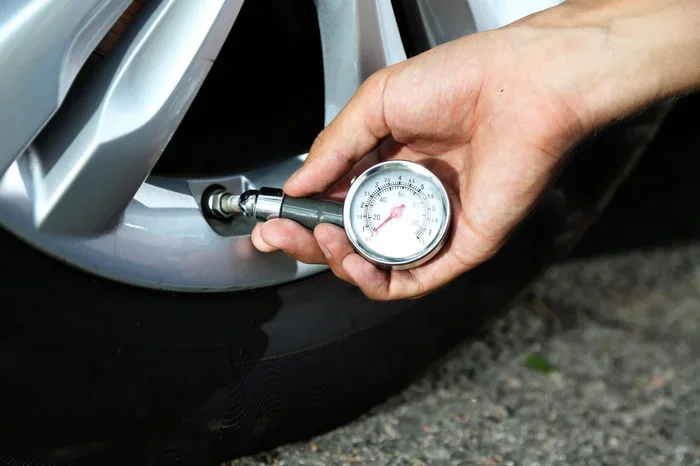
You will need a tire pressure gauge, which you can buy at any auto parts store for just a few dollars. Digital gauges are the most accurate, but pencil-style gauges work fine too.
Here is the process:
- Make sure your tires are cold. Driving heats up the air inside, which raises the pressure reading. Check before you hit the road or at least three hours after driving.
- Remove the valve cap from the tire.
- Press the gauge firmly onto the valve stem.
- Read the number on the gauge.
- Compare it to your vehicle’s recommended PSI.
- Add air if it is low. Let a small amount out if it is too high.
- Replace the valve cap.
When to Check Tire Pressure
Make it a habit to check your tire pressure at least once a month. Air slowly leaks out of all tires over time, even without a puncture. You should also check before long road trips.
Temperature changes affect tire pressure too. For every 10-degree drop in outside temperature, your tire pressure can drop by about 1 PSI. This is why you often see low-pressure warnings in winter.
Understanding Your Tire Pressure Monitoring System
Most modern vehicles come with a tire pressure monitoring system, or TPMS. This dashboard light flashes on when pressure drops significantly below the recommended level. It is a helpful warning tool, but it should not replace regular manual checks.
The TPMS usually only alerts you when pressure is 25% or more below the recommended level. By that point, your tires are already underinflated enough to affect performance and safety.
Common Tire Pressure Mistakes to Avoid
Even careful car owners make mistakes with tire pressure. Here are the most common ones and how to avoid them.
Relying Only on the Tire Sidewall
The number on the tire sidewall is the maximum pressure, not the recommended pressure. Using that number as your guide will almost always lead to overinflation. Always go by what your vehicle manufacturer specifies.
Ignoring the Spare Tire
Your spare tire needs air too. Many people forget about it until they need it and find it flat. Check your spare pressure at least twice a year.
Checking Tires After Driving
Hot tires give falsely high readings. If you check after a drive, you might think your pressure is fine when it is actually low. Always check when the tires are cold for the most accurate number.
Neglecting Regular Checks
Tire pressure changes over time. Even a brand-new tire loses about 1 PSI per month. Without regular checks, you could be driving on underinflated tires for weeks without realizing it.
How Tire Pressure Affects Fuel Economy
Here is a benefit many people do not think about. Proper tire pressure can actually improve your fuel economy. Underinflated tires create more rolling resistance, which means your engine has to work harder to keep you moving.
According to the Department of Energy, keeping your tires at the proper pressure can improve gas mileage by about 3%. That might not sound like much, but over thousands of miles, it adds up to real savings at the pump.
On the flip side, overinflating your tires to save fuel is not the answer. While extremely firm tires do reduce rolling resistance slightly, the safety and handling downsides far outweigh any tiny fuel savings. Stick to the manufacturer’s recommended pressure for the best balance.
Quick Tips for Maintaining the Right Tire Pressure
- Keep a tire pressure gauge in your glove box at all times.
- Write down the recommended PSI for each tire on a note stuck to your visor.
- Check pressure monthly and before long trips.
- Do not forget to check your spare tire twice a year.
- Invest in a quality air compressor for home use so you can top off tires anytime.
- If you frequently check your oil level, make tire pressure checks part of the same routine. Just like you would check if your car is low on oil, a quick tire pressure check takes only a few minutes.
Small habits make a big difference. A few minutes of attention each month can extend your tire life, improve safety, and even save you money on fuel.
Final Thoughts on 40 PSI and Your Tires
So, is 40 PSI too high for tires? The short answer is: not necessarily. It all comes down to your specific vehicle and what the manufacturer recommends. For some cars, 40 PSI is the sweet spot. For others, it is too much.
The most important thing you can do is know your numbers. Check your door jamb sticker, read your owner’s manual, and use a reliable gauge. Do not guess, and do not rely on the Max PSI number stamped on the tire.
Proper tire pressure is one of the easiest and most impactful things you can do for your vehicle. It keeps you safe, saves you money, and helps your tires last longer. Make it a regular part of your car maintenance routine and you will feel the difference every time you drive.
Take five minutes today. Grab a gauge, check your pressure, and drive with confidence knowing your tires are set up right.
Frequently Asked Questions
Can I drive with 40 PSI if my recommended pressure is 35 PSI?
Driving with 40 PSI when your recommended pressure is 35 PSI is not ideal but usually not dangerous for short distances. You will likely notice a firmer ride and slightly reduced traction. Over time, the higher pressure will cause uneven wear on the center of your tire tread. It is best to adjust your pressure to match the manufacturer’s recommendation.
What happens if tire pressure is too high?
Overinflated tires have a smaller contact area with the road, which reduces grip and traction. This can make your car harder to control, especially on wet surfaces. The ride becomes harsher, and the center of the tread wears out faster. In extreme cases, overinflation increases the risk of a sudden tire blowout.
Is 40 PSI too much for a sedan?
For most sedans, 40 PSI is higher than the recommended pressure, which is usually between 30 and 35 PSI. However, some lightweight sedans may list 40 PSI as their standard pressure. Always check your vehicle’s door jamb sticker or owner’s manual to confirm the correct pressure for your specific model.
Should I check tire pressure when the tires are hot or cold?
Always check tire pressure when the tires are cold, meaning the car has been parked for at least three hours or driven less than a mile. Driving heats up the air inside the tires, which raises the pressure reading and gives you a falsely high number. Cold readings are the most accurate for setting your pressure.
Does tire pressure affect fuel economy?
Yes, tire pressure has a direct impact on fuel economy. Underinflated tires create more rolling resistance, causing your engine to work harder and use more fuel. Properly inflated tires roll more efficiently and can improve gas mileage by up to 3%. However, overinflating tires to boost economy is not recommended due to safety and handling tradeoffs.
How often should I check my tire pressure?
You should check your tire pressure at least once a month and always before long road trips. Air slowly escapes from all tires over time, and temperature changes also affect pressure. Making tire pressure checks a monthly habit is one of the simplest ways to extend tire life and stay safe on the road.
=== CONCLUSION ===
Is 40 PSI too high for tires? The answer is not a simple yes or no. It depends entirely on your vehicle, your tires, and what the manufacturer recommends. For some drivers, 40 PSI is perfect. For others, it is too much. The key is knowing your numbers and sticking to them.
Take a few minutes to check your tire pressure today. Grab a gauge, find your recommended PSI, and make any adjustments needed. Your tires, your fuel bill, and your safety will all thank you. Proper tire pressure is one of the easiest and most rewarding things you can do as a car owner.