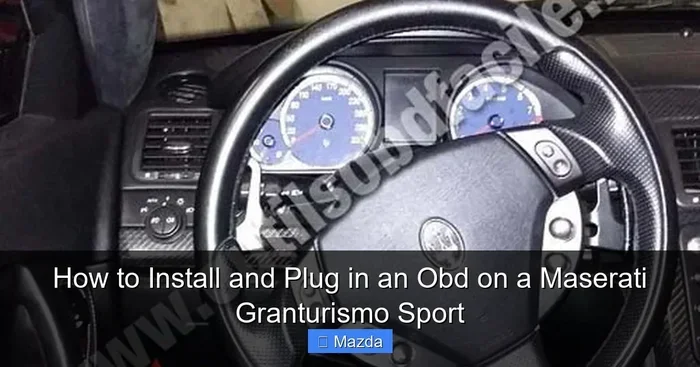
Install and Plug In an OBD on a Maserati GranTurismo Sport
Installing an OBD on a Maserati GranTurismo Sport is straightforward once you know the right steps. This guide walks you through finding the OBD port, plugging in your device, and reading diagnostic codes like a pro. You will learn what tools you need, common mistakes to avoid, and how to get the most from your OBD scanner on a luxury Italian sports car.
Owning a Maserati GranTurismo Sport is a thrilling experience. That sleek Italian design and powerful V8 engine turn heads everywhere you go. But even the most exotic cars need regular care. One of the smartest things you can do for your GranTurismo Sport is to install an OBD device. Whether you are a DIY mechanic or just want to stay on top of your car’s health, this tool is a game changer.
If you have never used an OBD scanner before, the process might seem intimidating. But here is the good news. Plugging in an OBD to a Maserati GranTurismo Sport is simple. In this guide, we will walk you through every step. You will learn where the port is, which scanner to use, how to read the data, and how to troubleshoot common issues. By the end, you will feel confident doing it yourself.
The onboard diagnostics system in your Maserati monitors everything from engine performance to the emission system. When something goes wrong, the system stores a fault code. An OBD device lets you access those codes in seconds. No more guessing what that dashboard warning light means. You get clear, actionable information right at your fingertips.
Key Takeaways
- Locate the OBD port: The Maserati GranTurismo Sport OBD-II port is typically found under the dashboard on the driver side.
- Use the right scanner: A quality OBD-II scanner or adapter ensures accurate diagnostic readings for your Maserati.
- Follow each step carefully: From plugging in the device to interpreting fault codes, every step matters for reliable results.
- Understand the data: OBD scanners provide real-time data streams, engine codes, and emission system insights.
- Clear codes safely: Always address the root cause before clearing any check engine light codes.
- Regular diagnostics save money: Routine OBD checks help catch small problems before they become expensive repairs.
📑 Table of Contents
- Understanding the OBD System on a Maserati GranTurismo Sport
- Tools and Equipment You Will Need
- Locating the OBD Port on the Maserati GranTurismo Sport
- How to Plug In the OBD Device
- Reading and Interpreting OBD Diagnostic Data
- Clearing Codes and Maintaining Your OBD Device
- When to Seek Professional Help
- How OBD Diagnostics Fit Into Your Maserati Maintenance Routine
- Final Thoughts
Understanding the OBD System on a Maserati GranTurismo Sport
Before you start installing anything, it helps to understand what the OBD system does. Onboard diagnostics is a standard system built into every modern car. It uses sensors throughout the vehicle to monitor engine timing, fuel mixture, emission controls, and more. When the system detects a problem, it logs a trouble code and often triggers the check engine light.
What Does OBD-II Mean?
The GranTurismo Sport uses the OBD-II standard. This is the second generation of onboard diagnostics, and it has been mandatory in all cars sold in the United States since 1996. OBD-II provides a universal connector and communication protocol. This means any OBD-II scanner can communicate with your Maserati. You are not locked into brand-specific tools, which is great news for owners who want flexibility.
What the OBD Monitors in Your Maserati
The OBD system on your GranTurismo Sport keeps tabs on many critical systems:
- Engine control module (ECM) performance and timing
- Fuel system pressure and injector operation
- Emission controls including the catalytic converter
- Oxygen sensors and air-fuel ratio
- Ignition system and misfire detection
- Transmission shifting patterns and solenoid operation
- Exhaust gas recirculation (EGR) system
When one of these systems reports a value outside the expected range, the ECM stores a diagnostic trouble code (DTC). An OBD scanner reads these codes and gives you a clear picture of what is happening under the hood. This is incredibly useful for vehicle maintenance and avoiding costly surprises.
Tools and Equipment You Will Need
Before you begin the installation, gather everything you need. Having the right tools makes the process smooth and stress-free. Here is a simple checklist:
Essential Items
- OBD-II scanner or adapter: Choose one that is compatible with luxury vehicles. A basic scanner works fine for reading and clearing codes. Bluetooth or Wi-Fi adapters work great if you prefer using a smartphone app.
- Smartphone or tablet (optional): If you are using a wireless OBD adapter, you will need a device with the matching app installed.
- Flashlight: The OBD port can be a tight spot to reach. A small flashlight helps you see what you are doing.
- Soft cloth or microfiber towel: Keeping the area around the port clean prevents dust from getting inside the connector.
Recommended OBD Scanners for Maserati
Not all OBD scanners are created equal. For a Maserati GranTurismo Sport, look for a scanner that supports advanced protocols and provides detailed manufacturer-specific data. Popular options include the Autel MaxiCOM series, the Foxwell GT series, and wireless Bluetooth adapters that work with apps like Torque Pro or Car Scanner. These tools give you access to real-time data streams and manufacturer-specific diagnostic functions.
Locating the OBD Port on the Maserati GranTurismo Sport
The first practical step is finding the OBD port. On the Maserati GranTurismo Sport, the OBD-II port is located under the dashboard on the driver side. It sits near the lower edge of the dashboard, close to where your left knee would be when seated in the driver seat.
Step-by-Step Port Location
- Open the driver door and kneel down on the left side of the vehicle.
- Look under the dashboard near the lower trim panel, to the left of the steering column.
- You are looking for a trapezoidal-shaped connector with 16 pins. It is usually covered by a small plastic flap or cap.
- Remove the cap or flap gently. The port should be clearly visible.
If you have trouble finding it, check your owner’s manual. The Maserati manual will show the exact location of the vehicle diagnostics port. Some owners also store a small OBD port cover replacement if the original cap gets lost.
How to Plug In the OBD Device
Now comes the easy part. Plugging in the OBD device is quick and requires no special skills. Just follow these steps carefully.
Step-by-Step Plug In Process
- Turn off the ignition. Make sure the engine is off and the key is removed from the ignition. This protects both the car’s computer and the OBD scanner.
- Take your OBD scanner or adapter. Inspect the connector for any dirt or debris. Wipe it clean with a soft cloth if needed.
- Align the connector with the OBD port. The 16-pin connector on your scanner matches the port shape. It will only fit one way. Do not force it.
- Push the connector firmly into the port. You should feel it click into place. The tabs on the sides of the connector lock it securely.
- Turn the ignition to the “ON” position. Do not start the engine. Just turn the key or press the start button without pressing the brake. The OBD device should power on and begin communicating with the car’s computer.
- Wait for the connection to establish. If you are using a Bluetooth adapter and a phone app, the app should detect the device within a few seconds. Follow the app’s pairing instructions if needed.
Once connected, your OBD device will display a menu or dashboard. From here, you can choose to read fault codes, view live data, or check the status of various systems. The entire process takes less than two minutes once you have done it a couple of times.
Common Plug In Mistakes to Avoid
- Forcing the connector: If it does not slide in easily, check the alignment. Forcing it can bend the pins.
- Starting the engine before connecting: Always connect the device with the ignition in the “ON” position first. Starting the engine too early can sometimes cause communication errors.
- Using a damaged cable: A frayed or bent OBD cable can give unreliable readings. Replace damaged cables immediately.
- Ignoring the port cover: Put the protective cap back on after you are done. This keeps dust and moisture out of the port.
Reading and Interpreting OBD Diagnostic Data
Once your OBD device is connected, the real value begins. The scanner communicates with your Maserati’s ECM and pulls up any stored diagnostic trouble codes. Understanding these codes is the key to using your OBD effectively.
Understanding Fault Code Formats
Every OBD fault code starts with a letter followed by four numbers. The letter tells you the category of the problem:
- P = Powertrain (engine and transmission)
- B = Body (air conditioning, sensors, comfort systems)
- C = Chassis (brakes, suspension, steering)
- U = Network (communication between modules)
For example, a code like P0301 indicates a misfire in cylinder 1. A code like P0420 suggests a problem with the catalytic converter efficiency. Once you have the code, you can look it up in a database or use your scanner’s built-in definitions to understand what it means.
Using Live Data for Deeper Insights
Beyond reading codes, a good OBD scanner lets you view live data streams. This means you can watch sensor readings in real time while the engine is running. You can monitor:
- Engine RPM and coolant temperature
- Oxygen sensor voltages
- Fuel trim percentages
- Boost pressure (on the turbocharged GranTurismo Sport)
- Transmission shift timing
Live data is incredibly useful when you are trying to diagnose intermittent issues. For instance, if your Maserati runs fine most of the time but occasionally stumbles, watching the fuel trim and oxygen sensor data in real time can reveal the problem that a static code reading might miss.
Clearing Codes and Maintaining Your OBD Device
After you have addressed a problem, you may want to clear the stored codes. This is where many car owners make mistakes. You should never clear codes before fixing the underlying issue. Clearing codes without repairing the problem simply hides the symptom and the check engine light will return.
If you have already fixed the issue and want to reset the system, follow these steps:
- Connect your OBD scanner as described earlier.
- Navigate to the “Clear Codes” or “Erase DTCs” function in the scanner menu.
- Confirm the action. The scanner will erase all stored trouble codes.
- Turn off the ignition and wait a few minutes.
- Restart the engine and check if the check engine light stays off.
If the check engine light comes back on shortly after clearing the codes, the problem has not been fully resolved. Go back and investigate further. For more detailed guidance on managing check engine lights and codes, you can refer to our article on can a check engine light turn off on its own.
Keeping Your OBD Device in Good Shape
Your OBD scanner or adapter is a tool, and like any tool, it needs care. Store it in a dry place when not in use. Avoid leaving it plugged into the car for extended periods when the engine is off. If you use a wireless adapter, keep it charged and update the firmware regularly. A well-maintained OBD device will give you reliable readings for years.
When to Seek Professional Help
While an OBD device is powerful, it has limits. Some issues require a trained technician and specialized equipment. If your Maserati GranTurismo Sport displays a code related to the advanced electronics, the transmission control module, or complex network communication errors, it is wise to consult a Maserati specialist. You can also visit any authorized dealership for complex diagnostics. For more information on service options, check out our guide on can I take my car to any dealership for service, which covers general dealership service questions.
Additionally, if you notice multiple warning lights on the dashboard at once, or if your car goes into limp mode, stop driving and get a professional inspection. These symptoms often point to serious issues that an OBD scanner alone cannot fully diagnose.
How OBD Diagnostics Fit Into Your Maserati Maintenance Routine
Installing an OBD device on your GranTurismo Sport is not a one-time task. Making it part of your regular car maintenance routine brings the best results. Here is a simple maintenance schedule that includes OBD checks:
- Monthly: Plug in your OBD scanner and scan for any new codes. Even if the check engine light is off, pending codes can alert you to problems before they trigger a warning light.
- Before long trips: Run a full diagnostic scan to make sure everything is in good shape. Check live data for any abnormal readings.
- After any repair: Use the OBD scanner to verify that codes have been cleared and the system is running normally.
- During oil changes or service: Share any OBD data with your mechanic. This gives them a head start on diagnosing any issues.
Regular OBD checks also help you track your car’s overall health over time. You can compare data from month to month and spot trends before they become serious problems. This proactive approach to vehicle diagnostics can save you thousands of dollars in repair costs over the life of your Maserati.
Understanding your car’s weight capacity and load limits is also important for overall maintenance. For more on this topic, check out our article on how do I know how much weight my car can hold.
Final Thoughts
Installing and plugging in an OBD on a Maserati GranTurismo Sport is one of the simplest and most valuable things you can do as a car owner. It puts you in control of your vehicle’s health. You no longer have to guess what that dashboard light means or wait for a mechanic to tell you what is wrong. With the right scanner and a little knowledge, you can diagnose issues, monitor performance, and keep your GranTurismo Sport running beautifully for years to come.
Start by locating the port under your dashboard. Plug in your OBD device. Read the codes. Interpret the data. And most importantly, take action on what you find. Your Maserati deserves the same attention and care that made it one of the most exciting sports cars on the road. A small investment in an OBD scanner pays for itself many times over in avoided repairs and peace of mind.
Frequently Asked Questions
Where is the OBD port located on a Maserati GranTurismo Sport?
The OBD-II port on the Maserati GranTurismo Sport is located under the dashboard on the driver side, near the lower edge close to the steering column. It is covered by a small plastic cap that you can gently remove to access the 16-pin connector.
Can I use any OBD scanner with my Maserati GranTurismo Sport?
Yes, since the GranTurismo Sport uses the standard OBD-II protocol, any OBD-II scanner should be able to communicate with the vehicle. However, for the best results and access to manufacturer-specific data, choose a scanner that supports advanced Maserati protocols and provides detailed diagnostic information.
Do I need to turn the engine on to use the OBD scanner?
No. You only need to turn the ignition to the “ON” position without starting the engine. This powers the car’s computer systems and allows the OBD device to establish communication. Starting the engine is not necessary for reading or clearing codes.
Is it safe to clear OBD codes myself?
Yes, it is safe as long as you have already fixed the underlying problem. Clearing codes before repairing the issue will only hide the problem temporarily, and the check engine light will return. Always diagnose and fix the root cause first, then use your scanner to clear the codes.
Can an OBD scanner tell me exactly what part needs replacing?
An OBD scanner provides fault codes that point to the affected system or component, but it does not always tell you the exact part that needs replacement. For example, a P0420 code indicates a catalytic converter efficiency issue, but further diagnosis may be needed to confirm the exact cause. Use the codes as a starting point for your investigation.
How often should I plug in my OBD scanner to check my Maserati?
It is a good practice to plug in your OBD scanner at least once a month or before any long road trip. Regular scans help you catch pending codes early, monitor sensor data for trends, and stay ahead of potential problems before they turn into expensive repairs.