Does Your Credit Score Really Affect Car Insurance
Yes, your credit score can significantly impact your car insurance rates. Most insurance companies use a credit-based insurance score to help determine your premium costs. Understanding this connection helps you take control of both your finances and your auto insurance quotes.
You might not think twice about your credit score when you get behind the wheel. But here is something that surprises many drivers. Your credit score can directly affect how much you pay for car insurance. This is not a secret. Insurance companies have been using credit information to price policies for decades. Yet most people do not realize this connection until they see their bill. If you have ever wondered why your insurance premiums seem high, your credit history might be a big reason.
The relationship between credit and car insurance rates is real and significant. Studies show that drivers with lower credit scores tend to file more claims. Because of this, insurers view them as higher risk. This means higher monthly payments. On the flip side, drivers with strong credit often enjoy lower rates. This guide breaks down everything you need to know. We will cover how this works, what you can do about it, and which states have rules against this practice.
Key Takeaways
- Credit-based insurance scores: Insurers use these scores, separate from your regular credit score, to assess risk.
- Higher credit, lower rates: Better credit typically means lower insurance premiums.
- State laws vary: Some states ban credit-based insurance scoring entirely.
- You can improve both: Steps to boost your credit can also reduce your insurance costs.
- Other factors matter too: Driving record, age, and vehicle type also influence rates.
- Shopping around helps: Comparing auto insurance quotes from multiple providers can offset credit-based pricing.
📑 Table of Contents
- How Credit Scores Connect to Car Insurance
- Why Do Insurance Companies Check Credit?
- Which States Ban Credit-Based Insurance Scoring?
- How Much Can Your Credit Score Affect Insurance Costs?
- Tips to Improve Your Credit and Lower Insurance Premiums
- Common Mistakes People Make With Credit and Insurance
- Expert Insights on Credit and Insurance
- Final Thoughts
How Credit Scores Connect to Car Insurance
When you apply for car insurance, the company does more than check your driving record. They also look at your financial history. This is where your credit score comes in. Insurers believe that people who manage their money well also take better care of their vehicles. This might not feel fair to everyone. But it is how the industry works in most states.
Insurance companies pull what is called a credit-based insurance score. This is different from your regular FICO score. Your credit-based insurance score focuses on specific factors. These include your payment history, how much debt you carry, and how long you have had credit accounts. It does not look at your income or job status. The goal is simple. Insurers want to predict whether you will file a claim.
Think of it this way. If someone pays their bills on time and keeps their debt low, they likely have a strong credit score. Insurers see this as a sign of financial responsibility. And they reward it with better rates. On the other hand, missed payments or high credit utilization can raise your insurance premiums. This is why checking your credit report regularly matters so much.
What Factors Go Into a Credit-Based Insurance Score?
Insurance companies do not just look at one number. They analyze several pieces of information from your credit history. Here are the main factors they consider:
- Payment history: Late payments hurt your score. On-time payments help it.
- Debt levels: High balances compared to your limits raise red flags.
- Length of credit history: Longer accounts work in your favor.
- New credit inquiries: Too many recent applications can lower your score.
- Credit mix: Having different types of credit accounts shows stability.
All of these factors combine into your credit-based insurance score. This score then gets weighed alongside your driving record, age, and vehicle type. The result is your final auto insurance quote. It is a complex process. But understanding it gives you power.
Why Do Insurance Companies Check Credit?
This question comes up a lot. Why would an insurance company care about your credit score? The answer comes down to data and risk. Insurers have massive amounts of claims data. Over many years, they have found patterns. Drivers with lower credit scores tend to file more insurance claims. This is a statistical reality, not a judgment about character.
When insurers price a policy, they try to predict future costs. Someone with a poor credit history is statistically more likely to need costly repairs or replacements. This is why car insurance rates are often higher for those with lower credit. It is not personal. It is about numbers.
Also, insurance companies face their own financial pressures. They need to set rates that cover claims, operating costs, and profit. Using credit-based insurance scores helps them do this more accurately. It allows them to offer coverage to more people. Without this tool, premiums for everyone might actually go up.
Keep in mind that checking your credit for insurance purposes is a soft inquiry. This does not hurt your credit score. Many people confuse this with hard inquiries from loan applications. Soft inquiries have no impact. You can check your own credit report as often as you want without any penalty.
Which States Ban Credit-Based Insurance Scoring?
Not everyone agrees with using credit scores to set insurance premiums. Because of this, some states have passed laws banning the practice. If you live in one of these states, your credit score cannot be used against you when getting a quote. Here is the current list of states that restrict or ban this practice:
- California
- Hawaii
- Massachusetts
- Michigan
- Colorado
- Connecticut
- Maryland
- Oregon
- Rhode Island
- Utah
If you live in one of these states, you have an advantage. Your car insurance rates are not affected by your credit history. But even if you do not live in these states, there are still things you can do. Shopping around for auto insurance quotes remains one of the best strategies. Different insurers weigh credit differently. You might find a company that offers fair rates despite a lower credit score.
It is also worth noting that laws change. New legislation could expand the list of banned states. Staying informed about state regulations in your area is always smart. You can check with your state insurance department for the latest rules.
How Much Can Your Credit Score Affect Insurance Costs?
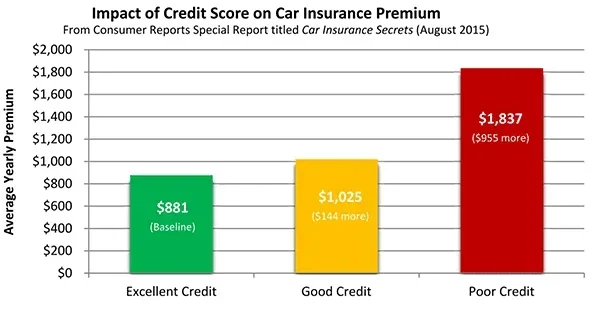
The impact of credit score on car insurance rates can be significant. Studies show that drivers with poor credit can pay up to 40% more than those with excellent credit. That is a huge difference over time. On average, a driver with a poor credit score might pay hundreds of dollars more per year for the same coverage.
Let us look at a quick comparison to make this real:
- Excellent credit: Lower insurance premiums, best available rates.
- Good credit: Slightly higher rates than excellent, but still competitive.
- Fair credit: Noticeable increase in monthly payments.
- Poor credit: Highest rates, limited options for affordable coverage.
The difference between excellent and poor credit can mean hundreds of dollars per year. Over a five-year policy period, this adds up to thousands of dollars. That is money that could go toward savings, monthly payments on your vehicle, or even coverage limits upgrades.
It is also important to remember that credit score is just one factor. Your driving record, age, location, and vehicle type all play roles. But credit often carries more weight than many people realize. If you have recently improved your credit history, it is worth getting new auto insurance quotes. You might be surprised at the savings.
Can Young Drivers Be Affected More?
Young drivers already face higher car insurance rates because of their inexperience. Add a poor credit score into the mix, and costs can skyrocket. For a 17-year-old looking to get their own policy, credit can make a big difference. If you are a young driver, building good credit habits early can save you money for years to come. Understanding how insurance premiums work gives you a head start.
Even if you are not a young driver, your credit score matters at every age. Whether you need 1 day car insurance for a short trip or a full annual policy, your credit history will likely be checked. The best approach is to maintain strong financial responsibility at all stages of life.
Tips to Improve Your Credit and Lower Insurance Premiums
The good news is that you can take action. Improving your credit score can lead to lower car insurance rates. Here are practical steps you can start today:
- Pay all bills on time. Payment history is the biggest factor in your credit score. Set up automatic payments if needed.
- Reduce your debt. Lowering your credit utilization ratio helps your score quickly.
- Check your credit report for errors. Mistakes happen. Disputing errors can boost your credit score fast.
- Avoid opening too many new accounts. Each application creates a hard inquiry that can temporarily lower your score.
- Keep old accounts open. Length of credit history matters. Do not close accounts you no longer use.
- Get multiple auto insurance quotes. Different companies weigh credit differently. Shopping around can save you money regardless of your score.
Improving your credit is not an overnight fix. It takes time and discipline. But every positive step counts. Within a few months of good financial habits, you should see your credit-based insurance score improve. And that means lower premium costs on your next policy renewal.
Quick Tips for Saving on Car Insurance
- Bundle your auto insurance with home or renters insurance for discounts.
- Maintain a clean driving record to offset any credit-related rate increases.
- Ask about safe driver programs and telematics discounts.
- Review your policy annually and adjust coverage limits as needed.
- Consider raising your deductible to lower monthly payments.
Common Mistakes People Make With Credit and Insurance
Many drivers make avoidable mistakes when it comes to credit score and car insurance. Here are the most common ones:
- Not checking your credit report: Errors can silently raise your rates. Check at least once a year.
- Assuming all insurers use credit the same way: Some companies weight credit more heavily than others. Always compare quotes.
- Ignoring state laws: If you live in a state that bans credit-based scoring, you may not need to worry about this factor at all.
- Closing old accounts: This shortens your credit history and can lower your score.
- Not asking about discounts: Many insurers offer discounts that go beyond credit. Safe driving, loyalty, and bundling all help.
Avoiding these mistakes puts you in a much better position. You will pay fairer rates and feel more confident in your auto insurance choices.
Expert Insights on Credit and Insurance
Insurance experts agree that the credit score debate is not going away anytime soon. Consumer advocates argue that using credit to price insurance penalizes lower-income families. They point out that financial hardship does not equal bad driving. On the other side, insurers say the data supports their approach. Drivers with higher credit scores do file fewer claims.
Regulators in banned states argue that insurance should be based on driving behavior, not financial history. This debate continues in legislatures across the country. For now, most drivers will still face credit-based pricing in some form. The best thing you can do is stay informed and take control of your financial health.
If you have ever been denied coverage or hit with unexpectedly high rates, your credit history might be the culprit. Understanding this gives you the power to make changes. Improve your credit, shop around, and always read the fine print on any policy. Your wallet will thank you.
Final Thoughts
Your credit score affects more than just loans and credit cards. It reaches into your car insurance costs too. The connection is real, significant, and often overlooked. By understanding how credit-based insurance scores work, you can take steps to lower your insurance premiums. Whether you live in a state that uses credit scoring or not, maintaining good financial habits always pays off.
Start by checking your credit report for errors. Pay your bills on time. Reduce your debt. And always compare auto insurance quotes from multiple providers. These steps give you the best chance of finding affordable car insurance that fits your needs. Your credit score is a powerful financial tool. Use it wisely and it will work in your favor for years to come.
Remember, insurance is about managing risk. And the more control you have over your financial picture, the more control you have over your rates. Take action today. Your future self will thank you when you see lower monthly payments and better coverage limits on your next policy.
Frequently Asked Questions
Does checking my credit for insurance affect my credit score?
No, it does not. Insurance companies perform a soft inquiry when checking your credit for pricing purposes. Soft inquiries do not impact your credit score in any way. You can check your own credit report as often as you like without any penalty.
Can I get car insurance with a bad credit score?
Yes, you absolutely can. A poor credit score may mean higher insurance premiums, but it does not prevent you from getting coverage. Many insurers specialize in high-risk policies. Shopping around for auto insurance quotes helps you find affordable options regardless of your credit history.
How long does it take to improve a credit score for better insurance rates?
Improving your credit score typically takes several months of consistent positive habits. Paying bills on time and reducing debt are the fastest ways to see improvement. Once your credit-based insurance score reflects the changes, you can request new auto insurance quotes and potentially lower your premium costs.
Do all car insurance companies use credit scores?
Most major insurers use credit-based insurance scores as one factor in pricing. However, not all companies weigh credit equally. Some place less emphasis on it and focus more on driving behavior. Comparing quotes from multiple providers is the best way to find fair rates for your situation.
Are there alternatives to credit-based insurance pricing?
Yes, some insurers offer usage-based or telematics programs. These programs track your actual driving habits instead of relying on credit. Safe drivers can earn significant discounts through these programs. This can be a great option if you have a lower credit score but a clean driving record.
Which factors matter more than credit score for car insurance rates?
Your driving record, age, location, and vehicle type all influence car insurance rates. A clean driving record can sometimes offset higher premiums caused by lower credit. Additionally, bundling policies and taking advantage of safe driver discounts can help reduce costs regardless of your financial history.
=== CONCLUSION ===
Your credit score really does affect your car insurance. From higher insurance premiums to limited options, the impact is real. But knowledge is power. Now that you understand how credit-based insurance scores work, you can take control. Improve your credit, compare auto insurance quotes, and make informed decisions about your coverage. The road to lower rates starts with a single step. Take it today.