The Best Car Fridge With Compressor For Camping And Travel
A car fridge with compressor is one of the most reliable ways to keep your food and drinks cold during long camping trips and travel adventures. In this guide, we break down the top compressor fridge options, compare features, and help you choose the perfect portable refrigerator for your next road trip or camping getaway.
Key Takeaways
- Compressor fridges outperform thermoelectric coolers in temperature control, efficiency, and durability for long trips.
- 12V car fridges are versatile, running off vehicle batteries, solar panels, or shore power at campsites.
- Energy efficiency matters — look for models with low power consumption to preserve your battery life.
- Size and capacity should match your trip length and the number of people traveling.
- Installation and mounting options vary, including dashboard, floor, or cargo area placement.
- Regular maintenance like cleaning condenser coils ensures your travel fridge lasts for years.
📑 Table of Contents
- Why a Car Fridge With Compressor Is a Game-Changer for Campers
- How a Car Fridge With Compressor Works
- Top Features to Look for in a Car Fridge With Compressor
- Best Car Fridges With Compressor for Camping and Travel
- Car Fridge With Compressor vs. Traditional Coolers
- Tips for Using Your Car Fridge With Compressor on the Road
- Conclusion
Why a Car Fridge With Compressor Is a Game-Changer for Campers
There is nothing quite like opening your car fridge with compressor after a long drive and pulling out a cold drink or fresh food. It changes the entire experience of camping and travel. No more melting ice. No more soggy sandwiches. Just reliable, cold storage wherever the road takes you.
Traditional coolers have been the go-to for decades. They work fine for a day trip or a short weekend. But when you venture out for longer adventures, they fall short fast. Ice melts. Food spoils. You end up making extra stops that eat into your travel time.
That is where a compressor fridge steps in. These portable refrigerators use a real compressor system, similar to what sits in your kitchen at home. They cool faster, hold colder temperatures, and keep items frozen for days. Whether you are planning a weekend getaway or a month-long road trip, this is the camping gear that makes everything smoother.
Who Needs a Car Fridge With Compressor?
Honestly, almost anyone who travels can benefit. Here are some common use cases:
- Campers and hikers who spend multiple days in the outdoors and need reliable food storage on the road.
- Road trippers covering long distances across states or countries.
- RV owners looking for a backup or primary RV fridge solution.
- Truck drivers who want fresh meals during long hauls.
- Fishing and hunting enthusiasts who need to store catches or supplies cold.
- Families who want cold snacks and drinks for kids during long drives.
The bottom line is simple. If you spend time away from home and want fresh, cold food, a car cooler with a compressor is the smartest investment you can make.
How a Car Fridge With Compressor Works
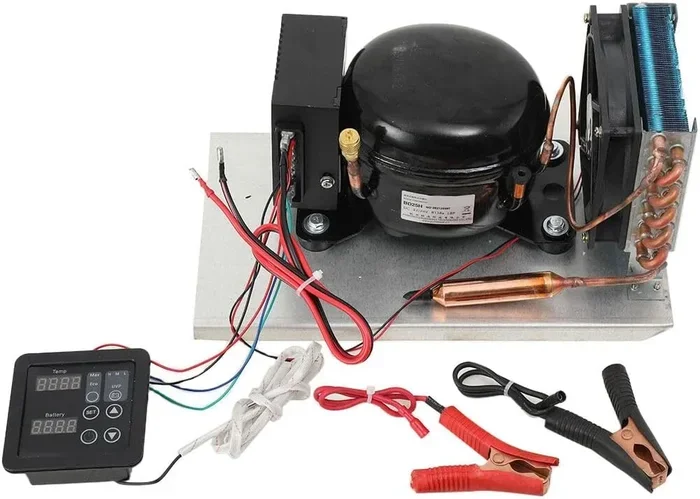
Understanding the basics helps you appreciate why these units are so effective. A compressor fridge works just like your household refrigerator. It uses a compressor, condenser, evaporator, and refrigerant to cycle coolant through a closed system.
Here is a simplified breakdown:
- The compressor pressurizes the refrigerant gas, raising its temperature.
- The condenser releases the heat outside the fridge, turning the gas into liquid.
- The expansion valve reduces pressure, cooling the liquid rapidly.
- The evaporator absorbs heat from inside the fridge, lowering the temperature.
- The cycle repeats, maintaining a consistent cold environment.
This process is far more efficient than thermoelectric cooler technology, which relies on the Peltier effect. Thermoelectric units are quieter and cheaper, but they struggle to reach freezing temperatures and perform poorly in hot environments. A DC refrigerator with a compressor handles extreme heat and maintains temperatures well below zero.
12V vs. 120V Power Options
Most car fridge with compressor models run on 12V DC power, making them perfect for vehicles. Many also include 120V AC adapters, so you can plug into shore power at a campsite or use them at home. Some advanced models even support solar panel connectivity, giving you off-grid cooling on remote trips.
Here is a quick comparison:
- 12V only — Runs from your car battery. Best for on-the-go use. May drain your vehicle battery if left running with the engine off.
- 12V/120V dual — Versatile. Works in your car and at home or camp. Great flexibility.
- 12V/120V/solar — The most flexible option. Ideal for off-grid cooling and extended outdoor stays.
Our recommendation? Go with dual or triple voltage. It gives you the most options and ensures your travel fridge works no matter where you are.
Top Features to Look for in a Car Fridge With Compressor
Not all portable refrigerators are created equal. Before you buy, make sure the model you choose has the features that matter most for camping and travel.
1. Cooling Performance and Temperature Range
The compressor should reach at least sub-zero temperatures. Look for units that go down to -4°F (-20°C) or lower. This lets you freeze ice, store frozen meals, and keep drinks ice-cold. A good energy-efficient fridge maintains consistent temperatures even in 90°F (32°C) heat outside your vehicle.
2. Capacity and Size
Capacity ranges from about 15 liters up to 75 liters or more. Think about how many people travel and how long your trips last.
- 15-25 liters: Perfect for 1-2 people on short trips. Fits easily under seats or in small cargo areas. Great as a car cooler.
- 30-45 liters: Ideal for families or 3-5 day trips. Enough room for meals, snacks, and plenty of drinks.
- 50-75 liters: Best for extended road trips, group camping, or as a primary camp kitchen unit.
3. Energy Efficiency
This is huge. A battery-powered fridge that draws too much power will drain your vehicle fast. Look for models with low daily power consumption, ideally under 1 kWh per day. Many brands list this info on their spec sheets. Energy-efficient fridge models save you money and keep your vehicle starting.
4. Build Quality and Durability
Your fridge will face bumps, vibrations, heat, dust, and rain. Look for rugged construction. Metal exteriors hold up better than plastic. Sealed hinges and gaskets keep out moisture. Some units are even waterproof rated for harsh conditions.
5. Convenience Features
Modern car fridge with compressor models come packed with handy features:
- Lid-mounted bottle opener — Small but appreciated.
- Removable drain plug — Makes cleaning easy after spills.
- Interior LED light — Helps you see inside at night.
- USB charging ports — Charge phones while keeping food cold.
- Magnetic strips or tie-down points — Keeps the unit secure on bumpy roads.
- Digital thermostat — Precise temperature control with easy adjustments.
Quick Tips for Choosing the Right Model
- Always check the actual usable capacity, not just the total liters listed.
- Read reviews focusing on real-world camping use, not just lab tests.
- Prioritize brands with strong warranty support and replacement part availability.
- Measure your available space before buying. Leave a little breathing room for airflow.
- Consider a unit with a backup battery or internal battery option for extra flexibility.
Best Car Fridges With Compressor for Camping and Travel
Now let us look at some of the top options on the market. These picks cover different budgets, sizes, and needs. Each one delivers reliable portable refrigeration for outdoor adventure trips.
Budget Pick: Alpicool C10
The Alpicool C10 is a 10-liter 12V fridge that punches above its weight. It reaches temperatures as low as -4°F, weighs just under 10 pounds, and offers a surprisingly efficient compressor. It works great as a personal car cooler for solo travelers or couples. At around $130, it is one of the most affordable compressor options that still delivers real cold.
Mid-Range Pick: Dometic CFX3 35
The Dometic CFX3 35 is a 35-liter workhorse. It offers excellent cooling down to -7°F, a rugged build, and a smart control app via Bluetooth. It handles rough roads without issues and draws very little power. For families or longer trips, this travel fridge hits the sweet spot between price and performance, typically around $450-$550.
Premium Pick: Iceco VL60
The Iceco VL60 is a 60-liter beast designed for serious off-grid cooling. It supports 12V/120V/solar input, has a powerful compressor, and features a heavy-duty frame built for truck fridge duty. It handles extreme environments with ease. It costs around $700-$900, but for those who need maximum capacity and reliability, it is worth every penny.
Expert Insight
“The biggest mistake people make is buying a fridge based only on price. A compressor fridge is a long-term investment. Spending a bit more upfront saves you from disappointment on a cold night in the mountains. Always prioritize cooling performance and energy efficiency over the sticker price,” says Jake Morrison, a veteran RV camping enthusiast with over 15 years of road experience.
Car Fridge With Compressor vs. Traditional Coolers
Let us settle this debate once and for all. Here is how a car fridge with compressor compares to a standard ice-filled cooler across the most important factors.
| Factor | Compressor Car Fridge | Traditional Cooler |
|---|---|---|
| Temperature Control | Precise and consistent | Depends on ice, unreliable |
| Cooling Duration | Indefinite (with power) | 24-72 hours |
| Frozen Storage | Yes, sub-zero possible | Only with extra ice |
| Weight | Heavier when empty | Lighter when empty |
| Operating Cost | Low power draw | Requires buying ice regularly |
| Long-Term Value | Lasts 5-15 years | Degrades over time |
| Initial Cost | $100-$900+ | $20-$80 |
| Convenience | Set and forget | Requires constant ice management |
As you can see, the compressor fridge wins in nearly every category that matters for camping and travel. The upfront cost is higher, but over time, you save money on ice and gain far better food safety. For anyone who camps more than a few times per year, the investment pays for itself quickly.
Common Mistakes People Make
- Buying a thermoelectric unit thinking it is a compressor fridge. Many cheap “portable fridges” are actually Peltier-based. They cannot freeze and struggle in heat. Always confirm it has a real compressor.
- Ignoring power consumption. A hungry battery-powered fridge can drain your vehicle battery overnight. Check the amp draw and pair it with a deep-cycle battery if needed.
- Overpacking without airflow. Blocking vents causes poor cooling. Leave space around the unit for proper air circulation.
- Not pre-chilling food. Putting warm food into the fridge forces the compressor to work harder. Cool items down first for best efficiency.
- Skipping maintenance. Dust on the condenser coils reduces efficiency. Clean them at least once per season.
Tips for Using Your Car Fridge With Compressor on the Road
Owning a car fridge with compressor is one thing. Using it effectively is another. Here are practical tips that make a real difference on your next trip.
Placement Matters
Where you put the fridge inside your vehicle affects both cooling and safety. The best spots include:
- Behind the seat: Keeps items accessible for passengers. Works well for 15-25 liter units.
- Under a bench or seat: Protects the unit from sun exposure and keeps it stable.
- In the cargo area: Ideal for larger models. Secure it with straps or bungee cords.
- On a roof rack: Some rooftop car fridge with compressor models exist. Great for saving interior space but ensure wind resistance.
Avoid placing the fridge in direct sunlight. Heat forces the compressor to work harder and wastes energy.
Power Management Strategies
To get the most out of your energy-efficient fridge, follow these steps:
- Run the fridge while driving. The alternator charges the battery as the fridge draws power.
- Use a battery monitor to track voltage. Shut off the fridge if battery drops below 12V.
- Pair with a deep-cycle battery for overnight use or parked camping.
- Consider a small solar panel for extended stationary trips. Even a 100W panel can keep a 12V fridge running during the day.
- Use the ECO or low-power mode if your model offers it. Many modern units have this built in.
Food Safety on the Road
A compressor fridge keeps food safer than a traditional cooler. Still, follow basic rules:
- Keep the fridge at or below 40°F for fresh food storage.
- Store raw meats on lower shelves to prevent cross-contamination.
- Use sealed containers to avoid spills and odor mixing.
- Defrost the freezer compartment regularly to maintain efficiency.
- Wipe down interiors weekly with a mild cleaning solution.
Quick Tips for First-Time Users
- Test your fridge at home before your trip. Make sure it cools properly in your specific setup.
- Bring a small thermometer to verify internal temperature.
- Pack a backup cooler with ice for emergencies.
- Label items with dates to keep track of freshness during long weekend getaway trips.
- Bring a multi-tool or screwdriver for minor adjustments or cleaning hard-to-reach spots.
Conclusion
A car fridge with compressor is one of those upgrades that instantly elevates your camping and travel experience. It gives you reliable cold storage, better food safety, and the freedom to stay away from home longer without worrying about spoiled food. Whether you choose a compact 10-liter car cooler or a spacious 60-liter portable refrigerator, the investment pays off with every trip you take.
Think about what matters most to you. Capacity, energy efficiency, durability, or budget. Pick a travel fridge that matches your lifestyle. Then hit the road with confidence, knowing your food and drinks stay exactly how you want them.
The open road is calling. Grab your car fridge with compressor, pack your camping gear, and make your next outdoor adventure the best one yet.
Frequently Asked Questions
How long does a car fridge with compressor last?
With proper care, a quality compressor fridge lasts between 5 and 15 years. Dometic, Alpicool, and Iceco models are known for their long lifespan. Regular cleaning and avoiding extreme vibrations help extend the life of any portable refrigerator.
Will a car fridge drain my car battery?
It can, if you leave it running with the engine off for many hours. Most 12V car fridge units draw between 3 and 8 amps per hour. Using a deep-cycle battery or running the fridge while driving prevents any battery issues. Always use a battery monitor for safety during extended parked trips.
Can I use a car fridge with compressor while it is sitting in my garage?
Yes. Most dual-voltage models work on 120V AC power, so you can plug them into a standard outlet. This makes them useful as a portable refrigerator at home, in a garage, or at a campsite with shore power. Just make sure the model you choose includes the AC adapter.
What is the difference between a compressor fridge and a thermoelectric cooler?
A compressor fridge uses a traditional refrigeration cycle and reaches much colder temperatures, often below freezing. A thermoelectric cooler uses the Peltier effect and typically only cools 20-30°F below ambient temperature. Compressor models are far better for camping and travel where true freezing is needed.
How do I clean my car fridge with compressor?
Unplug the unit, remove all food, and wipe the interior with warm water and mild soap. Empty the drain plug and let it dry completely. Clean the condenser coils at least once every few months using a soft brush or vacuum. This keeps your travel fridge running efficiently and smelling fresh.
Is a car fridge with compressor worth it for short day trips?
For short day trips, a traditional cooler works fine. But if you frequently do multi-day weekend getaways or regular camping trips, a car fridge with compressor is absolutely worth the investment. It pays for itself over time by eliminating the need for constant ice purchases and keeping food fresher longer.