Can I Change My ECU Myself A Complete Step by Step Guide
Yes, you can change your ECU yourself if you have the right tools and a bit of patience. This guide walks you through every step, from understanding what an ECU does to completing a successful ECU replacement at home. We also cover common mistakes and when to call a pro for help.
Have you ever wondered if you can change your ECU yourself? The short answer is yes. Many car owners tackle this project every year and save hundreds of dollars in labor costs. But it is not as simple as swapping out a light bulb. You need the right tools, some basic knowledge, and a careful approach. This guide will show you exactly how to do it safely and effectively.
Your car’s ECU, or engine control unit, is basically the brain of your vehicle. It controls everything from fuel injection to ignition timing. When your ECU starts to fail or you want to upgrade, the question becomes: should you pay a mechanic or handle it yourself? We will walk you through every single step so you feel confident and prepared.
Whether you are a weekend hobbyist or a complete beginner, this article has something for you. We will cover what an ECU does, the tools you need, the exact steps to follow, and the mistakes most people make. By the end, you will know if a DIY ECU replacement is right for your situation.
Key Takeaways
- You can DIY your ECU change: With basic tools and this guide, most car owners can swap or reprogram their ECU at home.
- Compatibility is critical: Your new ECU must match your vehicle make, model, and year to work properly.
- You will need specific tools: An OBD2 scanner, a flathead and Phillips screwdriver, and a stable power source are essential.
- Programming and coding matter: Simply swapping the unit is not enough; you must program the new ECU correctly.
- Common mistakes can cost you: Forgetting to disconnect the battery or skipping the coding step can lead to errors.
- Know when to call a pro: Complex vehicles or warranty concerns may make a professional the safer choice.
- Your car will run better: A properly installed and programmed ECU can improve engine performance and fuel efficiency.
📑 Table of Contents
- What Is an ECU and Why Does It Matter?
- Can You Really Change Your ECU Yourself?
- Tools and Equipment You Will Need
- Step by Step ECU Replacement Process
- Common Mistakes to Avoid When Changing Your ECU
- When to Call a Professional Instead
- Benefits of Changing Your ECU Yourself
- Final Thoughts on Changing Your ECU Yourself
What Is an ECU and Why Does It Matter?
The engine control unit is a small computer inside your car. It reads data from sensors all over the engine. Then it uses that data to control how your engine runs. Think of it as the mission control for your vehicle’s engine.
Without a working ECU, your car would not start. It manages fuel delivery, air intake, emissions, and much more. When the ECU goes bad, you might notice rough idling, poor fuel economy, or even a check engine light that will not turn off.
Signs Your ECU May Need Replacing
How do you know if your ECU is the problem? Here are some common signs:
- Your car stalls randomly while driving or at idle
- The check engine light stays on despite repairs
- You notice a drop in fuel efficiency
- Your engine misfires or runs rough
- The car refuses to start even with a good battery
- You experience unexplained loss of power
- Error codes keep coming back after clearing them
If you are seeing several of these symptoms, your ECU may need replacement or reprogramming. Before you buy a new unit, it is worth getting a full diagnostic check. Sometimes the issue is a sensor, not the ECU itself.
Can You Really Change Your ECU Yourself?
The honest answer is: it depends. For most modern vehicles, changing the ECU is a task a confident DIYer can handle. However, the process varies by car make and model. Some vehicles make it very easy, while others require more technical steps.
Here is what matters most. You need to understand your vehicle’s system. You need the correct replacement unit. And you need to be willing to follow each step carefully. Rushing through an ECU swap can cause more problems than it solves.
When a DIY ECU Change Works Well
DIY ECU changes work best in these situations:
- You have a common vehicle model with lots of online support
- You are replacing a known faulty ECU with an identical unit
- You have basic mechanical experience and tools
- Your vehicle is out of warranty
- You are simply swapping for an upgraded or reprogrammed unit
When You Should Call a Professional
There are times when professional help is the smarter choice:
- Your vehicle has advanced security systems or immobilizer features
- You are unsure about compatibility with your specific model
- Your car is still under warranty
- You lack the tools needed for programming
- You feel uncomfortable working with electrical components
There is no shame in calling a mechanic. The goal is to get the job done right without damaging your car or voiding any remaining warranty.
Tools and Equipment You Will Need
Before you start, gather everything you need. Having the right tools makes the process smoother and safer. Here is your checklist:
Essential Tools
- OBD2 scanner: This lets you read and clear error codes before and after the swap
- Socket set and screwdrivers: You will need basic sizes to remove the ECU housing
- Anti-static wrist strap: This protects the new ECU from static damage
- Battery charger or maintainer: A stable power source prevents voltage drops during programming
- Vehicle service manual: Your specific manual shows the exact location and wiring diagram for your ECU
- Clean workspace: A well-lit, dry area with plenty of room to work
Optional but Helpful Items
- A laptop with the manufacturer’s programming software
- Electrical contact cleaner spray
- Wire labels and markers for organizing connectors
- A digital multimeter for testing connections
- Zip ties to manage wiring harnesses
Having these items ready before you start will save you frustration. Nothing slows down a project faster than searching for a missing tool halfway through.
Step by Step ECU Replacement Process
Now for the part you have been waiting for. Here is the actual process to change your ECU yourself. Follow each step in order and do not skip ahead.
Step 1: Disconnect the Battery
Always start by disconnecting the negative battery terminal. This prevents electrical shorts and protects both you and your vehicle. Use your wrench to loosen the cable and pull it away from the terminal. Keep it disconnected for the entire process.
Step 2: Locate Your Current ECU
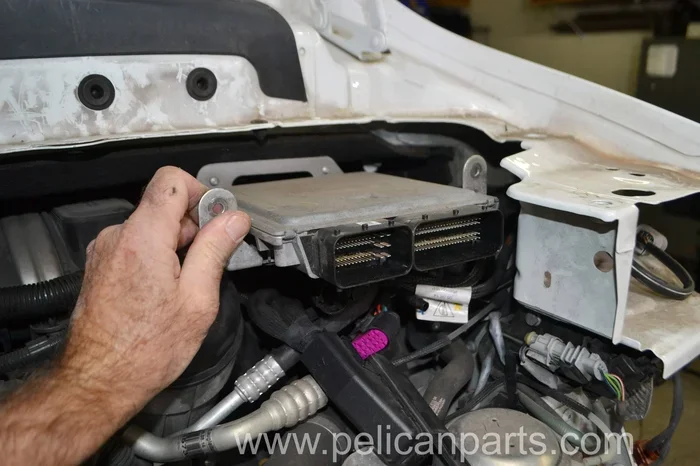
Open your vehicle service manual to find the ECU location. In most cars, the ECU sits under the hood near the engine. Some vehicles place it under the dashboard or behind the glove box. Use your manual to pinpoint the exact spot.
Step 3: Remove the Old ECU
Once you find the unit, carefully disconnect the wiring harnesses. Take a photo or label each connector before you remove it. This makes reinstalling the new unit much easier. Unscrew the mounting bolts and gently pull the ECU out of its housing.
Step 4: Install the New ECU
Place your new ECU into the mounting bracket. Secure it with the bolts you removed earlier. Reconnect each wiring harness in the reverse order you took them off. Double check every connection to make sure they are firm and seated properly.
Step 5: Reconnect the Battery
Now reconnect the negative battery terminal first, then the positive. Turn the ignition on without starting the engine. Listen for any unusual sounds or check for warning lights on the dashboard.
Step 6: Program and Code the New ECU
This is the step most people skip, and it causes problems. You must program the new ECU to match your vehicle. Use your OBD2 scanner or manufacturer software to flash the correct software. Some vehicles require a dealer or specialist for this step.
Step 7: Test Drive and Verify
Take your car for a short test drive. Pay attention to how the engine starts, idles, and accelerates. Use your OBD2 scanner to check for any remaining error codes. If everything looks good, you have successfully completed your DIY ECU replacement.
Quick Tips for a Smooth Process
- Never work on the ECU with the battery connected
- Take photos at every step for reference later
- Do not force any connectors, they should click in smoothly
- Keep all old parts until you confirm the new unit works
- Reset your trip meter and radio presets after the swap
Common Mistakes to Avoid When Changing Your ECU
Even with the best guide, mistakes happen. Knowing what to avoid can save you time, money, and headaches.
Mistake 1: Skipping the Programming Step
Some people think dropping in a new ECU and driving off is enough. It is not. The ECU must be programmed with the correct software for your specific vehicle. Without programming, your car may not run at all or could run poorly.
Mistake 2: Using an Incompatible Unit
Not every ECU fits every car. You must match the replacement unit to your vehicle’s exact make, model, year, and engine type. Buying the wrong unit wastes time and money. Always verify compatibility before you purchase.
Mistake 3: Forgetting to Disconnect the Battery
This is the number one mistake people make. Working on electrical components with the battery connected risks short circuits and damage. Always disconnect the battery first and wait a few minutes before touching any wires.
Mistake 4: Ignoring Error Codes After Installation
After you install the new ECU, use your scanner to check for codes. Do not just assume everything is fine. Catching problems early saves you from bigger issues down the road.
Mistake 5: Rushing the Process
Patience is your best friend here. Rushing leads to missed connections, forgotten steps, and potential damage. Take your time and follow each step carefully.
When to Call a Professional Instead
There is no shame in admitting a job is beyond your comfort zone. Some situations truly do require a professional touch. Here are the signs you should call a mechanic instead of going the DIY route.
First, if your vehicle has advanced security features like an immobilizer or transponder key system, the ECU programming can be very complex. Second, if your car is still under warranty, a DIY ECU change could void your coverage. Third, if you do not have access to the right programming tools, a professional has the equipment you need.
Also consider calling a pro if you have tried and failed to get the new unit working properly. Sometimes issues are hidden in the wiring or software that require expert diagnosis. A trusted mechanic can save you from turning a simple fix into an expensive repair.
Many local shops offer ECU programming services at reasonable rates. You can also check with your dealership, though their labor costs are often higher. Get quotes from multiple sources before you decide.
Benefits of Changing Your ECU Yourself
So why bother doing it yourself? There are several real benefits worth considering.
- Cost savings: Labor for ECU replacement can cost anywhere from $100 to $300 or more. Doing it yourself eliminates that expense.
- Learning experience: You gain valuable knowledge about your vehicle that helps with future repairs
- Convenience: You can work on your own schedule without waiting for an appointment
- Confidence: Completing a challenging DIY project builds your skills and self-reliance
- Control: You choose the exact replacement unit and programming approach
These benefits add up quickly, especially if you enjoy working on your car as a hobby. Even if you are not a car person, the satisfaction of completing the job yourself is hard to beat.
Final Thoughts on Changing Your ECU Yourself
So, can you change your ECU yourself? The answer is a clear yes, provided you take the right approach. You need the correct replacement unit, the proper tools, and the patience to follow each step carefully. This guide has given you everything you need to get started with confidence.
Remember that the most important parts of this process are preparation and patience. Do not rush. Do not skip steps. And always double check your work before you start the engine. A careful approach leads to a successful outcome every time.
If at any point you feel unsure, reach out to a professional. There is no award for pushing through when you are in over your head. The goal is a properly functioning vehicle that runs smoothly and reliably. Whether you finish the job yourself or hand it off to an expert, your car will thank you for it.
Now that you have all the information you need, you are ready to tackle your ECU replacement project. Grab your tools, clear your workspace, and get started. You might just surprise yourself with what you can accomplish.
Frequently Asked Questions
How long does it take to change an ECU yourself?
For most vehicles, the actual swap takes about one to two hours. However, programming the new ECU can add another one to three hours depending on your vehicle. If you are new to this type of work, give yourself extra time to learn and work carefully.
Do I need special software to program a new ECU?
Yes, most vehicles require specific programming software. This is often the manufacturer’s proprietary tool or a compatible third-party diagnostic program. Some basic ECU swaps do not need programming, but it is always best to verify before you start.
Will changing my ECU void my car’s warranty?
It can, especially if your vehicle is still under the manufacturer’s warranty. Check your warranty terms before attempting any ECU work. In many cases, having a professional handle the replacement preserves your coverage.
Can I use any ECU from the same car model?
Not always. The ECU must match your exact vehicle specifications including engine type, model year, and trim level. Even small differences between variants can cause compatibility issues. Always verify the part number before purchasing.
What happens if I do not program the new ECU?
Your vehicle may not start at all, or it could run very poorly with rough idling and misfires. The ECU needs the correct software to communicate with your engine sensors. Programming is not optional in most modern vehicles.
Is changing an ECU dangerous?
It is not inherently dangerous if you follow safety steps like disconnecting the battery and working in a dry area. The main risks are electrical shorts and damaging the new unit through static discharge. Taking proper precautions makes the process safe for most people.
=== CONCLUSION ===
Changing your ECU yourself is a rewarding project that saves money and builds your automotive skills. With the right tools, a compatible replacement unit, and the patience to follow each step, most car owners can complete this job at home. Remember to disconnect the battery, take your time, and never skip the programming step.
Keep this guide handy as a reference while you work through the process. And if anything feels beyond your comfort level, do not hesitate to call a professional. The best DIYer knows when to ask for help.
Now go ahead and take on your ECU replacement with confidence. Your car deserves it, and so do you.